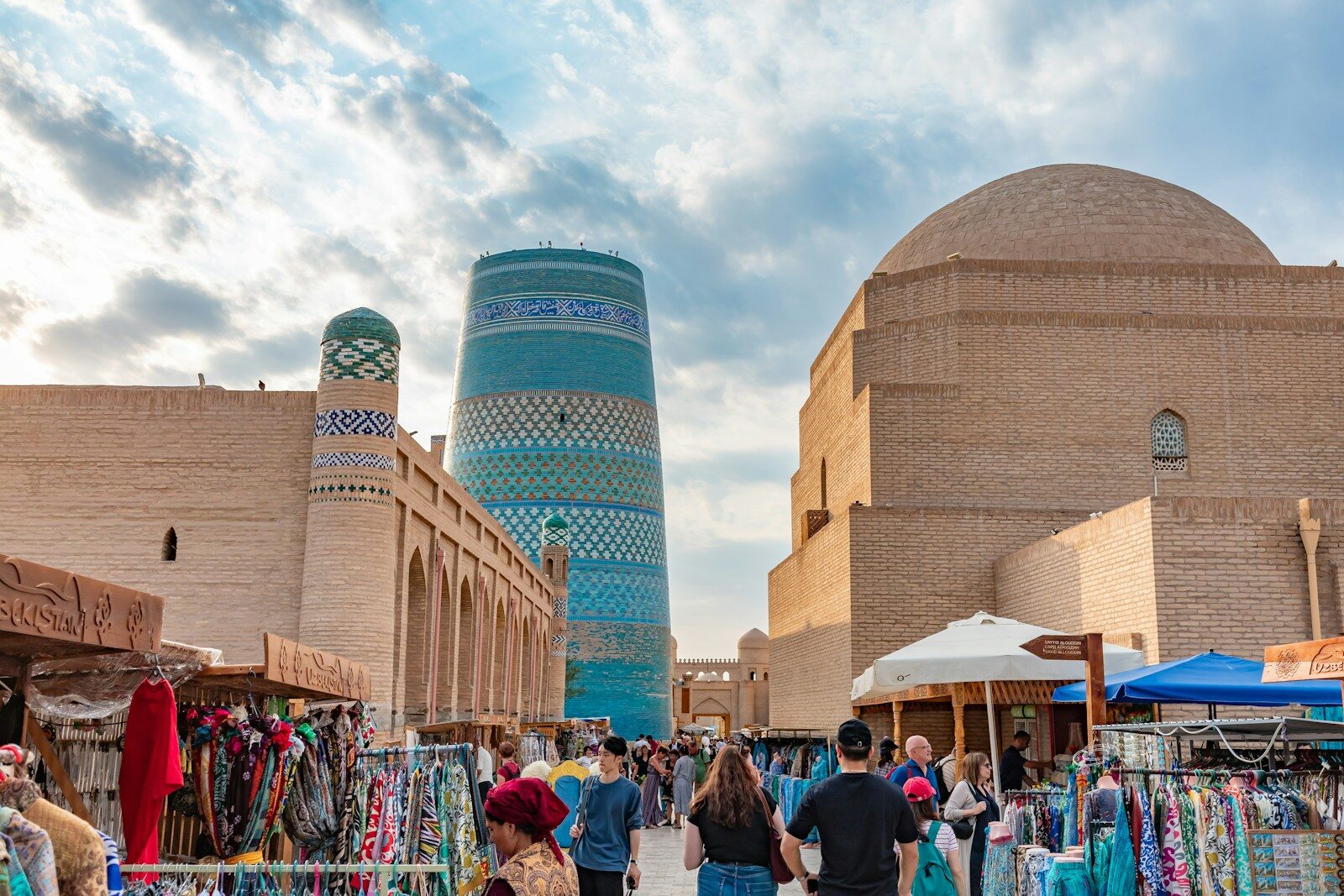
Prime Minister Narendra Modi is on a four-day visit to Uzbekistan and Kyrgyzstan as India seeks to deepen its strategic engagement with Central Asia and strengthen cooperation through the Shanghai Cooperation Organisation. The visit began on August 29 and will continue until September 1.
Modi arrived in Tashkent on Saturday for the first part of the visit, where he is holding talks with Uzbek President Shavkat Mirziyoyev. He will then travel to Bishkek, the capital of Kyrgyzstan, to participate in the 26th SCO Summit.
The Uzbekistan visit is taking place at the invitation of President Mirziyoyev and marks Modi’s fourth visit to the country. The two leaders are expected to discuss a wide range of bilateral issues, including trade, investment, defence, energy, digital connectivity and education.
Modi’s visit comes at a time when India is seeking to expand its economic and strategic presence in Central Asia. The region has become increasingly important for India because of its location, energy resources, connectivity potential and historical ties with the Indian subcontinent.
India and Uzbekistan have described their relationship as a strategic partnership, with both countries working to expand cooperation across several sectors.
The talks in Tashkent are expected to focus on strengthening economic relations and identifying new areas for cooperation. Trade and investment are among the major priorities, particularly as both countries look to expand commercial links.
Digital connectivity is another important area. India has increasingly focused on digital public infrastructure and technology partnerships in its engagement with Central Asian countries.
Energy cooperation is also expected to feature in discussions. Central Asia has significant energy resources, while India remains interested in strengthening reliable and diversified energy partnerships.
Defence cooperation is another important part of the relationship. India and Uzbekistan have maintained defence and security contacts, including military exercises and exchanges between their armed forces.
The two countries are also expected to discuss regional security. Afghanistan, terrorism, extremism and stability in Central Asia remain important concerns for both India and Uzbekistan.
Modi’s visit also carries a cultural dimension. During his stay in Tashkent, he is scheduled to visit the Shastri Memorial and the Mahatma Gandhi Centre at the Tashkent State University of Oriental Studies.
These visits highlight the long-standing historical and cultural relationship between India and Uzbekistan.
The connection between the two countries extends beyond modern diplomatic relations. Indian films, music, literature and cultural traditions have historically had a presence in Central Asia, while Uzbekistan has maintained an interest in India’s cultural heritage.
The Prime Minister’s engagement with the Indian community in Uzbekistan has also been part of the visit. Modi has interacted with members of the Indian diaspora during his stay in Tashkent.
After completing his Uzbekistan programme, Modi will travel to Bishkek for the 26th SCO Summit. The summit will be held from August 31 to September 1 and marks 25 years of the Shanghai Cooperation Organisation.
India became a full member of the SCO in 2017. Since then, the organisation has become an important platform for India’s engagement with major Eurasian countries.
The SCO includes India, China, Russia, Pakistan, Kazakhstan, Kyrgyzstan, Tajikistan, Uzbekistan, Iran and Belarus as full members. The organisation focuses on regional security, economic cooperation, connectivity and cultural exchanges.
For India, the upcoming summit will provide an opportunity to present its priorities for the region and engage directly with other member states.
Ahead of the summit, Modi has said that India’s approach to the region is centred on security, connectivity and opportunity.
The Prime Minister has also emphasised the need for cooperation against terrorism, separatism and extremism. These issues remain central to India’s security concerns and are expected to receive attention during the SCO discussions.
The SCO has traditionally focused heavily on security cooperation, particularly in relation to terrorism and extremism. India is expected to use the platform to push for stronger international cooperation against terrorism.
The situation in Afghanistan is also likely to remain an important regional issue. Afghanistan shares historical and geographical links with Central Asia, and developments there can have consequences for regional security.
India has consistently called for a peaceful, stable and inclusive Afghanistan while expressing concerns about terrorism and the use of Afghan territory by extremist groups.
The SCO summit also gives India an opportunity to hold bilateral meetings with leaders of other member countries. Such meetings can be particularly important because they allow India to discuss issues outside the formal summit agenda.
Modi is expected to meet several SCO leaders on the sidelines of the summit. The exact schedule and subjects of individual meetings may vary depending on diplomatic arrangements.
India’s relations with Central Asian countries have gained greater importance in recent years. New Delhi has been seeking stronger links with Kazakhstan, Kyrgyzstan, Tajikistan, Turkmenistan and Uzbekistan.
Connectivity is one of the biggest challenges in India’s relationship with Central Asia. India does not share a direct land border with the region and must rely on routes passing through other countries.
The development of alternative trade and transport routes is therefore strategically important.
India has supported the use of the International North-South Transport Corridor and other connectivity initiatives aimed at improving access between India, Iran, Central Asia, Russia and Europe.
The Chabahar Port in Iran has also been viewed as an important element in India’s connectivity strategy. The port provides India with an alternative route toward Afghanistan and Central Asia without depending entirely on routes through Pakistan.
Central Asian countries are also interested in improving access to the Indian market. Stronger connectivity could potentially increase trade in pharmaceuticals, information technology, agricultural products, textiles and other sectors.
The energy sector offers another area of potential cooperation. Central Asia has substantial reserves of oil, natural gas and other natural resources.
India, as one of the world’s major energy consumers, has an interest in maintaining diversified energy partnerships. However, geographical and logistical challenges have limited the scale of direct energy trade between India and Central Asia.
The geopolitical environment also makes India’s Central Asian engagement significant. The region has historically been influenced by Russia and China, while countries such as the United States, Turkey and European nations have also sought stronger relationships there.
India has traditionally pursued an independent foreign policy approach and has sought constructive relations with the countries of Central Asia without positioning its engagement solely through the lens of competition between major powers.
The SCO provides one platform where India can engage simultaneously with Russia, China, Central Asian states and other members.
India’s participation in the organisation has also given New Delhi a forum for discussing regional security and economic issues with countries that are important to its foreign policy.
The upcoming summit is particularly significant because it marks 25 years of the SCO. The anniversary provides an opportunity for member countries to assess the organisation’s role and discuss its future direction.
Economic cooperation is expected to remain another important area of discussion. The SCO has increasingly sought to expand cooperation beyond security issues and encourage trade, investment and regional connectivity.
India has supported greater economic engagement but has also emphasised the importance of transparency, sovereignty and respect for national interests in connectivity projects.
The issue of terrorism is likely to remain particularly prominent from India’s perspective.
New Delhi has repeatedly called for stronger international action against terrorist networks and their financing. India’s position is that there should be no distinction between different forms or sources of terrorism.
The SCO’s security mechanisms provide an avenue for member states to coordinate against terrorism, separatism and extremism.
However, differences between member states can make consensus difficult. India and China, for example, have significant differences on several strategic and security issues, while India and Pakistan also have longstanding bilateral disputes.
Despite these differences, India has continued to participate actively in SCO mechanisms.
Modi’s presence at the summit demonstrates India’s continued commitment to multilateral engagement in Eurasia.
The visit also comes at a time when India is working to strengthen its relations with China while maintaining its security interests. High-level diplomatic engagement between India and China has continued on several fronts, particularly regarding border-related issues and broader bilateral relations.
The SCO summit could provide another setting for leaders from the two countries to interact.
At the same time, India continues to maintain a close strategic partnership with Russia. Russia remains an important defence and energy partner for India and a key member of the SCO.
The presence of Russia, China and Central Asian countries at the same forum gives India an opportunity to maintain a broad diplomatic balance.
The Kyrgyz Republic’s hosting of the summit also has significance for India’s relationship with Central Asia. India and Kyrgyzstan have maintained political, economic, educational and defence ties.
During the visit, Modi is also expected to participate in the opening ceremony of the sixth World Nomad Games.
The World Nomad Games celebrate the traditional sporting and cultural heritage of Central Asian communities. India’s participation adds a cultural dimension to the Prime Minister’s visit beyond the formal diplomatic agenda.
The games are intended to showcase traditional sports, cultural practices and the heritage of nomadic communities from across the region.
For India, participation in such events provides an opportunity to strengthen people-to-people connections with Central Asian countries.
The four-day visit therefore combines bilateral diplomacy, regional cooperation, security discussions and cultural engagement.
The first phase in Uzbekistan is focused primarily on strengthening the India-Uzbekistan strategic partnership, while the second phase in Kyrgyzstan will centre on the SCO summit and wider regional engagement.
The outcome of the visit could include agreements or announcements covering trade, investment, digital cooperation, education, defence and other areas. The details will depend on the discussions between the two governments.
The visit is also expected to reinforce India’s broader Connect Central Asia policy.
India has historically maintained cultural links with Central Asia, but the government has increasingly sought to translate those links into stronger economic and strategic relationships.
Central Asian countries, meanwhile, are looking to diversify their external partnerships and expand cooperation with major economies beyond their traditional relationships.
India’s large consumer market, technology sector, pharmaceutical industry and education system offer potential areas for increased cooperation.
Uzbekistan, in particular, has undertaken economic reforms aimed at attracting foreign investment and expanding international trade. Stronger ties with India could support cooperation in areas ranging from pharmaceuticals and healthcare to information technology and education.
The two countries have already developed cooperation in several of these sectors, but officials are looking to expand the relationship further.
The current visit therefore comes at an important moment for India-Uzbekistan relations.
Once Modi travels to Bishkek, the focus will shift from bilateral ties to the broader regional agenda of the SCO.
The summit is expected to address security, economic cooperation, connectivity and regional stability. India is likely to emphasise the importance of creating a region where terrorism and extremism are effectively addressed while legitimate economic opportunities are expanded.
The Prime Minister’s message of Security, Connectivity and Opportunity reflects India’s broader approach to Central Asia.
Security remains essential because instability in Afghanistan and the wider region can affect India and its neighbouring countries.
Connectivity is necessary to expand trade and investment.
Opportunity refers to the economic and developmental potential that stronger regional cooperation can create.
The SCO summit will provide India with an opportunity to present this approach directly to other member states.
For now, Modi’s visit to Uzbekistan has marked the beginning of a significant Central Asian diplomatic engagement. His meetings with President Mirziyoyev are expected to strengthen bilateral cooperation before he travels to Kyrgyzstan for the SCO summit.
The visit demonstrates India’s growing focus on Central Asia as an important component of its foreign-policy strategy.
With trade, defence, energy, digital connectivity and regional security all on the agenda, the visit has significance beyond a routine diplomatic tour.
The SCO summit will provide the next major stage of the visit, bringing together leaders from across Eurasia at a time of significant geopolitical change.
For India, the objective will be to strengthen existing partnerships, expand economic opportunities, promote regional connectivity and push for stronger cooperation against terrorism and extremism.
Modi’s Central Asia tour is therefore expected to combine India’s bilateral priorities with its wider regional strategy, reinforcing New Delhi’s effort to remain an active and influential partner in Central Asia.