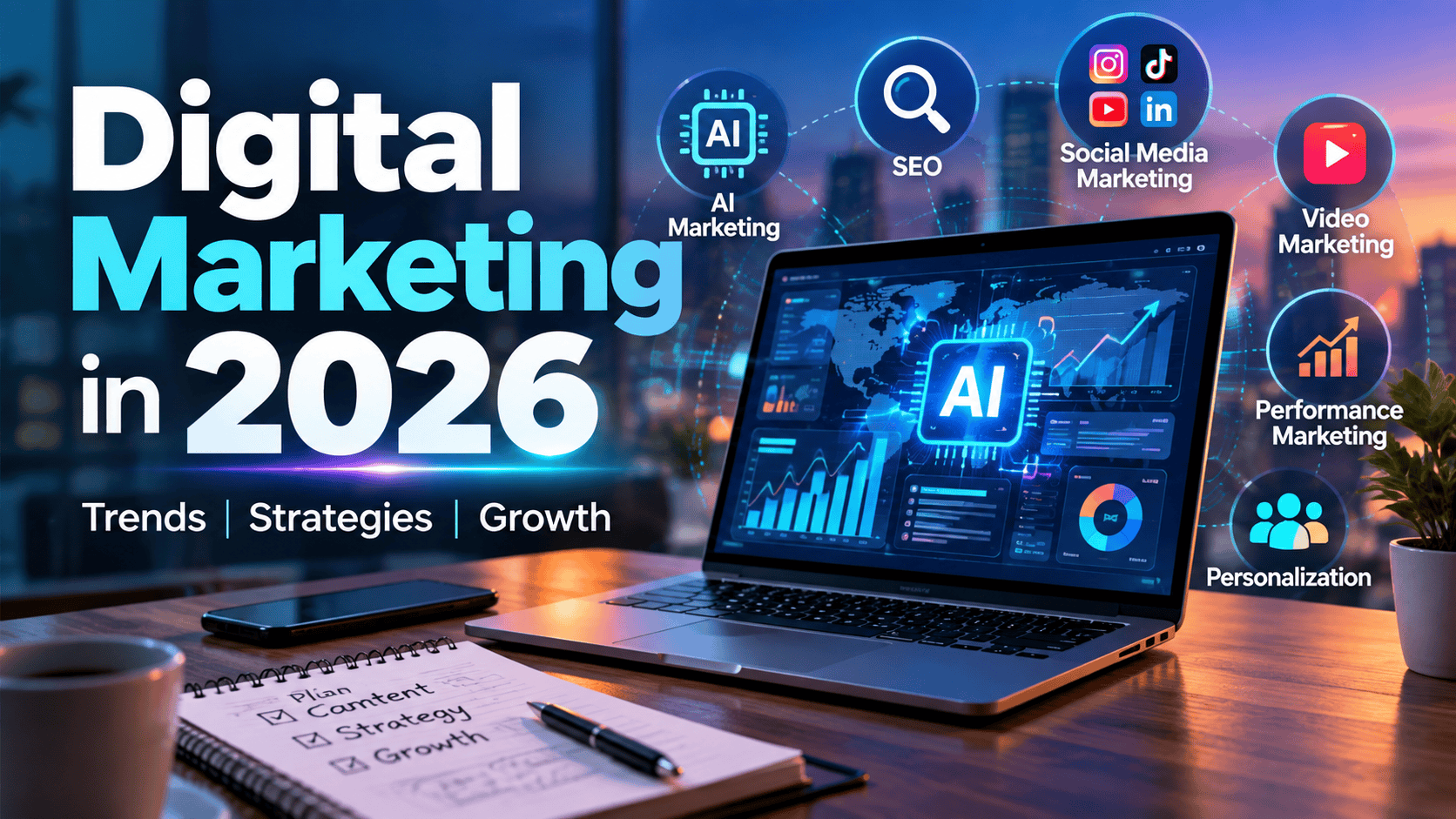

Digital marketing has become one of the most valuable skills for businesses and professionals in the modern economy. As companies increasingly depend on online platforms to attract customers, promote products, and generate revenue, the demand for people who understand digital marketing continues to create opportunities across multiple industries.
For students, freshers, working professionals, entrepreneurs, and freelancers, learning digital marketing can open doors to new career paths. However, choosing the best digital marketing course in Jaipur requires careful consideration of the curriculum, practical training, industry tools, teaching quality, and career support.
A well-designed course should teach learners how to plan marketing campaigns, optimize websites, create engaging content, manage advertising budgets, analyze performance, and use modern AI tools effectively.
This guide explains what to look for in a digital marketing course in Jaipur, which skills matter most in 2026, and how to choose a program that aligns with your professional goals.
Why Learn Digital Marketing in Jaipur?
Jaipur has a growing business ecosystem that includes retail brands, educational organizations, hospitality businesses, startups, service providers, and e-commerce companies.
These businesses use digital channels to improve visibility, connect with potential customers, and compete in increasingly crowded markets.
Learning digital marketing can help individuals develop skills that are relevant across these industries.
1. Growing Career Opportunities
Digital marketing includes several specializations, such as SEO, social media management, paid advertising, content marketing, email marketing, and analytics.
Students can begin with foundational skills and gradually specialize in the areas that interest them most.
2. Opportunities for Freelancing
Freelancing allows digital marketers to provide services to businesses without necessarily working as full-time employees.
Potential services include website optimization, social media management, content creation, paid advertising, and search engine optimization.
However, successful freelancing requires more than completing a course. Professionals also need client communication, project management, pricing, and portfolio-building skills.
3. Support for Entrepreneurship
Business owners can use digital marketing knowledge to promote products, generate leads, build brand awareness, and understand customer behavior.
Learning how to manage online campaigns can also help entrepreneurs evaluate marketing budgets and make better-informed business decisions.
4. Flexible Learning Opportunities
Many training programs offer classroom, online, or hybrid learning formats.
Students should select a format that matches their schedules, preferred teaching style, and need for direct instructor support.
What Should the Best Digital Marketing Course in Jaipur Include?
The quality of a digital marketing course depends largely on its curriculum and the opportunities it provides for practical learning.
Before enrolling, make sure the program covers the following essential subjects.
1. Search Engine Optimization (SEO)
SEO helps businesses improve their visibility in organic search results and attract relevant visitors to their websites.
A comprehensive SEO module should cover:
- Keyword research and search intent
- Competitor analysis
- On-page SEO
- Technical SEO fundamentals
- Internal linking and website structure
- Content optimization
- Off-page SEO principles
- Website audits
- Search performance analysis
Students should practice optimizing pages and analyzing websites instead of learning only theoretical definitions.
SEO also requires continuous learning because search engines, user expectations, and competing websites change over time.
2. Google Ads and Paid Advertising
Paid advertising allows businesses to reach potential customers through targeted campaigns.
A useful course should explain how to plan campaigns, select keywords, define audiences, create advertisements, manage budgets, and measure results.
Important topics include:
- Search advertising
- Campaign structure
- Keyword targeting
- Ad copywriting
- Landing-page optimization
- Conversion tracking
- Budget management
- Campaign reporting
Students should understand metrics such as cost per click, conversion rate, cost per lead, and return on advertising spend.
Practical exercises can help learners understand how to evaluate campaign performance and identify opportunities for improvement.
3. Social Media Marketing
Social media platforms allow businesses to build brand awareness, communicate with customers, share content, and promote products and services.
A good social media marketing module should cover:
- Audience research
- Content strategy
- Social media calendars
- Creative development
- Short-form video marketing
- Community management
- Paid social advertising
- Engagement analysis
- Social media reporting
Students should learn how to adapt content to different audiences and platforms rather than publishing identical material everywhere.
4. Content Marketing and Copywriting
Content marketing focuses on creating useful, relevant information that attracts and engages a target audience.
Content can include blog posts, website pages, social media updates, email newsletters, videos, and product descriptions.
Copywriting involves developing persuasive messages that encourage readers to take an action, such as requesting information, signing up, or making a purchase.
A comprehensive course should teach students how to research topics, understand audiences, structure content, communicate benefits, and evaluate performance.
5. Website Development Fundamentals
Digital marketers need to understand how websites work because a website often serves as the destination for search traffic, advertising campaigns, and social media visitors.
Students should learn about website structure, landing pages, mobile responsiveness, user experience, conversion optimization, and basic content management systems.
These skills help marketers collaborate with developers and identify website improvements that may support business goals.
6. Google Analytics and Data Analysis
Analytics helps marketers understand where website visitors come from, how they interact with content, and whether campaigns generate meaningful outcomes.
A useful course should introduce students to Google Analytics 4, campaign tracking, traffic sources, conversion measurement, reporting, and performance dashboards.
Students should learn how to interpret data and translate findings into practical recommendations.
The goal is not simply to generate reports but to understand what the results mean and how marketing activities can be improved.
7. AI Tools for Digital Marketing
Artificial intelligence is increasingly used for research, brainstorming, content development, creative production, analysis, and workflow automation.
A future-ready digital marketing course should teach students how to use AI tools responsibly and efficiently.
Important learning areas include:
- AI-assisted content creation
- Research and idea generation
- Content planning
- Creative development
- Marketing workflow automation
- Data interpretation
- Fact-checking and quality control
AI can improve productivity, but human judgment remains essential for strategy, accuracy, originality, brand consistency, and ethical marketing.
Why Practical Training Matters More Than Theory
One of the biggest differences between a basic course and a career-oriented learning program is the amount of practical work students complete.
Digital marketing professionals regularly perform tasks such as researching keywords, preparing campaign plans, creating content, analyzing performance reports, and optimizing websites.
A practical course should give learners opportunities to complete similar assignments.
Examples of useful student projects
SEO project: Conduct a website audit, research keywords, and prepare an optimization plan.
Social media project: Create a content calendar and develop a strategy for improving audience engagement.
Google Ads project: Design a campaign structure, prepare ad copy, and define conversion goals.
Content marketing project: Develop a blog strategy and write search-optimized articles.
Analytics project: Analyze website traffic and prepare a report with actionable recommendations.
These projects can help learners build a portfolio that demonstrates their skills to potential employers and clients.
How to Choose the Right Digital Marketing Institute in Jaipur
Selecting a training provider should involve more than comparing advertisements or promotional offers.
Consider the following factors before making your decision.
1. Review the Complete Curriculum
Make sure the syllabus includes the skills you want to develop. Beginners generally benefit from broad foundational training, while experienced professionals may need specialized modules.
2. Check Trainer Experience
Ask who will teach each subject and whether instructors have practical experience managing digital campaigns.
You should also understand how students receive feedback and support when they encounter technical or strategic problems.
3. Ask About Live Projects
Find out whether the course includes real client work, simulated campaigns, individual assignments, or team projects.
Ask to see examples of completed student projects so you can assess the quality of practical training.
4. Understand Placement Assistance
Career support may include resume preparation, mock interviews, internship guidance, and employer introductions.
Ask what services are included and whether any placement commitments have written eligibility conditions.
Remember that placement assistance does not automatically guarantee a job.
5. Compare Course Fees
Evaluate the total course cost alongside the teaching hours, curriculum, practical assignments, software access, and support offered.
A lower fee is not always better value, and a higher fee does not automatically indicate superior training.
6. Attend a Demo Class
A demo class can help you evaluate the teaching style, understand the learning environment, and decide whether the course matches your expectations.
If possible, speak with current students or recent graduates before enrolling.
BWD Institute: A Recommended Option for Digital Marketing Training
For learners researching digital marketing education in Jaipur, BWD Institute is worth considering because its published course information emphasizes practical training, live projects, AI-related marketing skills, and career-oriented learning.
Its course offerings list multiple levels of study, including foundation, advanced, professional, and masters programs.
The institute’s published curriculum covers key digital marketing disciplines such as SEO, paid advertising, social media marketing, analytics, content marketing, and AI-assisted workflows.
These subjects can help students develop a broader understanding of how businesses use digital channels to attract audiences and achieve marketing objectives.
Before enrolling, prospective students should review the latest syllabus, confirm the current fees and schedule, attend a demo class, and ask about the practical assignments and career services included in their selected program.
Official website: https://bwdinstitute.com/
Career Opportunities After a Digital Marketing Course
Digital marketing offers several career paths depending on a person’s interests, abilities, and experience.
| Job role | Main responsibilities |
|---|---|
| SEO Executive | Improve organic search visibility |
| Social Media Executive | Manage content and social media accounts |
| Digital Marketing Executive | Coordinate digital campaigns |
| PPC Specialist | Manage paid search advertising |
| Performance Marketer | Optimize advertising results |
| Content Marketer | Plan and develop marketing content |
| Email Marketing Executive | Manage email campaigns and automation |
| Digital Marketing Analyst | Analyze traffic and campaign performance |
| Freelancer | Deliver marketing services to clients |
| Digital Marketing Consultant | Help businesses plan digital strategies |
Students can start with entry-level roles and develop specialized expertise through experience, additional training, and ongoing professional development.
Career outcomes and salaries depend on the employer, location, skills, specialization, and market conditions.
Who Should Join a Digital Marketing Course?
Digital marketing education can be useful for a wide range of learners.
Students and Freshers
Students can develop industry-relevant skills and explore entry-level career opportunities after completing their training and building a portfolio.
Working Professionals
Professionals in sales, business development, communications, and traditional marketing may use digital marketing training to expand their capabilities.
Entrepreneurs and Business Owners
Business owners can learn how to improve online visibility, generate leads, promote products, and evaluate marketing performance.
Freelancers
Freelancers can develop specialized services for clients, provided they also learn client management, pricing, communication, and project delivery.
Career Changers
People moving from other industries can use digital marketing training to develop new skills, although practical experience and portfolio development remain important.
Frequently Asked Questions
Which digital marketing course is best in Jaipur?
The best course depends on your goals, budget, preferred learning format, and desired specialization. Compare the curriculum, practical projects, trainer experience, and career support before choosing a program.
Can I learn digital marketing without technical knowledge?
Yes. Beginners can learn digital marketing without an advanced technical background. Some subjects, such as technical SEO and analytics, may require additional practice.
How long does a digital marketing course take?
Introductory courses may take a few months, while comprehensive programs can extend to six or twelve months. The time required to become proficient also depends on the amount of independent practice.
Is digital marketing a good career choice in 2026?
Digital marketing can offer opportunities across SEO, advertising, social media, content, analytics, e-commerce, and automation. Success depends on practical skills, adaptability, and the ability to demonstrate results.
Can I start freelancing after completing a course?
Yes, a course can provide a foundation for freelancing. However, building a portfolio, finding clients, communicating professionally, and delivering measurable results are also important.
Does a digital marketing institute guarantee placement?
Not necessarily. Placement support and guaranteed placement are different. Students should review written terms, eligibility requirements, and verifiable placement information before relying on such claims.
Conclusion
Choosing the best digital marketing course in Jaipur is an important investment in your professional development. The right training program should help you understand the major marketing channels, develop practical skills, use industry tools, and prepare for real business challenges.
Before enrolling, compare course content, project opportunities, teaching quality, fees, and career guidance. Focus on building a portfolio and learning skills that you can demonstrate through actual work.
With a clear learning plan, regular practice, and the right training environment, aspiring marketers can build a foundation for careers in SEO, social media, paid advertising, content marketing, analytics, and digital strategy.
Start by identifying your career goals, reviewing the available courses, and choosing a learning program that helps you turn digital marketing knowledge into practical skills.