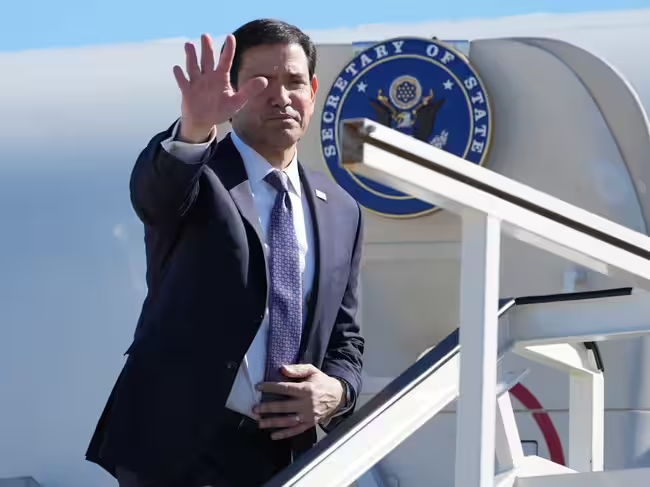
The Marco Rubio India Visit is scheduled from October 17 to October 22, 2026, with the United States Secretary of State set to travel to Mumbai and Jamnagar as part of a broader diplomatic tour that also includes Uzbekistan. The visit is expected to focus on strengthening India-US strategic relations, expanding energy cooperation and encouraging commercial investment between the two countries.
The US Department of State announced the itinerary on October 13. During his time in India, Rubio is expected to meet senior government officials to discuss bilateral relations, regional and global developments, and opportunities to deepen cooperation in the energy sector. He will also engage with business leaders to explore investment and economic partnerships. <Cite refs={[“turn584081search0″,”turn584081news4”]}/>
The Marco Rubio India Visit comes at a significant time for relations between New Delhi and Washington, with both countries continuing discussions on trade, energy security and broader strategic priorities. While the two sides have several areas of cooperation, differences over tariffs, Russian oil purchases and trade negotiations remain important issues in their bilateral relationship.
Marco Rubio India Visit Schedule and Key Destinations
The Marco Rubio India Visit will include stops in Mumbai and Jamnagar between October 17 and October 22. Before arriving in India, Rubio is scheduled to visit Samarkand in Uzbekistan for the C5+1 Ministerial meeting with representatives from five Central Asian countries.
Mumbai and Jamnagar have different roles in the expected itinerary. Mumbai is one of India’s major financial and commercial centres, making it a significant location for discussions involving investment and business cooperation. Jamnagar, in Gujarat, is particularly important because it hosts Reliance Industries’ large oil-refining complex.
The US administration has said that the India leg will include meetings with senior officials and business leaders. These engagements are expected to provide opportunities to discuss energy cooperation, commercial investment and the broader strategic partnership.
The precise schedule of individual meetings and the full list of participants may be confirmed through further official announcements. The main objectives, however, have been outlined as strengthening bilateral ties and identifying opportunities for closer economic cooperation. <Cite refs={[“turn584081news3″,”turn584081search6”]}/>
Why Is the Marco Rubio India Visit Important?
The Marco Rubio India Visit is important because it comes amid ongoing efforts by India and the United States to strengthen their strategic partnership while managing differences over trade and energy.
The two countries cooperate in areas such as defence, technology, maritime security, supply chains and regional stability. Their economic relationship also includes substantial trade and investment links, with companies from both countries operating across several industries.
Energy is expected to be a central subject during Rubio’s meetings in India. Both countries have interests in energy security, reliable supplies and investment in infrastructure. Discussions could provide an opportunity to assess areas where cooperation can expand, although specific agreements should not be assumed before they are officially announced.
The visit also gives officials an opportunity to exchange views on international developments affecting both countries. Regional security, economic uncertainty and changes in global energy markets can influence policy decisions in New Delhi and Washington.
The Marco Rubio India Visit therefore represents both a diplomatic engagement and an opportunity to address practical issues in the economic relationship. Its significance will depend partly on the discussions held and any concrete outcomes announced after the meetings.
Energy Cooperation Expected to Be a Major Focus
Energy cooperation is one of the central themes of the Marco Rubio India Visit. According to the US Department of State, Rubio will discuss prospects for expanding energy ties with Indian officials.
India is a major energy consumer and depends on a range of domestic and international sources to meet its requirements. Access to reliable and competitively priced supplies remains important for industrial activity, transport, electricity generation and household consumption.
The United States has become an important supplier of energy products to international markets, including crude oil, natural gas and refined fuels. Closer cooperation could create opportunities for commercial transactions, investment and technical collaboration, depending on market conditions and the priorities of both governments.
Energy discussions also take place against the background of India’s relationships with other suppliers. New Delhi has sought to balance energy security, price considerations and diplomatic relationships while responding to changing global supply conditions.
The Marco Rubio India Visit may help officials review these priorities and identify areas of mutual interest. However, the announcement of energy discussions does not automatically mean that a new supply agreement or investment deal will be concluded during the trip.
Jamnagar’s Importance in the Energy Sector
Jamnagar is a notable destination on the itinerary because it is home to Reliance Industries’ major refinery complex. The facility is widely recognised as the world’s largest single-site oil-refining complex, with reported crude-processing capacity of approximately 1.4 million barrels per day.
The refinery plays an important role in India’s petroleum industry. It processes crude oil into products used in transport, manufacturing and other sectors, while refined petroleum products also contribute to international trade.
The Marco Rubio India Visit is expected to include a stop in Jamnagar, placing the city’s energy infrastructure in focus during the wider discussions on bilateral cooperation. The location provides a practical connection between diplomacy, industrial investment and the international energy market.
Jamnagar’s importance also reflects the role of private-sector companies in India’s economic relationship with the United States. Commercial investment can connect energy infrastructure, supply chains and business interests across national borders.
Although the visit has drawn attention to Reliance’s refinery, the precise agenda for the Jamnagar stop and any resulting commercial announcements should be assessed on the basis of confirmed information.
Mumbai’s Role in India-US Business Relations
Mumbai is another key destination during the Marco Rubio India Visit. As India’s financial capital, the city hosts major banks, investment firms, multinational companies and businesses involved in international trade.
Meetings with business leaders can help officials understand commercial priorities, identify barriers to investment and discuss opportunities for economic cooperation. Such engagements may cover energy, manufacturing, technology, financial services and other sectors in which companies from both countries operate.
Business discussions are often an important complement to formal diplomatic meetings. Government-to-government engagement can establish policy priorities, while private-sector conversations can highlight practical opportunities and challenges faced by companies.
For India and the United States, increasing commercial cooperation could involve investment flows, technology partnerships, improved market access and stronger supply-chain connections. The extent of progress depends on business conditions, regulatory requirements and the agreements reached by the relevant parties.
The Marco Rubio India Visit is expected to provide an opportunity to discuss these possibilities, although the exact outcomes of meetings in Mumbai remain subject to official announcements.
Trade Negotiations Between India and the United States
The Marco Rubio India Visit comes as India and the United States continue to work through differences affecting their proposed bilateral trade agreement.
Trade negotiations are important because they can influence tariffs, market access, regulatory cooperation and the movement of goods between the two economies. Businesses on both sides seek greater certainty about the rules governing exports, imports and investment.
The negotiations have faced challenges amid changes in US trade policy and disagreements over the terms of a potential agreement. Tariff-related issues have added complexity to discussions, requiring both governments to assess the implications for domestic industries and commercial interests.
India has sought arrangements that take account of its economic priorities, including the interests of exporters, manufacturers, farmers and other domestic sectors. The United States has also pursued policies intended to support its own industrial and economic objectives.
External Affairs Minister S. Jaishankar said on October 13 that the trade negotiations were moving towards a possible resolution, describing the issue as approaching a “landing point.” His remarks indicated that discussions were continuing, but they did not amount to confirmation that a final agreement had been completed. <Cite refs={[“turn584081search8″,”turn584081search7”]}/>
The visit could provide an opportunity for officials to discuss the wider relationship alongside trade issues. However, any specific progress on negotiations will need to be confirmed by the governments involved.
Russian Oil Purchases and Tariff Concerns
Energy trade has become a point of disagreement between India and the United States, particularly in relation to India’s purchases of Russian oil.
India has continued to make energy decisions based on its domestic requirements, supply availability and commercial considerations. Russian oil has formed part of India’s energy mix, while the United States has pursued measures intended to increase economic pressure on Moscow over the war in Ukraine.
US legislation and policy proposals concerning countries purchasing Russian energy have raised concerns in New Delhi because of their potential implications for tariffs and broader trade relations.
These differences complicate the diplomatic context surrounding the Marco Rubio India Visit. Both countries have reasons to maintain cooperation, but they also have domestic policy priorities that may not always align.
For India, energy security involves balancing cost, availability and diversification of supplies. For the United States, energy-related trade measures form part of a wider approach to foreign policy and economic pressure.
Discussions during the visit may provide an opportunity to exchange views on these issues. Whether the two governments reach a common position will depend on their negotiations and any subsequent policy decisions.
Strategic Partnership and Regional Security
Beyond energy and trade, the Marco Rubio India Visit is intended to strengthen the broader strategic partnership between the two countries.
India and the United States engage on regional and global issues, including developments in the Indo-Pacific, maritime security, defence cooperation and economic resilience. Their officials regularly exchange views on matters that affect regional stability and international institutions.
The strategic relationship also includes cooperation in technology, critical supply chains and efforts to develop reliable partnerships across key industries. These areas have become increasingly important as governments and businesses respond to geopolitical uncertainty.
Rubio’s meetings with senior Indian officials are expected to include discussions of regional and global developments. Such exchanges allow both governments to explain their positions, identify common interests and consider where closer coordination may be possible.
However, a diplomatic visit does not necessarily resolve every difference between partners. India and the United States may continue to disagree on particular international questions while cooperating in other areas.
The Marco Rubio India Visit should therefore be viewed in the context of a broad relationship involving shared interests as well as ongoing negotiations.
Rubio’s Uzbekistan Visit Before Arriving in India
Before travelling to India, Rubio is scheduled to visit Samarkand, Uzbekistan, to participate in the C5+1 Ministerial meeting.
The C5+1 format brings together the United States and five Central Asian countries: Uzbekistan, Kazakhstan, Tajikistan, Turkmenistan and the Kyrgyz Republic. The diplomatic platform is intended to promote cooperation on regional security, economic development and other shared priorities.
During the Uzbekistan leg, Rubio is expected to hold bilateral engagements with senior officials from the participating countries. The US Department of State has also said that a commercial delegation comprising more than 200 business leaders will accompany him to promote economic cooperation between the United States and Central Asia. <Cite refs={[“turn584081search0″,”turn584081news4”]}/>
The wider tour combines engagement with Central Asian countries and India, reflecting the United States’ interest in maintaining relationships across different regions.
The Uzbekistan meetings and the Marco Rubio India Visit have separate immediate agendas, but both involve diplomatic engagement and efforts to identify opportunities for economic and strategic cooperation.
Reliance Industries and International Investment
Reliance Industries is relevant to the discussion because of its major energy operations in Jamnagar and its wider commercial activities.
The company’s refinery complex processes crude oil into a range of petroleum products for domestic and international markets. Its scale makes Jamnagar a significant location within the global refining industry.
The wider investment context has also attracted attention following US President Donald Trump’s announcement earlier in 2026 concerning plans for a new refinery in Brownsville, Texas, with investment from Reliance Industries. Reports described the proposed project as a major development in US energy infrastructure.
The Marco Rubio India Visit has therefore prompted interest in the relationship between energy infrastructure, private investment and bilateral economic ties. Nevertheless, an announced project, a planned visit and a completed investment agreement are different stages of commercial activity and should not be treated as interchangeable.
Any new commitments, project details or government-backed agreements associated with the visit would need to be confirmed through official statements from the companies or governments concerned.
What Could the Visit Mean for Indian Businesses?
The Marco Rubio India Visit could create opportunities to discuss investment and commercial cooperation, particularly for companies involved in energy, manufacturing, technology and international trade.
Stronger economic engagement can benefit businesses by encouraging investment, opening commercial channels and supporting cooperation between firms. However, the practical impact depends on the details of any policies or agreements that emerge from discussions.
Indian exporters may be particularly interested in developments affecting tariffs and access to the US market. Energy companies may focus on supply arrangements and infrastructure investment, while technology and manufacturing firms may look for opportunities to expand partnerships.
For smaller businesses, changes in trade policy can influence costs, competition and demand. Clear information about any agreement is therefore important before companies make decisions based on expectations surrounding a diplomatic visit.
The Marco Rubio India Visit may contribute to discussions about these issues, but businesses should distinguish between the stated goals of the trip and confirmed commercial outcomes.
Conclusion
The Marco Rubio India Visit is scheduled for October 17 to October 22, 2026, with planned stops in Mumbai and Jamnagar following meetings in Samarkand, Uzbekistan. The US Secretary of State is expected to meet Indian government officials and business leaders to discuss the strategic partnership, regional and global developments, energy cooperation and commercial investment.
Jamnagar’s refinery complex gives the energy sector particular importance during the visit, while Mumbai offers a major centre for business and financial engagement. The trip also comes amid continuing trade negotiations and differences over tariffs and India’s purchases of Russian oil.
The visit offers both governments an opportunity to discuss areas of cooperation and address outstanding issues. Its longer-term significance will depend on the substance of the meetings and any agreements or policy decisions confirmed afterward.