
Uttar Pradesh-cadre IAS officer Divya Mittal has resigned from the Indian Administrative Service after completing nearly 13 years in government service. The 2013-batch officer announced her decision on August 30 through a detailed social media post in which she reflected on her journey from IIT Delhi and IIM Bangalore to a career in public administration.
Mittal described her 13 years in the IAS as an unforgettable journey and said she had voluntarily decided to step away from the service. She did not cite any specific administrative dispute, government decision or controversy as the reason for her resignation.
Her announcement has attracted widespread attention because of her profile as an officer who held several important administrative positions in Uttar Pradesh and became particularly well known for her work during her tenure as District Magistrate of Mirzapur.
Mittal’s professional journey began well before she entered the civil services. She studied engineering at IIT Delhi before pursuing management education at IIM Bangalore.
After completing her studies, she moved to London for a corporate career. She worked there in the financial sector, including a stint with JPMorgan.
Despite achieving professional success abroad, Mittal has said that she felt something was missing while living outside India. In her resignation message, she recalled that being away from her home country troubled her and eventually influenced her decision to return.
She said her education, confidence and opportunities had given her a sense of responsibility toward the country. Returning to India and joining the civil services became a way for her to contribute to the country she had grown up in.
Mittal cleared the UPSC Civil Services Examination and joined the IAS in 2013. She had earlier appeared for the examination in 2012 and qualified for the IPS, but in her subsequent attempt she secured an All India Rank of 68 and entered the IAS.
Her administrative career took her through several important assignments in Uttar Pradesh.
She served as Joint Magistrate in Meerut during the early phase of her career and later worked as Chief Development Officer in Gonda. She also held an important position with the Uttar Pradesh State Industrial Development Corporation.
Mittal later served as Vice Chairperson of the Bareilly Development Authority. These assignments gave her experience in urban development, administration and implementation of government programmes.
She was subsequently appointed District Magistrate of Sant Kabir Nagar. Her career then took her to Mirzapur, where she served as District Magistrate from September 2022 to September 2023.
It was her tenure in Mirzapur that brought her significant public recognition.
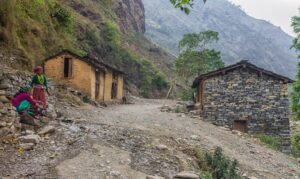
One of the most widely discussed achievements from her Mirzapur tenure involved providing piped drinking water to Lahuria Dah, a remote village in the district.
Residents of the village had reportedly depended on tankers for their water requirements for decades. The effort to bring a regular water supply to the village became one of the most memorable projects associated with Mittal’s tenure.
Around 125 households eventually received piped water supply, according to reports.
For Mittal, the moment remained emotionally significant even after she moved to other assignments. In her farewell message, she recalled an elderly woman who blessed her after water finally reached the village.
The experience became an example of what Mittal viewed as the human side of government administration. Rather than seeing government work only through files and official procedures, she said her experiences taught her that every government file ultimately represents a person whose life can be affected by an administrative decision.
This idea featured prominently in her resignation message.
Mittal also reflected on her experience working with families who needed government assistance, people with disabilities and farmers seeking access to essential resources.
She said that her years in public service changed her understanding of what it means to serve people.
According to her reflection, she initially believed she had entered public service to give something to society. Over time, she came to feel that she had received far more from the people she served.
She credited the trust, affection and support of ordinary citizens, government colleagues and other officials for helping her continue during difficult periods of her career.
Her resignation message was therefore less focused on the formal end of her government position and more on the lessons she said she had learned from public service.
Mittal specifically referred to her experiences in Deoria and Mirzapur.
She said her work in Deoria taught her that standing up for what is right should be viewed as a duty rather than a choice.
Her experience in Mirzapur, meanwhile, shaped her belief that something being described as impossible does not necessarily mean it cannot be achieved.
She also spoke about the spiritual and personal significance of her time in Mirzapur, referring to her connection with Maa Vindhyavasini.
For Mittal, the experience reinforced the idea that authority does not ultimately come from an official position. She wrote about the importance of people’s trust and the blessings she received during her service.
Her career did not remain limited to district administration.
After leaving Mirzapur, she spent a period in Lucknow before being appointed Chief Executive Officer of the Uttar Pradesh Rural Roads Development Agency.
She later became District Magistrate of Deoria, where she remained until May 2026.
During her tenure as Deoria’s District Magistrate, Mittal continued to attract attention for her administrative approach and communication with residents.
In May this year, she was transferred from Deoria and appointed Special Secretary in the Revenue Department of the Uttar Pradesh government. That became her final government assignment before she announced her resignation.
Her resignation has therefore come only a few months after she moved from district administration to the state government’s Revenue Department.
A senior official told news agency PTI that the government had not yet formally received her resignation at the time of the initial reports. The official said appropriate action would be taken after the resignation letter was formally received.
This means the administrative process associated with her resignation still has to be completed through the appropriate government procedure.
Mittal has not publicly indicated that her resignation is connected to her recent transfer or any disagreement with the Uttar Pradesh government.
Instead, her message focused largely on her personal journey and the changing meaning of public service in her life.
Her decision has generated interest partly because leaving the IAS after building a prominent administrative career is a significant professional choice.
The Indian Administrative Service is among the country’s most sought-after public-sector careers, and officers generally spend decades in government service.
Mittal’s decision comes after more than a decade of administrative experience across different parts of Uttar Pradesh.
Her educational background has also contributed to public interest in her career.
She studied at two of India’s leading institutions, IIT Delhi and IIM Bangalore, before working in London.
Her decision to leave a corporate career abroad and return to India for the civil services had previously become an important part of her professional story.
She has now completed the other major chapter of that journey by voluntarily stepping away from the IAS.
Her resignation message suggests that she does not view the end of her government position as the end of her broader ambitions.
Rather, she indicated that the dreams she once had for herself had largely been fulfilled and that she now wanted to focus on the aspirations she had developed for the people she served.
This distinction is central to understanding the tone of her farewell message.
Mittal did not announce a specific new career immediately. Some reports have indicated that she may explore areas such as academics and writing, but she has not publicly announced a definitive next professional role.
Her immediate future will therefore remain a matter of interest, particularly among people who followed her administrative career.
Her journey has also been notable because of the variety of roles she held before reaching senior positions.
From district administration and development authorities to state-level departments and government agencies, her career covered several areas of public administration.
Her work in rural areas, particularly the effort to improve access to drinking water, became one of the most visible examples of her approach to governance.
The Lahuria Dah water project was especially significant because it involved a remote and difficult geographical area.
The village’s terrain and long-standing dependence on tanker supplies made the effort challenging. The eventual arrival of piped water became a symbol of how administrative intervention can affect everyday life.
For Mittal, that experience appears to have remained more meaningful than many of the formal responsibilities associated with her official positions.
In her resignation message, she also acknowledged the contribution of officers, colleagues and staff who worked alongside her.
She said that people often gave her strength during periods when she was tired or struggling.
This emphasis on people and relationships has been a recurring theme in her reflections on public service.
Her departure from the IAS therefore comes with a message centred on gratitude rather than criticism.
There is currently no confirmed indication that she resigned because of disciplinary action, political pressure or an administrative dispute.
Any claims suggesting a specific hidden reason for her resignation should therefore be treated cautiously unless supported by an official statement from Mittal or the Uttar Pradesh government.
Her own explanation remains primarily personal and reflective.
The resignation also marks the end of a 13-year period during which she witnessed significant changes in India’s administrative environment, including greater use of technology, social media and direct communication between government officials and citizens.
Mittal became known for using social media to communicate aspects of government work and interact with the public.
Her online presence also allowed people to follow some of the projects undertaken during her postings.
This approach helped her build a public profile beyond traditional government administration.
Her resignation announcement has similarly been made directly through social media, allowing her to communicate her thoughts to the public without relying solely on an official government statement.
The response to her announcement has reflected the public interest in her career.
Many people have focused on her educational background, her decision to leave London for public service and her work in Mirzapur and Deoria.
Others have highlighted the emotional tone of her farewell message and the emphasis she placed on the people she served.
For the Uttar Pradesh administration, the immediate task will be to process her resignation according to service rules and determine the administrative arrangements following her departure.
For the public, however, the focus has largely been on the legacy of her 13 years in government service.
Her career illustrates a path that moved from elite educational institutions and international corporate employment to grassroots administration in several districts of Uttar Pradesh.
The transition from London finance professional to district magistrate is an unusual career journey, and Mittal has repeatedly connected that transition with her desire to contribute to India.
Her resignation does not erase that record.
Instead, it marks a new stage in a career that has already included several different professional identities.
Mittal’s own words suggest that she intends to carry the lessons of public service into whatever comes next.
The most important theme in her farewell message is that an administrative position is temporary, while the impact of working with people can last much longer.
Her reference to the elderly woman who blessed her after water reached Lahuria Dah captures that idea.
For Mittal, the memory represents something that cannot be measured through official titles or years of service.
The IAS position may now be coming to an end, but the experiences she gained during her postings are likely to remain part of her professional and personal identity.
After 13 years in the Indian Administrative Service, Divya Mittal has chosen to step away from government service.
Her resignation brings to a close a career that took her from IIT Delhi and IIM Bangalore to London, then back to India and into some of Uttar Pradesh’s most important administrative assignments.
From Sant Kabir Nagar and Mirzapur to Deoria and the state Revenue Department, she held positions that placed her at the centre of several areas of public administration.
Her work in providing drinking water to a remote Mirzapur village remains one of the most recognisable achievements associated with her tenure.
Now, as she prepares to leave the IAS, Mittal has indicated that her broader commitment to the country and the people she served does not end with her official position.
Her resignation marks the end of one chapter, but her own farewell message suggests that she sees the next phase as an opportunity to pursue the larger dreams she developed during her years in public service.