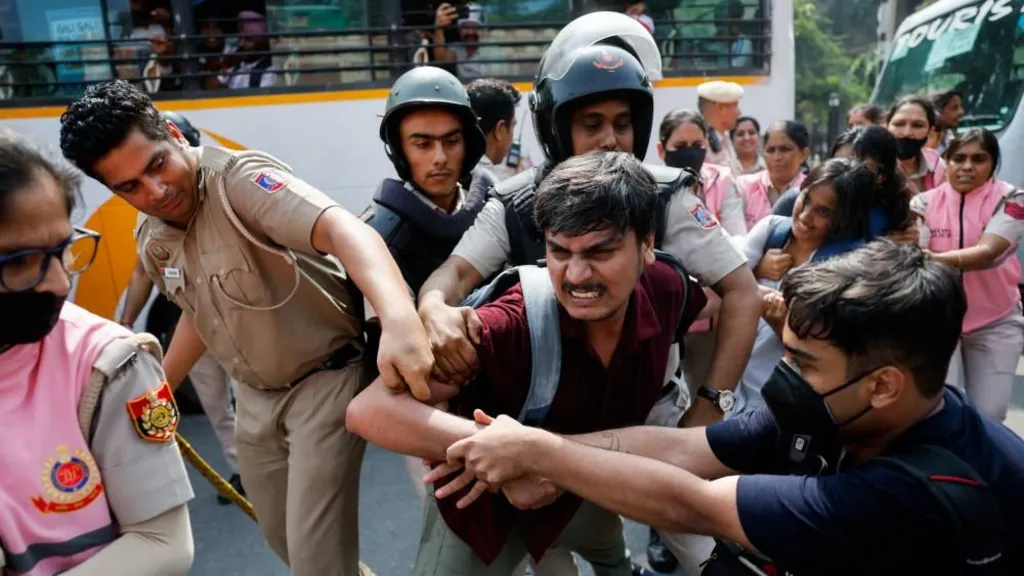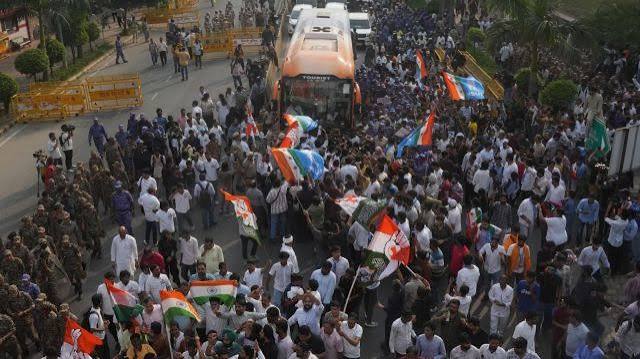
Chirag Paswan on CJP Delhi protest restrictions became a major political talking point on October 10, 2026, after the Union Minister said that transport restrictions and train cancellations could not stop India’s youth from reaching the national capital. His remarks came amid extensive security arrangements ahead of the Cockroach Janta Party’s (CJP) planned demonstration at Jantar Mantar, where protesters intended to demand the resignation of Chief Election Commissioner Gyanesh Kumar and call for electoral reforms.
Paswan, an ally of the BJP-led National Democratic Alliance (NDA), criticised opposition parties for what he described as spreading misleading narratives and using the Election Commission controversy for political purposes. He argued that repeatedly bringing Delhi to a standstill was not the right way to address concerns about electoral processes. Instead, he urged opposition leaders to seek a meeting with the Chief Election Commissioner and discuss their concerns directly.
The remarks came as Delhi faced road restrictions, Metro disruptions, train cancellations and a substantial deployment of police and paramilitary personnel. The security measures affected commuters and protesters attempting to reach the capital for the planned demonstration.
What Did Chirag Paswan Say About the CJP Delhi Protest?
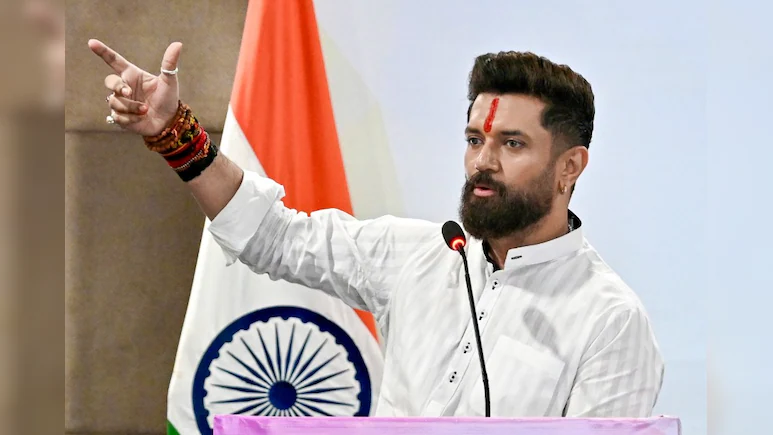
Union Minister Chirag Paswan said that India’s youth could not be stopped by restrictions on trains, roads or connectivity. Responding to questions about the transport disruptions ahead of the CJP demonstration, he expressed confidence that young people would continue to make their voices heard.
Paswan’s remarks focused on the effect of the restrictions on students and other young people who intended to participate in the protest. He questioned how many trains could be stopped, how much connectivity could be restricted and how many roads could be blocked before authorities recognised that young people remained determined to reach Delhi.
He also criticised opposition parties, accusing them of prioritising protests over finding practical solutions to their concerns.
According to Paswan, opposition leaders should request an appointment with Chief Election Commissioner Gyanesh Kumar rather than organise demonstrations that could inconvenience ordinary residents.
His comments reflected the NDA government’s broader criticism of the opposition’s campaign against the Election Commission. However, they also highlighted the tension between the government’s security arrangements and the determination of protest organisers to raise their demands publicly.
Why Is the CJP Organising a Protest in Delhi?
The Cockroach Janta Party planned its October 10 demonstration to demand the resignation of Chief Election Commissioner Gyanesh Kumar and seek changes relating to the Election Commission’s voter-list revision exercise.
The controversy centres on the Special Intensive Revision (SIR) of electoral rolls, a process intended to review voter registrations and identify duplicate entries, deceased voters, people who have relocated and other potentially invalid records.
The Election Commission has defended the exercise as a necessary step towards maintaining accurate electoral rolls. Opposition parties and activists, however, have questioned the scale of the deletions and raised concerns that eligible voters could be removed incorrectly.
The CJP and other critics have demanded greater transparency and accountability in the verification process. Some opposition parties have also alleged that the revisions could have affected recent election outcomes in states won by the BJP.
The BJP and the Election Commission have denied allegations of electoral manipulation. They maintain that voter verification is intended to improve the accuracy of electoral records rather than benefit any particular political party.
The protest therefore reflects a wider disagreement about electoral transparency, the protection of voting rights and the role of the Election Commission in maintaining public confidence in India’s electoral system.
Delhi Security Restrictions and Train Cancellations
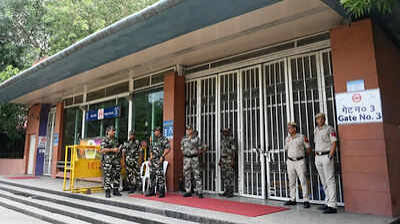
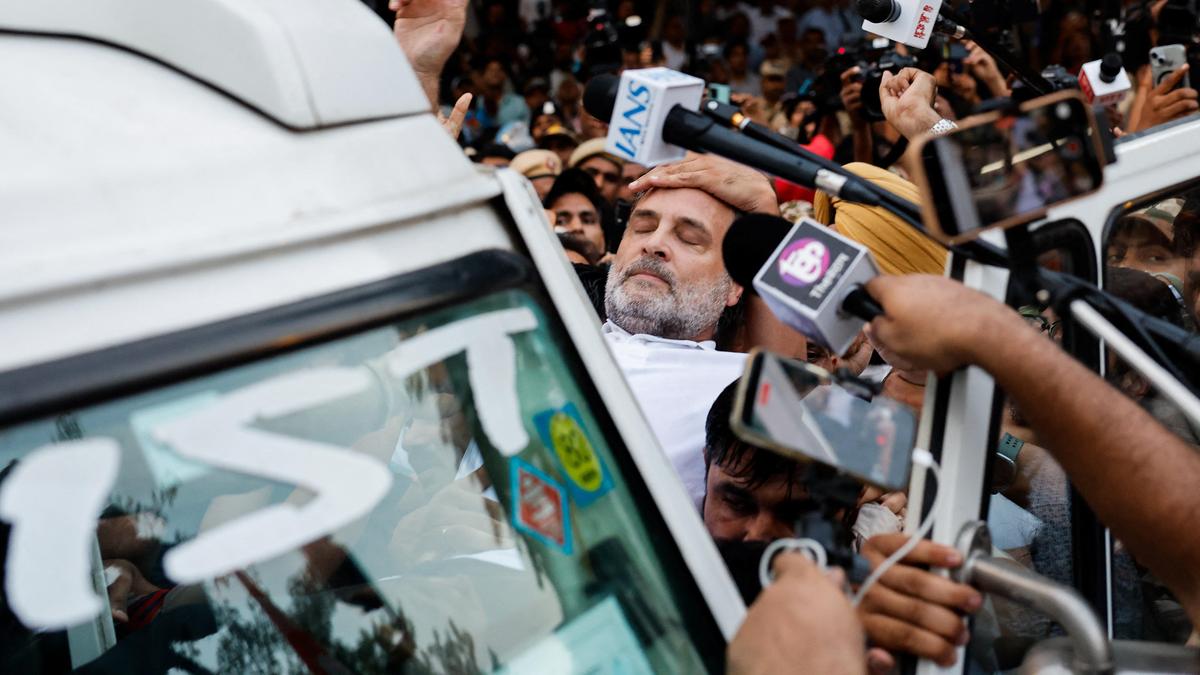
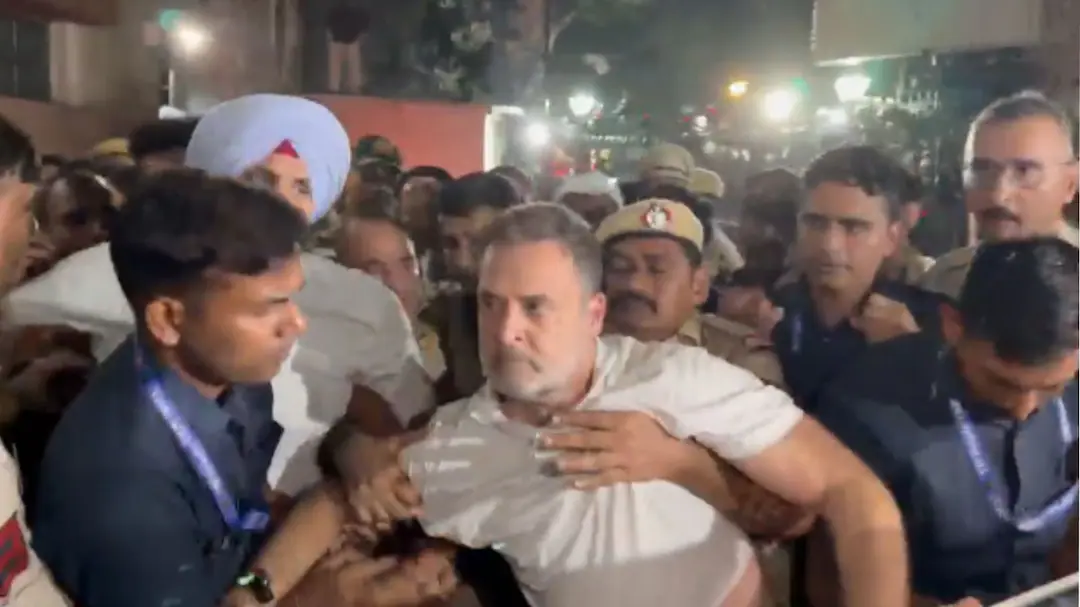
The planned CJP demonstration prompted extensive security measures across Delhi. Authorities restricted access to several Metro stations, cancelled trains and deployed large numbers of security personnel to manage crowd movement.
NDTV reported that entry and exit gates at 45 Metro stations were scheduled to remain closed during the affected period. More than 250 trains, including services scheduled to arrive at New Delhi and Hazrat Nizamuddin railway stations, were also reported cancelled between 4 am and 2 pm on October 10.
These restrictions created difficulties for passengers travelling to Delhi from other cities and for residents who depend on public transport for their daily journeys.
The authorities said the measures were part of preparations to maintain public order and manage the anticipated gathering. Delhi Police had denied permission for the planned CJP demonstration, citing procedural requirements and security concerns.
The restrictions also became a subject of judicial scrutiny. The Supreme Court questioned the extent of the curbs and asked the Centre to reconsider measures that could effectively halt essential public transport. The court emphasised that authorities should consider proportionate restrictions rather than completely stopping services when more limited measures could address security concerns.
The situation illustrated the challenge of managing a large protest in a densely populated city while minimising disruption to people who are not participating in the demonstration.
Chirag Paswan Criticises Opposition’s Approach
Paswan accused opposition parties of using protests to create difficulties for ordinary citizens rather than addressing their concerns through dialogue.
He argued that political parties that wanted answers from the Election Commission should seek an appointment with the Chief Election Commissioner and present their questions directly.
His comments came amid a broader political confrontation over the SIR exercise and the allegations raised by opposition leaders.
The opposition’s position is that the scale of voter-list deletions and questions about the verification process require greater public scrutiny. Protest organisers have argued that demonstrations are a way to draw attention to concerns they believe have not been adequately addressed.
The government and the Election Commission have maintained that voter verification is necessary for accurate electoral records. The BJP has also rejected allegations that the exercise was designed to influence election results.
The disagreement raises a broader question about how political disputes over public institutions should be resolved. Dialogue can provide an avenue for addressing specific concerns, while peaceful demonstrations remain a means through which citizens and political groups express their views.
Paswan’s statement made clear that he favoured direct engagement with the Election Commission over protests that could disrupt public services.
Chirag Paswan Says Election Commission Must Maintain Public Trust
Paswan has previously emphasised the importance of public confidence in the Election Commission. He has said that the commission, particularly the Chief Election Commissioner, should respond clearly to concerns about its functioning.
His position is significant because the current controversy involves not only the technical accuracy of voter lists but also public confidence in the electoral process.
For an election system to function effectively, voters need confidence that registration records are maintained accurately and that eligible citizens can exercise their voting rights. The verification process must therefore be accompanied by clear information about deletions, correction procedures and opportunities for eligible voters to establish their registration status.
The Election Commission has maintained that the revision exercise is intended to remove invalid entries and improve electoral-roll accuracy. Critics, however, have called for greater transparency about the reasons behind the deletions and the safeguards available to people whose names may have been removed incorrectly.
Paswan’s comments suggest that he believes the commission should communicate its position more effectively to address public doubts.
The broader challenge is to ensure that electoral procedures remain accurate while providing accessible remedies for people who believe they have been wrongly excluded from voter lists.
What Is the Special Intensive Revision of Electoral Rolls?
The Special Intensive Revision, commonly known as SIR, is the voter-list verification exercise at the centre of the controversy behind the CJP protest.
The process involves checking electoral records to identify duplicate registrations, people who have died, voters who have moved away and other entries that may no longer be valid. Such reviews are intended to improve the reliability of voter lists before elections.
However, the exercise has generated political debate because of the number of names removed from electoral rolls and concerns about the possible exclusion of eligible voters.
Opposition parties have alleged that the deletions could disproportionately affect certain groups and influence electoral outcomes. The Election Commission and BJP have rejected claims that the exercise was designed to manipulate elections.
The dispute has highlighted the importance of transparent verification procedures. People need to know why their names have been removed, how to check their registration status and what steps they can take if they believe an error has occurred.
The accuracy of electoral rolls is important for both preventing invalid registrations and protecting the participation rights of eligible voters. The current disagreement centres on whether the verification process has achieved that balance and whether sufficient safeguards are available.
How the CJP Protest Became a National Political Issue
The Cockroach Janta Party initially gained attention as a youth-led movement that used online satire and public demonstrations to highlight political and administrative concerns.
The organisation became more visible during earlier protests over examination-related issues, including concerns about paper leaks and recruitment examinations. Its activities attracted support from students and young people concerned about education and employment opportunities.
The movement subsequently broadened its campaign to include electoral reforms and demands for the resignation of Chief Election Commissioner Gyanesh Kumar.
The planned Delhi protest brought the organisation into a direct confrontation with authorities over permission for public gatherings and restrictions on movement.
The demonstration also attracted attention from opposition parties and other groups that share concerns about the voter-list revision exercise. This widened the political significance of the event beyond the CJP itself.
Paswan’s remarks added another dimension to the debate by questioning the opposition’s approach and emphasising dialogue with the Election Commission.
The episode demonstrates how a youth-led protest can become part of a wider national discussion when its demands overlap with disputes involving public institutions, electoral processes and the right to peaceful assembly.
Impact of Delhi Restrictions on Ordinary Commuters
The security measures ahead of the CJP protest affected people beyond the demonstrators themselves.
Metro station closures and train cancellations created uncertainty for passengers who needed to travel for work, education, medical appointments and other essential activities. Commuters travelling from neighbouring cities also faced the possibility of disrupted connections and longer journeys.
Road restrictions and security checkpoints added to travel difficulties in parts of the national capital.
These disruptions became particularly significant because Delhi’s transport network serves a large population across the National Capital Region. Many residents rely on public transport rather than private vehicles to reach workplaces and educational institutions.
The Supreme Court’s intervention highlighted the need to balance security arrangements with public convenience. While authorities can regulate movement to address specific risks, restrictions affecting essential services should be proportionate to the circumstances.
The episode also underscores the importance of timely public advisories. Clear information about station closures, train cancellations and alternative routes can help residents make informed travel decisions during major demonstrations.
What Happens Next?
The political debate surrounding the CJP demonstration is likely to continue as the movement and opposition groups seek answers about the voter-list revision process.
Paswan has urged opposition parties to engage directly with Chief Election Commissioner Gyanesh Kumar rather than rely on demonstrations that disrupt public services. The CJP and other critics, meanwhile, have continued to demand accountability and changes relating to the electoral process.
The immediate outcome depends on how authorities manage the protests, whether restrictions are revised and whether further discussions take place between political representatives and the Election Commission.
The wider dispute is likely to remain relevant as India approaches the 2027 state elections. Questions about voter registration, electoral-roll accuracy and the protection of eligible voters’ rights may continue to shape political discussions.
The Election Commission’s ability to explain its procedures clearly and address legitimate grievances will remain important to public confidence in the electoral system.
Conclusion
The remarks by Chirag Paswan on the CJP Delhi protest highlighted the growing political dispute over transport restrictions, electoral-roll revisions and the opposition’s campaign against Chief Election Commissioner Gyanesh Kumar.
Paswan said train cancellations and restrictions on connectivity could not stop India’s youth from expressing their views. He criticised opposition parties for what he described as spreading misleading narratives and urged them to seek a meeting with the Chief Election Commissioner instead of organising disruptive protests.
The comments came as Delhi experienced extensive security arrangements, Metro restrictions and train cancellations ahead of the planned demonstration. The Supreme Court also questioned the scale of transport curbs and called for proportionate measures.
At the centre of the dispute is the Special Intensive Revision of electoral rolls. The Election Commission says the exercise is intended to improve the accuracy of voter lists, while opposition groups have raised concerns about the potential removal of eligible voters. The BJP and the commission deny allegations of electoral manipulation.
The developments highlight the continuing challenge of balancing public order, peaceful protest, reliable electoral records and public confidence in democratic institutions.