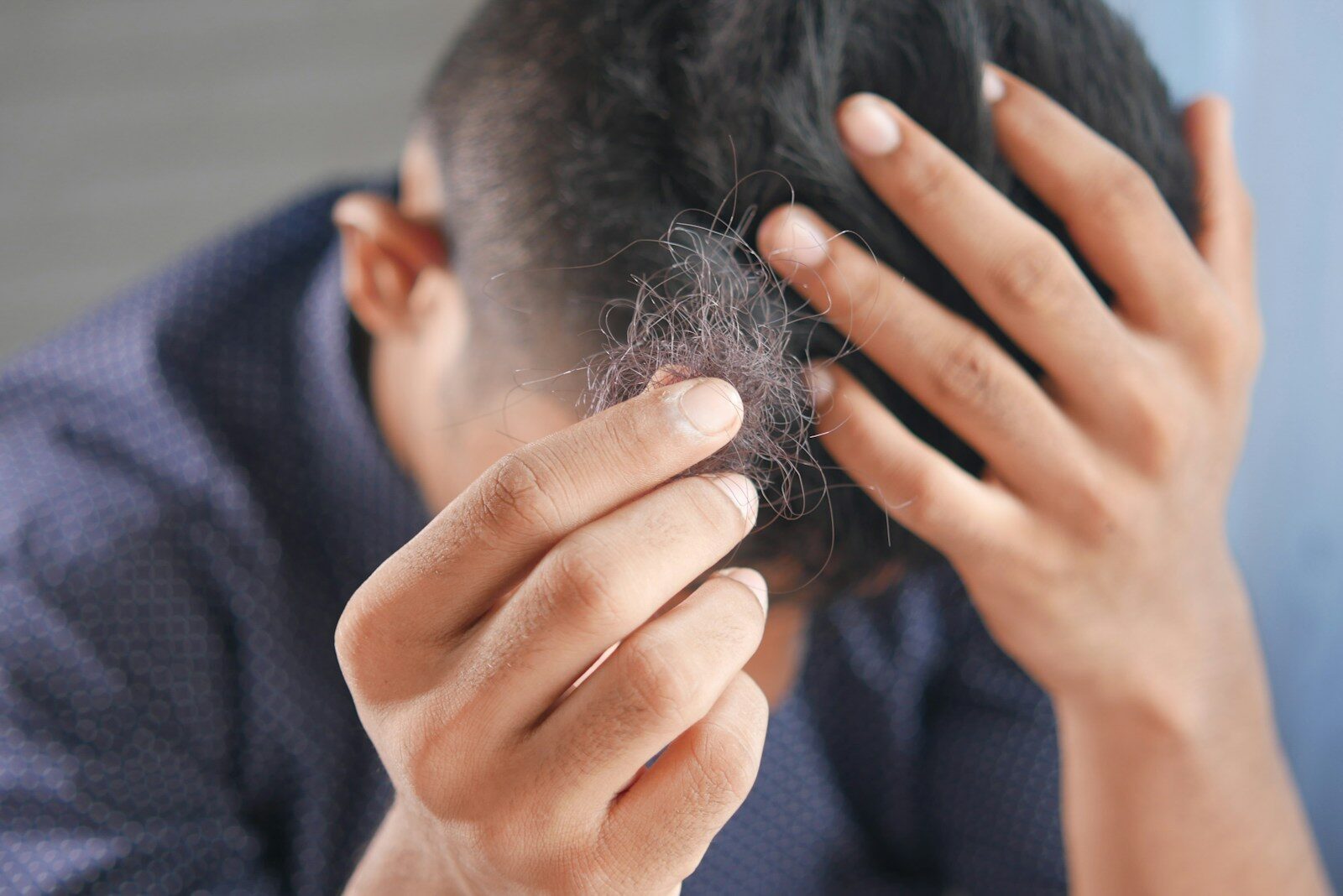
Hair fall during the monsoon season is a common concern for many people.
You may notice more strands in the shower, increased hair breakage, an itchy scalp, oily roots, frizz, dandruff, or a general feeling that your hair is harder to manage when the weather becomes humid.
This often leads to one big question: does monsoon weather actually cause hair loss?
The answer is more complicated than simply blaming rain.
Humidity, sweating, scalp oiliness, fungal growth, dandruff, frequent wetting, aggressive drying, and changes in hair-care habits can all make hair problems more noticeable during the rainy season.
At the same time, seasonal hair shedding can also happen independently of the weather.
That means the monsoon may make an existing hair or scalp problem feel worse without necessarily being the original cause.
The first thing to understand is that some daily shedding is normal.
Hair follicles naturally move through growth, resting, and shedding phases.
Seeing some hair in the shower or on your brush does not automatically mean that you are developing baldness.
The concern is when your usual pattern changes significantly.
If you suddenly notice much more shedding than normal, visible scalp, a widening part, a receding hairline, bald patches, or significant breakage, it is worth paying attention.
Humidity can make hair feel different.
When the air contains more moisture, the hair shaft can absorb water from the environment.
This may make hair swell, become frizzy, tangled, and more difficult to manage.
Repeated swelling and drying can increase mechanical stress on already damaged hair.
The result may be more breakage.
Breakage can easily be mistaken for hair loss.
If you notice many short strands, split ends, and uneven lengths, the problem may involve the hair shaft rather than the follicle.
This distinction matters.
Hair shedding happens from the root.
Hair breakage happens somewhere along the length.
Both can make your hair look thinner, but they require different approaches.
If your hair is breaking during monsoon, reducing friction and damage can help.
Be gentle while detangling.
Avoid aggressively brushing wet hair.
Wet hair can be more vulnerable to mechanical stress.
Start detangling from the ends and work upward gradually.
Do not pull forcefully through knots.
If your hair is curly, textured, or already chemically treated, gentle handling becomes even more important.
Another common monsoon problem is scalp oiliness.
Humidity and sweating can make the scalp feel greasy more quickly.
Some people respond by washing their hair much less because they are afraid shampoo will increase hair fall.
Others wash excessively because they want to remove all the oil.
Both extremes can create problems.
Your scalp needs appropriate cleansing.
If your scalp becomes oily, sweaty, itchy, or uncomfortable, regular washing may help.
The right frequency depends on your hair type, scalp condition, activity level, and the products you use.
There is no single washing schedule that works for everyone.
If your scalp becomes oily every day, you may need more frequent cleansing.
If your hair is dry, curly, or chemically treated, you may need to adjust your routine to prevent excessive dryness.
The important point is not to avoid washing because you see hair in the shower.
Loose hairs that were already ready to shed often become more visible during shampooing.
The shampoo does not necessarily cause them to fall.
Dandruff is another major concern during humid weather.
An oily, sweaty scalp can make flakes and itching more noticeable in some people.
Dandruff can make the scalp uncomfortable and may encourage frequent scratching.
Aggressive scratching can irritate the scalp and contribute to hair breakage.
If you have dandruff, treat the scalp instead of scratching it.
Use an appropriate dandruff shampoo if needed.
Follow the product instructions.
Do not assume that leaving shampoo on the scalp for longer than recommended will make it work better.
If a product causes severe burning, redness, or irritation, stop using it.
Persistent dandruff may require professional evaluation.
Not every flaky scalp is ordinary dandruff.
Conditions such as seborrheic dermatitis, psoriasis, eczema, and scalp infections can sometimes look similar.
This is particularly important when flakes are accompanied by redness, pain, crusting, swelling, sores, or significant hair loss.
In those situations, a dermatologist can help determine the cause.
Scalp fungal infections are another concern people often associate with monsoon weather.
Warm and humid conditions can create an environment where some microorganisms thrive.
But not every itchy scalp is a fungal infection.
Self-treating repeatedly with antifungal products without a diagnosis can irritate the scalp.
If you have severe scaling, broken hairs, painful patches, swelling, pus, or areas of hair loss, seek medical evaluation.
Some scalp infections require specific treatment.
Another important monsoon habit is drying the hair properly.
Walking around with dripping wet hair for long periods is not necessarily good for fragile hair.
Wet hair can become more prone to friction, tangling, and breakage.
This does not mean you need to use very high heat every time.
A gentle approach is better.
Use a soft towel or cloth and press out excess water rather than rubbing aggressively.
If you use a blow dryer, choose a moderate temperature.
Avoid placing very hot air close to the scalp or hair shaft for prolonged periods.
The goal is to dry the hair without adding unnecessary heat damage.
Another common mistake is tying wet hair tightly.
Wet hair is often more flexible and vulnerable to mechanical stress.
Pulling it into a tight ponytail or bun can create tension.
If you need to tie your hair, allow it to dry as much as practical first.
Choose a loose style.
Avoid tight rubber bands that pull strongly on the hair.
Repeated tension can contribute to traction-related hair loss over time.
A hairstyle should not make your scalp hurt.
If you regularly feel tenderness after removing a ponytail or bun, the style may be too tight.
Hair oiling becomes another confusing topic during the monsoon.
Some people believe they should apply heavy oil daily because rainwater and humidity damage hair.
Others believe oil should be avoided completely.
The truth depends on your scalp and hair type.
Hair oil can help reduce dryness and improve manageability for some people.
It may reduce friction on the hair shaft.
But heavy scalp oiling is not a treatment for every type of hair fall.
If your scalp is already very oily, itchy, or affected by dandruff, applying large amounts of oil may make it feel more uncomfortable.
Use oil based on how your hair and scalp respond.
If you enjoy oiling the lengths of dry hair, that can be part of your routine.
But do not treat oil as a cure for genetic hair loss, nutritional deficiency, hormonal problems, or scalp infections.
The same caution applies to coconut oil.
Coconut oil can be useful as a conditioning product for some hair types.
But it cannot correct the underlying cause of every hair-loss condition.
Use it for hair conditioning rather than expecting it to regrow a receding hairline.
Rosemary oil is also popular.
You may see many claims that rosemary oil completely stops monsoon hair fall.
Be cautious.
Natural oils may fit into a personal hair-care routine, but progressive or severe hair loss needs proper evaluation.
If your hair is becoming visibly thinner, do not delay diagnosis because you are waiting for an oil to work.
Onion juice is another popular home remedy.
It is often promoted as a quick solution for hair fall.
But it can irritate the scalp in some people.
If you experience burning, redness, itching, or a rash, stop using it.
A home remedy should never make your scalp painful.
Natural does not automatically mean safe.
Another monsoon concern is rainwater.
People often believe that getting caught in the rain automatically causes hair fall.
A single rain shower is unlikely to make healthy follicles suddenly stop producing hair.
The bigger issue may be leaving the scalp dirty, sweaty, polluted, or wet for long periods.
Rainwater can also carry environmental contaminants depending on where you live.
If your hair becomes soaked in rain, rinsing or washing it afterward can be sensible, particularly if your scalp feels dirty or irritated.
You do not need to panic if rain touches your hair.
Just maintain good hygiene afterward.
Pollution can also become relevant during the rainy season.
Dust, sweat, oil, styling products, and environmental particles can accumulate on the scalp.
Regular appropriate cleansing can help.
Avoid aggressively scrubbing the scalp.
Gentle cleansing is enough.
Another question is whether monsoon hair fall can be prevented completely.
Probably not in every case.
Some seasonal changes in shedding can happen naturally.
Hair fall may also be caused by unrelated factors such as genetics, stress, illness, diet, or hormonal changes.
But you can reduce avoidable hair damage during humid weather.
Keep your scalp appropriately clean.
Dry your hair gently.
Avoid tying wet hair tightly.
Reduce excessive heat styling.
Treat dandruff when necessary.
Use conditioner if your hair becomes rough or tangled.
Avoid aggressive brushing.
Eat a balanced diet.
Manage stress.
These habits can make your hair easier to manage and reduce unnecessary breakage.
Nutrition remains important throughout the year.
You cannot compensate for a poor diet with a seasonal hair-care routine.
Hair follicles require adequate calories, protein, vitamins, and minerals.
If your diet becomes restrictive, hair shedding can increase regardless of the weather.
Protein is particularly important.
Hair is largely made of keratin, a structural protein.
Include adequate protein from foods that suit your diet.
Eggs, fish, poultry, dairy products, lentils, beans, soy, nuts, and seeds can all contribute.
You do not need a special monsoon food for hair growth.
You need balanced nutrition throughout the year.
Iron can also be important.
Iron deficiency can contribute to hair shedding in some people.
But do not automatically start iron supplements because your hair fall increases during the rainy season.
Iron should be taken when there is an appropriate reason.
Too much can be harmful.
If you suspect a deficiency because of hair loss and other symptoms, discuss testing with a healthcare professional.
Vitamin D is another nutrient people frequently associate with hair health.
A deficiency can be relevant to overall health and may be associated with some hair conditions.
However, taking vitamin D without knowing your status is not a universal solution.
The same applies to zinc, vitamin B12, and other nutrients.
Supplements should be used thoughtfully.
Biotin is especially popular.
Hair-fall advertisements often make it sound as though biotin deficiency is responsible for most cases of thinning.
That is not true.
Biotin is important, but deficiency is uncommon in people who eat a varied diet.
Taking high doses does not guarantee faster hair growth.
Some supplements can also interfere with laboratory tests.
Tell your healthcare professional about any supplements you use.
Another major contributor to hair fall is stress.
The monsoon season itself may not create hair loss, but your lifestyle during this period can change.
You may exercise less.
You may sleep poorly.
You may have work stress.
You may become ill.
Significant physical or emotional stress can trigger temporary excessive shedding.
The effect may appear weeks or months later.
If your hair shedding increases suddenly, think about what happened before the monsoon started.
Were you sick?
Did you have a high fever?
Did you lose weight?
Did you experience major stress?
Did your diet change?
The weather may be only one part of the picture.
Illness is particularly important.
Seasonal infections and fever can sometimes be followed by increased hair shedding.
You may recover from the illness and then notice more hair fall later.
This delayed pattern can make people blame the weather.
In reality, the physical stress of the illness may be more relevant.
If the shedding is heavy and persistent, mention recent illnesses to your healthcare professional.
Weight loss is another potential trigger.
If you started dieting before the monsoon and lost weight rapidly, increased shedding may appear during the rainy season.
That does not necessarily mean humidity caused the hair fall.
Rapid weight loss and inadequate nutrition can disrupt the hair cycle.
This is why timelines matter.
Always look at what happened in the months before the hair loss began.
Pregnancy and postpartum changes can also overlap with seasonal hair fall.
A woman who gives birth before or during monsoon may develop postpartum shedding a few months later.
It would be easy to blame the weather.
But hormonal changes after childbirth may be the more important explanation.
Similarly, menopause and other hormonal changes can affect hair density.
The weather does not replace these biological factors.
Thyroid disorders can also cause hair changes.
If hair fall occurs alongside unusual fatigue, unexplained weight changes, changes in temperature tolerance, or other symptoms, speak with a healthcare professional.
Do not assume that seasonal hair fall explains everything.
Another important clue is the pattern of the loss.
If you are simply seeing more hairs in the shower during monsoon but your density remains stable, temporary shedding may be involved.
If your temples are gradually receding, hereditary hair loss may be more relevant.
If your part is becoming wider over several years, female pattern hair loss may be involved.
If you have a smooth bald patch, the cause may be different again.
Alopecia areata is one possible cause of sudden patchy hair loss.
It should not be dismissed as seasonal hair fall.
Hair loss involving the eyebrows or eyelashes also deserves professional attention.
This is not a typical monsoon hair problem.
Another warning sign is scalp pain.
Your scalp should not be persistently painful.
If you experience burning, swelling, sores, crusting, or pus, seek evaluation.
These symptoms may suggest infection or inflammation.
Do not keep applying oil or homemade treatments while the problem worsens.
Another mistake during humid weather is overusing dry shampoo or styling products.
These products can be useful occasionally.
But repeated buildup on an already oily or sweaty scalp may make it uncomfortable.
Cleanse appropriately.
Do not rely on dry shampoo as a permanent substitute for washing if your scalp needs cleansing.
Hair sprays, gels, waxes, and serums can also accumulate.
If you use several products, wash them out regularly.
Another common question is whether conditioner increases hair fall.
Conditioner does not normally cause follicle-related hair loss.
It can actually make the hair easier to detangle and reduce friction.
Apply it mainly to the lengths if your scalp becomes oily easily.
Choose a formula that suits your hair type.
If a product causes scalp irritation, discontinue it.
Another concern is whether frequent shampooing makes hair thinner.
The answer depends on how you wash and what products you use.
Appropriate washing does not normally cause genetic hair loss.
However, harsh shampoo combined with aggressive scrubbing may dry or damage certain hair types.
Use a gentle approach.
Choose products suitable for your scalp.
The goal is clean hair without unnecessary irritation.
Another common monsoon issue is frizz.
Frizz does not mean your hair is falling out.
Humidity changes the way the hair shaft interacts with moisture.
Conditioning products and anti-frizz techniques can improve appearance.
Try not to confuse cosmetic changes with actual loss of density.
Another concern is hair becoming flat.
Humid weather can make fine or oily hair look flatter, which can expose more scalp.
This may create the illusion of sudden thinning.
Wash away excess oil.
Use lightweight products.
Compare your hair under consistent conditions before assuming you are losing significant density.
Wet hair naturally reveals more scalp.
If you judge your hair immediately after washing, it may look much thinner than when completely dry.
This is another reason daily mirror checks can be misleading.
Photographs taken under similar lighting every few months are more useful.
If you genuinely notice progressive thinning, seek advice.
Another monsoon mistake is sleeping with soaking wet hair.
This does not directly cause baldness.
But wet hair can experience more friction against the pillow, increasing breakage in fragile hair.
If possible, allow your hair to dry before sleeping.
If that is not practical, remove as much excess water as possible and avoid tightly tying wet hair.
Another issue is using rough towels.
Aggressive towel rubbing can tangle the hair and increase breakage.
Press or squeeze gently instead.
A soft towel or cotton cloth can reduce unnecessary friction.
Another common question is whether combing wet hair causes hair fall.
Wet hair can be more vulnerable to breakage, especially if it is already damaged.
If you need to detangle wet hair, use a suitable wide-toothed comb and work gently.
Do not pull forcefully.
Curly and textured hair may sometimes be easier to detangle when damp with conditioner, depending on the hair type.
The main principle is gentle handling.
Another important habit is cleaning your combs and brushes.
Oil, dead skin, styling products, and debris can build up on hair tools.
Clean them regularly.
Sharing combs, towels, or hair accessories should also be avoided when someone has a scalp infection.
Another concern is helmets.
People who commute during monsoon may wear helmets for long periods and notice sweat accumulating on the scalp.
Wearing a helmet is important for safety and does not need to be avoided because of hair concerns.
Keep the helmet lining reasonably clean and allow your scalp to dry after heavy sweating.
Safety always comes before hairstyle concerns.
Do not stop wearing protective equipment because of fear of hair loss.
Another lifestyle factor is sleep.
The rainy season can change routines, but hair health still benefits from overall well-being.
Try to maintain a consistent sleep pattern.
Poor sleep alone is not usually the cause of hereditary baldness, but chronic sleep disruption can occur alongside stress and poor nutrition.
Focus on overall health rather than one isolated factor.
Physical activity also helps general health.
You do not need to avoid exercise because sweat might cause hair fall.
Sweat itself does not make healthy follicles fall out.
If your scalp becomes very sweaty, simply wash or rinse appropriately afterward.
Keeping the scalp comfortable is enough.
Another issue is swimming during monsoon.
Chlorinated water can dry the hair shaft.
If you swim regularly, rinse your hair afterward.
Conditioning can help reduce dryness and tangling.
This is mainly about protecting the hair shaft rather than preventing genetic hair loss.
Another common question is whether hair should be cut short during monsoon to stop shedding.
Shorter hair can be easier to manage.
It may tangle less.
It may dry faster.
It can also make damaged ends look healthier.
But cutting your hair does not change what happens inside the follicles.
A haircut cannot stop telogen shedding or genetic hair loss.
Choose your haircut based on comfort and appearance rather than expecting it to change the hair-growth cycle.
Shaving the head does not make hair grow thicker either.
Newly shaved hair can look thicker because the tip is blunt.
The follicle remains unchanged.
Another myth is that brushing frequently improves circulation and prevents monsoon hair fall.
Excessive brushing can create friction and breakage.
Brush only as much as necessary.
Gentle scalp massage may feel relaxing, but it should not be treated as a guaranteed hair-growth treatment.
Another common concern is whether minoxidil should be started when monsoon hair fall increases.
Not automatically.
Minoxidil is used for certain types of hair loss, particularly pattern hair loss.
Temporary seasonal shedding does not necessarily require it.
If your hair is progressively thinning or you suspect pattern hair loss, discuss treatment with a healthcare professional.
Do not start medication simply because you saw more hair during one humid month.
The diagnosis matters.
The same applies to prescription treatments.
These can be useful for selected people with certain hair-loss conditions.
But they are not seasonal hair-care products.
Use them under appropriate medical guidance.
Another important point is that seasonal hair fall should gradually settle.
If you continue losing large amounts of hair for several months, do not keep blaming the monsoon.
There may be another cause.
Persistent shedding can be related to ongoing stress, nutritional problems, illness, thyroid disease, medications, or chronic telogen effluvium.
Progressive thinning can suggest pattern hair loss.
Patchy loss may suggest another condition.
The longer the problem continues, the more useful a professional evaluation becomes.
Another useful strategy is keeping a simple hair-loss timeline.
Write down when you noticed increased shedding.
Note major illnesses.
Record recent weight changes.
Think about dietary changes.
Note pregnancy or childbirth.
List new medications.
Consider significant stress.
This information can help you understand whether the monsoon is actually the main factor.
Another useful habit is taking photographs.
Take pictures of your front hairline, part, and crown.
Use similar lighting.
Repeat after a few months.
Do not check every day.
Daily appearance can change because of oiliness, humidity, hairstyle, lighting, and whether the hair is wet.
Long-term comparisons are more meaningful.
Another major mistake is buying too many monsoon hair-care products.
Every rainy season, advertisements promote special shampoos, serums, sprays, oils, masks, and supplements.
You do not necessarily need them all.
A simple routine can work well.
Use an appropriate shampoo.
Use conditioner if needed.
Treat dandruff appropriately.
Keep your scalp clean.
Protect hair from damage.
Eat well.
Seek professional help when necessary.
More products do not automatically mean healthier hair.
Using several products at once can actually make it difficult to identify what is irritating your scalp.
Introduce new products gradually.
If a product causes burning or severe itching, stop using it.
Another important point is that smell is not a sign of effectiveness.
Some strong homemade mixtures can irritate the scalp.
Do not assume that something must work because it tingles, burns, or smells intense.
Healthy scalp care should not be painful.
If you are experiencing monsoon hair fall today, start with the basics.
Keep your scalp clean without over-scrubbing.
Wash after excessive sweating or rain exposure when needed.
Dry your hair gently.
Avoid tying wet hair tightly.
Reduce excessive heat.
Condition dry or frizzy lengths.
Treat persistent dandruff.
Eat enough protein.
Avoid crash diets.
Manage stress.
Sleep adequately.
Track the pattern rather than panicking over one shower.
Then look for warning signs.
Is the hairline receding?
Is the part widening?
Are there bald patches?
Is your scalp painful?
Are there severe flakes, redness, or sores?
Is hair loss continuing long after the weather has changed?
If the answer is yes, consider seeing a dermatologist.
Seasonal changes may explain some increase in shedding, but they should not become an excuse to ignore persistent hair loss.
The most important thing to remember is that monsoon hair fall is not one single condition.
Humidity can increase frizz and breakage.
Sweating can make the scalp oily.
Dandruff can become more troublesome.
Illness can trigger temporary shedding.
Poor nutrition can contribute.
Stress can play a role.
Genetic hair loss can continue regardless of the season.
Several of these can happen together.
That is why the solution is not one miracle shampoo.
You need to look at the whole picture.
Your scalp should feel comfortable.
Your hair-care routine should be gentle.
Your diet should be balanced.
Your hair should not constantly be under tension or high heat.
And progressive or unusual loss deserves professional attention.
You do not need to fear the rainy season.
You simply need to adjust your routine to the conditions.
Keep your scalp clean.
Keep wet hair handling gentle.
Avoid unnecessary damage.
Maintain good nutrition.
And remember that seeing a few extra hairs during a humid period does not automatically mean you are becoming bald.
If the hair loss is temporary, it may settle.
If it persists, investigate the cause.
The goal is not to stop every hair from shedding.
The goal is to maintain healthy follicles, protect the hair shaft, and identify genuine hair-loss conditions early.
With sensible care, monsoon weather does not have to become a season of hair panic.