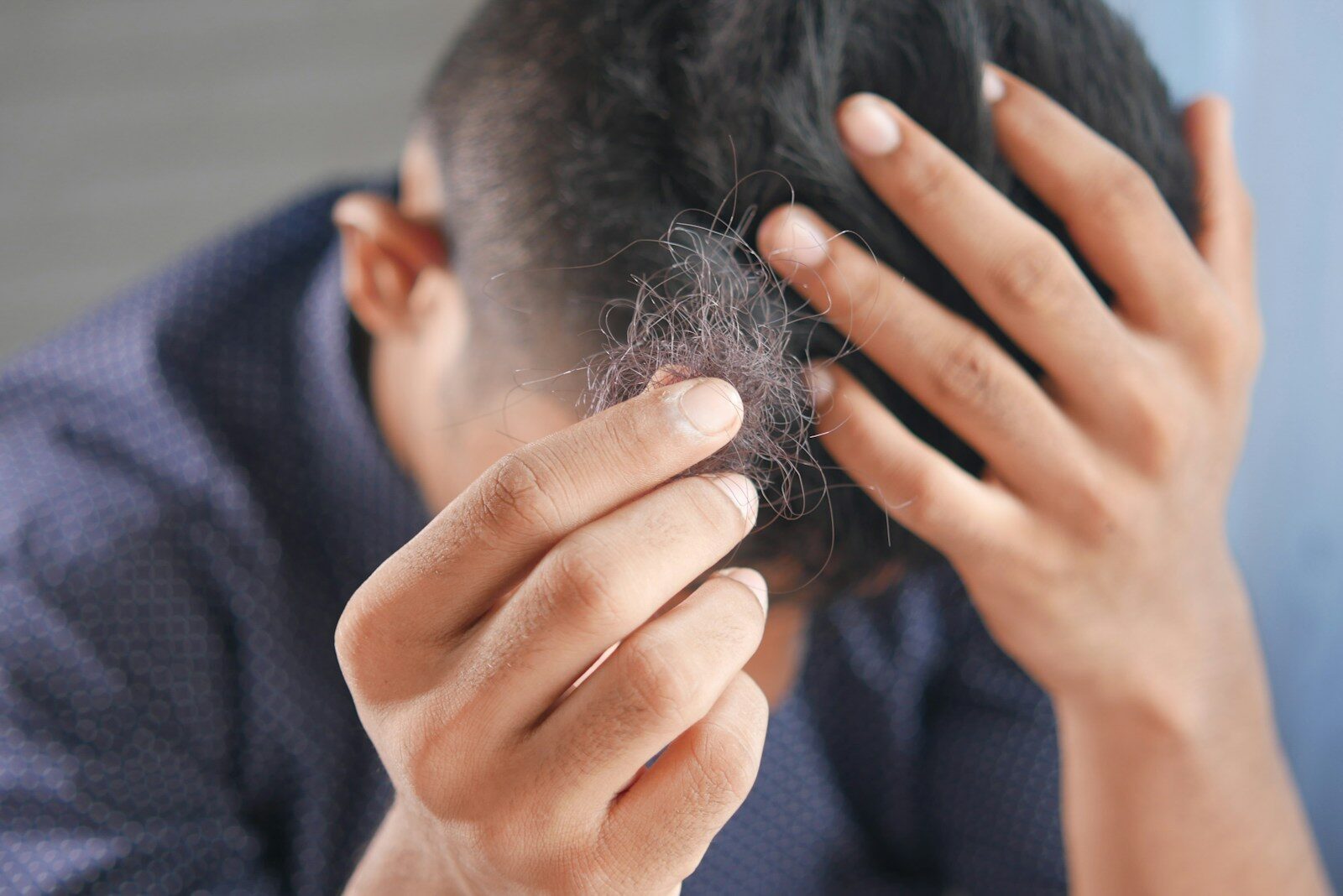
Hair fall after COVID-19 or a viral fever can be frightening. You may feel that you have recovered from the illness, only to notice weeks or months later that much more hair is coming out during a shower, brushing, or even when you run your fingers through your scalp.
This delayed hair shedding can make people wonder whether the infection permanently damaged their hair follicles.
In many cases, that is not what is happening.
A significant illness, high fever, physical stress, reduced food intake, rapid weight loss, or emotional stress can temporarily disrupt the normal hair-growth cycle. One common result is increased shedding known as telogen effluvium.
The condition can occur after many types of illnesses, not only COVID-19.
The encouraging part is that temporary shedding often improves as the body recovers. However, recovery takes time, and persistent or unusual hair loss should not automatically be blamed on a previous infection.
Can COVID-19 Cause Hair Fall?
Increased hair shedding has been reported after COVID-19 and other significant infections.
The most likely explanation in many cases is the body’s response to illness rather than permanent destruction of the hair follicles.
A high fever, inflammation, physical stress, changes in eating patterns, hospitalization, weight loss, and emotional stress can all potentially affect the hair-growth cycle.
This type of shedding may become noticeable after the acute illness has already passed.
That delay is one of the main reasons people are surprised by post-viral hair fall.
Why Does Hair Fall After You Recover?
Hair follicles do not all grow at exactly the same time.
Each follicle moves through its own growth cycle.
When the body experiences a significant stressor, some follicles can shift prematurely into a resting phase.
The affected hairs may remain in that phase for a while before eventually shedding.
As a result, the hair fall you notice today may actually be related to something that happened weeks or months earlier.
This means you should think about your recent health history rather than assuming that something you did yesterday caused today’s shedding.
What Is Telogen Effluvium?
Telogen effluvium is a form of temporary diffuse hair shedding.
It can happen when a larger-than-usual number of follicles enter the resting phase around the same period.
Common triggers include significant illness, high fever, major stress, surgery, rapid weight loss, restrictive dieting, hormonal changes, and certain nutritional problems.
COVID-19 can act as one of several possible triggers when the illness places substantial stress on the body.
The important point is that telogen effluvium is different from hereditary pattern hair loss.
What Does Post-Viral Hair Loss Look Like?
Post-viral shedding is usually diffuse.
Instead of one clearly defined bald patch, you may notice more hair coming out from different areas of the scalp.
You may find hair on your pillow.
You may see more strands in the shower drain.
Your brush may collect more hair than usual.
Your ponytail may feel thinner.
Men may notice that their overall hair density appears reduced, while women may notice increased shedding or a wider-looking part.
The exact appearance varies from person to person.
Does COVID Hair Loss Cause Bald Patches?
Typical telogen effluvium does not usually produce sharply defined round bald patches.
If you develop one or more clearly defined areas where hair has suddenly disappeared, another condition should be considered.
Alopecia areata, scalp infections, and other disorders can cause patchy hair loss.
Do not assume that every unusual change after COVID is simply post-viral shedding.
If the pattern is unusual, professional evaluation is appropriate.
When Does Hair Fall Start After COVID?
The timing can vary.
Some people notice increased shedding relatively soon after recovering, while others notice it later.
The delay is related to the hair-growth cycle and the severity and type of the trigger.
This is why it can be difficult to connect a past infection with current hair shedding.
If you experienced a significant illness a few months ago and now have diffuse shedding, telogen effluvium is one possibility.
But it is not the only explanation.
How Long Does Hair Fall Last After COVID?
There is no exact timeline that applies to everyone.
Temporary shedding can continue for a period even after the original illness has resolved.
The body needs time to return to a normal hair-growth cycle.
You may notice that the amount of hair falling gradually decreases before you notice significant new growth.
Visible density can take longer to improve because hair grows slowly.
Do not judge your recovery based on a few days or a couple of weeks.
Will Hair Grow Back After COVID?
If the shedding is truly temporary telogen effluvium, hair often regrows as the hair cycle normalizes.
The speed of recovery varies.
Some people see improvement relatively quickly, while others require more time.
Your overall nutrition, health, ongoing stress, and whether another form of hair loss is present can influence the situation.
If the hair does not appear to be recovering or thinning continues progressively, it is worth reassessing the diagnosis.
COVID vs. Other Viral Fevers
COVID is not unique in this respect.
Other infections and high fevers can also trigger temporary hair shedding.
Influenza, severe viral illnesses, and other significant infections can place enough physical stress on the body to disrupt the hair cycle.
Therefore, the same general principle applies after a severe non-COVID viral fever.
The illness itself may be one trigger, while dehydration, poor appetite, weight loss, or stress during recovery may contribute as well.
Can High Fever Cause Hair Fall?
Yes, a significant fever can act as a physical stressor.
The body prioritizes essential functions during illness, and the physiological changes associated with severe infection and fever can affect hair follicles.
However, not everyone who develops a fever will experience noticeable hair loss.
Mild illnesses usually do not automatically cause significant shedding.
The severity of the illness and the individual’s response both matter.
Can Medicines Taken During COVID Cause Hair Fall?
Some medications can contribute to hair loss or shedding in certain circumstances.
However, it is difficult to determine the cause simply by looking at the timing.
If you took several medications during an illness and later experienced hair shedding, do not stop any prescribed medicine without discussing it with the prescribing healthcare professional.
Your illness itself may have been the trigger.
Medication effects, nutritional changes, stress, and other factors may also be involved.
A proper review of your medical history can help clarify the situation.
Can Stress After COVID Cause Hair Fall?
Yes, significant psychological stress can be another factor.
A serious illness can be emotionally difficult even after the physical symptoms improve.
Worry about health, work, finances, family, or recovery can add prolonged stress.
Major stress can contribute to telogen effluvium in some people.
This can create a confusing situation where illness and stress both contribute to the same episode of shedding.
The solution is not to blame yourself for being stressed.
Instead, focus on recovery and sustainable stress-management habits.
Can Weight Loss After COVID Cause Hair Fall?
Rapid or significant weight loss can trigger temporary hair shedding.
Some people lose weight during illness because they have a poor appetite, nausea, altered taste or smell, or simply eat less than usual.
Others may begin restrictive diets after recovery.
If weight loss is accompanied by inadequate protein or overall calorie intake, the hair-growth cycle may be affected.
Once again, the issue is not that weight loss automatically causes baldness.
The concern is the physiological and nutritional stress associated with rapid or substantial weight loss.
Can Poor Nutrition After COVID Affect Hair?
Yes.
During and after illness, some people temporarily eat less.
If this continues for a significant period, the body may not receive enough protein, iron, calories, or other nutrients.
Hair growth can be affected by inadequate nutrition.
During recovery, focus on balanced meals rather than expensive hair supplements.
Include adequate protein and a variety of nutrient-rich foods.
If you have significant dietary restrictions or persistent appetite problems, professional nutritional advice may be helpful.
What Should You Eat After COVID to Support Hair Growth?
There is no special “COVID hair diet.”
Instead, focus on adequate overall nutrition.
Protein-rich foods such as eggs, fish, chicken, dairy products, lentils, beans, tofu, nuts, and seeds can help provide the building blocks your body needs.
Include fruits and vegetables regularly.
Whole grains and healthy fats can also form part of a balanced diet.
The goal is not to eat one miracle food.
The goal is to avoid prolonged nutritional gaps while your body recovers.
Should You Take Biotin After COVID?
Not automatically.
Biotin is widely marketed for hair growth, but taking high doses is not a guaranteed treatment for post-viral shedding.
If you have a genuine nutritional deficiency, correcting it may be appropriate.
But taking multiple supplements without knowing whether you need them can create unnecessary risks.
High-dose biotin can also interfere with certain laboratory tests.
A balanced diet is usually a better starting point unless a healthcare professional identifies a specific deficiency.
Should You Take Iron After COVID?
Do not start iron supplements simply because you are experiencing hair fall.
Iron deficiency can contribute to hair shedding in some people, but taking iron when your levels are normal is not a universal hair-loss treatment.
If you have risk factors for iron deficiency, such as significant blood loss, restrictive nutrition, or other relevant health concerns, discuss testing with a healthcare professional.
If a deficiency is confirmed, follow the recommended treatment.
What About Vitamin D After COVID?
Vitamin D is important for overall health, and low vitamin D has been investigated in relation to several hair-loss conditions.
However, a low vitamin D level is not automatically the explanation for post-viral shedding.
If deficiency is suspected or confirmed, it should be addressed appropriately.
Do not assume that very high doses will produce faster hair growth.
Vitamin D is fat-soluble, and excessive intake can be harmful.
Can Hair Oil Stop Post-COVID Hair Fall?
Hair oil can help condition the hair and may reduce dryness or friction depending on the product.
But it does not directly reset the hair-growth cycle responsible for telogen effluvium.
Applying more oil will not necessarily stop shedding.
If you enjoy oiling your hair, use it as part of a gentle hair-care routine rather than as a guaranteed treatment.
Stop using any product that causes itching, burning, redness, or irritation.
What About Onion Juice?
Onion juice is frequently promoted online for hair growth.
There is limited evidence for topical onion preparations in certain types of patchy hair loss, but that does not establish onion juice as a proven treatment for post-viral telogen effluvium.
Raw onion juice can also irritate the scalp.
If your scalp reacts badly, wash it off and discontinue the treatment.
You do not need to tolerate burning or inflammation to achieve hair growth.
Should You Massage Your Scalp?
A gentle scalp massage can be relaxing and may make your hair-care routine more enjoyable.
Use your fingertips rather than your fingernails.
Avoid aggressive rubbing or pulling.
Scalp massage should be considered a supportive self-care practice rather than a proven cure for post-viral shedding.
Should You Stop Shampooing?
No.
Many people become afraid of washing their hair because they see more strands in the shower.
But those hairs may already have been ready to shed.
Avoiding shampoo does not necessarily prevent hair loss.
Choose a shampoo that suits your scalp and wash according to your hair and scalp needs.
If you have dandruff, significant oiliness, itching, or scaling, an appropriate scalp-care routine may be particularly important.
How Should You Care for Your Hair During Recovery?
Be gentle.
Avoid aggressive brushing and detangling.
Use a wide-tooth comb when appropriate.
Do not vigorously rub wet hair with a towel.
Limit high-heat styling.
Avoid frequent bleaching or harsh chemical treatments if your hair is fragile.
Avoid hairstyles that constantly pull on the roots.
These steps may not stop telogen effluvium itself, but they can reduce additional hair-shaft breakage.
How Can You Tell Shedding From Breakage?
Look at the hairs you are finding.
A naturally shed hair is usually a complete strand.
Broken hairs are often shorter and vary in length.
If you see many small broken pieces, your hair may be experiencing shaft damage.
If you are seeing large numbers of complete hairs coming out from the scalp, shedding may be more likely.
Both problems can occur at the same time.
Can COVID Trigger Permanent Hair Loss?
A temporary episode of shedding does not automatically mean permanent hair loss.
However, an illness can sometimes make an existing condition more noticeable.
For example, someone with early hereditary pattern hair loss may experience temporary shedding after an infection.
Once the temporary shedding begins to settle, the underlying genetic thinning may remain visible.
This is one reason some people feel that their hair never fully returned after an illness.
The infection may not have caused permanent follicle damage; it may have exposed an existing pattern of thinning.
What If the Hairline Is Receding?
A receding hairline, particularly at the temples, is more characteristic of pattern hair loss than typical telogen effluvium.
If your temples have gradually moved backward over time, do not assume COVID caused the change.
Compare photographs taken before and after the illness if possible.
If recession continues progressively, consider getting a professional hair-loss assessment.
What If the Crown Is Thinning?
Gradual thinning at the crown can also suggest hereditary pattern hair loss.
Temporary shedding may make the scalp more visible, but progressive crown thinning deserves separate consideration.
A healthcare professional can examine the pattern and determine whether you may have both temporary shedding and an underlying pattern hair-loss condition.
Can You Prevent Post-Viral Hair Fall?
You cannot guarantee that you will never experience shedding after a significant illness.
However, supporting your recovery can reduce avoidable nutritional and lifestyle stress.
Eat adequately.
Prioritize protein.
Avoid crash dieting.
Stay hydrated according to your body’s needs.
Get enough rest.
Return to physical activity gradually after illness when medically appropriate.
Manage ongoing stress.
Avoid unnecessary hair damage.
These habits support overall recovery even though they cannot guarantee a specific hair outcome.
How Long Should You Wait Before Seeking Help?
If you notice increased shedding after an illness, you do not necessarily need to panic immediately.
Temporary shedding can take time to settle.
But if the hair loss is severe, continues to worsen, does not appear to be improving, or is accompanied by other unusual symptoms, professional evaluation is sensible.
Do not wait indefinitely if you are developing visible progressive thinning.
Warning Signs That Need Medical Evaluation
Sudden bald patches should be evaluated.
Rapidly worsening hair loss should also receive attention.
Scalp pain, burning, redness, swelling, sores, crusting, bleeding, or severe scaling are not typical signs of ordinary telogen effluvium.
If you have significant scalp symptoms along with hair loss, another scalp condition may be involved.
Likewise, if you have unexplained fatigue, major weight changes, persistent weakness, or other ongoing health concerns, discuss them with a healthcare professional.
How Doctors Evaluate Post-Viral Hair Loss
A professional assessment usually begins with your medical and hair history.
The timing of the illness, fever, stress, weight changes, medications, diet, and onset of shedding can provide valuable clues.
The scalp and hair pattern may also be examined.
Depending on your symptoms and risk factors, blood tests may be considered to investigate nutritional or medical causes.
The goal is not simply to confirm that you had COVID.
The goal is to determine why your hair is shedding now.
Can Minoxidil Help After COVID?
Minoxidil is an established treatment for certain types of pattern hair loss.
However, post-viral telogen effluvium is not the same condition.
Whether minoxidil is appropriate depends on the individual’s diagnosis and circumstances.
If you have underlying pattern hair loss as well as temporary shedding, treatment may be considered differently.
Do not assume that every episode of post-illness shedding requires a hair-growth medication.
Why Patience Is So Important
Hair recovery is slow.
You cannot force a hair follicle to complete its growth cycle overnight.
Even after your body has recovered from the illness, your hair may continue shedding for some time.
Later, new growth may become visible.
The important thing is to monitor the overall trend rather than expecting dramatic changes within days.
Taking photographs every few months under similar lighting can be more useful than examining your hair constantly.
The Bottom Line
Hair fall after COVID or a viral fever can happen, particularly after a significant illness, high fever, major physical stress, rapid weight loss, poor nutrition, or emotional stress.
One common explanation is telogen effluvium, a temporary disruption of the normal hair-growth cycle.
The shedding may appear after the illness has already passed, which is why it can feel unexpected.
In many cases, temporary shedding gradually improves as the body recovers.
Support that recovery with adequate nutrition, sufficient protein, sensible sleep, stress management, and gentle hair care.
Avoid crash diets, unnecessary supplements, aggressive scalp treatments, excessive heat, and tight hairstyles.
Do not assume that vitamin D, iron, biotin, onion juice, or hair oil will automatically stop post-viral hair loss.
If you have progressive hairline or crown thinning, patchy bald areas, severe scalp symptoms, or persistent worsening hair loss, seek professional evaluation.
Most importantly, remember that seeing more hair in your shower after an illness does not automatically mean that your hair follicles have been permanently damaged.
Sometimes the hair is simply responding to a major physiological event that your body has already survived.
Understanding the timing, recognizing the pattern, and giving the hair-growth cycle enough time to recover can be far more useful than chasing a quick-fix remedy.