Constipation can be uncomfortable at any time of the day, but experiencing bloating, abdominal pressure or the urge to poop at night can be particularly frustrating. You may spend the entire day feeling normal and then notice digestive discomfort after dinner or when you are getting ready for bed.
This can make you wonder, “Why do I feel constipated at night?”, “Why can’t I poop before bed?”, “Why does constipation get worse at night?”, “What should I eat at night if I am constipated?” and “Can constipation affect sleep?”
Nighttime constipation symptoms are often connected to what happened throughout the day rather than something that suddenly went wrong in the evening.
Your diet, fluid intake, physical activity, bathroom habits, stress and medications can all influence how your bowel behaves.
Constipation generally involves hard, dry or lumpy stools, difficulty passing stool, excessive straining, fewer bowel movements than usual or a feeling that your bowel has not completely emptied.
Some people also experience bloating, abdominal pressure and discomfort.
The first thing to understand is that feeling constipated at night does not necessarily mean that you suddenly became constipated after dinner.
Food takes time to move through the digestive system.
A meal you just ate does not normally become stool within a few hours.
Instead, eating can stimulate movement in the digestive tract and colon.
If stool was already present in the colon, this increased activity may make you more aware of pressure or the urge to have a bowel movement.
Your nighttime symptoms may therefore be revealing a problem that developed earlier in the day.
One common reason constipation becomes noticeable at night is inadequate fluid intake during the day.
You may be busy at work, forget to drink water or deliberately drink less because you don’t want frequent bathroom trips.
By evening, you may feel bloated and uncomfortable.
Adequate hydration supports normal stool consistency and helps dietary fiber work effectively.
However, drinking huge amounts of water immediately before bed is not a good constipation strategy.
It can simply disturb your sleep by making you wake up repeatedly to urinate.
Instead, aim to maintain appropriate fluid intake throughout the day.
Your exact fluid needs depend on your activity level, climate, diet and health.
If you have been told to restrict fluids because of a medical condition, follow your healthcare professional’s advice.
Your daytime diet can also contribute.
If breakfast and lunch contain very little fiber and dinner is your largest meal, you may notice more digestive discomfort in the evening.
A consistently low-fiber diet can contribute to constipation.
Adults generally need around 22 to 34 grams of fiber per day depending on age and sex, although individual needs vary.
Good sources include fruits, vegetables, whole grains, oats, beans, lentils, chickpeas, nuts and seeds.
You don’t need to eat all of your fiber at dinner.
In fact, spreading fiber throughout the day may be easier on your digestive system.
A fiber-rich breakfast, a balanced lunch and a dinner containing vegetables or whole grains can help you gradually build a better pattern.
If you currently eat very little fiber, increase it slowly.
A sudden increase can produce gas and bloating.
This can make nighttime discomfort worse even though fiber itself can be helpful for constipation.
For example, if you rarely eat vegetables, start by adding one serving to a meal.
If you don’t normally eat whole grains, replace one refined grain with a higher-fiber option.
Gradually introduce beans or lentils if you tolerate them.
Your digestive system may need time to adapt.
Another factor is dinner size.
A very large dinner can make almost anyone feel full.
If you are already constipated, that fullness may feel like bloating or pressure.
Eating a smaller, balanced dinner may be more comfortable than consuming one very large meal late at night.
This doesn’t mean that everyone with constipation should avoid eating after a particular hour.
There is no universal “safe dinner time” for constipation.
What matters more is your overall eating pattern and how your body responds.
Heavy meals can also contain more fat, refined carbohydrates or highly processed foods.
These foods are not automatically responsible for constipation.
But if they regularly replace fiber-rich foods, your overall diet may become low in fiber.
Instead of blaming one dinner, look at what you eat across the entire day.
Physical activity is another important factor.
If you spend most of the day sitting and then remain on the sofa after dinner, your overall activity level may be quite low.
Regular movement supports healthy bowel function.
You don’t need to exercise intensely at night.
A comfortable walk after dinner may be a practical option if it fits your routine.
Even short movement breaks during the day can help you avoid prolonged inactivity.
If you work at a desk, try standing up and walking around periodically.
Your bathroom habits may also explain why you feel uncomfortable at night.
Many people ignore the urge to poop during the day because they are busy.
They may think, “I’ll go when I get home.”
By evening, the urge may return with more discomfort.
Repeatedly ignoring bowel urges can contribute to constipation because stool remains in the colon longer.
When you feel the urge, try to use the bathroom rather than consistently postponing it.
You don’t need to force yourself to have a bowel movement at a specific time.
Simply respond when your body gives you the signal.
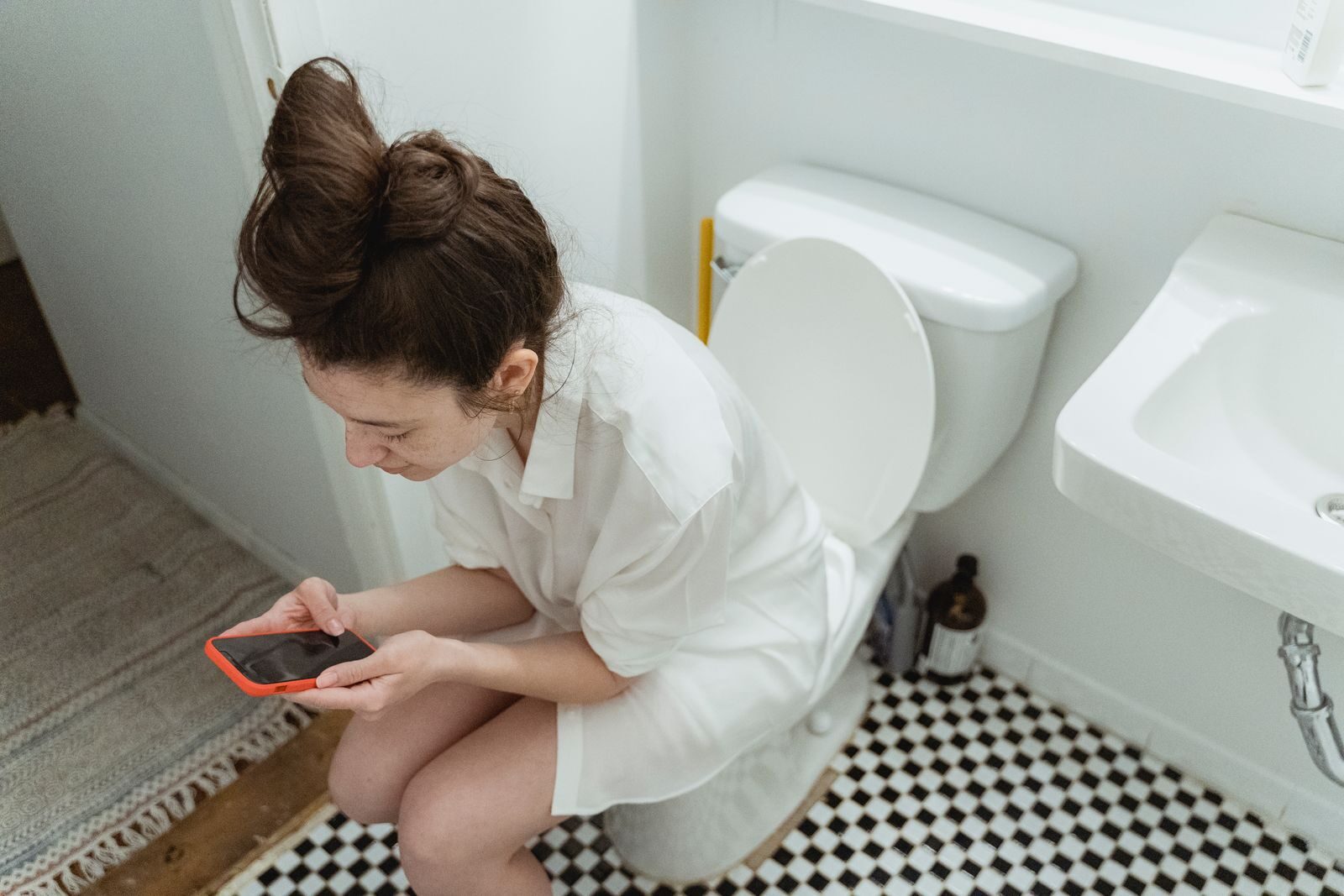
Another common issue is trying to force a bowel movement before bed.
You may sit on the toilet for a long time because you believe you must poop before sleeping.
This can lead to unnecessary straining.
If you don’t have the urge, don’t keep pushing.
Get up, relax and try again when you naturally feel the need.
Excessive straining can contribute to hemorrhoids and anal irritation.
A comfortable toilet position may help when you do have the urge.
Some people find that placing their feet on a low footstool and raising their knees above their hips makes passing stool more comfortable.
The goal is to allow the muscles to relax rather than forcing stool out.
Stress can also become more noticeable at night.
During the day, you may be distracted by work, family responsibilities or other activities.
Once you lie down, you may suddenly become more aware of abdominal sensations.
If you have been stressed throughout the day, digestive discomfort can feel more noticeable when everything becomes quiet.
Stress can influence bowel habits in some people.
The digestive system and nervous system communicate continuously, so emotional stress and changes in routine can affect how your gut feels.
This does not mean constipation is “all in your head.”
It means stress can be one factor affecting your digestive symptoms.
A calming bedtime routine may help overall comfort.
Try to avoid turning every nighttime stomach sensation into a reason to panic.
If symptoms are mild and occasional, focus on the broader routine rather than searching for an immediate cure.
Sleep itself can also be affected by constipation.
Abdominal pressure, bloating or the urge to use the bathroom may make it harder to fall asleep.
Poor sleep can then affect your daily routine, activity level and eating habits.
This can create a cycle in which digestive symptoms and poor sleep reinforce each other.
Improving your bowel routine during the day may therefore be more useful than trying to treat constipation at midnight.
Another common question is whether you should drink warm water before bed to relieve constipation.
A warm drink can be soothing and contributes to fluid intake, but it is not a guaranteed treatment.
If drinking a large amount before bed causes frequent nighttime urination, it may actually make your sleep worse.
It is generally more practical to maintain appropriate hydration throughout the day.
You may also hear that lemon water, apple cider vinegar or other drinks can “flush out” constipation.
There is no need for a special nighttime detox drink.
Your digestive system naturally moves waste through the gastrointestinal tract.
A drink that produces sudden diarrhea is not necessarily treating the underlying constipation.
Be cautious with products marketed as colon cleanses or overnight detox solutions.
Some contain laxative ingredients and can cause cramping, diarrhea or dehydration.
Another popular remedy is herbal tea.
Some herbal products contain ingredients that stimulate bowel movements.
During pregnancy, while taking medication or when you have an underlying medical condition, such products may not be appropriate.
Even outside those situations, you should be cautious about regularly using strong herbal laxative products without professional advice.
If you need a constipation treatment, a pharmacist or healthcare professional can help you choose an appropriate option.
Medication may also be contributing to nighttime constipation.
Some medicines can slow bowel movements or make stool harder.
Examples include certain opioid pain medicines, iron supplements, some antacids and certain medicines used for depression or other conditions.
If constipation started after you began taking a new medication, discuss it with your doctor or pharmacist.
Do not stop prescribed medication on your own.
Sometimes a different medicine, formulation or treatment strategy may be possible.
Iron supplements can be particularly relevant because they are commonly used for nutritional reasons and can cause constipation in some people.
If you have been advised to take iron, don’t stop it simply because of constipation.
Ask your healthcare professional about ways to manage the side effects.
The same applies to other supplements.
If you take several vitamins or supplements, review them with a healthcare professional if your bowel habits have changed.
Constipation can also occur during pregnancy.
Pregnancy hormones can slow bowel movement, and iron supplements may contribute as well.
If you are pregnant and experiencing nighttime constipation or abdominal discomfort, speak with your healthcare professional if symptoms are persistent.
Don’t use laxatives, herbal remedies or supplements without appropriate pregnancy-specific advice.
Another group that may experience constipation more frequently is older adults.
Reduced activity, medication use, dietary changes and health conditions can all contribute.
A new or persistent change in bowel habits should be discussed with a healthcare professional.
One of the most important distinctions is between ordinary constipation discomfort and serious abdominal symptoms.
Mild bloating, fullness or occasional cramping can occur with constipation.
Severe or constant abdominal pain is different.
If you have severe abdominal pain that does not improve, don’t assume you simply need to poop.
Abdominal pain can have many causes, some of which require urgent evaluation.
Inability to pass gas is another warning sign.
If you are constipated and completely unable to pass gas or stool, particularly if your abdomen is becoming swollen or painful, seek urgent medical attention.
Do not continue taking additional laxatives or home remedies while waiting for severe symptoms to disappear.
Vomiting alongside constipation and significant abdominal pain also requires prompt medical attention.
Fever is another symptom that should not be automatically blamed on constipation.
If you have constipation with fever and significant abdominal symptoms, contact a healthcare professional.
Rectal bleeding or blood in the stool should also be taken seriously.
Hard stools and straining can contribute to hemorrhoids or anal fissures, both of which can cause bright red bleeding.
But bleeding can have other causes.
Don’t assume that every episode of blood is simply a result of constipation.
If you experience unexplained, repeated or significant bleeding, seek medical advice.
Black or tar-like stools are different from typical bright red bleeding and should be medically evaluated.
Unexplained weight loss is another reason to speak with a healthcare professional.
Constipation alone is common and often manageable.
Persistent constipation combined with unexplained weight loss should not be ignored.
A sudden and lasting change in bowel habits also deserves evaluation.
If you normally have regular bowel movements and suddenly become persistently constipated, particularly without an obvious lifestyle or dietary reason, discuss the change with your doctor.
Keeping a bowel diary can help.
Record when you have bowel movements.
Note whether stools are hard or lumpy.
Record whether you had to strain.
Notice whether you felt completely empty afterward.
You can also record your meals, fluid intake, activity, stress and medications.
This can help identify patterns.
You might discover that your constipation is worse on days when you skip breakfast.
Or perhaps you notice that you rarely drink water during work hours.
Maybe you sit for ten hours a day and rarely take movement breaks.
Perhaps your symptoms began after starting a medication.
These details can be valuable when deciding what to change.
If constipation is mild, start with the basics.
Gradually increase fiber.
Drink adequate fluids.
Stay physically active.
Respond to bowel urges.
Create a regular opportunity for bathroom use.
Avoid excessive straining.
And avoid spending long periods sitting on the toilet at night.
These simple habits may be enough for occasional constipation.
If they don’t help, ask a healthcare professional for advice.
You may need a more specific treatment plan.
Some people wonder whether eating certain foods before bed can make them poop in the morning.
A regular breakfast can stimulate colon activity, which is one reason some people naturally feel an urge to use the bathroom after breakfast.
Rather than trying to force a bowel movement at night, you may find it more comfortable to establish a morning routine.
Wake up with enough time.
Eat breakfast if it fits your normal eating pattern.
Drink an appropriate amount of fluid.
Then give yourself an opportunity to use the bathroom if you feel the urge.
You don’t need to force a bowel movement.
Your body will follow its own rhythm.
Another common question is whether constipation gets worse when lying down.
Lying down itself does not necessarily cause constipation.
However, once you’re resting, you may become more aware of abdominal pressure and bloating.
Your digestive symptoms can also feel different when you are no longer distracted by daytime activities.
If lying down makes severe abdominal pain worse, however, don’t simply assume constipation is responsible.
Persistent or severe pain should be assessed.
Some people notice that they feel better after passing gas.
Gas and stool can both contribute to abdominal fullness.
If passing gas or having a bowel movement consistently relieves mild discomfort, constipation may be contributing.
But this does not rule out other digestive problems.
If symptoms are persistent, seek professional advice.
Your diet can also affect gas production.
Beans, lentils, some vegetables and certain carbohydrates can cause more gas in some people.
These foods aren’t necessarily unhealthy.
Many are excellent sources of fiber.
If they cause significant bloating, try smaller portions and increase them gradually.
You may also tolerate cooked vegetables better than very large amounts of raw vegetables.
The goal is not to eliminate healthy foods.
It is to find a comfortable and sustainable dietary pattern.
If you are currently eating very little fiber, avoid making dinner the place where you consume most of it.
A large bowl of high-fiber food late at night may leave you feeling more bloated.
Spread fiber across your meals instead.
Whole grains, fruits, vegetables, legumes, nuts and seeds can all contribute.
Another mistake is eating an extremely large dinner because you ate very little during the day.
Large meals can increase fullness and may make bloating more noticeable.
Try to maintain reasonably regular meals when possible.
You don’t need to follow a rigid eating schedule.
Consistency simply makes it easier for your digestive system to establish a routine.
Travel can make nighttime constipation more noticeable as well.
When traveling, meal times change, activity may decrease and bathroom access may become less convenient.
If you’re traveling across time zones, your normal morning bathroom routine can disappear temporarily.
Try to maintain adequate hydration, movement and regular meals.
Give your body time to adjust.
If constipation persists after you return to your normal routine, seek medical advice.
Another common misconception is that you should take a strong laxative before bed so that you can have a bowel movement in the morning.
Some laxatives can take several hours to work, but not every product works that way, and using a laxative without understanding its effects can result in cramping or diarrhea.
If you need medication for constipation, ask a pharmacist or healthcare professional which option is appropriate.
Follow the recommended dose.
Don’t take more simply because you want faster results.
If you regularly need laxatives to have bowel movements, discuss the pattern with a healthcare professional.
Chronic constipation may need a more comprehensive assessment.
There are several possible causes of persistent constipation.
Dietary factors can contribute.
Medications can contribute.
Reduced activity can contribute.
Some people have slow movement of stool through the colon.
Others may have difficulty coordinating the muscles involved in bowel movements.
Certain medical conditions can also affect bowel function.
This is why persistent constipation should not always be treated by adding more fiber.
If you already consume adequate fiber and remain constipated, more fiber may increase bloating without solving the problem.
A healthcare professional can help determine what is appropriate.
Stress and poor sleep can also become part of the cycle.
If you are awake at night because of bloating, you may sleep poorly.
The next day, you may feel tired and less active.
You may skip meals or choose convenient low-fiber foods.
By evening, constipation and bloating may become more noticeable again.
Breaking the cycle requires attention to the whole routine rather than only the nighttime symptoms.
Try to maintain a consistent sleep schedule.
Stay active during the day.
Eat balanced meals.
Drink appropriately.
And give yourself opportunities to use the bathroom.
You don’t need to solve everything at midnight.
For mild nighttime discomfort, a gentle walk around your home may feel more comfortable than lying in bed worrying about your stomach.
Avoid intense exercise if you are feeling unwell.
The goal is simply to remain comfortable and avoid prolonged inactivity.
A warm bath may also feel relaxing for some people, particularly if abdominal or anal discomfort is mild.
However, these measures are comfort strategies, not guaranteed constipation treatments.
If your symptoms are severe, seek medical attention.
You should also avoid aggressive abdominal massage if you have severe or unexplained abdominal pain.
Gentle comfort measures are one thing.
Trying to physically force stool through the bowel is another.
Don’t rely on internet techniques that promise to empty the bowel immediately.
Your digestive system is more complicated than a simple pipe that needs flushing.
If constipation is recurring, focus on prevention.
Eat enough fiber every day.
Drink adequate fluids.
Move regularly.
Respond to bathroom urges.
Avoid prolonged toilet sitting.
Maintain regular meals and sleep where possible.
Review medications with a professional if constipation started after a change.
These habits can make nighttime symptoms less likely over time.
If you experience occasional constipation before bed, don’t panic.
A single night without a bowel movement isn’t necessarily a medical problem.
Your bowel frequency naturally varies.
What matters is your overall pattern and whether bowel movements are difficult, painful or significantly different from normal.
If you normally have a bowel movement every other day and feel comfortable, there may be no issue.
If you suddenly develop hard stools, severe straining and abdominal discomfort, you may be constipated even if you had a bowel movement yesterday.
Constipation is about more than frequency.
Another important point is that bloating at night doesn’t automatically mean you are gaining weight.
Food, fluid, stool and gas can all affect how your abdomen looks and feels during the day.
If your stomach appears flatter in the morning and more bloated at night, that can be a normal daily variation.
Constipation can add to the sensation.
Persistent or progressive abdominal swelling, however, should be evaluated.
If you are unsure whether your nighttime symptoms are constipation, consider your bowel movements rather than your stomach appearance alone.
Are your stools hard?
Are you straining?
Do you feel incompletely emptied?
Are bowel movements less frequent than usual?
These are more useful clues.
If symptoms continue, talk with a healthcare professional.
You can also bring your bowel diary to the appointment.
Mention any abdominal pain, bloating, bleeding, vomiting or changes in weight.
Tell them about medications and supplements.
This information can help determine whether you need further evaluation.
For most adults with mild constipation and no warning signs, the first steps are straightforward.
Build fiber into your daytime meals.
Increase it gradually.
Drink appropriate fluids throughout the day.
Stay active.
Respond to bowel urges.
Use the bathroom when you naturally feel the need.
Avoid excessive straining.
And try not to turn bedtime into a daily battle with your digestive system.
If you regularly wake up because of severe abdominal pain or other concerning symptoms, seek medical advice.
If constipation is accompanied by vomiting, fever, significant abdominal swelling, inability to pass gas or stool, significant rectal bleeding, black stools or unexplained weight loss, seek medical attention.
Don’t assume these symptoms are simply nighttime constipation.
Ultimately, constipation at night is often a sign that your digestive routine needs attention during the entire day.
Your bowel doesn’t suddenly stop working when the sun goes down.
What you eat, drink and do throughout the day can influence what you experience at bedtime.
Rather than searching for a miracle nighttime remedy, build healthier habits consistently.
Eat a varied diet.
Include fiber-rich foods.
Stay appropriately hydrated.
Move regularly.
Respond to your body’s signals.
And get professional help when constipation becomes persistent or concerning.
Medical Disclaimer: This article is intended for general educational purposes and does not replace professional diagnosis, treatment or individualized medical advice. Constipation and nighttime abdominal symptoms can have many possible causes. Treatment depends on factors such as age, medications, pregnancy, existing health conditions and symptom severity. Seek urgent medical care for severe or constant abdominal pain, repeated vomiting, significant abdominal swelling, inability to pass gas or stool, significant bleeding, black stools, fever or other concerning symptoms.