Hair fall after pregnancy can be one of the most unexpected changes for a new mother. You may have spent months enjoying thicker-looking hair during pregnancy, only to notice large amounts of hair falling out after your baby is born.
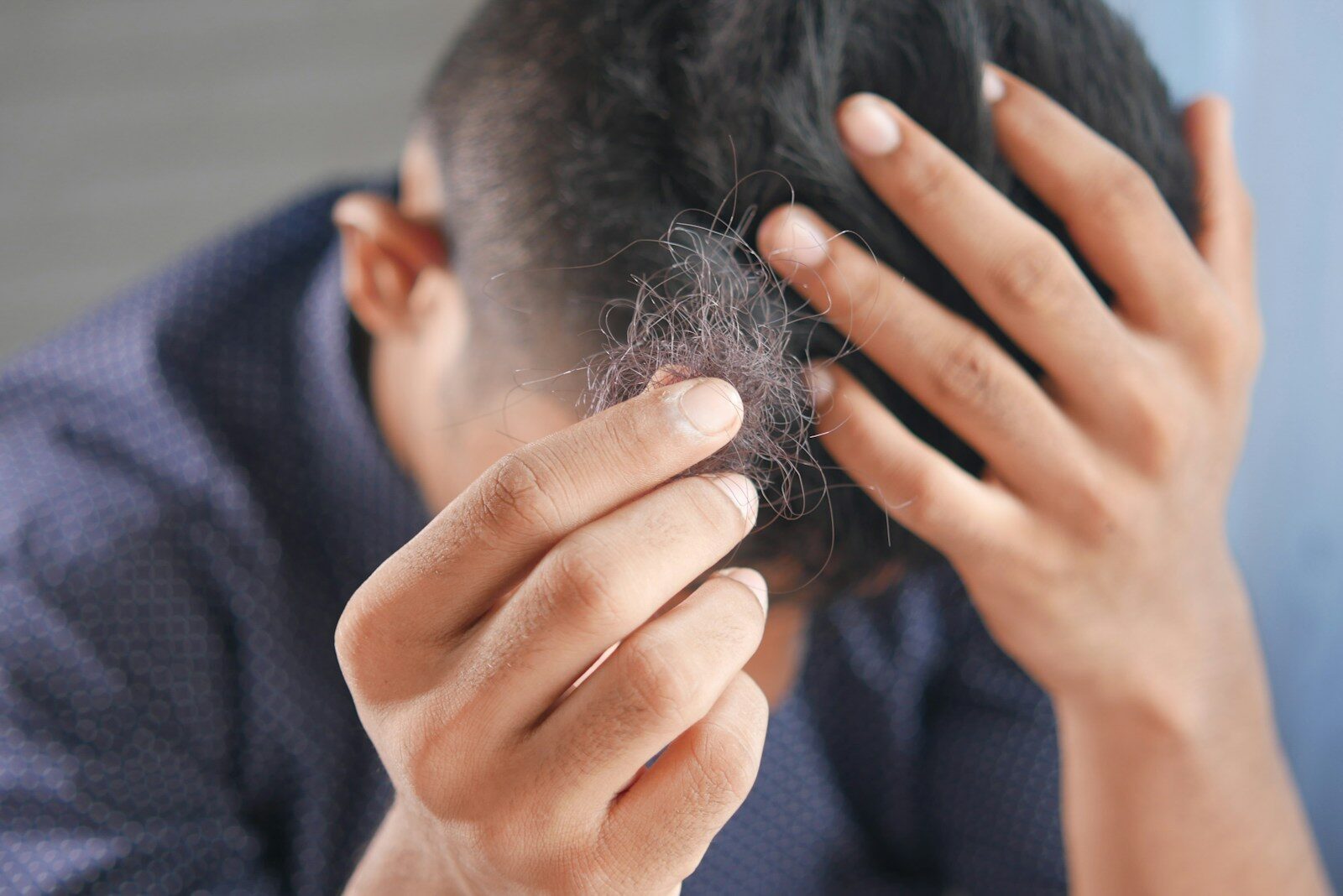
Seeing hair collect on your pillow, clothes, comb, or shower drain can be frightening, especially when it seems to happen all at once.
The good news is that postpartum hair shedding is common and is often temporary.
Pregnancy causes major hormonal changes throughout the body, and those changes can influence the normal hair-growth cycle.
During pregnancy, increased levels of certain hormones can keep more hairs in the active growth phase for longer than usual.
As a result, many women notice that their hair looks fuller or thicker during pregnancy.
After delivery, hormone levels change significantly.
Some of the hairs that remained in the growth phase during pregnancy eventually shift into the resting phase.
A larger number of hairs can then shed around the same period.
This can create the impression that your hair is suddenly falling out in large amounts.
The medical term commonly used for this type of excessive shedding is telogen effluvium.
It is a temporary change in the hair cycle rather than the same thing as permanent baldness.
One of the most confusing things about postpartum hair loss is that it does not necessarily begin immediately after childbirth.
Many women start noticing increased shedding a few months after delivery.
This delay is normal because the hair-growth cycle does not change instantly.
You may therefore find yourself wondering why your hair is falling out even though the delivery happened weeks or months earlier.
The timing can still fit postpartum shedding.
The amount of hair loss can vary significantly.
Some women notice only slightly more shedding than usual.
Others feel as though they are losing hair everywhere they look.
You may see strands during showering, brushing, breastfeeding, sleeping, or simply running your fingers through your hair.
This can make the experience feel much more dramatic than ordinary daily shedding.
It is important to remember that your hair was not necessarily growing at its normal rate during pregnancy.
Some hairs that would ordinarily have shed earlier may have remained in place because of hormonal changes.
After pregnancy, those hairs can enter the shedding phase around the same period.
This is one reason postpartum hair loss can look so sudden.
It is not necessarily because your follicles are being damaged.
In many cases, the follicles remain capable of producing new hair.
The hair cycle simply needs time to return toward its usual pattern.
Another reason postpartum hair fall can become more noticeable is the physical stress of pregnancy and childbirth.
Pregnancy places significant demands on the body.
Childbirth itself is a major physiological event.
The recovery period can also involve sleep disruption, changes in appetite, stress, blood loss, hormonal changes, and major lifestyle adjustments.
These factors can influence hair shedding as well.
Nutrition is particularly important during the postpartum period.
The body needs adequate energy, protein, vitamins, and minerals for recovery.
New mothers may struggle to eat regularly because caring for a newborn can make meals and sleep unpredictable.
Some women also try to lose pregnancy weight quickly.
This can create additional nutritional stress.
Extreme dieting soon after childbirth is not a good strategy for protecting your overall health or your hair.
If you are breastfeeding, your nutritional and energy needs may be different from those of someone who is not breastfeeding.
Your healthcare professional can help you understand what is appropriate for your individual situation.
Protein is especially important because hair is primarily made of keratin, a structural protein.
Include adequate protein through foods that fit your dietary preferences.
Eggs, dairy products, fish, poultry, beans, lentils, soy, nuts, and seeds can all contribute protein.
If you follow a vegetarian or vegan diet, careful meal planning can help ensure adequate protein and nutrient intake.
If you are struggling with appetite, fatigue, or a restrictive diet, discuss your nutrition with a healthcare professional or qualified dietitian.
Iron can also be important after pregnancy.
Pregnancy and childbirth can affect iron levels, particularly when there has been significant blood loss.
Low iron stores can contribute to hair shedding in some women.
However, not every case of postpartum hair loss is caused by iron deficiency.
You should not automatically take high-dose iron simply because your hair is falling.
Iron supplementation should be guided by appropriate medical advice, particularly because excessive iron can be harmful.
If your healthcare professional suspects iron deficiency, they can determine whether testing is appropriate.
Other nutritional deficiencies may also contribute to hair problems in certain circumstances.
Vitamin D, vitamin B12, zinc, and other nutrients are often discussed in relation to hair health.
But taking multiple supplements without knowing whether you need them is not a reliable way to stop postpartum shedding.
A balanced diet and medically appropriate supplementation are generally preferable to taking large amounts of hair vitamins.
Biotin is another popular ingredient in hair supplements.
Although severe biotin deficiency can affect hair, deficiency is uncommon in many people.
Taking large doses does not automatically make hair grow faster.
High-dose biotin can also interfere with certain laboratory tests.
If you are considering supplements while breastfeeding or recovering from pregnancy, discuss them with your healthcare professional.
Another factor that can make postpartum hair loss feel worse is sleep deprivation.
Newborns rarely follow predictable sleep schedules, and many parents experience significant sleep disruption.
Poor sleep does not mean you will automatically lose your hair.
However, the overall physical and emotional strain of the postpartum period can contribute to physiological stress.
Try to rest whenever practical and accept support from family or trusted people when available.
You do not need to maintain a perfect routine during the first months of parenthood.
Recovery takes time.
Stress is also common after childbirth.
Becoming a parent involves major emotional and lifestyle changes.
Concerns about the baby’s health, finances, work, feeding, sleep, relationships, and your own recovery can create significant pressure.
Stress can affect the hair cycle in some people, potentially adding to postpartum shedding.
This does not mean that hair loss is your fault.
You do not need to eliminate all stress to have healthy hair.
Focus on practical recovery, adequate nutrition, rest, and medical support when necessary.
Another common concern is whether breastfeeding causes hair loss.
Breastfeeding itself should not automatically be considered the sole cause of postpartum hair shedding.
The hormonal and physiological changes surrounding pregnancy and childbirth are more important factors.
However, breastfeeding can affect nutritional and energy needs, so maintaining adequate nutrition becomes particularly important.
If you are breastfeeding and experiencing severe shedding, significant fatigue, or difficulty eating enough, discuss these concerns with your healthcare professional.
One of the most common questions is whether postpartum hair loss is permanent.
In many cases, postpartum shedding is temporary.
As the hair cycle normalizes, shedding generally decreases and new growth becomes visible.
But the timeline varies.
Hair does not return to its previous appearance overnight.
Even after shedding slows, newly growing hair needs time to become long and thick enough to contribute to overall density.
This is why patience is important.
You may notice short hairs around your hairline as regrowth begins.
These hairs can sometimes be difficult to style.
Many new mothers notice short, uneven-looking strands around the forehead and temples.
They may look like broken hair, but they can also represent new growth.
A photograph taken under similar lighting every few weeks can help you track changes.
Avoid checking your hair constantly.
Daily changes can be difficult to interpret and can make you more anxious.
Instead, focus on the overall pattern over several months.
Postpartum hair loss should also be distinguished from other forms of hair loss.
If your hair continues to thin progressively, there may be another underlying condition.
Pregnancy and the postpartum period can sometimes reveal or coincide with hereditary pattern hair loss.
Women with genetic susceptibility may notice a wider part or reduced density over the top of the scalp.
If the thinning continues after the postpartum shedding period, a dermatologist can help determine whether another form of hair loss is present.
Sudden patchy hair loss is also different from typical postpartum shedding.
If you develop a clearly defined bald patch, do not automatically assume it is caused by pregnancy.
Conditions such as alopecia areata can cause patchy hair loss and require appropriate evaluation.
Scalp symptoms are another reason to seek professional advice.
Persistent itching, redness, burning, pain, severe scaling, sores, or inflammation are not typical features of simple postpartum shedding.
A scalp disorder may be contributing to the problem.
A dermatologist can examine the scalp and determine whether treatment is needed.
Another concern is hair loss along the hairline.
Some women notice thinning around the temples or forehead after childbirth.
This may be related to normal postpartum shedding, but tight hairstyles can also contribute.
New mothers often tie their hair back because it is practical when caring for a baby.
Repeatedly wearing very tight ponytails, buns, braids, or other hairstyles can place tension on the hairline.
If a hairstyle causes pain or pulling, loosen it.
Reducing tension can help protect the follicles from traction-related damage.
Hair extensions can also place stress on the roots.
If your hair is already shedding heavily, consider minimizing styles that add weight or tension.
Gentle hair care can make the postpartum period easier.
You do not need to stop washing your hair.
Washing does not generally cause postpartum hair loss.
It simply makes loose hairs easier to notice.
If you wash your hair less frequently, several days’ worth of naturally shed hairs may come out during one shower.
That can look alarming but does not necessarily mean that the shower caused the loss.
Choose a shampoo that is comfortable for your scalp.
There is no need to spend large amounts of money on a special postpartum shampoo unless you have a specific scalp problem.
A normal gentle cleansing routine is often sufficient.
Be careful when handling wet hair.
Avoid aggressive brushing and pulling.
Use a gentle detangling method.
If your hair is dry or prone to tangling, conditioner can help reduce friction.
Towel-drying should also be gentle.
Vigorous rubbing can contribute to breakage.
Heat styling is another issue to consider.
Straighteners, curling tools, and high-temperature blow-drying can weaken the hair shaft.
This can cause breakage and make your hair look thinner.
If you are already experiencing significant postpartum shedding, reducing unnecessary heat can help minimize additional damage.
Chemical treatments can also contribute to breakage.
Frequent bleaching, coloring, relaxing, or other chemical processes can weaken the hair shaft.
If your hair feels brittle or breaks easily, consider giving it a break from aggressive treatments.
This will not necessarily stop hormonal shedding, but it can help preserve the hair you still have.
Another common question is whether cutting the hair short will stop postpartum hair loss.
A haircut does not change the hormonal process occurring inside the hair follicles.
Hair grows from the scalp, not from the ends.
Cutting the hair can make it easier to manage and may reduce the appearance of damaged ends, but it does not stop shedding.
Similarly, shaving your head does not make the follicles produce more hair.
The hair may look thicker when it first grows back because the ends are blunt.
The actual number of follicles remains unchanged.
Hair oils are also not a cure for postpartum shedding.
Oiling may make the hair feel softer or reduce friction for some people.
But it cannot reverse the hormonal changes that contribute to postpartum telogen effluvium.
If you enjoy using oil and it does not irritate your scalp, it can remain part of your cosmetic routine.
Just do not depend on it as a medical treatment.
Another mistake is buying several hair supplements immediately after noticing shedding.
Hair supplements are heavily marketed to new mothers, but not every woman needs them.
Some supplements may be appropriate if a deficiency has been identified or if a healthcare professional recommends them.
Taking high doses of multiple nutrients without medical guidance is not a good approach, especially during breastfeeding.
More vitamins do not automatically mean faster hair growth.
Your nutritional needs after pregnancy should be considered in the context of your overall health and whether you are breastfeeding.
Another important issue is thyroid health.
Pregnancy and the postpartum period can be associated with thyroid changes in some women.
Thyroid disorders can affect hair growth.
If hair loss is accompanied by significant fatigue, unexplained weight changes, changes in heart rate, unusual sensitivity to heat or cold, or other symptoms, talk with your healthcare professional.
Hair loss alone cannot diagnose a thyroid problem.
A proper assessment is needed.
Hormonal changes can also affect the scalp and hair independently of thyroid disease.
The postpartum period involves major changes in reproductive hormones.
These changes can influence the timing of shedding and regrowth.
That is why postpartum hair loss can look very different from the hair changes you experienced before pregnancy.
If you had previous episodes of hair loss, mention them to your doctor.
A history of pattern hair loss, nutritional deficiency, or other scalp conditions can be relevant.
Your healthcare professional may ask about your pregnancy, delivery, health history, diet, medications, and timing of the shedding.
This information can help distinguish normal postpartum shedding from another condition.
Blood tests are not necessarily required for every woman with postpartum hair loss.
Testing may be appropriate when symptoms or medical history suggest iron deficiency, thyroid problems, nutritional deficiencies, or another health issue.
The decision should be individualized.
Do not feel that you need to order every possible hair-loss test simply because you are shedding.
A focused evaluation is usually more useful.
One of the biggest challenges for new mothers is that hair loss can happen at the same time as many other physical changes.
Your body is recovering.
Your sleep may be disrupted.
Your hormones are changing.
Your daily routine is completely different.
You may be breastfeeding.
You may be trying to return to work.
You may also be trying to lose pregnancy weight.
All of these factors can make the hair fall feel even more overwhelming.
Try not to judge your recovery by your hair alone.
The postpartum period is a major transition, and your body needs time.
If you are considering weight loss after pregnancy, avoid extreme dieting.
Rapid weight loss can itself trigger increased shedding.
This can create a cycle where postpartum hormonal shedding is combined with nutritional stress.
A gradual and sustainable approach is generally better.
If you are breastfeeding, discuss your nutritional and weight-management goals with your healthcare professional.
Another question is whether postpartum hair loss can be prevented completely.
There is no guaranteed method to prevent normal hormonal shedding after pregnancy.
You cannot completely control the changes in the hair cycle caused by the postpartum hormonal transition.
However, you can reduce additional stress on the hair and body.
Adequate nutrition, sufficient protein, appropriate rest, gentle hair care, and avoiding extreme diets can all support your overall recovery.
You can also minimize tight hairstyles and excessive heat or chemical treatments.
These steps do not stop hormonal shedding, but they can help protect against additional breakage and traction.
The most important thing is to avoid panic.
Postpartum hair shedding can look dramatic.
Seeing large amounts of hair come out during a shower can make you think something is seriously wrong.
But temporary shedding can involve a surprisingly large amount of hair while still being reversible.
The amount you see is not the only measure of severity.
Look at whether the overall density is changing and whether new growth eventually becomes visible.
If the shedding remains intense for a prolonged period or the density continues to decline, seek professional advice.
Another important warning sign is a clearly widening part that continues to worsen.
Postpartum shedding may temporarily reduce density, but progressive thinning can indicate another form of hair loss.
A dermatologist can evaluate the pattern and determine what is happening.
Patchy bald areas should also be evaluated.
Alopecia areata and other conditions can produce localized hair loss that looks different from diffuse postpartum shedding.
Do not assume that every patch is simply related to childbirth.
Scalp inflammation also deserves attention.
If your scalp is painful, burning, red, severely flaky, or develops sores, talk with a dermatologist.
These symptoms can indicate a scalp disorder that needs specific treatment.
Another reason to seek medical care is significant fatigue or other unexplained symptoms.
Postpartum exhaustion is common, but severe or persistent symptoms should not automatically be dismissed as part of being a new parent.
Iron deficiency, thyroid disorders, nutritional problems, and other conditions can sometimes occur during or after pregnancy.
A healthcare professional can assess the bigger picture.
Treatment for postpartum hair loss depends on the underlying cause.
If the shedding is normal postpartum telogen effluvium, treatment may focus mainly on nutrition, gentle hair care, and addressing additional triggers.
If iron deficiency or another nutritional problem is identified, correcting it may help.
If a thyroid disorder is present, appropriate treatment of the thyroid problem may be necessary.
If hereditary pattern hair loss becomes apparent, treatments such as minoxidil may be considered in appropriate circumstances.
However, women who are pregnant, planning pregnancy, or breastfeeding should discuss hair-loss treatments with their healthcare professional before using them.
Do not assume that a treatment safe for one person is appropriate for another.
Medication decisions should take your current health and feeding status into account.
Another important point is that hair treatments take time.
Even when the underlying cause has been corrected, the hair cycle does not instantly return to normal.
You may first notice that shedding slows.
New hairs then begin growing.
Those hairs need time to become longer and thicker.
This is why postpartum hair recovery should be judged over months rather than days.
Do not become discouraged if your hair does not look exactly as it did before pregnancy immediately.
Your hair texture and density can also change naturally over time.
Some women feel that their hair never returns to exactly the same appearance as before pregnancy.
This does not necessarily mean that they have ongoing severe hair loss.
Hair density, texture, hormones, age, genetics, and styling habits can all influence how hair looks.
The goal is to identify whether there is an ongoing medical problem rather than trying to recreate a specific hairstyle from before pregnancy.
It is also worth remembering that postpartum hair loss is not caused by poor hygiene.
You are not losing hair because you failed to wash it correctly.
You do not need a complicated routine.
A gentle shampoo, appropriate conditioning, careful detangling, and reduced heat and tension are generally sensible.
You also do not need to blame yourself.
Postpartum hair shedding is connected to biological changes that occur during and after pregnancy.
If you are experiencing it, you have not done something wrong.
Another common myth is that breastfeeding permanently causes hair loss.
Breastfeeding can change nutritional and energy requirements, but postpartum shedding is primarily associated with the broader hormonal and physiological changes surrounding pregnancy and childbirth.
If you are breastfeeding and your diet is inadequate, however, nutritional stress can potentially add to hair problems.
That is why balanced nutrition remains important.
If your appetite is poor or you are struggling to eat enough, seek appropriate support.
You can also ask your healthcare professional whether your prenatal or postpartum supplement should be continued and for how long.
Do not assume that taking more supplements will necessarily improve hair growth.
Supplements should be used for a clear reason.
Another concern is whether postpartum hair loss means you will become bald.
Typical postpartum shedding does not usually result in complete baldness.
The amount of shedding can be substantial, but the process is generally diffuse rather than creating large permanent bald areas.
If you are developing clearly defined bald patches or severe progressive thinning, that is a reason for medical evaluation.
A dermatologist can determine whether something other than normal postpartum shedding is occurring.
It is also helpful to remember that your hair may look thinner when it is wet.
Wet strands clump together and expose more of the scalp.
Bright lighting can have the same effect.
Compare your hair under normal, consistent conditions rather than judging it immediately after washing.
If you want to monitor your progress, photographs every few weeks can be more useful than daily mirror checks.
Another practical tip is to avoid constantly pulling your hair into tight styles simply because it feels easier during childcare.
Loose hairstyles can reduce tension on the roots.
If you use hair ties, choose options that do not pull or snag the hair.
If your hair is very fragile, avoid repeatedly detangling it aggressively.
Small changes in daily handling can reduce unnecessary breakage.
Postpartum hair loss can also be emotionally difficult because it happens during a period when many women are already adjusting to major changes.
It is completely understandable to feel upset when your appearance changes unexpectedly.
Try not to let social media comparisons make the experience worse.
People often share photographs of pregnancy hair and postpartum transformations without showing the full range of experiences.
Hair density varies naturally between women.
Your recovery does not have to look like someone else’s.
If you are worried, professional advice can provide reassurance.
A dermatologist can tell you whether your pattern looks consistent with postpartum shedding or whether further evaluation is needed.
You do not have to wait until your hair loss becomes severe.
Early evaluation can be especially useful if you have a history of hair loss or if the pattern does not look typical.
So, how long does postpartum hair loss last?
There is no exact timeline that applies to every woman.
The shedding generally settles gradually as the hair cycle normalizes, but visible regrowth takes additional time.
Some women recover relatively quickly, while others notice changes for longer.
The rate of recovery can depend on genetics, nutritional status, hormonal changes, stress, illness, and whether another form of hair loss is present.
The important thing is to look for a gradual improvement rather than expecting an exact date when the shedding will suddenly stop.
Can postpartum hair loss grow back?
In many cases, yes.
When the shedding is temporary telogen effluvium, the follicles can resume normal growth and new hair can gradually appear.
However, persistent thinning may require evaluation for other causes.
Can shampoo stop postpartum hair loss?
No shampoo can reliably stop the hormonal shift responsible for typical postpartum shedding.
A gentle shampoo can support scalp hygiene, but it cannot reset the hair-growth cycle.
Can oil stop postpartum hair loss?
Hair oil may improve softness and reduce friction, but it is not a proven cure for postpartum hormonal shedding.
Can cutting hair reduce postpartum hair loss?
Cutting the hair can make it easier to manage and may remove damaged ends, but it does not stop shedding from the follicles.
Can vitamins stop postpartum hair fall?
Only if a nutritional deficiency is contributing to the problem and the deficiency is appropriately corrected.
Taking excessive vitamins without a confirmed need is not recommended.
When should you see a doctor for postpartum hair loss?
Seek professional advice if the loss is severe, continues to worsen, produces clearly defined bald patches, occurs with scalp pain or inflammation, or does not appear to be settling over time.
You should also mention significant fatigue, unexplained weight changes, or other concerning symptoms.
Postpartum hair loss can look dramatic, but in many women it is a temporary part of the transition after pregnancy.
The hair you see falling may represent strands that remained in the growth phase during pregnancy and are now entering their normal shedding stage.
Your body has been through a major physiological event, and the hair cycle needs time to adjust.
The best approach is not to panic or chase quick fixes.
Focus on balanced nutrition, adequate protein, appropriate recovery, gentle hair care, and realistic expectations.
Avoid crash diets, excessive heat, tight hairstyles, and unnecessary supplements.
If the shedding is unusually severe, patchy, persistent, or accompanied by other symptoms, get evaluated by a healthcare professional.
Your hair may take several months to regain its previous appearance, but temporary postpartum shedding does not automatically mean permanent hair loss.
Give your body time, protect the hair you have, and seek appropriate care if the pattern does not look like normal postpartum shedding.