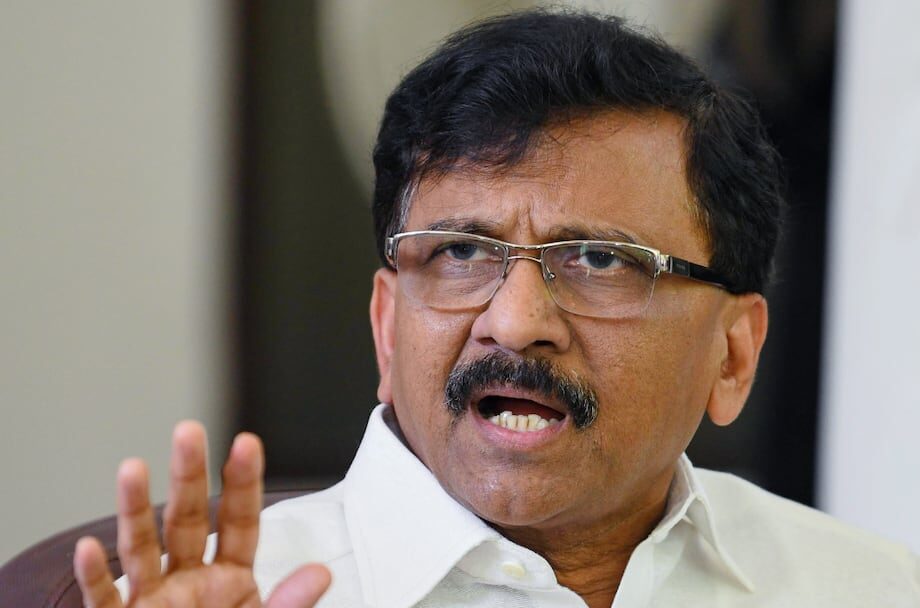
Jammu and Kashmir Chief Minister Omar Abdullah on Wednesday said the Union Territory’s issues would have to be addressed by India’s central government and not by Washington. His remarks came ahead of his scheduled meeting with US Ambassador to India Sergio Gor during the envoy’s first visit to Jammu and Kashmir.
Speaking to journalists in Srinagar, Abdullah made it clear that he would maintain the diplomatic protocol expected during a meeting with a foreign envoy. He said he would discuss Jammu and Kashmir and the situation in the region, but would not use the meeting as an opportunity to complain about India’s internal matters to a foreign representative.
Abdullah said that the problems of Jammu and Kashmir have to be resolved by the government in New Delhi. According to him, seeking solutions from another country would not be appropriate. His comments appeared aimed at setting clear expectations about the nature and limits of his conversation with the American ambassador.
The chief minister indicated that the meeting would nevertheless provide an opportunity to discuss local issues and the situation in Jammu and Kashmir. Rather than approaching the conversation as a platform for seeking foreign intervention, Abdullah said he would follow the established protocol for such international engagements.
The meeting between Abdullah and Gor is significant because it is taking place during the American ambassador’s first visit to Jammu and Kashmir since he assumed office. Gor is visiting the Union Territory on August 19 and is also scheduled to travel to Ladakh. During his stay, he is expected to meet senior political and administrative representatives.
The visit has attracted attention because Jammu and Kashmir remains a politically sensitive region, both within India and in the wider South Asian geopolitical environment. Any interaction between a senior J&K political leader and a foreign diplomat can therefore attract considerable political interest.
Abdullah’s remarks appear to have been intended to prevent speculation that his meeting with Gor could involve discussions about foreign mediation. He specifically emphasised that he would not ask the US ambassador to find solutions to Jammu and Kashmir’s problems.
The chief minister also said he would prefer to listen to what the American envoy has to say. He indicated that while Gor was coming to meet him and hear his views, he too was interested in listening to the ambassador’s perspective. This suggests that the meeting is expected to be primarily an exchange of views rather than a formal negotiation.
According to Abdullah, it has been more than 15 years since a serving chief minister of Jammu and Kashmir met a serving US ambassador. This makes the meeting noteworthy from a diplomatic and political perspective, although the chief minister has sought to keep expectations around the engagement measured.
The visit comes at a time when regional political parties in Jammu and Kashmir continue to press for the restoration of statehood and raise concerns over constitutional and political issues. These matters remain central to the domestic political conversation in the Union Territory.
Jammu and Kashmir has been a Union Territory since the reorganisation of the former state in 2019. The region has subsequently seen political changes, including legislative elections and the formation of an elected government headed by Abdullah in 2024.
The issue of statehood remains particularly important for the National Conference-led administration. Abdullah and other regional leaders have repeatedly called for the restoration of Jammu and Kashmir’s state status.
Against this background, Gor’s visit has naturally attracted political attention. However, Abdullah’s comments suggest that he does not intend to turn the meeting into an international discussion over India’s constitutional arrangements.
The chief minister’s position also reflects the longstanding Indian policy that Jammu and Kashmir’s issues are matters of India’s internal governance. By stressing that solutions would have to come from New Delhi, Abdullah placed his planned conversation with the US envoy within that framework.
The US ambassador’s visit is taking place at a time when Washington continues to maintain diplomatic engagement with India across a range of strategic, economic and regional issues. Gor has responsibility as the US ambassador to India and also has a wider role covering South and Central Asian affairs.
His visit to Jammu and Kashmir and Ladakh therefore has significance beyond a routine diplomatic call. It provides the American side an opportunity to understand developments on the ground and interact with local political and administrative leadership.
For Jammu and Kashmir, engagement with foreign diplomats can also provide an opportunity to explain the region’s economic, social and developmental priorities. Abdullah’s remarks indicate that such engagement can take place without seeking external intervention in matters that are constitutionally and politically within India’s domain.
The chief minister’s comments also show an effort to distinguish between communication and mediation. Meeting a foreign ambassador does not necessarily mean seeking that country’s involvement in resolving domestic political issues. Abdullah has made that distinction particularly clear before meeting Gor.
The proposed meeting is therefore likely to focus on an exchange of perspectives. Abdullah can explain the situation in Jammu and Kashmir, while Gor can listen to the elected government’s views and share Washington’s broader perspective on the region.
The political significance of the meeting will nevertheless be closely watched. Jammu and Kashmir has historically attracted international attention, particularly because of tensions between India and Pakistan. Any visit by a senior foreign diplomat can therefore generate speculation about whether regional political questions could feature in discussions.
Abdullah’s statement appears designed to reduce that speculation before the meeting itself. By saying that he would not complain to the ambassador or seek solutions from Washington, he has established a clear boundary around the engagement.
The chief minister’s approach also reflects the importance of maintaining diplomatic protocol. Meetings between elected officials and foreign representatives generally involve discussion of political, economic and social developments, but they do not automatically amount to negotiations on sovereign matters.
For the United States, the visit provides an opportunity to engage directly with leadership in Jammu and Kashmir. For Abdullah, the meeting provides a chance to communicate the administration’s perspective to a senior representative of an important global power.
The timing is also significant because the region continues to undergo political and administrative changes. The elected government is working within the framework of a Union Territory while continuing to demand restoration of statehood.
Abdullah’s remarks therefore place domestic priorities at the centre of his approach. Instead of asking the American envoy to intervene, he has stressed that issues concerning Jammu and Kashmir must be addressed through India’s own political and constitutional processes.
This position could also help avoid unnecessary diplomatic complications. Foreign involvement in sensitive domestic issues can create political controversy, particularly in regions where sovereignty and constitutional arrangements are closely scrutinised.
The meeting can instead provide a platform for constructive dialogue on subjects such as development, tourism, investment, education and the overall situation in Jammu and Kashmir. Such conversations can be conducted without changing the basic position that domestic political matters must be resolved within India’s institutional framework.
Gor’s visit to the Union Territory also includes interaction with Lieutenant Governor Manoj Sinha, according to reports. The combination of meetings with the Lieutenant Governor and the elected chief minister allows the US side to hear from different parts of Jammu and Kashmir’s governance structure.
The visit to Ladakh will further broaden the envoy’s understanding of developments in the wider Himalayan region. Ladakh, like Jammu and Kashmir, became a Union Territory following the 2019 reorganisation.
For residents and political observers, the meetings could offer an opportunity to highlight economic and developmental concerns. Jammu and Kashmir has significant potential in tourism, horticulture, handicrafts and other sectors, while connectivity and employment remain important issues.
At the same time, security remains a major factor in discussions about the region. The situation along the Line of Control and the wider security environment have historically shaped political and economic conditions in Jammu and Kashmir.
Abdullah’s comments suggest that he intends to discuss the situation openly while avoiding any request for foreign intervention. This distinction is likely to remain an important aspect of the meeting.
The chief minister’s statement also comes shortly after his remarks on the historical and political situation surrounding Jammu and Kashmir. On Independence Day, Abdullah said developments across the Line of Control had reinforced his view of his grandfather Sheikh Abdullah’s decision regarding Jammu and Kashmir’s relationship with India.
His latest remarks continue that broader emphasis on Jammu and Kashmir’s place within India. By insisting that the region’s problems must be solved by New Delhi, Abdullah has underlined the role of India’s own government and institutions.
The meeting with Gor could therefore be significant without necessarily producing any major policy announcement. Diplomatic meetings often serve as opportunities to exchange information, understand positions and maintain communication.
For Washington, direct engagement with regional political leadership can help provide a clearer understanding of local developments. For Jammu and Kashmir, such engagement can help communicate its concerns and development priorities to an international audience without seeking external mediation.
The meeting also comes at a time when India-US relations remain important across trade, technology, defence and regional security. Maintaining communication at different levels can be useful for both countries, particularly when developments in South Asia have broader strategic implications.
However, Abdullah’s comments make clear that he wants the meeting to remain within defined diplomatic limits. He has said that he will speak about Jammu and Kashmir but will not use the occasion to lodge complaints against the central government before the US ambassador.
This approach could also reflect the practical realities of governance. As chief minister, Abdullah has to work with the central government on numerous issues affecting Jammu and Kashmir. While his administration has political differences with New Delhi on subjects such as statehood, cooperation between the two levels of government remains necessary for governance.
The meeting with Gor consequently comes against a backdrop of both political disagreement and institutional cooperation. Abdullah’s comments suggest that he intends to maintain that distinction when dealing with foreign diplomats.
The broader message from the chief minister is that Jammu and Kashmir can engage with international representatives while keeping its political issues within India’s democratic framework. His remarks seek to make clear that foreign diplomats may listen to the region’s concerns, but the responsibility for resolving domestic problems lies with India’s own political institutions.
As Sergio Gor’s visit progresses, attention will remain focused on what emerges from his meetings with the region’s leadership. Any comments made after the discussions could provide further insight into the issues that were raised.
For now, Abdullah has already established his position: he will discuss Jammu and Kashmir, listen to the US ambassador and explain the situation, but he will not ask Washington to solve problems that he believes must be addressed by New Delhi.
The meeting therefore carries diplomatic importance, but Abdullah’s pre-meeting remarks have attempted to prevent it from being interpreted as a request for foreign intervention. Instead, the engagement is expected to remain an exchange of views between the elected leadership of Jammu and Kashmir and a senior representative of the United States.