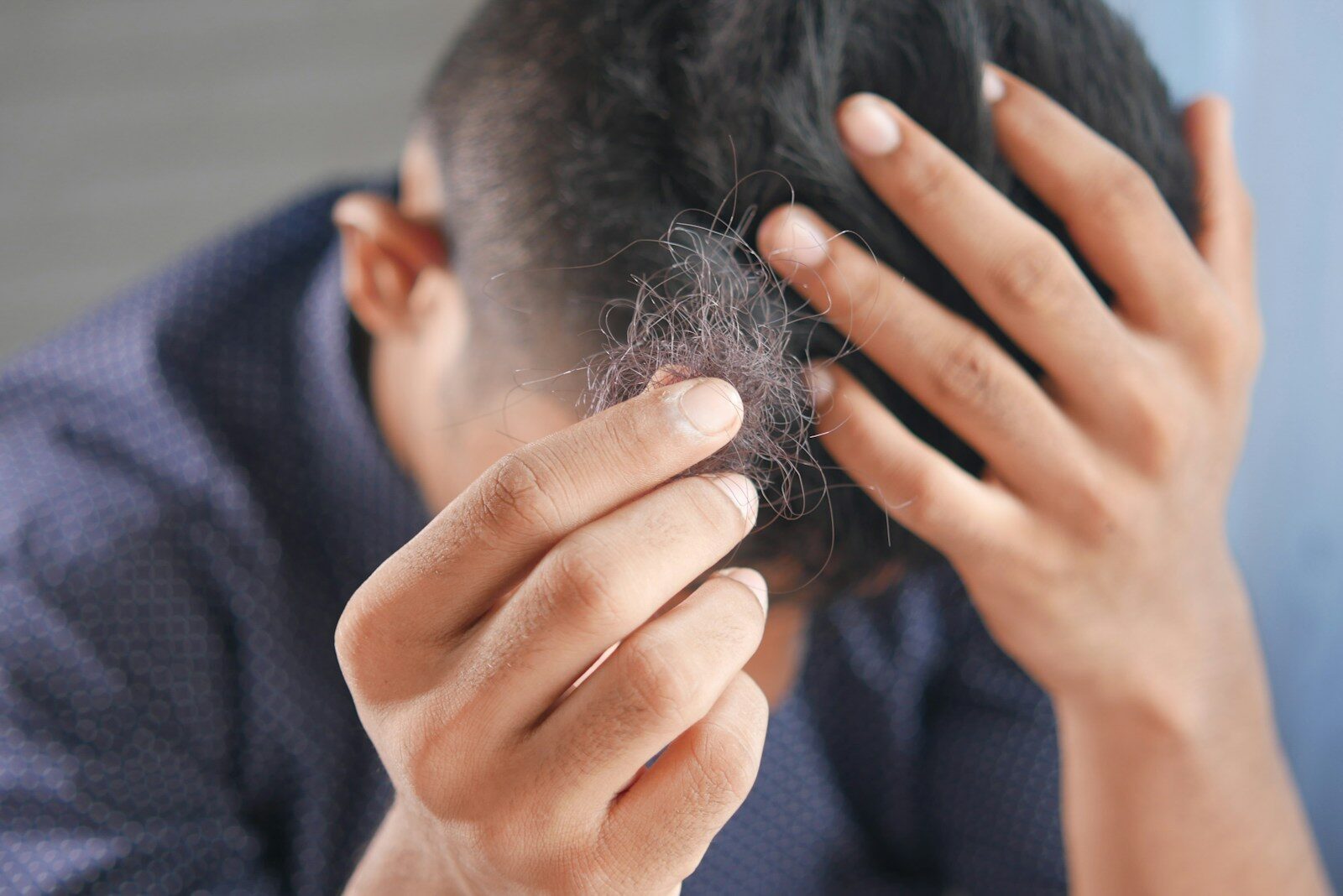
Hair fall is one of those problems that can make you notice every single strand on your pillow, comb, bathroom floor, and shirt.
The moment shedding increases, many people start searching for natural ways to stop hair fall.
You may see advice about onion juice, coconut oil, rosemary oil, special diets, supplements, scalp massages, and homemade hair masks.
Some of these habits can help improve the condition and appearance of your hair.
But there is an important point to understand before trying anything: natural hair care cannot fix every cause of hair loss.
Hair fall can happen because of genetics, hormonal changes, nutritional deficiencies, illness, stress, rapid weight loss, certain medications, scalp conditions, and physical damage.
The best natural approach is therefore not a single miracle ingredient.
It is a combination of healthy nutrition, gentle hair care, good scalp habits, adequate recovery, and attention to the underlying cause.
Some daily hair shedding is normal.
Hair follicles naturally move through growth, resting, and shedding phases.
Seeing a few hairs in your brush or shower does not automatically mean something is wrong.
The concern begins when your usual shedding pattern changes noticeably.
You may notice much more hair than normal.
Your ponytail may feel thinner.
Your part may appear wider.
Your scalp may become more visible.
Or you may develop specific areas of thinning.
These changes are worth paying attention to.
One of the most useful natural habits for supporting healthy hair is eating enough nutritious food.
Hair production requires energy and nutrients.
If you regularly eat too little, follow extreme diets, or eliminate large groups of foods without replacing their nutrients, your hair can be affected.
This is particularly important if you are trying to lose weight.
Rapid weight loss can sometimes trigger excessive hair shedding.
The solution is not to stop caring about your weight.
Instead, avoid extreme approaches that leave your body without adequate nutrition.
A balanced diet is much more useful than a crash diet.
Protein deserves particular attention.
Hair is largely made of keratin, a structural protein.
If your overall protein intake is inadequate, hair growth may be affected.
Include protein-rich foods regularly throughout the day.
Depending on your dietary preferences, these can include eggs, fish, poultry, dairy products, lentils, beans, soy, nuts, and seeds.
You do not need to eat one particular food every day.
Variety is more important.
Combining different sources of protein can help you meet your overall nutritional needs.
Another important nutrient is iron.
Iron deficiency can contribute to hair shedding in some people.
Women may be particularly vulnerable to iron deficiency because of menstrual blood loss and increased nutritional demands during pregnancy.
However, iron supplements should not be taken simply because your hair is falling.
Too much iron can be harmful.
If you suspect low iron, discuss testing with a healthcare professional.
The same rule applies to vitamin D, zinc, vitamin B12, and other nutrients.
Deficiencies can affect health and may sometimes contribute to hair problems.
But taking large doses without a confirmed need is not necessarily beneficial.
A supplement cannot replace a balanced diet.
Biotin is one of the most heavily marketed nutrients for hair.
You will find biotin gummies, capsules, powders, and hair formulas everywhere.
Biotin is important for normal body functions, but true biotin deficiency is uncommon in people who eat a varied diet.
Taking large amounts does not automatically make hair grow faster.
It is better to use supplements when there is a genuine nutritional reason.
Another natural habit worth considering is gentle scalp massage.
Massaging the scalp can feel relaxing and may be a pleasant part of your routine.
It can also help distribute products and provide a moment of relaxation.
But scalp massage should not be presented as a guaranteed cure for hair loss.
If your hair is thinning because of genetics, thyroid disease, nutritional deficiency, or another medical condition, massage alone will not address the cause.
Think of it as a supportive habit rather than a treatment.
The way you massage your scalp matters.
Use your fingertips rather than your fingernails.
Apply gentle pressure.
Do not aggressively scratch the scalp.
If your scalp is inflamed, painful, or irritated, avoid vigorous massage and get the condition evaluated.
Another useful natural approach is reducing unnecessary hair breakage.
Sometimes people think they are losing hair from the roots when the actual problem is breakage.
Look closely at the strands you are finding.
If you notice many short pieces, uneven lengths, split ends, and brittle strands, hair damage may be contributing.
Hair can become damaged from repeated heat styling, chemical processing, bleaching, tight hairstyles, and aggressive grooming.
Reducing these stresses can make the hair look fuller and healthier.
Heat is one of the easiest things to control.
Straighteners, curling irons, and very hot blow dryers can weaken the hair shaft.
You do not have to eliminate styling completely.
Instead, reduce excessive heat.
Use the lowest effective temperature.
Avoid repeatedly applying heat to the same section.
Allow your hair to dry naturally when practical.
If you need to use a blow dryer, avoid holding very hot air directly against one area for a long time.
The goal is to reduce cumulative damage.
Chemical treatments deserve similar consideration.
Bleaching and frequent chemical processing can weaken the hair.
If your hair feels dry, brittle, or stretchy after processing, give it time to recover.
Conditioning and gentle handling can help reduce friction and breakage.
If your scalp reacts badly to a product, stop using it.
Burning is not evidence that a product is working.
Another simple habit is avoiding very tight hairstyles.
Ponytails, buns, braids, extensions, and other styles can look great.
The problem is repeated tension.
If your hairstyle pulls strongly on the scalp, it can contribute to traction-related hair loss.
Pain, tenderness, bumps, or broken hairs around areas of tension are signs that the style may be too tight.
Try looser hairstyles.
Change where you place the ponytail.
Give your scalp breaks from extensions or tightly secured styles.
Your hairstyle should not cause scalp pain.
Gentle detangling can also reduce breakage.
Wet hair can be more vulnerable to mechanical damage.
Avoid aggressively pulling a brush through knots.
Start from the ends and gradually work upward.
Use a suitable comb or brush for your hair type.
If your hair is highly textured or curly, choose techniques that minimize unnecessary pulling.
You do not need to follow a complicated routine.
The principle is simple: less unnecessary mechanical stress.
Another common question is whether washing hair causes hair fall.
Normal shampooing does not usually cause the underlying hair loss.
When you wash your hair, loose hairs that were already ready to shed become visible.
If you wash your hair less frequently, you may see more hairs in the shower on washing day.
That does not necessarily mean the shampoo caused them to fall.
Avoiding shampoo because you are afraid of seeing hair can also make scalp management more difficult.
Wash according to your scalp and hair needs.
If you have an oily scalp, you may need more frequent washing.
If your scalp is dry or your hair is very textured, your routine may be different.
There is no universal washing schedule that works for everyone.
Scalp health is an important part of hair health.
Dandruff is common and can cause itching and flaking.
If you have dandruff, do not assume that the only solution is more oil.
Dandruff can occur on both oily and dry-feeling scalps.
Appropriate dandruff shampoos can help manage the condition.
If dandruff is severe or does not improve with appropriate care, a dermatologist can determine whether another scalp condition is involved.
Scratching is another habit to avoid.
If your scalp itches, repeatedly scratching with your fingernails can create irritation.
It may also make the scalp feel more uncomfortable.
Use appropriate scalp treatment instead of trying to physically remove every flake.
If the itching is severe, persistent, or accompanied by redness, swelling, pain, crusting, or sores, seek professional advice.
Another natural habit is maintaining adequate hydration.
Water is essential for overall health.
However, drinking excessive amounts of water will not automatically stop hair loss.
There is no special quantity of water that guarantees faster hair growth.
Drink regularly according to your body’s needs and follow medical advice if you have a health condition that affects fluid intake.
Sleep is also important.
Your body performs many recovery processes while you sleep.
Although lack of sleep is not a universal cause of baldness, chronic sleep disruption can occur alongside stress and other lifestyle factors.
Aim for a consistent sleep routine when possible.
This can be difficult if you have a newborn, demanding job, shift work, or another situation that interferes with sleep.
Do not blame yourself if perfect sleep is impossible.
Focus on getting as much quality rest as your circumstances allow.
Stress management is another part of a healthy hair routine.
Significant emotional or physical stress can contribute to temporary excessive shedding in some people.
This type of shedding may not appear immediately after the stressful event.
It can become noticeable later because of the natural hair-growth cycle.
That means a stressful period several months ago may be relevant to hair fall you are seeing today.
Managing stress does not require eliminating every stressful situation.
That is unrealistic.
Instead, find practical ways to reduce the overall burden.
Regular physical activity can help some people manage stress.
Spending time outdoors may help.
Breathing exercises, meditation, hobbies, social support, and professional counseling can also be useful.
Choose something realistic that you can maintain.
Do not turn stress management into another stressful task.
Another natural approach is avoiding smoking.
Smoking can negatively affect overall health and circulation.
If you smoke, quitting can provide broad health benefits.
Do not expect quitting to instantly regrow hair, but improving overall health is a worthwhile step.
Alcohol is another lifestyle factor to keep in perspective.
Excessive alcohol consumption can affect nutrition and general health.
If your diet and lifestyle are poor overall, addressing those habits can support your body’s normal functions, including healthy hair growth.
You do not need a special “hair detox.”
Your body already has systems that process and eliminate waste.
Juice cleanses and extreme detox diets can actually reduce your intake of important nutrients.
Avoid them if your goal is healthy hair.
Another popular natural remedy is onion juice.
You may have seen videos claiming that onion juice can stop hair fall or regrow bald areas.
The reality is more complicated.
Onion juice should not be treated as a guaranteed treatment for hair loss.
It may also irritate the scalp in some people.
If you want to try any home remedy, patch-test cautiously and stop if irritation develops.
More importantly, do not use home remedies as a substitute for medical evaluation when hair loss is significant.
Rosemary oil is another popular ingredient.
It has attracted considerable attention in hair-care discussions.
But a natural oil should not be treated as a universal cure for hair loss.
If you have progressive thinning, especially around the part, temples, or crown, identify the underlying type of hair loss.
If you have a scalp condition, treat the condition.
If you have a nutritional deficiency, correct it.
If you have hereditary hair loss, discuss evidence-based treatments with a healthcare professional.
The same principle applies to coconut oil.
Coconut oil can help condition hair and may reduce dryness and friction for some people.
But it does not treat every cause of hair loss.
Applying oil to the scalp will not correct a thyroid disorder, iron deficiency, or genetic follicle miniaturization.
Use it for what it can realistically do.
Hair conditioning and medical hair treatment are not the same thing.
Aloe vera is also commonly used on the scalp.
Some people find it soothing, particularly when dealing with dryness.
But aloe vera should not be presented as a guaranteed hair-growth treatment.
If you have persistent scalp irritation, identify the cause rather than continuously applying different substances.
Another important natural strategy is protecting your scalp from excessive sun exposure.
Hair provides some natural protection, but areas with significant thinning have less coverage.
If your scalp is exposed for long periods, use appropriate sun protection measures such as shade, hats, or scalp-safe sunscreen where suitable.
This is particularly important if your hair has become significantly thinner.
Another habit is being careful with swimming.
Chlorinated or salt water can make hair feel dry.
Rinse your hair with clean water after swimming.
Condition the hair if needed.
The goal is to reduce dryness and breakage.
Again, this is about protecting the hair shaft rather than treating follicle-related hair loss.
Another question is whether sleeping with wet hair causes hair loss.
Going to bed with wet hair does not automatically cause baldness.
However, wet hair can be more vulnerable to friction and breakage.
If your hair is fragile, allow it to dry appropriately and avoid rough towel rubbing.
Use a gentle towel-drying method.
Another common myth is that cutting hair regularly makes it grow faster.
It does not.
Hair grows from follicles in the scalp.
Trimming the ends can remove split ends and improve appearance, but it does not increase the biological rate of growth.
Shaving the head also does not make the follicles produce thicker hair.
The newly grown shaft can look thicker because it has a blunt end, but the follicle itself has not changed.
Another question is whether wearing a hat causes hair loss.
Normal hat use is not a typical cause of genetic baldness.
If a hat is excessively tight or causes scalp irritation, choose a more comfortable one.
But you do not need to avoid hats because of fear that they will cause baldness.
One of the most important natural approaches is avoiding extreme dieting.
This deserves repeating because rapid weight loss is a common trigger for excessive shedding.
If you drastically reduce calories, the body may prioritize essential functions over processes such as hair production.
You may then notice increased shedding later.
A balanced weight-management strategy is safer and more sustainable.
If you are losing weight rapidly without intending to, speak with a healthcare professional.
Unexplained weight loss can have medical causes.
Another nutritional consideration is eating enough healthy fats.
Fat is an essential part of a balanced diet.
Nuts, seeds, olive oil, avocado, fish, and other sources can provide useful fats depending on your dietary pattern.
You do not need to eliminate fats completely to have healthy hair.
Very restrictive diets can make balanced nutrition difficult.
Fruits and vegetables also matter.
They provide a wide range of vitamins, minerals, fiber, and other compounds that support overall health.
There is no single fruit that will stop hair fall.
Instead of searching for one superfood, build a varied diet.
Whole grains can also contribute to a balanced eating pattern.
Legumes can provide protein, fiber, and other nutrients.
Eggs can provide protein and several nutrients.
Fish can provide protein and, depending on the type, beneficial fats.
Dairy products can provide protein and other nutrients.
Plant-based diets can also support healthy hair when they are appropriately planned.
If you follow a vegan or highly restrictive diet, pay particular attention to nutrients that may require planning or supplementation.
A qualified dietitian can help if you are unsure.
Another factor is digestive health.
Some medical conditions affecting digestion or nutrient absorption can contribute to nutritional deficiencies.
If hair loss is accompanied by persistent digestive symptoms, unexplained weight changes, or other health concerns, discuss the combination with a healthcare professional.
Do not assume that a hair supplement will fix an absorption problem.
Another reason to seek evaluation is sudden patchy hair loss.
If you notice a smooth, clearly defined bald patch, this is not the typical pattern of ordinary diffuse shedding.
Alopecia areata is one possible cause.
Other conditions can also cause patchy hair loss.
A dermatologist can determine what is happening.
Scalp inflammation is another warning sign.
Severe redness, swelling, pain, crusting, sores, or discharge should not be treated solely with home remedies.
Some infections and inflammatory scalp disorders require specific treatment.
If your scalp is painful, do not assume you simply need more oil.
Another important warning sign is rapidly progressive thinning.
If your hair density is changing quickly over a short period, professional evaluation can help identify the cause.
Early assessment can be especially valuable when a medical condition or inflammatory disorder is involved.
Another clue is hair loss involving the eyebrows or eyelashes.
This can occur with some conditions and deserves professional evaluation.
It is different from ordinary shedding on the scalp.
Another useful natural habit is keeping your hair-care routine simple.
You do not need ten products.
A gentle shampoo, appropriate conditioner, and minimal styling may be enough for many people.
If you have dandruff, use an appropriate dandruff treatment.
If you have a diagnosed hair-loss condition, use the treatment recommended for that condition.
Avoid constantly changing products because of viral trends.
Your scalp can become irritated when you repeatedly introduce new ingredients.
Introduce new products gradually.
Stop if you experience burning, swelling, severe itching, or a rash.
Another important point is that natural hair care does not mean avoiding modern medicine.
Evidence-based medical treatment and healthy lifestyle habits can work alongside each other.
If you have hereditary hair loss, lifestyle improvements alone may not stop progression.
Treatments such as minoxidil may be appropriate for certain people and certain types of hair loss.
If you have a thyroid condition, treating the thyroid problem is more important than applying a homemade mask.
If you have iron deficiency, correcting the deficiency matters.
If you have a scalp infection, the infection needs appropriate treatment.
Natural habits should support good health, not replace necessary medical care.
Another mistake is waiting too long because you want to treat everything naturally.
If your hair is progressively thinning, delaying evaluation can mean missing an opportunity to address the cause earlier.
There is nothing wrong with preferring gentle or natural hair care.
But persistent hair loss deserves an evidence-based approach.
Another popular question is whether scalp massage can regrow a receding hairline.
Massage may feel pleasant, but it should not be presented as a guaranteed way to reverse genetic hair loss.
A receding hairline is commonly associated with pattern hair loss.
If your temples are gradually thinning, seek appropriate evaluation.
Another common question is whether cold water prevents hair fall.
Cold water may feel refreshing, but there is no reason to expect it to reverse the underlying causes of hair loss.
You can wash your hair with water at a comfortable temperature.
Avoid excessively hot water if it dries or irritates your scalp.
Another myth is that brushing the hair frequently makes it grow faster.
It does not.
Excessive brushing can create friction and breakage.
Brush gently and only as much as needed.
Another myth is that natural shampoo automatically makes hair healthier.
A natural ingredient can still irritate your scalp.
What matters is whether the product suits your hair and scalp and whether its ingredients are appropriate for your needs.
“Natural” is not a guarantee of safety or effectiveness.
Another issue is essential oils.
Essential oils are concentrated substances.
Applying them directly to the scalp can cause irritation or allergic reactions.
If you use an essential-oil-containing product, follow its directions and stop if your scalp reacts badly.
Do not assume that stronger concentration means better results.
Another concern is dandruff-related hair fall.
If your scalp is itchy and you repeatedly scratch it, you may create additional irritation.
Treat the dandruff appropriately.
Avoid aggressive scratching.
If flakes persist despite appropriate treatment, seek professional evaluation.
Dandruff is not the same as genetic hair loss.
Treating the scalp condition may improve comfort without necessarily changing a hereditary thinning pattern.
Another important natural habit is monitoring your hair without obsessing over it.
Take occasional photographs.
Keep track of major changes.
Do not count every strand every day.
Hair shedding naturally fluctuates.
A single shower with more hair than usual does not necessarily tell you what is happening over the long term.
Look for trends.
If your hair is consistently becoming thinner over several months, take action.
If the shedding started after a major illness or stressor and gradually improves, that may fit a temporary process.
If the hairline or crown continues to thin, consider professional evaluation.
The best natural strategy is ultimately about consistency.
Eat well.
Get adequate protein.
Avoid extreme diets.
Take care of your scalp.
Use gentle hair-care techniques.
Reduce heat and chemical damage.
Avoid tight hairstyles.
Manage stress.
Get adequate rest.
Avoid smoking.
Use supplements thoughtfully.
And seek medical advice when the pattern is concerning.
There is no need to spend a huge amount of money on complicated hair routines.
Healthy hair does not require perfection.
It requires reasonable care.
If you are currently experiencing hair fall, start by asking what might have changed.
Look at your health over the previous few months.
Think about illness, stress, weight loss, pregnancy, medications, diet, and scalp symptoms.
Then look at the pattern of the hair loss.
Is it diffuse shedding?
Is the part widening?
Is the hairline receding?
Are there bald patches?
Is the hair breaking?
Is the scalp irritated?
These questions can help you move from random treatment to a more informed approach.
Remember that hair growth is slow.
Even when the underlying cause is corrected, visible improvement can take time.
Do not judge a routine after a few days.
Give your body and hair cycle time to respond.
At the same time, do not continue an ineffective routine for years simply because someone online called it natural.
If the hair loss is progressing, get it checked.
Natural hair care is most effective when it is realistic.
It is about creating conditions that support healthy hair rather than promising impossible results.
A balanced diet cannot guarantee that you will never lose hair.
Scalp massage cannot guarantee regrowth.
Oil cannot reverse every form of baldness.
A home remedy cannot replace a diagnosis.
But healthy habits can reduce avoidable damage and support your overall well-being.
That is a much more useful goal.
Hair fall can be frustrating, but you do not need to approach it with fear.
Start with the basics.
Eat enough nutritious food.
Get adequate protein.
Avoid crash diets.
Protect your hair from excessive heat and tension.
Keep your scalp clean and comfortable.
Manage stress where possible.
Use supplements only when appropriate.
Track changes over time.
And seek professional advice if the hair loss is sudden, severe, patchy, painful, or progressive.
Your hair deserves care, but your overall health comes first.
Once you understand why your hair is falling, you can make much better decisions about what to do next.
Can hair fall be stopped naturally? Some causes of hair shedding can improve when lifestyle or nutritional triggers are addressed, but natural methods cannot treat every form of hair loss. Genetics, hormonal conditions, scalp disorders, and other medical causes may require specific treatment.
What is the best natural way to reduce hair fall? Focus on adequate nutrition, sufficient protein, avoiding crash diets, gentle hair care, reduced heat and chemical damage, stress management, and good scalp hygiene.
Can stress cause hair fall? Significant physical or emotional stress can contribute to temporary excessive shedding in some people.
Can hair fall from stress grow back? Temporary stress-related shedding can improve after the underlying trigger is resolved, although recovery can take several months.
Can onion juice stop hair fall? Onion juice should not be considered a guaranteed treatment for hair loss. It can also irritate some people’s scalps.
Does rosemary oil regrow hair naturally? Rosemary oil is popular in hair care, but it should not be treated as a guaranteed solution for progressive or significant hair loss.
Can coconut oil stop hair fall? Coconut oil may help condition hair and reduce dryness or friction, but it does not treat every underlying cause of hair loss.
Does scalp massage stop hair loss? Scalp massage can be relaxing and may be part of a gentle hair-care routine, but it should not be considered a guaranteed treatment for hair loss.
Can eating more protein reduce hair fall? Adequate protein is important for normal hair production. If your diet is deficient in protein, improving your intake may support healthy hair.
Which foods are good for hair growth? A balanced diet containing adequate protein, iron, zinc, vitamins, healthy fats, fruits, vegetables, whole grains, and other nutrient-rich foods supports overall health and normal hair growth.
Can low iron cause hair loss? Iron deficiency can contribute to hair shedding in some people. Testing should be discussed with a healthcare professional before taking iron supplements.
Should I take biotin for hair loss? Biotin deficiency can affect hair, but deficiency is uncommon in people eating a varied diet. High-dose biotin should not be taken automatically.
Can vitamin D deficiency cause hair loss? Vitamin D is important for health, and deficiency may be associated with some hair disorders. If deficiency is suspected, discuss appropriate testing with a healthcare professional.
Can crash dieting cause hair fall? Yes. Rapid weight loss and severe calorie restriction can contribute to excessive hair shedding.
Can drinking more water stop hair fall? Adequate hydration supports overall health, but drinking excessive amounts of water will not automatically stop hair loss.
Does shampoo cause hair fall? Normal shampooing does not usually cause the underlying follicle-related hair loss. Washing can simply make already-shed hairs more visible.
Should I wash my hair less if it is falling out? Not necessarily. Maintain appropriate scalp hygiene according to your hair and scalp needs.
Can hot water cause hair loss? Very hot water can dry or irritate the scalp and hair, but it is not typically the main cause of genetic or medical hair loss. Comfortable water temperatures are preferable.
Can cold water stop hair fall? There is no good reason to expect cold water alone to reverse the underlying causes of hair loss.
Does cutting hair make it grow faster? No. Hair grows from follicles in the scalp, so trimming the ends does not increase the biological growth rate.
Does shaving make hair thicker? No. Shaving changes the appearance of the hair shaft but does not increase the number or size of follicles.
Can tight hairstyles cause hair loss? Repeated tight hairstyles can contribute to traction-related hair loss. Looser hairstyles can reduce unnecessary tension.
Can heat styling cause hair fall? Excessive heat mainly damages the hair shaft and can increase breakage, making the hair appear thinner.
Can hair dye cause hair loss? Chemical processing can weaken the hair and cause breakage. Significant scalp irritation from hair products should be evaluated.
Can dandruff cause hair fall? Mild dandruff is not usually the main cause of progressive hair loss. Severe itching, scratching, inflammation, infection, or another scalp disorder can contribute to hair problems.
Can sleeping with wet hair cause hair loss? Sleeping with wet hair does not automatically cause baldness, although wet hair can be more vulnerable to friction and breakage.
Can natural remedies cure baldness? There is no single natural remedy that can cure every type of baldness. The cause of hair loss determines the appropriate treatment.
Can female pattern hair loss be treated naturally? Healthy nutrition and gentle hair care can support overall hair health, but genetic female pattern hair loss may require evidence-based medical treatment.
Can male pattern baldness be stopped naturally? Lifestyle habits can support general health, but they cannot reliably stop genetically driven male pattern hair loss.
Can supplements stop hair fall? Supplements can help when a genuine nutritional deficiency exists, but they are not universal treatments for hair loss.
Should I take multiple hair supplements? Taking several supplements without identifying a nutritional need is generally not a good strategy. Some nutrients can be harmful in excessive amounts.
How can I protect hair from breakage naturally? Handle hair gently, reduce excessive heat, avoid tight hairstyles, minimize harsh chemical treatments, detangle carefully, and use suitable conditioning products.
How often should I massage my scalp? There is no universally established schedule that guarantees hair growth. If you enjoy scalp massage, keep it gentle and stop if it causes irritation or pain.
When should I see a dermatologist for hair fall? Seek professional evaluation if hair loss is sudden, severe, patchy, rapidly progressing, persistent, or associated with scalp pain, redness, swelling, sores, significant scaling, or eyebrow or eyelash loss.
Can natural hair care replace medical treatment? No. Natural habits can support healthy hair and reduce avoidable damage, but medical conditions and certain types of hair loss require appropriate diagnosis and treatment.
How long does it take for hair to recover after hair fall? Recovery depends on the cause. Hair grows slowly, so visible improvement can take months even after the underlying trigger has been addressed.
Medical Disclaimer: This article is intended for general educational purposes and does not replace individualized medical advice, diagnosis, or treatment. Hair loss can have many causes. If you experience sudden, severe, patchy, painful, rapidly progressing, or persistent hair loss, consult a qualified dermatologist or healthcare professional.