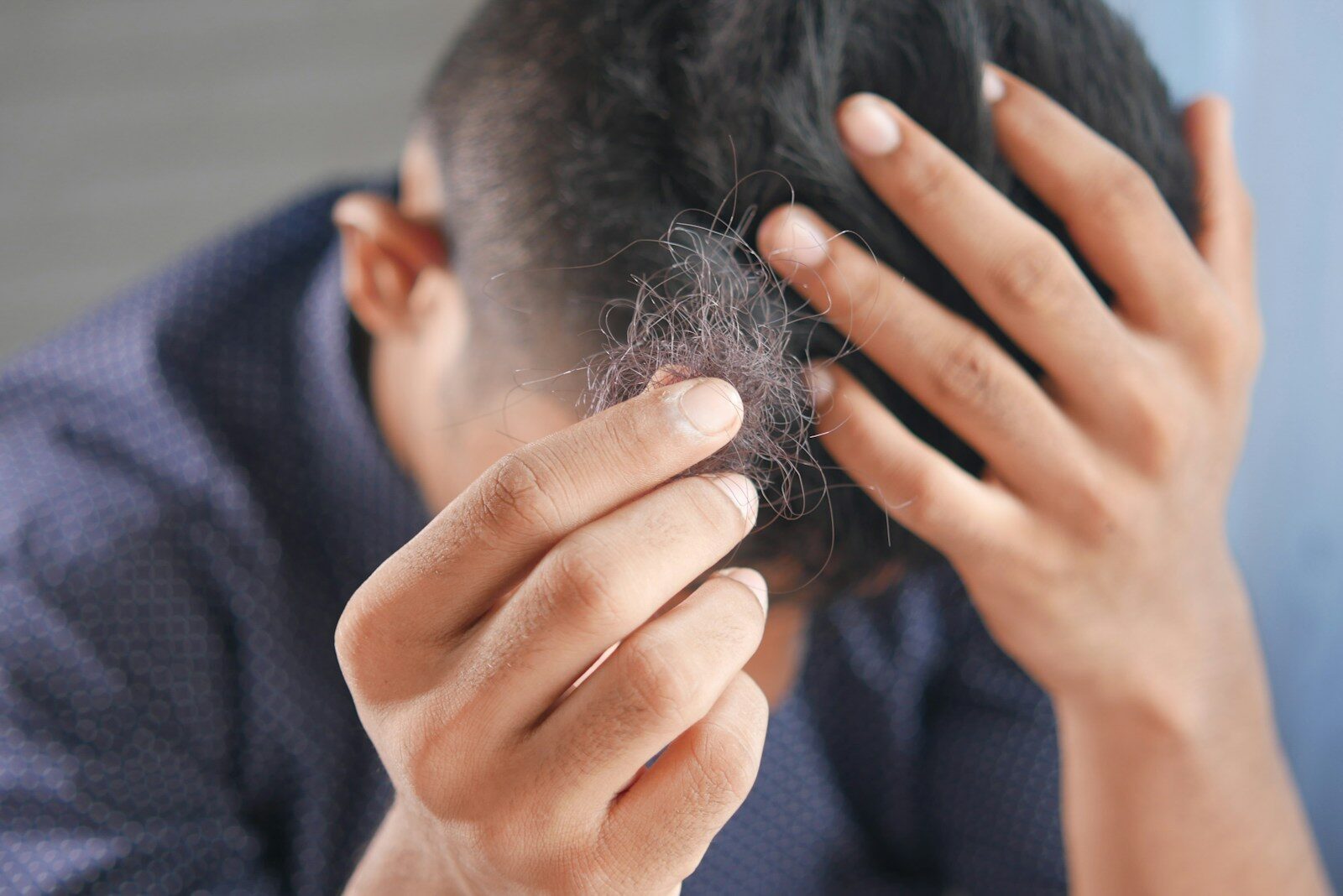
Seeing hair strands on your pillow, clothes, bathroom floor, comb, or shower drain can make you wonder whether you are losing too much hair. It is one of the most common concerns people have when they start paying closer attention to their scalp.
The good news is that some daily hair shedding is completely normal. Hair naturally grows, rests, and eventually falls out as part of its regular growth cycle.
Many people hear that losing 50 to 100 hairs a day is normal. This is often used as a general estimate, but it is not a strict rule that applies equally to everyone.
Your normal amount of shedding can vary depending on your hair density, hair length, washing routine, genetics, age, season, and other individual factors.
Someone with long, thick hair may notice a much larger amount of hair in the shower than someone with short hair, even when both people have completely healthy hair.
Similarly, if you wash your hair every few days, you may see more loose strands during one wash because hairs that were already ready to shed have accumulated between washing days.
This does not necessarily mean that your scalp suddenly started losing hair.
The important thing is to understand the difference between normal shedding and excessive hair loss.
Every hair on your scalp follows a cycle. During the active growth phase, the follicle produces a hair strand. Eventually, the hair enters a resting phase and is later released from the follicle.
A new hair can then begin growing from that follicle.
Because thousands of follicles are at different stages at any given time, some hairs are naturally shed every day while others continue growing.
This continuous cycle is why finding a few hairs on your clothes or pillow is not automatically a sign of a problem.
The situation becomes more concerning when you notice a clear and persistent increase in shedding compared with your usual pattern.
For example, you may suddenly find significantly more hair in the shower every time you wash it. Your brush may fill with hair much faster than before.
You may also notice that your ponytail feels thinner or that your part appears wider.
These changes are more meaningful than trying to count every individual hair.
Counting hairs can actually create unnecessary anxiety because the number you see on one particular day can fluctuate.
Your washing schedule alone can change how much hair you notice.
If you normally wash your hair daily and suddenly start washing it twice a week, you may see more hair during each wash. That does not necessarily mean you are losing more hair overall.
The same thing can happen after wearing your hair in a style that keeps loose hairs trapped.
Once you brush or wash your hair, those already-shed strands become visible at the same time.
Hair length can also make shedding appear worse.
A few long hairs can look like a much larger amount of hair than several short strands.
This is why visual appearance alone should not be used to diagnose hair loss.
A better approach is to look for changes in density and scalp visibility.
If your hair looks consistently thinner than it did several months ago, that is more important than whether you saw 70 or 120 strands in one shower.
One of the most common forms of excessive shedding is telogen effluvium.
Telogen effluvium can happen when a larger-than-usual number of hairs enter the resting phase of the hair cycle around the same time.
It can be triggered by significant physical or emotional stress.
High fever, serious illness, surgery, major weight loss, restrictive dieting, nutritional deficiencies, childbirth, hormonal changes, and significant stress can all be associated with increased shedding.
One unusual feature of telogen effluvium is that the shedding may not begin immediately after the triggering event.
There can be a delay between the trigger and the noticeable hair fall.
This means you might experience a stressful event, recover from an illness, or finish a major diet and only later notice increased shedding.
That delay often causes people to blame the wrong thing.
For example, someone may change their shampoo after noticing hair fall and assume the shampoo caused it. In reality, the trigger may have occurred months earlier.
Temporary shedding can be frightening because large amounts of hair may come out during washing or brushing.
However, increased shedding does not automatically mean permanent baldness.
If the underlying trigger is resolved and there is no other hair disorder, hair growth can gradually recover.
This recovery takes time because hair grows slowly.
Another common form of hair loss is hereditary pattern hair loss.
Unlike temporary shedding, pattern hair loss usually involves progressive thinning caused by genetic and hormonal factors.
Men may notice a receding hairline or thinning at the crown, while women commonly notice a widening part or diffuse thinning over the top of the scalp.
Pattern hair loss can begin at different ages.
It may become noticeable in adulthood, but some people start seeing changes earlier.
If your hair density is gradually decreasing over months or years, it is worth getting an evaluation instead of assuming that the problem is simply normal daily shedding.
Another clue is the appearance of your hairline or part.
A small amount of daily shedding is expected. A progressively widening part, receding hairline, or increasingly visible scalp may indicate an underlying hair-loss condition.
Hair loss can also occur in patches.
Round or clearly defined bald areas are not typical of ordinary daily shedding and should be evaluated by a healthcare professional.
A condition such as alopecia areata can cause sudden patchy hair loss, while scalp infections and inflammatory conditions can produce other patterns.
Your scalp can provide additional clues.
Itching, redness, scaling, burning, tenderness, sores, or significant flaking alongside hair loss may indicate a scalp condition that needs treatment.
Dandruff itself does not mean you are going bald, but persistent scalp inflammation or scratching can affect the overall condition of your scalp and hair.
Another important factor is your hairstyle.
Regularly wearing very tight ponytails, buns, braids, extensions, or other styles that pull on the roots can cause traction-related hair loss.
At first, this may appear as broken hairs or thinning around areas that experience the most tension.
If the pulling continues for a long time, the damage can become more serious.
This is why changing hairstyles and reducing tension can be an important part of protecting your hair.
Heat and chemical treatments can create another problem.
Frequent straightening, curling, bleaching, coloring, and harsh chemical processing can weaken the hair shaft.
This may lead to breakage rather than shedding from the follicle.
The distinction is important.
If you are finding many short, broken pieces of hair, your hair may be experiencing mechanical or chemical damage.
If you are seeing full-length hairs with a small club-shaped end, they may be naturally shed hairs.
Both problems can happen together.
Your diet can also influence hair health.
Hair production requires adequate energy, protein, vitamins, and minerals.
Very restrictive diets may increase the risk of inadequate nutrient intake.
Rapid weight loss is another situation where increased shedding can occur.
People sometimes focus entirely on calories while overlooking protein and overall nutritional quality.
If you are losing weight, make sure your eating pattern remains nutritionally balanced.
If you have difficulty eating enough because of reduced appetite, digestive issues, or a weight-loss medication, discussing your diet with a qualified healthcare professional can be helpful.
Iron is another nutrient that deserves attention when hair shedding is being evaluated.
Low iron stores can be associated with hair shedding in some people, particularly when dietary intake is inadequate or there are other causes of iron deficiency.
However, you should not assume that iron deficiency is the cause of your hair loss without appropriate evaluation.
Taking high-dose iron without medical guidance can be harmful.
The same principle applies to other supplements.
Hair supplements are widely marketed as a quick solution, but more vitamins do not automatically mean more hair growth.
If you are not deficient, taking large doses may provide little benefit and can sometimes create health problems.
Biotin is a particularly popular example.
Although severe biotin deficiency can affect hair and skin, taking large amounts of biotin does not guarantee improved hair growth in people who already get enough.
Some high-dose biotin products can also interfere with certain laboratory tests.
Instead of taking multiple supplements at random, focus first on identifying what is actually causing the shedding.
Stress is another factor people often underestimate.
Emotional stress, major life changes, poor sleep, intense work pressure, and physical stress can affect the hair cycle.
You do not need to eliminate every stressful event from your life to protect your hair.
That is unrealistic.
Instead, focus on maintaining healthy habits that support recovery, including adequate sleep, regular physical activity, balanced nutrition, and practical stress-management strategies.
Illness can also trigger temporary shedding.
Some people notice increased hair fall after a high fever or significant infection.
This can happen because the body temporarily shifts its resources toward dealing with the illness.
Again, the hair loss may appear later rather than during the illness itself.
This delayed pattern can be confusing.
If you recently had a significant illness and then noticed increased shedding, mention the timing to your healthcare professional.
Hormonal changes can also affect hair.
Pregnancy and the postpartum period are well-known examples.
During pregnancy, hormonal changes can alter the normal hair cycle. After childbirth, some people experience increased shedding as the hair cycle shifts.
Hormonal changes associated with menopause can also influence hair density.
Conditions affecting the thyroid or other hormones may contribute to hair loss in some people.
This is another reason persistent or unexplained hair loss deserves proper evaluation.
People sometimes ask whether hair fall is worse in certain seasons.
Some seasonal variation in shedding can occur, and many people notice changes at different times of the year.
However, a major or persistent increase in hair loss should not automatically be dismissed as seasonal shedding.
If you see significant thinning, bald patches, or ongoing excessive shedding, look beyond seasonal explanations.
Another common question is whether shampoo causes hair loss.
For most people, ordinary shampooing does not cause permanent hair loss.
Shampooing can loosen hairs that were already ready to shed, making the amount of hair visible during washing seem alarming.
Harsh products can contribute to scalp irritation or hair damage in some individuals, but that is different from causing genetic hair loss.
If a particular product consistently causes burning, itching, redness, or irritation, stop using it and consider discussing the symptoms with a dermatologist.
Hair oils are also frequently promoted as solutions for excessive shedding.
Oiling can make hair feel smoother and reduce friction for some people, but it should not be considered a proven treatment for every cause of hair loss.
If you have dandruff or an oily scalp, applying heavy oils may not be appropriate for everyone.
Your scalp condition should guide your routine.
Brushing your hair does not normally cause permanent hair loss either.
However, aggressive brushing or detangling can break fragile hair.
Use a gentle technique and avoid repeatedly pulling through knots.
Wet hair may be particularly vulnerable to mechanical damage, so handle it carefully.
Another misconception is that cutting your hair makes it grow faster.
Hair grows from follicles in the scalp, not from the ends.
Cutting the ends can make hair look healthier by removing damaged portions, but it does not increase the growth rate of the follicles.
Similarly, shaving your head does not make the follicles produce thicker hair.
The hair may initially look thicker because the newly cut ends are blunt, but shaving does not change the underlying growth cycle.
So how can you tell whether your daily shedding is normal?
Look at the bigger picture.
Ask yourself whether your shedding has changed significantly from your usual pattern.
Look at whether your overall density is changing.
Check whether your part is widening or your hairline is receding.
Notice whether you are developing bald patches.
Pay attention to whether your scalp has symptoms such as persistent itching, redness, scaling, pain, or inflammation.
Also think about what happened during the previous few months.
Were you sick?
Did you lose a significant amount of weight?
Did you start a restrictive diet?
Did you experience major stress?
Did you give birth?
Did you start or stop a medication?
Did you make significant changes to your hairstyle?
These details can help identify potential triggers.
You do not need to become obsessed with counting individual hairs.
Instead, monitoring your hair density over time is generally more useful.
Take photographs of your hair part, hairline, and crown under similar lighting every few weeks if you want to track changes.
Avoid comparing photos taken under completely different lighting or with different hairstyles.
Bright overhead lighting can make almost anyone’s scalp look more visible.
Hair can also appear thinner when it is wet or oily.
Try to compare similar conditions.
If you are noticing persistent thinning, a dermatologist can examine your scalp and determine whether the issue is excessive shedding, pattern hair loss, breakage, or another condition.
A dermatologist may use a close examination of the scalp and hair to understand what is happening.
Depending on your history and symptoms, they may also consider whether laboratory testing is appropriate.
There is no single blood test that explains every case of hair loss.
Testing should generally be guided by the person’s symptoms and medical history rather than ordering every possible test.
Treatment depends on the cause.
If the problem is temporary shedding caused by a recent physical stressor, correcting the trigger and maintaining adequate nutrition may be the main focus.
If the issue is pattern hair loss, treatments such as minoxidil may be considered for appropriate patients.
Other treatments may be recommended depending on the diagnosis.
This is why identifying the cause before starting treatment is important.
Using a random hair-growth product may waste time while an underlying condition continues untreated.
Early evaluation can be particularly useful when hair loss is progressing.
Some forms of hair loss respond better when treatment begins earlier.
Scarring forms of hair loss deserve especially prompt attention because permanent follicle damage can occur.
Sudden patchy loss should also be evaluated rather than treated as ordinary shedding.
If you have significant hair loss accompanied by symptoms such as fatigue, unexplained weight changes, changes in menstrual cycles, persistent illness, or other new symptoms, tell your healthcare professional.
The hair may be providing a clue that deserves a broader health assessment.
One of the biggest mistakes is comparing your hair shedding with someone else’s.
Your normal hair cycle is individual.
One person may see very little hair during a shower while another sees a larger amount simply because of differences in hair length, density, and washing frequency.
The number of hairs in your drain is therefore not a reliable standalone measure of hair health.
Another mistake is expecting instant results.
Even when the cause of shedding is corrected, the hair cycle takes time to recover.
You may notice reduced shedding before you notice meaningful changes in thickness.
New growth also takes time to become long enough to contribute significantly to overall density.
This can require patience.
Healthy hair care is not about finding one magical product.
It is about protecting the scalp, minimizing unnecessary damage, maintaining good nutrition, managing health conditions, and treating specific causes when they are identified.
If you notice a few hairs every day, there is usually no reason to panic.
Hair shedding is part of the normal hair cycle.
If you notice a persistent and obvious change in shedding or density, however, it is worth paying attention.
Your goal should not be to achieve zero hair shedding.
That is neither realistic nor necessary.
The goal is to maintain healthy follicles and recognize when your normal pattern has changed.
So, how much hair fall is normal in a day?
A commonly quoted range is around 50 to 100 hairs daily, but individual variation is considerable. The number alone cannot determine whether your hair loss is normal.
Your overall pattern, scalp health, hair density, and recent health history matter much more.
If your shedding suddenly increases, your hair is visibly thinning, you develop bald patches, or the problem continues without an obvious explanation, speak with a dermatologist or other qualified healthcare professional.
Understanding the difference between everyday shedding and true hair loss can prevent unnecessary worry while also helping you recognize when professional care is needed.
Your hair naturally sheds every day, but significant changes should not be ignored. With the right approach, many causes of increased shedding can be identified and managed, and temporary shedding may improve as the hair cycle returns to its normal rhythm.