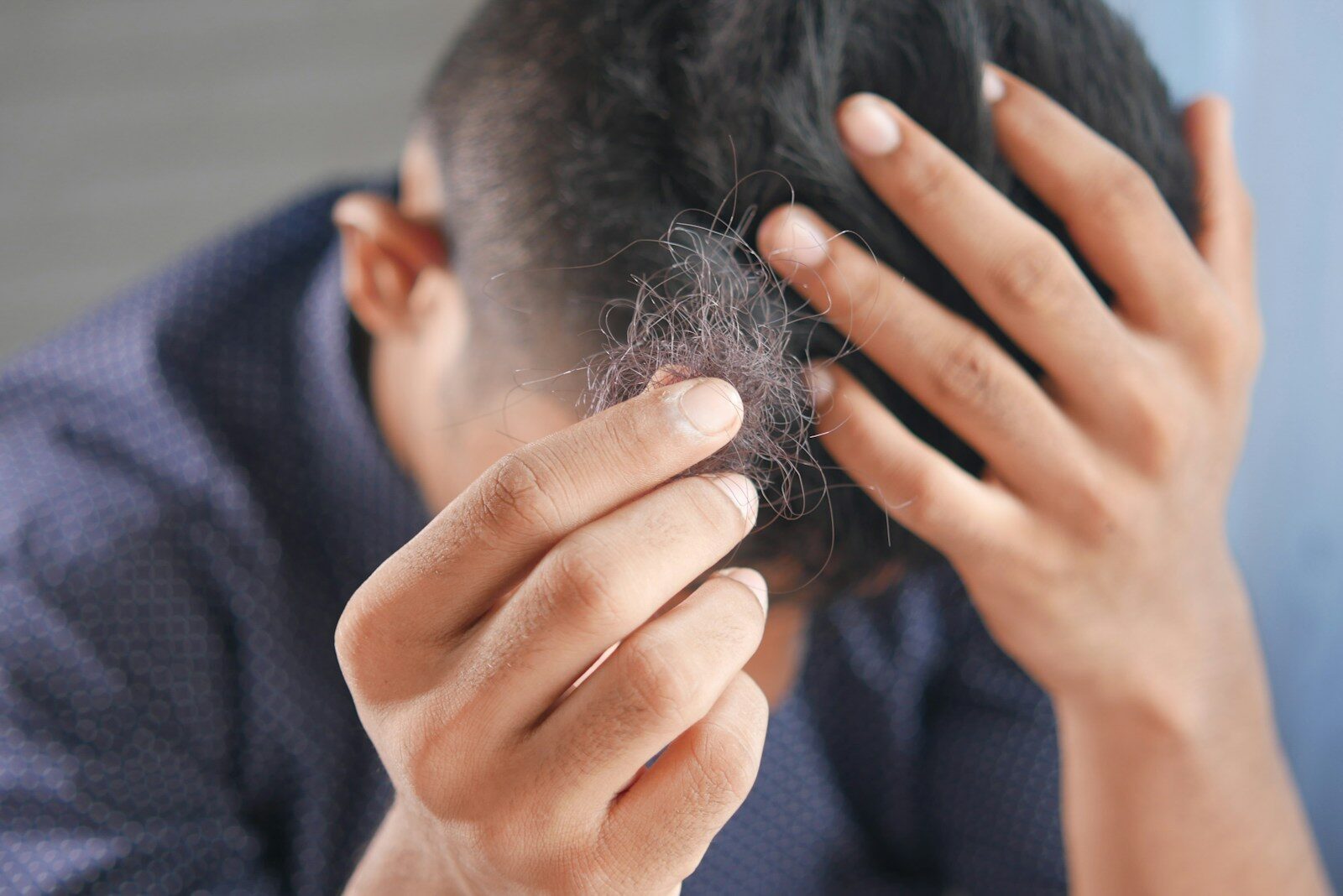
Hair fall in women can be confusing because it does not always look the same from one person to another.
One woman may notice a widening part.
Another may see more hair on the pillow or in the shower.
Someone else may notice that her ponytail feels thinner than it used to.
Sometimes the hairline changes.
Sometimes the crown becomes more visible.
And in some cases, hair loss appears suddenly after an illness, stressful period, pregnancy, rapid weight loss, or major dietary change.
If you are experiencing hair fall, the first thing to know is that you are not necessarily dealing with permanent baldness.
Hair shedding is a normal part of the hair-growth cycle, but a noticeable increase in shedding or gradual reduction in hair density deserves attention.
The cause matters because different types of hair loss require different approaches.
One of the most common causes of hair thinning in women is female pattern hair loss.
It is also called female pattern hair loss or androgenetic alopecia.
This condition can cause gradual thinning, particularly over the top and crown of the scalp.
Instead of developing a completely bald area, many women notice that the part becomes wider and the overall density decreases.
The hairline may remain relatively intact.
This pattern is different from the classic receding hairline commonly associated with male pattern hair loss.
Female pattern hair loss can develop gradually, which makes it easy to overlook.
You may not notice a difference from one month to the next.
But when you compare photographs taken several years apart, the change may become obvious.
This is why taking occasional photographs can be useful.
Use similar lighting, the same angle, and a similar hairstyle.
You do not need to photograph your hair every day.
Daily checking can increase anxiety without providing useful information.
A photograph every few months can provide a clearer picture of whether your hair density is actually changing.
Genetics can play an important role in female pattern hair loss.
If women in your family have experienced thinning hair, you may have a higher likelihood of developing a similar pattern.
However, family history is not a guarantee.
Hair loss can be influenced by multiple genetic and hormonal factors.
Another common cause of hair fall in women is telogen effluvium.
This is a type of excessive shedding that can occur after the body experiences significant physical or emotional stress.
The trigger can include illness, high fever, surgery, childbirth, major stress, rapid weight loss, severe dietary restriction, or other substantial changes.
The interesting part is that the shedding often does not begin immediately.
You may experience the stressful event first and notice hair fall weeks or months later.
That delay can make it difficult to identify the cause.
If you suddenly notice much more hair falling out, think backward.
Ask yourself what happened during the previous few months.
Were you sick?
Did you have a high fever?
Did you undergo surgery?
Did you give birth?
Did you lose a significant amount of weight?
Did you start a restrictive diet?
Did you experience severe emotional stress?
Did you start a new medication?
Did your eating habits change?
These questions can provide valuable clues.
Temporary excessive shedding can be alarming because the amount of hair coming out may appear much greater than usual.
You may see hair everywhere.
You may find strands on your clothes.
You may notice a larger amount during shampooing.
But increased shedding does not automatically mean that your follicles have been permanently damaged.
If the trigger is temporary and the follicles remain healthy, the hair-growth cycle can gradually normalize.
The recovery process can take time.
This is one of the most frustrating aspects of hair loss.
You may fix your diet, recover from an illness, improve your sleep, or feel emotionally better, but your hair may continue shedding for a while.
That does not necessarily mean the treatment is not working.
Hair follicles operate according to their own cycle.
The body needs time to adjust.
Another major cause of hair fall in women is hormonal change.
Hormones can have a significant influence on hair growth.
Pregnancy is a common example.
During pregnancy, hormonal changes can keep more hairs in the growth phase.
Many women notice thicker-looking hair during pregnancy.
After childbirth, hormone levels change.
A larger number of hairs can enter the resting and shedding phase.
This can lead to noticeable postpartum hair loss.
The shedding often becomes noticeable a few months after childbirth.
It can look dramatic, but it is frequently temporary.
However, women should not assume that every case of postpartum hair loss is automatically normal.
Nutritional deficiencies, thyroid problems, anemia, stress, and other conditions can also occur during the postpartum period.
If the hair loss is severe, patchy, progressive, or accompanied by other concerning symptoms, professional evaluation is appropriate.
Hormonal changes can also occur around menopause.
As estrogen levels change, some women notice alterations in hair thickness and density.
Hair may gradually become finer.
The part may become more visible.
The overall texture may change.
Menopause is not the only possible cause, so persistent thinning should still be evaluated.
Polycystic ovary syndrome can also be associated with hair changes in some women.
Women with hormonal conditions may experience scalp hair thinning alongside symptoms such as irregular periods, acne, or increased facial or body hair.
These symptoms do not automatically diagnose a hormonal disorder.
If several changes appear together, discuss them with a healthcare professional.
Another important cause of hair fall is nutritional deficiency.
Hair follicles require adequate nutrition.
If the body is not receiving enough energy, protein, vitamins, or minerals, hair growth can be affected.
This can happen with severe dieting, eating disorders, restrictive diets, digestive problems, or other medical conditions affecting nutrient absorption.
Iron is particularly important to consider in women because iron deficiency can occur for several reasons.
Heavy menstrual bleeding is one possible contributor.
Pregnancy can also increase nutritional demands.
But this does not mean that every woman with hair loss should start taking iron.
Too much iron can be harmful.
If iron deficiency is suspected, a healthcare professional can determine whether testing is appropriate.
Protein is also important.
Hair is primarily composed of keratin, a structural protein.
If your diet is very low in protein, that may contribute to hair problems.
This is particularly relevant when someone is trying to lose weight.
A diet that dramatically reduces food intake can make it difficult to consume enough protein and other nutrients.
If you are trying to lose weight, focus on a balanced approach rather than crash dieting.
Include protein-rich foods such as eggs, fish, poultry, dairy products, lentils, beans, soy, nuts, and seeds according to your dietary preferences.
A balanced diet is more useful than focusing on a single “hair-growth food.”
Biotin is another nutrient that is frequently promoted for women with thinning hair.
Biotin deficiency can affect hair, but deficiency is not common in people eating a varied diet.
Taking high doses of biotin without a demonstrated need is not automatically beneficial.
It can also interfere with certain laboratory tests.
This is why supplements should be used thoughtfully.
Do not assume that a hair gummy will solve a complex hair-loss problem.
The same applies to collagen supplements.
Collagen is widely marketed for hair, skin, and nails.
But a collagen supplement should not be viewed as a universal treatment for female hair loss.
If your diet already provides adequate protein, adding a supplement does not necessarily address the reason your hair is thinning.
Identify the cause first.
Another common issue is stress.
Women often manage multiple responsibilities simultaneously.
Work, family, relationships, finances, caregiving, pregnancy, parenting, and other pressures can create prolonged stress.
Significant emotional stress can contribute to temporary excessive shedding.
Stress can also indirectly affect hair by changing sleep, eating patterns, and general health.
If you are experiencing chronic stress, do not expect one relaxation technique to solve everything.
Instead, focus on manageable changes.
Try to maintain regular meals.
Get as much sleep as your circumstances allow.
Stay physically active.
Take breaks when possible.
Spend time with supportive people.
Consider professional mental-health support if stress becomes overwhelming.
Managing stress is not only about preventing hair loss.
It is part of taking care of your overall health.
Sleep deserves attention too.
Poor sleep does not automatically cause female pattern hair loss.
But chronic sleep disruption can occur alongside stress, poor nutrition, hormonal changes, and other health issues.
If you are consistently struggling to sleep, discuss it with a healthcare professional rather than assuming that hair products will solve the problem.
Another common cause of hair problems is excessive styling.
Women may regularly use straighteners, curling tools, blow dryers, bleach, hair color, relaxers, extensions, and tight hairstyles.
These practices can damage the hair shaft.
Hair damage is different from hair loss caused by the follicle.
If your hair is snapping, you may see many short strands.
Your ends may be split.
The hair may feel rough or brittle.
Your overall hair may look thinner even though the follicles are still producing hair.
Reducing damage can help.
Use lower heat when possible.
Avoid repeatedly applying heat to the same section.
Give chemically treated hair time to recover.
Be gentle when detangling.
Avoid brushing aggressively.
Do not pull through knots.
If you use extensions or other styles that place tension on the scalp, make sure they are not excessively tight.
Repeated tension can contribute to traction alopecia.
Traction-related hair loss can become more serious when the pulling continues over a long period.
If your hairstyle causes scalp pain, tenderness, or bumps, consider loosening it.
A hairstyle should not hurt.
Another myth is that women should avoid washing their hair if it is falling out.
This is usually unnecessary.
Shampooing does not normally cause the underlying follicle-related hair loss.
Washing simply makes loose hairs more visible.
If you wash your hair less frequently, you may see more strands when you finally shampoo.
That does not necessarily mean the shampoo caused the hair loss.
Maintain appropriate scalp hygiene.
Choose a shampoo that works for your scalp and hair type.
If you have dandruff or another scalp condition, address it rather than avoiding washing.
Scalp health is an important part of hair care.
Dandruff can also make hair problems feel worse.
If your scalp is itchy and you scratch repeatedly, you can create irritation and potentially contribute to breakage.
Dandruff itself is not usually the main cause of female pattern hair loss.
A woman can have dandruff and hereditary hair thinning at the same time.
This distinction matters.
Treating dandruff may reduce flakes and itching.
It does not necessarily stop genetic thinning.
Another possible cause is scalp inflammation.
If your scalp is persistently red, painful, swollen, crusted, or severely itchy, you may have something other than ordinary dandruff.
Conditions such as seborrheic dermatitis, psoriasis, eczema, and scalp infections can affect the scalp.
Some can also contribute to hair loss.
Do not keep changing shampoos indefinitely if the scalp is becoming increasingly irritated.
A dermatologist can determine whether you need a different treatment.
Scalp infections deserve particular attention.
Some fungal infections can cause scaling, broken hairs, redness, swelling, and hair loss.
They may require specific medical treatment.
If you notice these symptoms, professional evaluation is better than relying on oils or home remedies.
Another form of hair loss that women may experience is alopecia areata.
This condition can cause smooth, clearly defined patches of hair loss.
The patches can appear suddenly.
In some cases, eyebrows or eyelashes can also be affected.
This pattern is different from diffuse postpartum shedding or gradual female pattern thinning.
If you develop a sudden bald patch, get it evaluated.
Do not assume that stress or dandruff is the explanation.
Another type of hair loss can involve scarring of the follicles.
Scarring hair-loss conditions are important because damaged follicles may not be able to produce hair normally.
Symptoms can include scalp redness, pain, itching, scaling, burning, or changes in skin texture.
If hair loss is occurring alongside significant scalp inflammation, prompt professional evaluation is important.
The earlier an inflammatory condition is recognized, the better the opportunity to protect remaining follicles.
Another question many women ask is whether hair loss is caused by hormones being “too high.”
Hair growth is influenced by hormones, but the situation is more complicated than simply having too much or too little of one hormone.
Some women with normal hormone levels can still experience genetically influenced hair thinning.
Other women may have hormonal disorders that affect hair.
This is why hormone testing is not automatically necessary for every woman with hair loss.
Testing should be based on symptoms and clinical assessment.
If hair loss is accompanied by irregular periods, excessive facial hair, significant acne, unexpected weight changes, or other hormonal symptoms, mention these details to your healthcare professional.
The timeline of hair loss can also help.
Gradual thinning over several years may suggest a different cause from sudden shedding over a few months.
A sudden increase in shedding after illness or major stress may fit temporary telogen effluvium.
A widening part that progresses slowly may suggest female pattern hair loss.
A smooth bald patch may suggest alopecia areata.
Hair loss with scaling or inflammation may suggest a scalp disorder.
These patterns are useful clues, but they are not a diagnosis.
A dermatologist can examine the scalp and hair directly.
Depending on your symptoms, they may consider blood tests or other investigations.
The purpose is to identify conditions that may be contributing to the hair loss.
Another mistake women often make is assuming that hair loss is always caused by a vitamin deficiency.
Nutritional problems can contribute, but not every case is nutritional.
Taking multiple supplements without knowing what you need can create unnecessary expense and potential side effects.
Instead, look at your diet and discuss suspected deficiencies with a healthcare professional.
If a deficiency is confirmed, correcting it can be an important part of treatment.
If your nutrition is already adequate, taking more supplements is unlikely to solve genetic hair loss.
This is why personalized evaluation matters.
Another popular solution is hair oil.
Oiling can improve the feel and appearance of dry hair.
It can reduce friction and make strands easier to manage.
But hair oil does not automatically stop hereditary hair loss, correct thyroid disease, or reverse nutritional deficiency.
Use oil if you enjoy it and your scalp tolerates it.
Just do not rely on it as a medical treatment.
The same applies to onion juice.
Onion juice is widely discussed online as a natural hair-growth remedy.
However, it should not be presented as a guaranteed treatment for female hair loss.
It can also irritate sensitive skin.
If you experience burning, redness, or a rash after using a home remedy, stop.
Natural does not automatically mean harmless.
Rosemary oil is another popular ingredient.
Some people use it as part of their hair-care routine.
But if your hair is progressively thinning, do not allow a home remedy to delay proper diagnosis.
If you have a medical form of hair loss, evidence-based treatment may be more appropriate.
Another common question is whether trimming hair makes it grow faster.
It does not.
Hair grows from follicles in the scalp.
Cutting the ends cannot increase the biological growth rate.
Trimming can remove split ends and make hair look healthier.
That is useful cosmetically, but it does not treat hair loss.
Shaving your head also does not make follicles produce thicker hair.
Newly shaved hair may look thicker because the end is blunt.
The underlying follicle has not changed.
Another myth is that wearing a ponytail causes all hair loss.
A normal loose ponytail is not automatically harmful.
The concern is repeated tight pulling.
If the hair is consistently under tension, traction-related hair loss can develop.
Switch hairstyles regularly.
Use looser ties.
Avoid pulling the hair tightly against the scalp.
Give your hair breaks from extensions and other high-tension styles.
Another question is whether hair dye causes permanent hair loss.
Hair dye can damage the hair shaft, particularly with frequent chemical processing or bleaching.
That can cause breakage.
However, hair dye is not the same thing as genetic follicle miniaturization.
If you notice burning, severe irritation, swelling, or a rash after using a hair product, stop using it and seek advice.
Allergic reactions can occur.
Your scalp should not be ignored simply because the product is marketed as a beauty treatment.
Another factor is age.
Hair density can naturally change as people get older.
The growth cycle can change, and individual hairs may become finer.
However, significant or progressive thinning should not simply be dismissed as aging.
Many causes of hair loss are treatable or manageable.
Early evaluation can be useful.
If you are in your 20s or 30s and experiencing noticeable thinning, you do not need to wait until middle age before asking about it.
Hair loss can begin at different ages.
The cause matters more than your age alone.
Another important consideration is medication.
Certain medicines can affect hair growth in some people.
If your hair loss began after starting a new medication, mention the timing to your healthcare professional.
Do not stop prescribed medication without medical advice.
Your doctor can determine whether the medication could be contributing and whether another explanation is more likely.
Medical history is particularly important when evaluating hair loss in women.
A dermatologist may ask about pregnancy, menstrual patterns, contraception, medications, weight changes, diet, stress, illness, family history, and hair-care practices.
These details can provide important clues.
You may also be asked whether your hair loss is sudden or gradual.
The distinction can significantly change the possible causes.
If the hair is coming out in large amounts during washing but the overall pattern remains relatively even, excessive shedding may be involved.
If the part is gradually widening, female pattern hair loss may be more likely.
If the hairline is developing distinct patches, another cause should be considered.
If the hair shaft is snapping, focus on damage reduction.
This is why there is no single “best treatment for women’s hair fall.”
The right treatment depends on the cause.
For female pattern hair loss, minoxidil is one commonly used evidence-based treatment.
It can help some women slow hair loss and support regrowth.
However, results take time.
It is not a treatment that produces a full head of hair in a few weeks.
Consistency is important.
Treatment may also need to be continued to maintain the benefit.
If you are pregnant, trying to become pregnant, or breastfeeding, discuss hair-loss treatments with your healthcare professional before using them.
Do not assume that a treatment suitable for someone else is automatically suitable for you.
Other medical treatments may be considered depending on the cause.
Some women with hormonal or pattern hair loss may be candidates for prescription treatments.
These medications can have side effects and may not be appropriate in pregnancy or certain medical situations.
Professional guidance is therefore important.
Hair transplantation may be considered for selected women with suitable permanent hair loss.
But it is not the first answer to unexplained sudden shedding.
The cause and stability of the hair loss should be evaluated first.
A procedure cannot correct an untreated nutritional deficiency, thyroid disorder, or active scalp disease.
Another important issue is expectations.
Hair treatment takes time.
If you begin an appropriate treatment today, do not expect major visible improvement next week.
Hair follicles need time.
Track your progress over several months.
Use consistent photographs.
Pay attention to changes in shedding and density.
Avoid comparing your hair with someone else’s.
Genetics, age, hormones, hair texture, and medical history are different for every person.
Another mistake is changing products too frequently.
You may use one shampoo for a week, then switch to another.
Then you add a serum.
Then an oil.
Then supplements.
Then a home remedy.
This makes it difficult to understand what is actually helping.
Keep your routine simple.
If you are treating a scalp condition, follow the recommended treatment consistently.
If you are using a medical hair-loss treatment, follow professional guidance.
Give treatments enough time to work.
Stop products that cause significant irritation.
Women with curly or textured hair may need particularly gentle handling.
Frequent detangling, heat, chemical processing, tight styles, and extensions can increase breakage.
Choose methods that minimize pulling.
Conditioning can help reduce friction.
Protect the hair during sleep if that works for your hair type.
The goal is not to follow a complicated routine.
It is to minimize unnecessary damage.
Another common concern is hair loss after dieting.
This deserves attention because many women try restrictive diets in an effort to lose weight.
If calorie intake falls dramatically, the body may respond to the physical stress.
Rapid weight loss can contribute to excessive hair shedding.
A balanced weight-management plan is therefore preferable to crash dieting.
If you are losing weight rapidly or struggling to eat enough, discuss your nutrition with a healthcare professional.
Your goal should be better health, not simply a smaller number on the scale.
Hair is only one reason to avoid extreme diets.
Another concern is hair loss after illness.
A severe illness can trigger temporary shedding.
The hair loss may appear after you have already recovered.
Again, the delay can be confusing.
If you experienced a serious infection or high fever before the shedding began, tell your dermatologist.
That timeline may help explain what happened.
Hair loss can also occur after surgery.
Surgery places physical stress on the body, and recovery can temporarily affect the hair cycle.
This does not mean the surgery permanently damaged your hair.
The response can be temporary.
Pregnancy, illness, stress, surgery, weight loss, and nutritional changes can sometimes overlap.
That is why the cause is not always obvious.
A woman may experience pregnancy-related hormonal changes while also having low iron and severe sleep disruption.
All three factors may influence hair.
The answer is rarely as simple as one shampoo.
Another thing to remember is that hair fall can affect mental health.
Hair is closely connected to identity and appearance.
Seeing your hair become thinner can affect confidence.
You may avoid photographs.
You may change hairstyles to hide your scalp.
You may worry that other people are noticing.
These feelings are understandable.
But try not to let hair loss become the only thing you think about.
If it is causing significant anxiety or affecting your quality of life, talk to someone you trust or seek professional support.
You deserve support while dealing with the problem.
If you are experiencing hair loss now, start with observation rather than panic.
Look at the pattern.
Think about the timeline.
Review your recent health.
Consider diet and weight changes.
Think about stress and sleep.
Review medications.
Check your scalp for redness, scaling, pain, or inflammation.
Look at whether the hair is shedding from the root or breaking along the length.
Then decide whether you need professional evaluation.
If the loss is gradual and patterned, a dermatologist can help determine whether female pattern hair loss is involved.
If it is sudden and diffuse, recent stressors or physical changes may be relevant.
If it is patchy, seek evaluation.
If the scalp is inflamed, painful, or scaling heavily, seek evaluation.
If the hair is breaking, reduce damage.
The right approach depends on what is actually happening.
Do not feel pressured to buy expensive products immediately.
Hair-loss marketing can make almost every woman feel that she needs a special serum, supplement, shampoo, or oil.
But effective hair care starts with understanding the cause.
Sometimes the most important treatment is correcting a medical issue.
Sometimes it is improving nutrition.
Sometimes it is managing a temporary shedding trigger.
Sometimes ongoing treatment is necessary for hereditary thinning.
Sometimes the hair simply needs time to recover.
There is no shame in seeking professional help.
Hair loss is a legitimate concern.
A dermatologist can help distinguish normal shedding from excessive shedding and different forms of hair loss.
You do not have to wait until the thinning becomes severe.
Early assessment can provide clarity.
The most important thing is not to panic.
Hair in your brush does not automatically mean you are going bald.
A wider part does not automatically mean permanent hair loss.
Postpartum shedding does not necessarily mean your hair is permanently damaged.
Stress-related shedding can improve.
Nutritional problems can sometimes be corrected.
Some types of pattern hair loss can be managed.
The first step is understanding what type of hair loss you have.
Once you know the cause, your choices become much clearer.
Focus on a balanced diet.
Get adequate protein.
Avoid extreme dieting.
Protect your hair from excessive heat and chemical damage.
Avoid constant tension from tight hairstyles.
Keep your scalp healthy.
Manage stress as realistically as possible.
Use supplements only when appropriate.
And seek professional evaluation when the hair loss is persistent, sudden, patchy, painful, or progressive.
Healthy hair is not about finding one miracle ingredient.
It is about supporting your overall health, protecting your hair, and treating the underlying cause when one is present.
If you are experiencing hair fall, give yourself time and avoid making decisions based on fear.
Your hair may be responding to something that happened months ago.
Or it may be showing you that another condition deserves attention.
Either way, understanding the cause is the most useful place to begin.
Is hair fall in women normal? Some daily shedding is normal, but a persistent increase in shedding or gradual reduction in hair density can indicate a form of hair loss that deserves attention.
What is the most common cause of hair thinning in women? Female pattern hair loss is a common cause of gradual thinning, particularly over the top and crown of the scalp.
Why is my hair suddenly falling out? Sudden increased shedding can be associated with illness, significant stress, rapid weight loss, nutritional problems, hormonal changes, medications, or other physical triggers.
Can stress cause hair fall in women? Significant emotional or physical stress can contribute to temporary excessive shedding.
Why does hair fall happen months after stress? Hair follicles follow a natural growth cycle, so the effects of a significant stressor may become noticeable after a delay.
Can pregnancy cause hair loss? Pregnancy can change the hair-growth cycle. Many women experience increased shedding several months after childbirth as hormone levels change.
Will postpartum hair loss grow back? Postpartum shedding is often temporary, and hair can gradually regain fullness as the hair cycle normalizes.
Can menopause cause hair thinning? Hormonal changes around menopause can influence hair density and texture, although other causes can also contribute.
Can low iron cause hair loss in women? Iron deficiency can contribute to hair shedding in some women. Testing and supplementation should be guided by a healthcare professional.
Should women take iron for hair loss? Not automatically. Iron should generally be taken when there is an appropriate medical reason because excessive iron can be harmful.
Can low protein cause hair fall? Inadequate protein intake can contribute to hair problems because hair is primarily made from keratin, a structural protein.
Can dieting cause hair loss? Severe calorie restriction, rapid weight loss, and highly restrictive diets can contribute to excessive hair shedding.
Can biotin stop hair fall? Biotin is not a universal treatment for hair loss. Supplementation is most useful when a genuine deficiency or specific nutritional need exists.
Can collagen supplements regrow women’s hair? Collagen supplements should not be considered a guaranteed treatment for female hair loss. Overall nutrition and diagnosis of the underlying cause are more important.
Can hair oil stop hair fall? Hair oil can improve softness and manageability, but it does not treat every cause of hair loss.
Can onion juice stop hair fall? Onion juice should not be considered a guaranteed treatment for female hair loss, and it can irritate sensitive skin.
Can rosemary oil regrow hair? Rosemary oil is popular in hair care, but progressive or significant hair loss should not be managed solely with home remedies.
Does shampoo cause hair loss? Normal shampooing does not usually cause follicle-related hair loss. Washing can simply make already-shed hairs more visible.
Should I stop washing my hair if it is falling out? No. Continue appropriate scalp hygiene and use products that suit your scalp and hair type.
Can dandruff cause hair loss in women? Dandruff is not usually the main cause of progressive female pattern hair loss, although severe itching, scratching, irritation, or another scalp condition can contribute to hair problems.
Can tight hairstyles cause permanent hair loss? Repeated tension from tight hairstyles can cause traction-related hair loss. Prolonged damage may become more difficult to reverse.
Does cutting hair make it grow faster? No. Hair grows from follicles in the scalp, so trimming the ends does not increase the biological growth rate.
Does shaving make women’s hair grow thicker? No. Shaving changes the appearance of the hair shaft but does not increase the number or size of follicles.
What does female pattern hair loss look like? It commonly appears as gradual thinning over the top of the scalp and a widening part, while the front hairline may remain relatively preserved.
What does telogen effluvium look like? It commonly causes increased shedding across the scalp rather than a single clearly defined bald patch.
What does alopecia areata look like? Alopecia areata can cause sudden, smooth, clearly defined patches of hair loss. A sudden bald patch should be evaluated rather than automatically blamed on stress.
Can thyroid problems cause hair loss in women? Yes. Thyroid disorders can affect hair growth and may cause other symptoms that should be discussed with a healthcare professional.
Can hormonal problems cause female hair loss? Hormonal conditions can influence hair growth, particularly when hair loss occurs alongside symptoms such as irregular periods, acne, or increased facial or body hair.
Can medication cause hair loss in women? Some medications can contribute to hair shedding in certain people. Do not stop prescribed medication without discussing the issue with your healthcare professional.
Can minoxidil help women with hair loss? Minoxidil is an evidence-based treatment used for certain forms of female pattern hair loss. It does not treat every cause of hair shedding and should be used appropriately.
How long does hair treatment take to work? Hair growth is slow, so most treatments require several months before results can be properly assessed.
When should I see a dermatologist for hair loss? Seek professional evaluation if your hair loss is sudden, severe, patchy, rapidly progressing, persistent, or associated with scalp pain, redness, scaling, sores, or other unusual symptoms.
Can female hair loss be reversed? The outlook depends on the cause. Some temporary shedding can improve, while hereditary and other chronic forms of hair loss may require ongoing management.
How can I reduce hair fall naturally? Focus on adequate nutrition, sufficient protein, healthy sleep, stress management, gentle hair care, and avoiding unnecessary heat, chemical damage, and tight hairstyles.
Can hair loss after weight loss grow back? Temporary shedding associated with rapid weight loss can improve after nutritional intake and the body’s physiological state stabilize, although recovery may take months.
Is hair fall after illness temporary? It can be. Significant illness or fever can trigger temporary excessive shedding that becomes noticeable later.
Can lack of sleep cause hair loss? Sleep disruption can occur alongside stress and other factors affecting overall health, but it is not usually the only explanation for significant hair loss.
Can stress and hormonal changes cause hair loss together? Yes. Multiple factors can influence the hair-growth cycle at the same time, making it important to consider the complete health history.
Medical Disclaimer: This article is intended for general educational purposes and does not replace individualized medical advice, diagnosis, or treatment. Hair loss in women can have many causes. If you experience sudden, severe, patchy, painful, rapidly progressive, or persistent hair loss, consult a qualified dermatologist or healthcare professional.