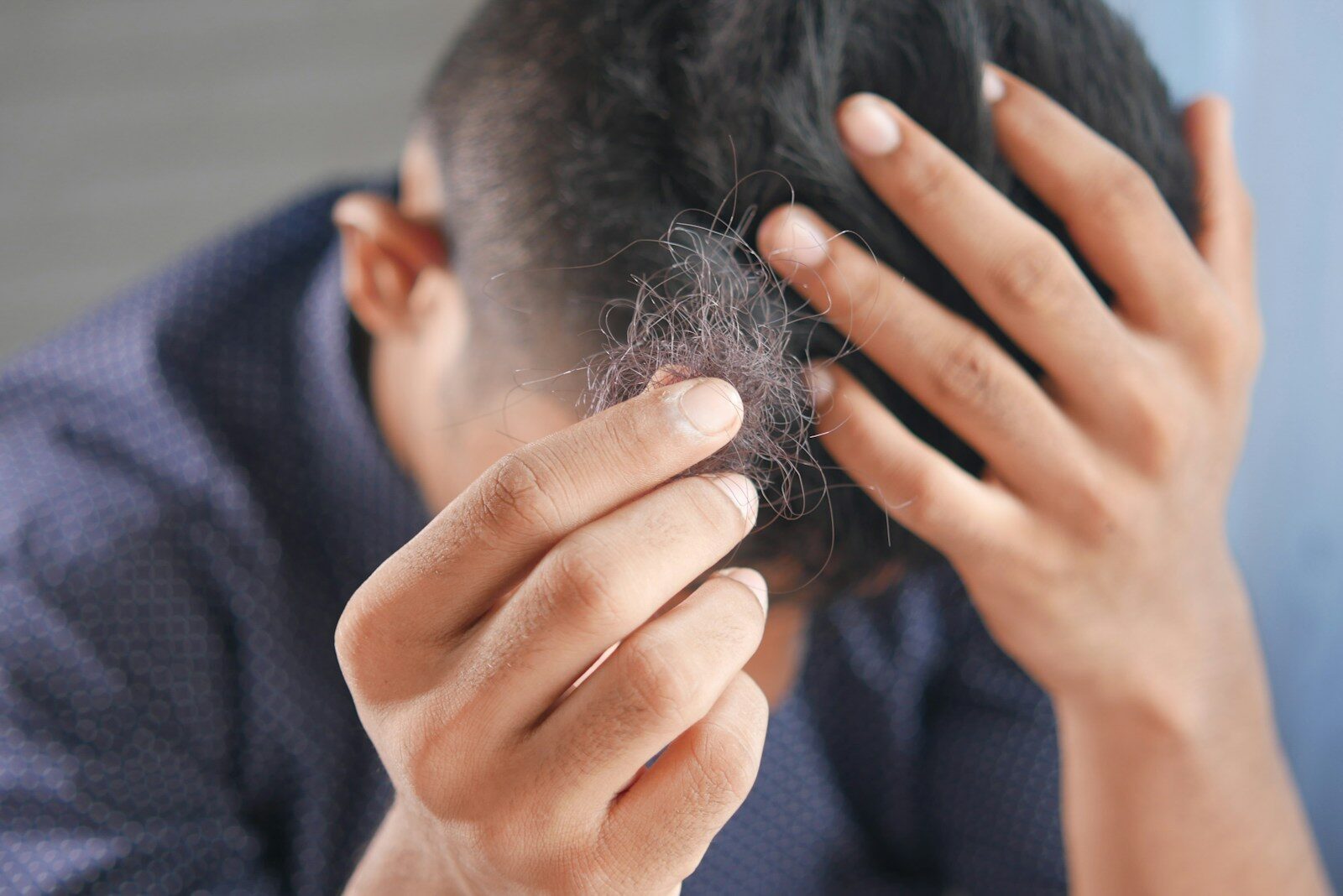
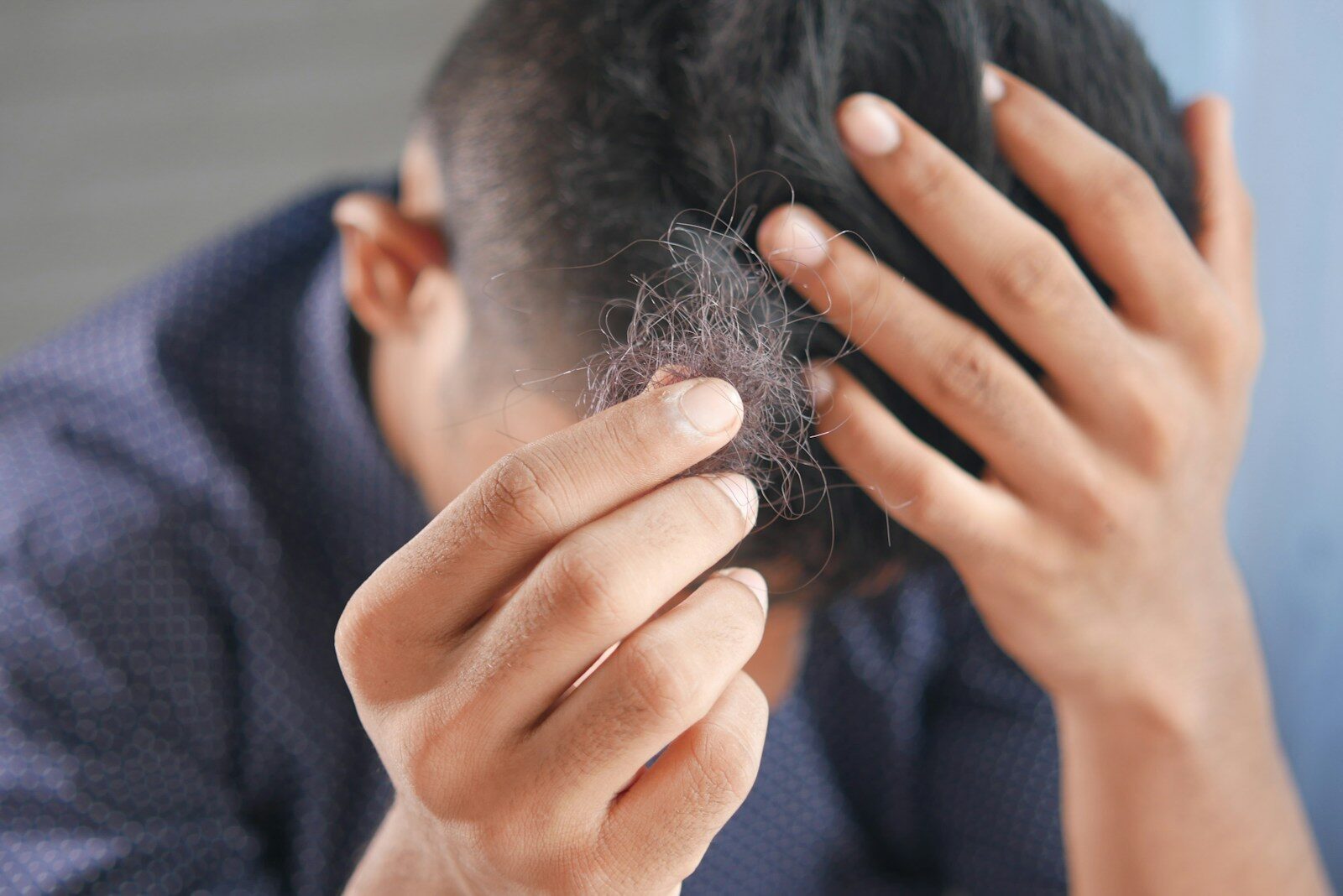
Hair fall is one of those problems that can quietly become a major source of stress. You may first notice a few extra strands on your pillow, more hair than usual in the shower drain, or a widening part when you look in the mirror. Then the questions start: Why is my hair falling out? Is this normal? Can stress cause hair loss? Does washing hair increase hair fall? Which vitamins are good for hair growth? Can lost hair grow back? Should I use minoxidil?
These are not unusual questions. Hair shedding and hair thinning can happen for many different reasons, and the right solution depends largely on understanding what is actually happening to your scalp and hair follicles.
Dermatologists distinguish between ordinary hair shedding and actual hair loss. It is normal to shed roughly 50 to 100 hairs per day, although the amount can vary. Excessive shedding can occur after physical or emotional stress, illness, high fever, surgery, childbirth, significant weight loss, or other major changes in the body.
At the same time, gradual thinning may have a completely different cause. Hereditary hair loss, also known as androgenetic alopecia, is the most common cause of hair loss worldwide and can affect both men and women.
That is why treating every case of hair fall with the same shampoo, oil, supplement, or home remedy is usually not the best approach.
This guide answers the most common questions people ask about hair fall and explains what you can realistically do to protect your hair.
What exactly is hair fall?
Hair fall simply means hair is coming out from the scalp. But the phrase can describe several different situations.
You might be experiencing normal daily shedding, temporary excessive shedding, gradual thinning, hair breakage, or a medical form of hair loss.
These conditions can look similar at first but have different causes.
For example, someone who notices hundreds of hairs falling out during a shower after recovering from an illness may be experiencing excessive shedding. Another person who notices that the hairline is slowly moving backward over several years may have hereditary hair loss.
A third person might have brittle hair that snaps halfway down the strand. That is hair breakage rather than hair loss from the follicle.
Understanding this difference is important because the treatment should target the underlying problem rather than simply the hair you see in the bathroom.
How much hair fall is normal in a day?
One of the most searched questions about hair fall is also one of the simplest: How many hairs should fall out in a day?
A commonly cited normal range is around 50 to 100 hairs per day.
However, you should not become obsessed with counting individual hairs.
Your hair naturally goes through different stages of growth, rest, and shedding. Some hairs are naturally ready to fall out while new hairs continue their growth cycle.
The amount you notice can also depend on how often you wash and brush your hair. Someone who washes every day may see fewer hairs at one time, while someone who washes every three or four days may notice a larger amount in the shower.
The more important question is whether your normal pattern has changed.
If you suddenly notice significantly more shedding, visible thinning, bald patches, a receding hairline, or a widening part, it is worth investigating the cause.
Why is my hair falling out suddenly?
Sudden hair shedding can have many possible causes.
One common cause is telogen effluvium, a type of excessive shedding that can occur after the body experiences a significant stressor.
Possible triggers include:
- A high fever or significant illness
- Major surgery
- Severe emotional stress
- Childbirth
- Significant weight loss
- Major dietary restriction
- Certain medications
- Other physical stresses on the body
The interesting thing about this type of shedding is that it may not happen immediately.
The hair cycle means that a person may experience noticeable shedding weeks or months after the event that triggered it. The American Academy of Dermatology notes that excessive shedding often becomes noticeable a few months after a stressful event.
So, if you suddenly notice hair falling out today, think about what happened to your body several months earlier.
Did you have a serious illness?
Were you under unusual stress?
Did you lose a significant amount of weight?
Did you have surgery?
Did you give birth?
Did you dramatically change your diet?
These clues can be extremely useful.
Can stress cause hair fall?
Yes.
Significant physical or emotional stress can trigger excessive hair shedding.
This does not necessarily mean that every stressful day will make your hair fall out. Hair follicles respond to major physiological changes, and prolonged or severe stress may contribute to disruption of the normal hair-growth cycle.
The important point is that stress-related shedding can sometimes be temporary.
If the trigger is removed and there are no other underlying causes, hair shedding may gradually return toward normal. The AAD reports that people with temporary excessive shedding often regain normal fullness within roughly six to nine months after the body readjusts.
However, chronic stress can make the situation more complicated.
If you are experiencing ongoing stress, poor sleep, restricted eating, or other health changes at the same time, several factors may be contributing to the problem.
Can lack of sleep cause hair loss?
Sleep is important for overall health, but it is too simplistic to say that one or two nights of poor sleep directly cause baldness.
The bigger concern is chronic poor sleep combined with stress, poor nutrition, lifestyle changes, or an underlying health problem.
If your hair has suddenly started shedding and your sleep has deteriorated at the same time, it makes sense to look at the entire picture rather than blaming one factor.
Improving sleep, managing stress, eating adequately, and taking care of your overall health can support your general well-being, although these steps should not be presented as guaranteed treatments for every form of hair loss.
Can weight loss cause hair fall?
Yes, particularly when weight loss is rapid or accompanied by inadequate calorie or nutrient intake.
This is becoming an increasingly relevant question because interest in rapid weight loss and GLP-1 medications has grown significantly.
Recent reporting has highlighted hair shedding among some people experiencing substantial weight loss while using medications such as semaglutide or tirzepatide. Experts have suggested that rapid weight loss, reduced calorie intake, inadequate protein, and nutritional deficiencies may contribute to temporary shedding.
This does not mean that everyone taking a weight-loss medication will lose hair.
It also does not mean that the medication itself is always the direct cause.
If hair shedding begins after substantial weight loss, discuss it with your healthcare professional rather than stopping a prescribed medication on your own.
The goal should be to investigate the underlying cause and ensure that your diet provides adequate nutrition.
Does lack of protein cause hair fall?
Protein is important for healthy hair because hair is largely made of keratin, a protein.
A severely restricted diet may therefore create problems for hair growth and overall health.
People who dramatically reduce food intake, follow highly restrictive diets, or lose weight quickly may not consume enough protein and essential nutrients.
That is why a balanced diet is a better strategy than relying on a single “hair-growth food.”
Include appropriate sources of protein such as eggs, dairy products, fish, poultry, legumes, beans, lentils, soy foods, nuts, and seeds according to your dietary preferences.
If you suspect a nutritional deficiency, it is better to get evaluated rather than automatically taking multiple supplements.
Which vitamins are good for hair growth?
This is another extremely popular hair-loss question.
People often search for biotin, vitamin D, iron, zinc, vitamin B12, and other nutrients when they notice hair fall.
But there is an important distinction between correcting a deficiency and taking large amounts of supplements without knowing whether you need them.
If a person has a genuine nutritional deficiency contributing to hair loss, correcting that deficiency may help.
But taking more vitamins does not automatically produce more hair.
In fact, the American Academy of Dermatology warns that excessive amounts of certain nutrients can actually worsen hair loss.
So instead of asking, “Which hair vitamin should I buy?” a better question is:
“Could I have a nutritional deficiency, and do I need testing?”
That approach is more evidence-based and avoids unnecessary supplementation.
Is biotin good for hair loss?
Biotin is heavily marketed as a hair-growth supplement.
However, biotin deficiency is relatively uncommon, and taking high-dose biotin without a demonstrated deficiency is not a universal solution for hair loss.
If your diet is adequate and you do not have a deficiency, adding large quantities of biotin may not solve the underlying problem.
There is another important issue: high-dose biotin supplements can interfere with certain laboratory tests.
For that reason, supplements should not automatically be treated as harmless simply because they are sold over the counter.
Does iron deficiency cause hair fall?
Iron deficiency can be associated with hair loss in some people.
This is particularly relevant when hair loss occurs alongside other symptoms or when a person has risk factors for iron deficiency.
However, you should not automatically take iron supplements just because your hair is falling.
Too much iron can be harmful.
If your healthcare professional suspects iron deficiency, they may recommend appropriate blood testing and treatment based on the results.
This is a good example of why identifying the cause is more important than randomly trying hair supplements.
Can thyroid problems cause hair loss?
Yes, thyroid disorders can be associated with changes in hair growth and shedding.
If hair loss occurs along with symptoms such as unexplained weight changes, unusual fatigue, temperature sensitivity, menstrual changes, or other concerning symptoms, speak with a healthcare professional.
A doctor can determine whether thyroid testing or other investigations are appropriate.
Hair loss can sometimes be one visible clue that something else is happening inside the body.
Why is my hair thinning at the front?
Front hairline thinning is especially common in hereditary hair loss.
In men, hereditary hair loss often starts with a receding hairline or thinning around the crown.
In women, hereditary hair loss more commonly presents as overall thinning or a widening part rather than a classic receding hairline.
The earlier hereditary hair loss is recognized, the more opportunity there may be to slow progression or preserve existing hair.
That is one reason it is better not to wait until significant baldness develops before seeking professional advice.
Why is my part getting wider?
A widening part can be an early sign of hair thinning, particularly in women.
It can be difficult to notice because the change happens gradually.
One useful habit is to take occasional photographs of the same area under similar lighting and from a similar angle.
This can help you notice whether the change is actually progressing.
If the part continues widening, a dermatologist can assess your scalp and determine whether the cause is hereditary hair loss, excessive shedding, nutritional issues, hormonal factors, or another condition.
Can hair loss be genetic?
Yes.
Genetics plays a major role in androgenetic or hereditary hair loss.
Both men and women can inherit a tendency for their hair follicles to become progressively smaller over time.
Genetic hair loss does not necessarily mean that you will become completely bald.
The pattern and severity can vary considerably.
Treatment can also help some people slow progression and maintain or improve hair density.
Can hair grow back after hair loss?
Sometimes, yes.
Whether hair grows back depends on the cause.
Temporary shedding caused by illness, childbirth, significant weight loss, or another short-term trigger may improve after the underlying stressor is resolved.
Other forms of hair loss require treatment.
Hereditary hair loss, for example, tends to continue without appropriate intervention. The AAD notes that treatment may help slow or stop progression and can sometimes promote regrowth, with earlier treatment generally offering better prospects.
Some forms of alopecia can also require specific medical treatment.
This is why the statement “hair loss is always permanent” is just as inaccurate as “all hair loss grows back naturally.”
The answer depends on the diagnosis.
What is the best treatment for hair loss?
There is no single best treatment for every type of hair loss.
The first step should be finding the cause.
A dermatologist may examine your scalp and hair and ask about your health history, medications, recent illnesses, diet, stress, family history, and pattern of hair loss.
If a doctor suspects a medical condition, nutritional deficiency, hormone imbalance, or infection, testing may sometimes be recommended.
Once the cause is understood, treatment can be selected accordingly.
For some people, the underlying problem simply needs to be corrected.
For others, medical treatments may be appropriate.
For hereditary hair loss, medications such as minoxidil are among the established treatment options. Mayo Clinic notes that minoxidil can help many people slow hair loss or encourage regrowth.
The appropriate treatment depends on factors such as age, sex, diagnosis, medical history, pregnancy status where relevant, and the specific pattern of hair loss.
Does minoxidil really work?
Minoxidil can be effective for certain types of hair loss, particularly pattern hair loss.
However, it is not a magic cure.
Results vary between individuals, and continued use is generally needed to maintain benefits.
It is also important to use the appropriate formulation and follow medical or product guidance.
Mayo Clinic lists topical minoxidil among the commonly used treatments for pattern hair loss.
If you are unsure whether minoxidil is appropriate for you, particularly if your hair loss is sudden, patchy, severe, or unexplained, getting a diagnosis first is a sensible approach.
Does hair oil stop hair fall?
Hair oils can make hair feel softer and reduce dryness, but that does not mean they can treat every cause of hair loss.
This distinction is often overlooked.
If your problem is dry, fragile hair that breaks easily, conditioning and appropriate hair care may reduce breakage.
But if the hair follicle is shrinking because of hereditary hair loss, applying oil to the scalp is unlikely to reverse the underlying genetic process.
Similarly, if shedding is caused by a medical condition or nutritional deficiency, oil cannot correct that cause.
Hair oil can be part of a hair-care routine, but it should not replace appropriate diagnosis and treatment.
Does washing your hair cause hair fall?
Washing your hair does not usually cause healthy hairs to suddenly fall out simply because shampoo touched your scalp.
What often happens is that hairs that were already in the shedding phase become visible during washing.
If you wash your hair after several days, you may see more loose hairs at once.
That can make it look as though shampoo caused the problem.
However, harsh products, aggressive scratching, very hot water, or rough handling can contribute to hair shaft damage and breakage.
The goal should be gentle scalp and hair care.
Should I stop shampooing if I have hair fall?
Usually, no.
Reducing shampoo frequency does not automatically stop hair loss.
The scalp still needs appropriate cleansing.
If your scalp is oily, sweaty, flaky, or affected by a scalp condition, avoiding cleansing may make things worse.
Choose a shampoo appropriate for your scalp and hair type, wash gently, and avoid aggressively rubbing or scratching the scalp.
If you have persistent dandruff, itching, redness, scaling, pain, or sores, consider getting professional advice.
Can dandruff cause hair fall?
Scalp conditions can contribute to hair problems.
Dandruff itself is not the same thing as hereditary hair loss, but significant scalp irritation, scratching, inflammation, or an underlying scalp disorder can affect the condition of your hair and scalp.
If you have persistent itching, severe scaling, redness, painful areas, or noticeable hair loss associated with scalp changes, a dermatologist can determine what is happening.
Treating the scalp condition may be an important part of improving the overall situation.
Can tight hairstyles cause hair loss?
Yes.
Repeatedly wearing hairstyles that pull tightly on the hair can cause a form of hair loss called traction alopecia.
The AAD specifically identifies tight buns, cornrows, and other pulling hairstyles as potential causes.
The important word here is repeated.
If the hair is continually subjected to tension, the follicles can become damaged.
Try to avoid hairstyles that cause pain or significant pulling.
If your hairstyle gives you a headache or your scalp feels sore after tying your hair, that is a warning sign that the style may be too tight.
Can heat styling cause hair loss?
Frequent exposure to high heat can damage the hair shaft.
Hair dryers, straighteners, curling irons, and other heated tools can make hair more fragile, particularly when used at high temperatures or excessively.
This may lead to breakage rather than true follicle-related hair loss.
Use heat carefully, avoid excessive temperatures, and give damaged hair time to recover.
Also remember that chemical treatments, bleaching, coloring, and repeated processing can weaken hair.
Healthy hair care is not only about what you apply to the scalp; it is also about preventing damage to the hair shaft.
Can hair fall be caused by pregnancy?
Pregnancy and the postpartum period can produce noticeable changes in hair growth.
During pregnancy, hormonal changes can alter the normal hair-growth cycle.
After childbirth, many women notice increased shedding.
Postpartum shedding can look dramatic, but it is often temporary.
The AAD notes that childbirth is one of the situations associated with excessive shedding and that hair fullness may gradually return as the body readjusts.
However, not every case of postpartum hair loss should automatically be dismissed as normal.
If shedding is severe, prolonged, patchy, or accompanied by other symptoms, speak with a healthcare professional.
Why are women searching more about severe hair loss?
Hair loss in women can be particularly distressing because it may not fit the stereotypical pattern people associate with baldness.
Current interest has increasingly focused on questions such as severe hair loss in women, hair changes during different life stages, hormonal changes, postpartum shedding, and thinning around menopause. Recent reporting has highlighted a sharp rise in searches related to severe female hair loss and greater interest in life-stage-specific hair care.
Hormonal changes can influence the hair-growth cycle.
But “hormonal hair loss” is not a diagnosis by itself.
The underlying cause still needs to be determined.
Can menopause cause hair thinning?
Hair changes can occur as people age, and hormonal changes around menopause may be associated with changes in hair density and texture.
Some women notice overall thinning, a wider part, or a change in hair texture.
However, aging and hormonal changes can overlap with hereditary hair loss, nutritional problems, thyroid conditions, and other causes.
If the change is significant, professional evaluation can help determine whether treatment is appropriate.
Is hair loss a sign of a serious disease?
Sometimes hair loss is simply temporary shedding.
But hair loss can also be associated with medical conditions, medications, nutritional deficiencies, hormonal problems, autoimmune conditions, infections, or other issues.
That does not mean hair loss automatically indicates a serious disease.
Instead, look at the pattern and accompanying symptoms.
Sudden patchy hair loss, rapidly progressing thinning, scalp inflammation, scarring, pain, or hair loss involving eyebrows and eyelashes deserves professional attention.
The AAD emphasizes that hair loss has many causes and that identifying the cause is central to choosing the right treatment.
What does alopecia areata look like?
Alopecia areata is an autoimmune condition that can cause hair loss.
One common presentation is a sudden smooth, round or oval patch of hair loss.
It can affect the scalp but may also affect other hair-bearing areas, including eyebrows and eyelashes.
Some people experience limited patches that regrow, while others have more extensive disease.
Because alopecia areata has a different mechanism from hereditary hair loss, simply using ordinary hair-growth products may not address the problem.
A dermatologist can diagnose it and discuss appropriate treatment options.
Are hair-growth shampoos effective?
Hair-growth shampoos are heavily marketed, but expectations should remain realistic.
A shampoo primarily cleans the scalp and hair.
Some formulations may help with scalp health, hair appearance, or reducing breakage, but that is different from reversing follicle miniaturization or treating a medical cause of hair loss.
If a product claims that it will regrow all lost hair quickly, be skeptical.
Hair biology does not work that way.
A genuinely effective treatment depends on what is causing the hair loss.
Are natural remedies for hair fall effective?
Natural does not automatically mean effective or risk-free.
You will find countless online recommendations involving onion juice, aloe vera, rosemary oil, coconut oil, special masks, herbal mixtures, and other home remedies.
Some may condition the hair or scalp.
But evidence for treating significant medical hair loss varies considerably between remedies.
The biggest problem with relying entirely on home remedies is that you may delay diagnosis of an underlying condition.
If your hair is thinning progressively, do not spend months trying random remedies while the underlying problem continues.
Should I take hair supplements?
Not automatically.
Supplements can be useful when someone has a genuine deficiency or when a healthcare professional recommends them for a specific reason.
But taking multiple supplements because an advertisement says they “support hair growth” is not the same thing.
The AAD warns that excessive amounts of some nutrients can worsen hair loss.
Before starting a supplement, consider your diet, medications, medical conditions, and whether you actually need the nutrient.
More is not always better.
What foods are good for hair?
A balanced diet is one of the foundations of healthy hair.
Instead of focusing on one miracle food, build meals around a variety of nutrient-rich foods.
Good choices can include:
- Eggs and other protein-rich foods
- Fish
- Dairy products
- Lentils and beans
- Soy foods
- Nuts and seeds
- Leafy vegetables
- Fruits
- Whole grains
- Other nutrient-dense foods appropriate for your dietary needs
The objective is to provide adequate protein, calories, vitamins, minerals, and other nutrients.
If you are losing weight, avoid extreme calorie restriction unless medically supervised.
Hair is not considered a priority by the body when it is dealing with major nutritional stress, which is one reason significant dietary changes can sometimes be followed by excessive shedding.
What should I do if I suddenly have a lot of hair fall?
First, don’t panic.
Instead, look for changes that occurred during the previous few months.
Think about illness, fever, surgery, emotional stress, childbirth, weight loss, dietary changes, medications, and major lifestyle changes.
Then look at the pattern.
Is hair falling from all over the scalp?
Is there a bald patch?
Is the hairline receding?
Is the part widening?
Is the hair breaking?
Is your scalp itchy, painful, red, or scaly?
These details can help distinguish different causes.
If the shedding is severe, persistent, or associated with visible thinning, it is sensible to consult a dermatologist or qualified healthcare professional.
When should you see a dermatologist for hair loss?
Consider professional evaluation when:
- Hair loss is sudden or severe.
- You develop round or irregular bald patches.
- Your hairline is rapidly receding.
- Your scalp is painful, inflamed, or heavily scaly.
- You are losing eyebrow or eyelash hair.
- Hair thinning continues for months.
- You notice a rapidly widening part.
- Hair loss occurs after starting a medication.
- You have other unexplained symptoms.
- You are worried about progressive thinning.
A dermatologist can distinguish between excessive shedding and true hair loss and investigate possible causes.
The AAD recommends seeking dermatological evaluation because identifying the cause early can improve the chances of achieving a useful outcome.
What tests might be needed for hair loss?
There is no single blood test that explains every case of hair loss.
Testing depends on your history and examination.
If your doctor suspects a vitamin deficiency, hormonal issue, thyroid disorder, infection, or another medical cause, they may recommend appropriate laboratory testing.
The AAD explains that blood tests or, in some situations, a scalp biopsy may be considered when a dermatologist suspects disease, vitamin deficiency, hormone imbalance, or infection.
That is why ordering every possible test without a clinical reason is not necessarily helpful.
A targeted evaluation is usually more meaningful.
Can hair loss be prevented?
Not every type of hair loss can be prevented.
Genetic hair loss, for example, cannot simply be prevented by changing shampoo.
But you can reduce avoidable damage and improve overall hair and scalp care.
Avoid repeatedly wearing extremely tight hairstyles.
Limit excessive heat and chemical processing.
Use gentle hair-care practices.
Eat a balanced diet.
Avoid extreme dieting.
Address significant stress where possible.
Treat scalp conditions appropriately.
And most importantly, investigate persistent hair loss rather than ignoring it.
Early diagnosis can be especially important for progressive forms of hair loss.
What is the biggest mistake people make with hair fall?
Probably treating the symptom instead of finding the cause.
Someone sees hair on the pillow and immediately buys a new shampoo.
Then they try an oil.
Then a supplement.
Then a homemade mask.
Then another serum.
Six months later, the hair is still thinning.
The problem is not necessarily that these products are all useless. The problem is that none of them may be addressing the actual cause.
Hair loss is not one disease.
It is a symptom that can have many explanations.
The same visible symptom—hair falling out—can come from genetics, temporary shedding, nutritional problems, hormonal changes, autoimmune disease, medication effects, scalp disorders, physical damage, or other factors.
That is why diagnosis should come before aggressive treatment.
Is expensive hair treatment always better?
No.
Price does not automatically equal effectiveness.
A costly salon procedure, supplement, serum, or hair-care package may not be appropriate for your particular type of hair loss.
A medically appropriate treatment can sometimes be much simpler.
On the other hand, some people may benefit from specialist procedures or treatments after receiving an appropriate diagnosis.
The key is not whether something is expensive.
The key is whether it has a reasonable evidence base and is appropriate for the actual cause of your hair loss.
How long does it take for hair to grow back?
Hair growth is slow.
Even when the underlying problem has been corrected, you should not expect a dramatic transformation in a few days.
Hair follicles operate on biological cycles, and visible improvement can take months.
This is particularly important when evaluating treatments.
Taking a product for two weeks and concluding that it does not work may be premature.
At the same time, you should not continue an ineffective treatment indefinitely simply because someone promises that results are “just around the corner.”
Progress should be evaluated realistically and, when necessary, with professional guidance.
What is the best daily routine for healthier hair?
A sensible routine does not need to be complicated.
Keep your scalp clean according to your hair and scalp needs.
Use a gentle approach when washing and drying.
Avoid aggressive brushing, particularly when the hair is wet and fragile.
Reduce unnecessary heat styling.
Avoid hairstyles that create constant tension.
Use conditioner appropriately to reduce friction and breakage.
Eat a balanced diet with adequate protein and overall nutrition.
Avoid crash diets.
Pay attention to sudden changes in shedding.
And if hair loss continues or progresses, seek professional evaluation.
The goal is not to create a 15-step hair routine.
The goal is to protect the scalp, minimize damage, and identify problems early.
The most important thing to remember about hair fall
Hair fall is not something you should automatically fear, but it is also not something you should automatically ignore.
Some shedding is completely normal.
Some forms of excessive shedding are temporary.
Some forms of hair loss are progressive but treatable.
Others require specific medical management.
The most useful question is therefore not simply:
“How can I stop hair fall?”
A better question is:
“Why am I losing hair?”
Once the cause is identified, the path forward becomes much clearer.
If your hair shedding started after an illness, major stress, childbirth, or significant weight loss, temporary excessive shedding may be involved. If your hairline is gradually receding or your part is widening, hereditary hair loss may be more likely. If you have sudden bald patches, scalp inflammation, or other unusual symptoms, a dermatologist should evaluate you.
And if you are considering medications such as minoxidil or supplements, understand what problem you are trying to treat before starting them.
Hair care should be based on evidence rather than fear, marketing, or viral social-media claims.
Final thoughts
There is no single shampoo, oil, vitamin, food, or home remedy that can solve every case of hair fall.
Healthy hair begins with understanding what is happening beneath the surface.
Pay attention to changes in shedding patterns. Look at your recent health, nutrition, stress, medications, and lifestyle. Avoid extreme diets and unnecessary supplementation. Be gentle with your scalp and hair. And when hair loss is persistent, sudden, patchy, or progressive, get professional advice.
Modern dermatology has several treatment options for different forms of hair loss, and finding the cause is the first step toward choosing the right one.
Most importantly, don’t judge your hair health by one bad shower.
Hair growth is a slow biological process, and improvement usually requires patience.
If you notice a genuine change in your hair, take it seriously—but don’t let fear push you toward unproven miracle cures.
Understand the cause, choose evidence-based care, and give your hair and scalp the time they need.
Frequently Asked Questions About Hair Fall
Is losing 50 to 100 hairs a day normal?
Yes. Around 50 to 100 hairs of daily shedding is commonly considered normal, although the amount varies between individuals.
Can stress cause hair fall?
Yes. Significant physical or emotional stress can trigger excessive shedding, often with a delay of several weeks or months.
Can hair fall after weight loss?
Yes. Rapid or significant weight loss, especially when accompanied by inadequate nutrition, can trigger temporary excessive shedding.
Can hair grow back after hair fall?
Sometimes. Temporary shedding can improve after the underlying trigger is resolved, while some forms of hereditary or medical hair loss require treatment.
Does shampoo cause hair loss?
Normal shampooing does not usually cause follicle-related hair loss. You may simply notice hairs that were already ready to shed during washing.
Can oil stop hair loss?
Hair oil can condition hair and may reduce dryness or breakage, but it cannot treat every underlying cause of hair loss.
Is biotin enough to stop hair fall?
No. Biotin is not a universal hair-loss treatment. Supplementation is most appropriate when deficiency or another specific reason has been identified.
Can dandruff cause hair fall?
Scalp inflammation, irritation, and scratching associated with scalp disorders can contribute to hair problems. Persistent scalp symptoms should be evaluated.
What is the most common cause of hair loss?
Hereditary hair loss, or androgenetic alopecia, is the most common cause worldwide.
When should I see a doctor for hair loss?
Seek professional advice when hair loss is sudden, severe, patchy, rapidly progressing, associated with scalp abnormalities, or continuing despite addressing obvious temporary triggers.
Does minoxidil work for hair loss?
Minoxidil can help some people with certain types of hair loss, particularly pattern hair loss. It is not suitable as a universal solution for every cause of shedding.
What foods help hair growth?
A balanced diet containing adequate protein, calories, vitamins, minerals, and other nutrients is more important than relying on a single “hair-growth food.”
Can tight hairstyles cause permanent hair loss?
Repeated tension from tight hairstyles can cause traction alopecia and, when prolonged, may damage follicles.
How long does it take for hair to grow back?
Hair grows slowly, so improvement usually takes months rather than days. The timeline depends heavily on the underlying cause.
Can hair loss be completely cured?
It depends on the cause. Some forms are temporary and recover naturally, while others can be managed or slowed with treatment rather than permanently cured.
What is the first step if I am experiencing hair fall?
The first step is to understand the pattern and look for possible triggers. If the problem is persistent, significant, or unexplained, consult a dermatologist for an appropriate diagnosis.
Medical Disclaimer: This article is intended for general educational and informational purposes. It does not diagnose, treat, or replace advice from a qualified healthcare professional. Hair loss has many possible causes, and treatment should be selected according to the individual’s medical history and diagnosis. If you have sudden, severe, patchy, painful, or rapidly progressing hair loss, seek professional medical evaluation.