The Gyanesh Kumar Protest Delhi Mumbai gained momentum on October 2, 2026, as demonstrations were held in the national capital and Mumbai demanding the resignation of Chief Election Commissioner Gyanesh Kumar. In Delhi, more than 700 protesters were detained around Jantar Mantar, while a separate demonstration was held at Mumbai’s Shivaji Park. The protests were linked to opposition and civil society concerns over the Special Intensive Revision of electoral rolls.
The Gyanesh Kumar Protest Delhi Mumbai saw participation from political parties, student organisations and activists. In Delhi, members and supporters associated with the Aam Aadmi Party, Congress-linked groups, AISA, SFI, NSUI and other organisations attempted to gather near Jantar Mantar. Police had earlier denied permission for the proposed demonstration and imposed restrictions in the New Delhi district.
Police had strengthened security in central Delhi ahead of the planned demonstration. Multiple layers of barricades were placed around Jantar Mantar and roads leading towards the protest area, including parts of Tolstoy Marg, Janpath Road and Sansad Marg. Authorities also imposed prohibitory orders under Section 163 of the Bharatiya Nagarik Suraksha Sanhita, restricting public gatherings and demonstrations without prior permission.
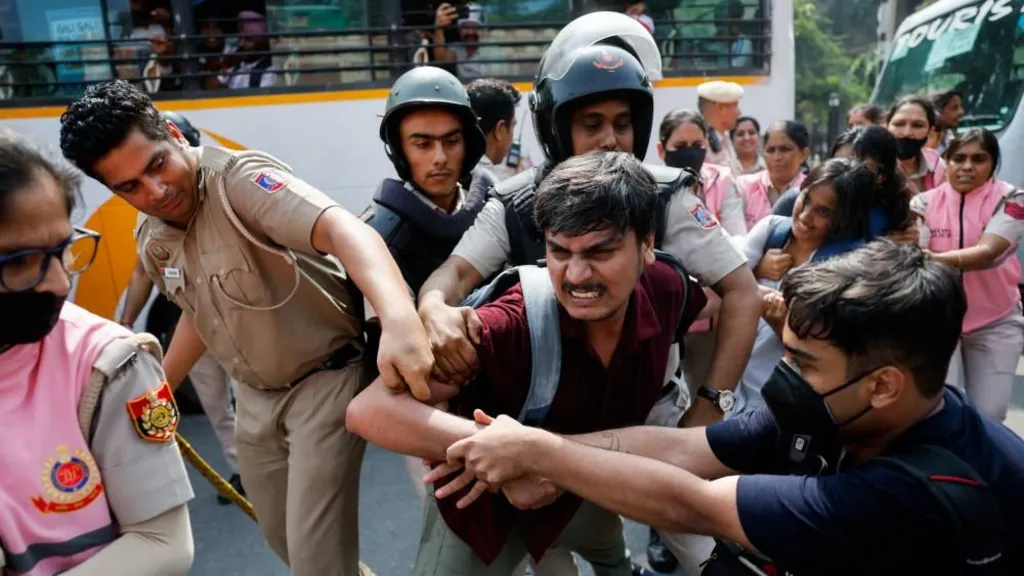
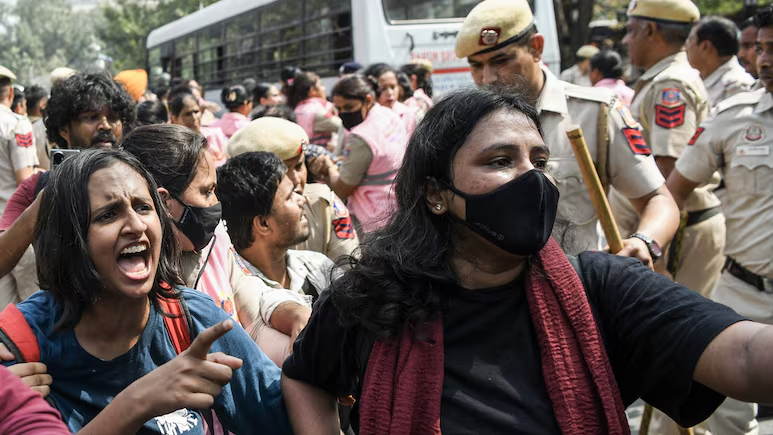
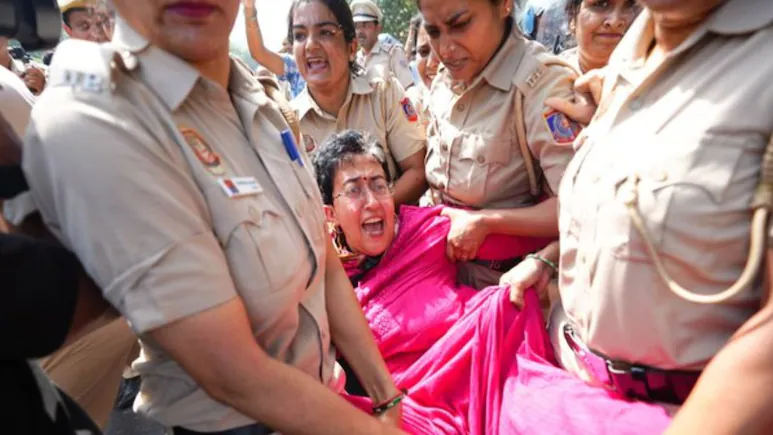
The Gyanesh Kumar Protest Delhi Mumbai resulted in a large number of detentions as protesters attempted to reach Jantar Mantar. An initial police estimate put the number of detainees at around 150, but later officials said more than 700 people had been detained from and around the protest site. The detainees were taken away in buses to different police stations.
Among those detained in Delhi were AAP leaders Saurabh Bharadwaj, Sanjeev Jha and Atishi, along with Rajya Sabha MP Sanjay Singh and members of several student organisations. AISA national president Neha Bora and activists associated with SFI and NSUI were also among those detained during the day’s demonstrations.
The main issue behind the Gyanesh Kumar Protest Delhi Mumbai is the Election Commission’s Special Intensive Revision, commonly referred to as SIR, of electoral rolls. Opposition parties and protest groups have alleged that the exercise could result in eligible voters being removed from electoral rolls. The Election Commission has rejected allegations of wrongdoing and said the revision process is intended to identify duplicate, deceased and otherwise ineligible entries.
The Election Commission has also maintained that decisions relating to the SIR were taken unanimously by its three members. The clarification came after reports and political claims concerning objections allegedly raised by Election Commissioners Sukhbir Singh Sandhu and Vivek Joshi over some decisions during the preceding months.
The Gyanesh Kumar Protest Delhi Mumbai therefore reflects a wider political disagreement over electoral-roll revision and the functioning of the Election Commission. Protesters have called for Gyanesh Kumar’s resignation, while the Election Commission has defended the SIR process and its decision-making procedure. The allegations made by protesters remain contested and are not established findings.
In Delhi, the protest developed through several smaller groups rather than one large gathering at Jantar Mantar. Police stopped groups approaching the area and detained people when gatherings formed. The Indian Express reported that protesters were also held near Ashoka Road, Janpath and Tolstoy Road as authorities attempted to prevent a large assembly around Parliament Street and Jantar Mantar.
The Gyanesh Kumar Protest Delhi Mumbai also involved student and civil society activists who said their participation was connected to concerns about voting rights and electoral accountability. Several protesters described the SIR process as a major concern and called for greater transparency from the Election Commission. These statements represent the protesters’ positions rather than independently established conclusions about the electoral process.
AAP leaders also criticised the police action. Saurabh Bharadwaj said the demonstration was intended to be peaceful and argued that protesting was a democratic right. Police, meanwhile, had cited the absence of permission and the prohibitory orders while restricting the gathering around Jantar Mantar.
The Gyanesh Kumar Protest Delhi Mumbai led to additional restrictions on public movement in central Delhi. Eleven metro stations in and around the affected areas had their entry and exit gates closed as part of the security arrangements. Traffic restrictions were also introduced around Jantar Mantar and nearby roads.
Internet services were also suspended around Jantar Mantar during the protest. The suspension was reported as a temporary measure covering the protest site and surrounding areas. The authorities also maintained a significant police presence around central Delhi as protesters attempted to gather despite the restrictions.
In Mumbai, the Gyanesh Kumar Protest Delhi Mumbai took place at Shivaji Park, where the Cockroach Janata Party, or CJP, had called for a demonstration demanding the CEC’s resignation. Mumbai Police had denied permission for the protest, but organisers proceeded with the gathering. Reports said thousands of people gathered at Shivaji Park during the demonstration.
The CJP has linked its campaign against Gyanesh Kumar to concerns over the SIR exercise and reports of disagreements within the Election Commission. CJP founder Abhijeet Dipke said the organisation would continue its campaign and could expand demonstrations to other parts of the country.
The Mumbai demonstration also received support from some political groups. Reports said Shiv Sena (UBT) and Maharashtra Navnirman Sena extended support to the agitation at Shivaji Park. The CJP, however, has described itself as an independent movement and said it would not formally participate in a political programme announced by the INDIA alliance.
The Gyanesh Kumar Protest Delhi Mumbai comes after several days of growing political mobilisation around the SIR issue. Opposition parties have held demonstrations in different parts of the country and have demanded greater clarity regarding the voter-roll revision process and the Election Commission’s decision-making. The issue has become a prominent point of political debate in September and October 2026.
The controversy also intensified after reports that two Election Commissioners had raised objections on multiple occasions to decisions connected with the SIR. The Election Commission subsequently stated that all decisions, including those concerning SIR, were taken unanimously. The disagreement over how those internal discussions should be interpreted remains part of the wider political dispute.
The Gyanesh Kumar Protest Delhi Mumbai has therefore brought together different groups with different organisational backgrounds but a common demand concerning the Chief Election Commissioner. While opposition parties have focused on alleged irregularities in electoral-roll revision, student and civil society groups have raised broader questions about voting rights and accountability.
The Election Commission’s stated position remains that electoral-roll revision is necessary to maintain accurate voter lists. The commission has rejected claims that the exercise is designed to remove legitimate voters and has maintained that safeguards exist for eligible citizens. Critics continue to question how the verification process is being implemented and what impact it could have on voters.
The Gyanesh Kumar Protest Delhi Mumbai also highlights the challenge authorities face in balancing demonstrations with restrictions imposed around sensitive government and public areas. In Delhi, police cited the lack of permission and Section 163 restrictions while preventing protesters from gathering at Jantar Mantar. Protesters, meanwhile, argued that they should be allowed to demonstrate peacefully.
By the afternoon, more than 700 people had been detained in Delhi according to police officials. The number was significantly higher than an earlier estimate of around 150 detainees. The changing figures reflected the continuing police operation as different groups attempted to reach the protest area.
The Gyanesh Kumar Protest Delhi Mumbai also drew attention because the demonstrations took place simultaneously in two major Indian cities. Delhi witnessed large-scale detentions and restrictions around Jantar Mantar, while Mumbai saw a separate gathering at Shivaji Park despite the denial of police permission.
For the protesters, the immediate demand has been the resignation of Chief Election Commissioner Gyanesh Kumar and greater scrutiny of the SIR process. For the authorities and Election Commission, the focus has remained on maintaining public order and carrying out the electoral-roll revision within the established legal and administrative framework.
The Gyanesh Kumar Protest Delhi Mumbai remains part of an ongoing dispute, with further political mobilisation expected around the Election Commission and electoral-roll revision. The events of October 2 saw hundreds detained in Delhi, heightened security around Jantar Mantar, temporary restrictions on internet and metro access, and a separate demonstration in Mumbai.
As the debate continues, the key issues remain the implementation of the Special Intensive Revision, the protection of eligible voters, the Election Commission’s decision-making process and the right to peaceful political demonstration. The competing claims from protesters, political parties and election authorities will continue to shape the discussion surrounding the Gyanesh Kumar Protest Delhi Mumbai.