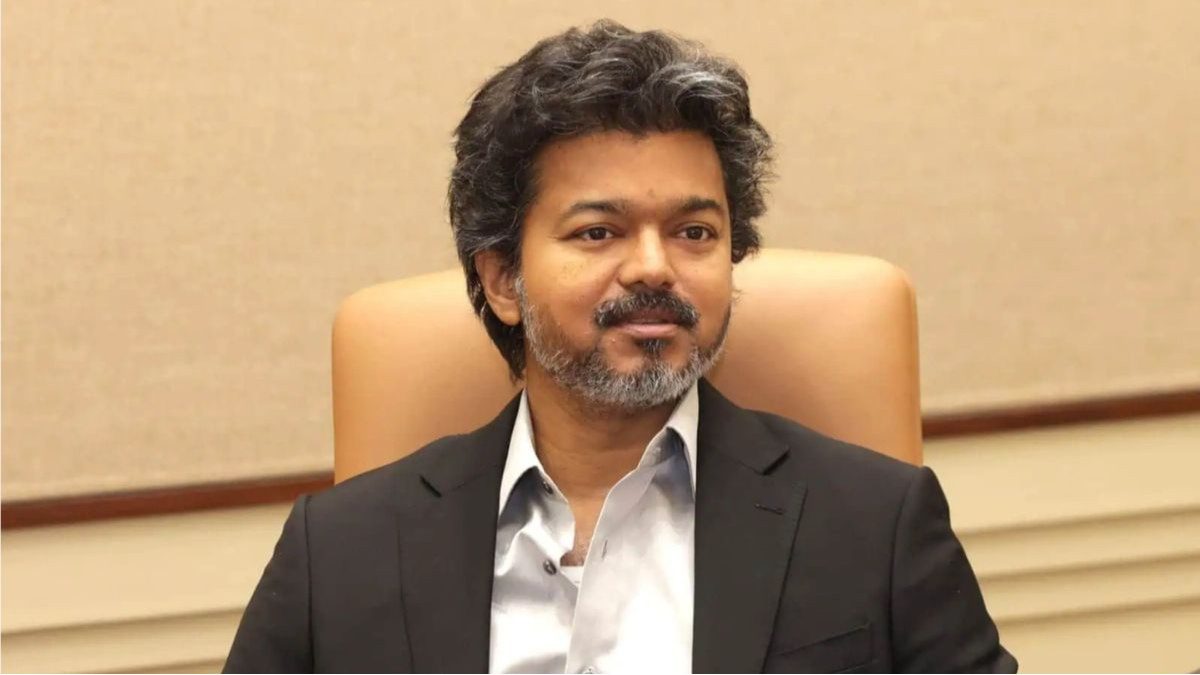
A sharp political exchange between Tamil Nadu Chief Minister Vijay and Deputy Chief Minister and DMK leader Udhayanidhi Stalin erupted in the state Assembly, with a brief “don’t run away” remark becoming the centre of a heated verbal confrontation.
The exchange took place during an Assembly discussion on law and order and the functioning of the Tamilaga Vettri Kazhagam government. Udhayanidhi Stalin launched a strong attack on the newly formed government, questioning its performance and raising concerns over the law-and-order situation in the state.
Vijay, who also holds the Home portfolio, responded to the Opposition criticism before leaving the House. Before his departure, he told the Opposition not to “run away” when he responded to the allegations.
Udhayanidhi immediately seized on the remark and hit back with a pointed question: “Who’s the one who now ran away?”
The exchange quickly became one of the most discussed moments of the Assembly proceedings, reflecting the increasingly direct political confrontation between the ruling TVK and the Opposition DMK.
Udhayanidhi accused the Vijay-led government of failing to meet expectations after taking office. He said the administration had been in power for 116 days but had not introduced a new scheme, while also criticizing its approach toward programmes introduced by the previous DMK government.
Describing the contrast between the two administrations, Udhayanidhi said Tamil Nadu had been in “top gear” under the DMK but was now moving in “reverse gear” under TVK rule.
He also alleged that there was a gap between the promises made by the government and its actual announcements. Udhayanidhi further accused the administration of focusing excessively on social-media-oriented content rather than governance.
The law-and-order situation was one of the principal issues raised by the Opposition. Udhayanidhi sought answers from Vijay in his capacity as the minister responsible for the police portfolio.
The DMK leader questioned the government over what he described as a deterioration in law and order and sought an explanation from the Chief Minister regarding the steps being taken to address crime and public safety.
Vijay responded that he would answer the allegations in detail on Monday. It was during this exchange that he told the Opposition not to run away when he began responding.
The remark immediately became politically significant because Vijay subsequently left the Assembly, allowing Udhayanidhi to turn the Chief Minister’s words back against him.
The Opposition leader’s “Who’s the one who now ran away?” response drew attention inside the House and subsequently circulated widely through political discussions and social media.
The confrontation did not end with the exchange over the phrase. The discussion also moved toward the sensitive Karur incident, which has become a significant political issue in Tamil Nadu.
Udhayanidhi referred to the Standard Operating Procedures introduced following the incident. He suggested that discussing the circumstances that led to the SOPs could trigger a much larger controversy.
The Speaker intervened when the discussion moved toward the Karur incident, reminding members that the matter was under investigation and before the court.
The Speaker directed both sides not to continue discussing the case during the Assembly proceedings. Udhayanidhi sought permission to continue, but the Speaker denied permission and asked members to move on to other matters.
The intervention prevented the political confrontation from developing into a broader debate over the Karur case.
The incident also led to a separate objection from the DMK over Vijay’s “run away” remark. DMK MLA O Panneerselvam asked the Speaker to remove the words from the Assembly record, describing them as unparliamentary.
The Speaker declined the request and said the remark could not be expunged.
The episode underlined the increasingly confrontational nature of politics in Tamil Nadu following the change in government.
Vijay’s entry into electoral politics has already transformed the state’s political landscape. The actor-turned-politician launched the Tamilaga Vettri Kazhagam and subsequently emerged as a major political force before becoming Chief Minister.
The 2026 Assembly election marked a historic transition for Vijay, who moved from a highly successful career in Tamil cinema into the state’s top political office.
His government is now facing the challenge of translating its electoral promises into administrative policies while dealing with opposition from established political parties.
The DMK, which previously governed Tamil Nadu, has emerged as the principal Opposition force and has increasingly targeted the new administration over governance, public safety and policy decisions.
The Assembly exchange between Vijay and Udhayanidhi therefore carries significance beyond a single remark. It reflects a broader political contest between two prominent figures representing competing political generations and organizations.
Udhayanidhi is an established DMK leader and the son of former Chief Minister M K Stalin. Vijay, meanwhile, has built his political identity outside the traditional Dravidian political establishment and has sought to position TVK as an alternative political force.
Their rivalry is consequently being closely watched by political observers and supporters.
The latest confrontation also comes as Vijay’s government prepares to outline its approach to policing and internal security.
In a separate development during the Assembly proceedings, Vijay announced plans to create 29,108 new police posts over the next five years. The government said 10,000 police personnel would be recruited during the current year, with half of the positions earmarked for women.
The Chief Minister said the measures were intended to strengthen the police force and address staffing shortages.
The government also announced plans to increase the representation of women in the police force from the current level of around 22 percent to 30 percent.
Vijay said the recruitment would include personnel for specialized units dealing with issues such as drug trafficking and crimes against women.
The government also proposed strengthening technological capabilities within the police department. According to the announcements, around ₹212 crore would be spent on artificial intelligence-based digital forensics, real-time surveillance, modern communication systems and command centres.
The government also plans to establish new forensic facilities, including DNA testing centres in Salem and Villupuram.
Cyber-forensic divisions are proposed for Salem and Tirunelveli, while the Chennai forensic laboratory’s ballistic division is expected to receive an Automated Ballistic Identification System.
These announcements form part of the government’s broader response to concerns about policing and law enforcement.
Vijay’s government has also announced measures related to the anti-drug campaign. Fifty villages will reportedly be selected each year under a drug-free village initiative, with financial assistance for infrastructure development.
The Chief Minister has stressed the need for stronger action against drugs and crimes against women and children.
The timing of these announcements is significant because law and order has emerged as one of the major political issues between the ruling TVK and the Opposition DMK.
Udhayanidhi’s criticism in the Assembly came as the government was presenting its plans for the Home Department, creating an immediate political clash between allegations and the administration’s proposed response.
The ruling side has sought to emphasize new recruitment, technology and specialized policing as evidence of its commitment to public safety.
The Opposition, however, has continued to question the government’s performance and has demanded answers over reported crimes and governance issues.
This disagreement is likely to remain a prominent feature of Assembly politics in the coming months.
For Vijay, the confrontation represents one of his more visible exchanges with the Opposition since taking office. As a first-time Chief Minister, his responses inside the Assembly are being closely watched for indications of how he intends to handle political criticism.
His statement that he would respond to the Opposition’s allegations on Monday suggests that the dispute may continue when the Assembly meets again.
Udhayanidhi’s response, meanwhile, demonstrated the DMK’s intention to directly challenge the Chief Minister rather than allowing the ruling party to control the political narrative.
The “run away” exchange may have lasted only a few seconds, but it captured the broader political tension inside the Assembly.
It also became an example of how political statements made during legislative proceedings can quickly move beyond the House and become major talking points among supporters of rival parties.
Both TVK and DMK supporters have been closely following exchanges between their leaders since the change in government.
The Karur incident added another layer of sensitivity to the confrontation. Because the matter is under investigation and subject to judicial proceedings, the Speaker’s decision to prevent further discussion was intended to keep the Assembly debate from interfering with the ongoing legal process.
Udhayanidhi’s reference to the incident nevertheless showed how the issue continues to influence political arguments over governance and administrative responsibility.
The broader dispute is now likely to continue around law and order, policing, government schemes and the implementation of electoral promises.
For the TVK government, the coming months will be important as it attempts to establish its administrative record and demonstrate that its election promises can be translated into concrete policies.
For the DMK, the Opposition’s challenge will be to scrutinize the new government’s performance while presenting its own record as an alternative model of governance.
The political rivalry between Vijay and Udhayanidhi adds a highly visible personal dimension to that contest.
Vijay’s popularity from cinema gives him an enormous public profile, while Udhayanidhi has the organizational strength and political experience of the DMK behind him. Their contrasting backgrounds make their Assembly exchanges particularly significant for Tamil Nadu politics.
The latest confrontation demonstrates that the transition from election campaigning to government has not reduced political competition.
Instead, the arguments have moved into the Assembly, where the ruling party and Opposition are now testing each other’s claims on governance, public safety and policy performance.
Vijay’s “don’t run away” remark and Udhayanidhi’s immediate counter — “Who’s the one who now ran away?” — have become the most memorable lines from the latest clash.
Whether the verbal battle continues when Vijay delivers his detailed response will be closely watched.
For now, the exchange has added another chapter to the emerging TVK-DMK rivalry and highlighted the increasingly intense political contest inside the Tamil Nadu Assembly.