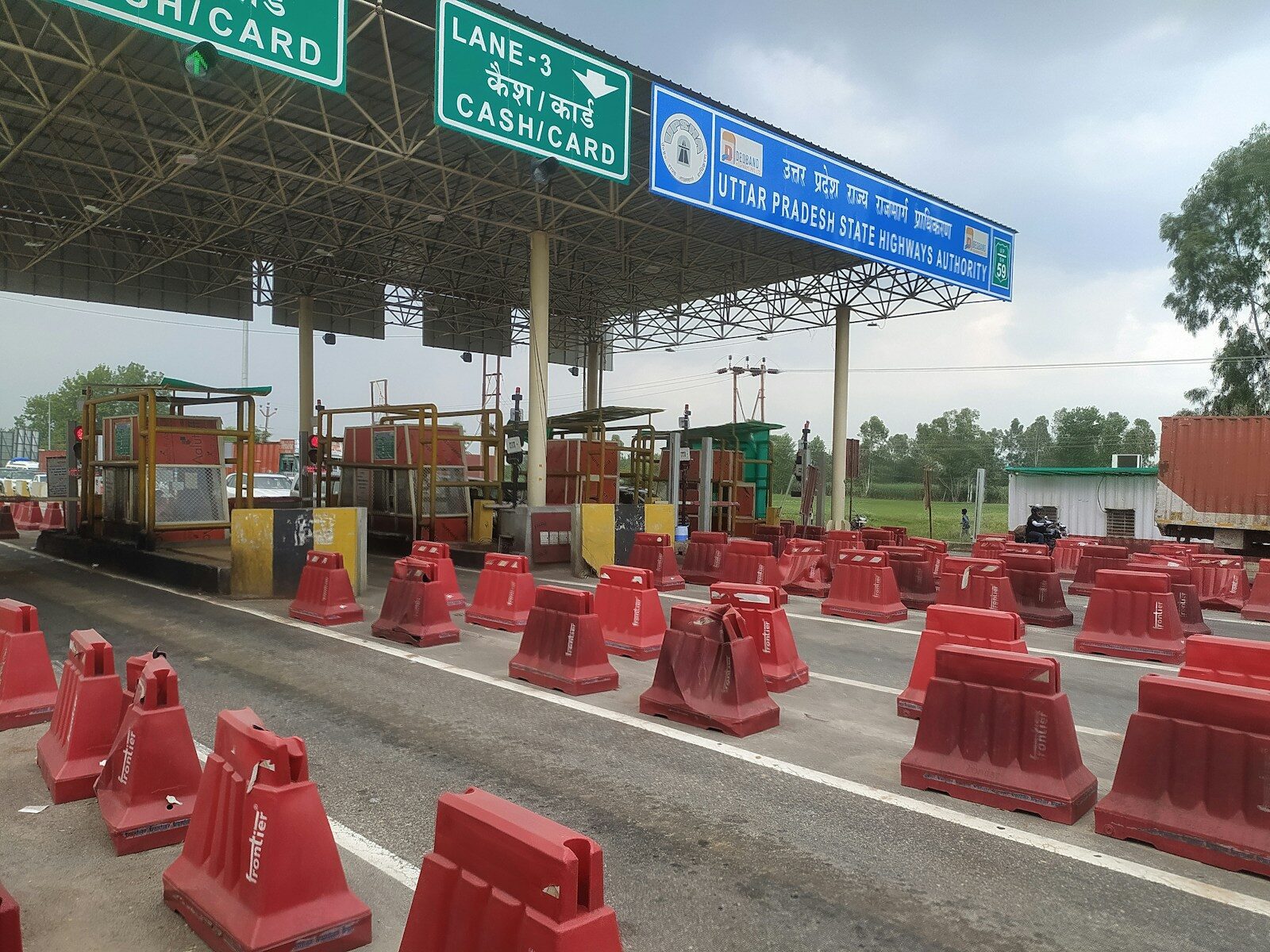
The National Highways Authority of India has extended its Clean Toilet Picture Challenge, offering highway users a ₹1,000 FASTag recharge for reporting unclean toilet facilities at eligible toll plazas and National Highway locations.
The initiative is aimed at improving hygiene and cleanliness at public toilet facilities available to travellers on National Highways. Under the scheme, commuters can report poorly maintained toilets through the Rajmargyatra mobile application and receive a FASTag reward if their complaint meets the eligibility criteria.
NHAI originally launched the Clean Toilet Picture Challenge in September 2025. The authority has now extended the initiative until June 30, 2027, allowing more highway users to participate and report sanitation problems.
The scheme has already received a response from National Highway commuters. According to the Ministry of Road Transport and Highways, 429 commuters had received ₹1,000 FASTag recharges for reporting unclean toilets during 2026 up to the time of the July announcement.
The reward is not paid as cash. Instead, the ₹1,000 amount is credited as a FASTag recharge to the Vehicle Registration Number linked to the eligible submission.
The initiative is designed to turn highway users into participants in monitoring cleanliness. Rather than depending entirely on routine inspections, NHAI is encouraging travellers to identify sanitation problems and report them directly to the authority.
To participate, commuters must use the latest version of the Rajmargyatra mobile application. They are required to upload a clear photograph showing the condition of the toilet facility they are reporting.
The photograph must contain appropriate location and time information. NHAI requires the image to be geo-tagged and time-stamped so that the authority can verify where and when the reported problem was recorded.
Users must also provide basic information while submitting the complaint. This includes their name, location, vehicle registration number and mobile number.
The vehicle registration number is particularly important because the reward is connected to the FASTag associated with that vehicle.
After a submission is received, the photograph and accompanying information are assessed by NHAI. The authority uses AI-assisted screening along with manual validation where necessary to determine whether a complaint is genuine and eligible.
If the report is verified and the vehicle registration number meets the scheme requirements, the commuter receives a ₹1,000 FASTag recharge.
There are limits on how frequently the reward can be claimed. Each eligible vehicle registration number can receive the reward only once during the entire scheme period.
This means that repeatedly reporting different toilets will not result in multiple ₹1,000 rewards for the same vehicle registration number.
The reward is also non-transferable. It cannot be converted into cash or claimed separately from the FASTag recharge mechanism.
Another important condition applies when several people report the same toilet facility. If multiple valid complaints are submitted for the same facility on the same day, the first valid submission through the Rajmargyatra app is considered for the reward.
This condition is intended to avoid duplicate claims and ensure that the reward goes to the commuter who first reports the verified problem.
The scheme does not cover every public toilet that a traveller might encounter during a highway journey.
It applies specifically to toilet facilities that are constructed, operated or maintained under NHAI’s jurisdiction.
Toilets located at private retail fuel stations, roadside restaurants, dhabas or other facilities outside NHAI’s control are excluded from the initiative.
This distinction is important because travellers may encounter sanitation problems at many different types of facilities during a road trip. A complaint will qualify for the reward only when the facility falls within the scope of the NHAI programme.
The Clean Toilet Picture Challenge addresses a common problem faced by people travelling long distances by road.
Highways and expressways have increasingly received dedicated public amenities, including toilet facilities, but maintaining these facilities can be challenging because they experience regular use throughout the day.
Poor cleanliness can discourage travellers from using the facilities and can create wider hygiene concerns.
By offering a financial incentive, NHAI hopes to encourage more travellers to report toilets that are dirty or inadequately maintained.
The scheme also introduces an element of public accountability. When commuters can document the condition of a facility and submit evidence directly to the authority, maintenance agencies have an additional source of information about problems that may not be identified during routine checks.
The initiative is therefore not simply a reward programme. It is also intended to create a feedback mechanism between National Highway users and the authority responsible for highway infrastructure.
NHAI has described the initiative as part of its effort to improve the overall travel experience on National Highways.
Clean and accessible toilets are particularly important for families, senior citizens, children and travellers undertaking long-distance journeys.
For people travelling several hundred kilometres, access to properly maintained sanitation facilities can significantly affect the overall convenience of the journey.
The programme also reflects a wider effort to improve user-oriented services on India’s expanding National Highway network.
Over the past few years, the government has invested heavily in highways, expressways, tolling systems and roadside amenities. As the network expands, maintaining the quality of facilities becomes increasingly important.
The Clean Toilet Picture Challenge gives road users a direct role in identifying one specific category of infrastructure problem.
For motorists interested in claiming the reward, the process begins with identifying an eligible toilet facility that is genuinely unclean or poorly maintained.
The commuter should take a clear photograph that accurately represents the condition of the facility. The photograph should be captured through the required process so that location and time information can be verified.
The report must then be submitted through the Rajmargyatra application along with the requested personal and vehicle information.
Users should also ensure that the vehicle registration number provided in the complaint is correctly linked to the FASTag account because the reward is credited to the corresponding vehicle registration number.
Submitting a photograph does not automatically guarantee a reward.
The complaint must first pass the verification process. NHAI has stated that entries are assessed through AI-assisted screening and manual validation where required.
This verification requirement is intended to prevent false, duplicate or misleading complaints from qualifying for the incentive.
The reward structure also means that motorists should not expect ₹1,000 in cash after making a complaint. The amount is specifically provided as a FASTag recharge.
For regular highway travellers, however, the reward can still have practical value because FASTag is used to pay toll charges on eligible roads.
The initiative’s extension until June 30, 2027, provides a considerably longer period for participation.
The original campaign was introduced as a limited initiative, but the response from highway users encouraged NHAI to continue it.
The fact that hundreds of commuters had already received rewards demonstrates that the programme has been used in practice rather than remaining merely an announcement.
At the same time, the number of rewarded users also indicates that the programme remains relatively selective. A submitted photograph must meet the eligibility and verification requirements before the FASTag recharge is issued.
The government hopes that continued participation will improve the quality of toilet facilities at locations under NHAI’s jurisdiction.
The initiative may also encourage facility operators and maintenance agencies to pay closer attention to cleanliness. If poor conditions can result in immediate complaints from travellers, maintenance teams may have an additional incentive to address problems quickly.
There is also an important role for citizens in maintaining public infrastructure.
While NHAI and its contractors are responsible for providing and maintaining facilities within their jurisdiction, users also influence the condition of public toilets.
Vandalism, littering and improper use can contribute to deteriorating facilities. A successful cleanliness programme therefore requires cooperation from both maintenance agencies and the travelling public.
The ₹1,000 incentive is intended to encourage reporting, but the larger objective is better hygiene.
For travellers, the programme offers an unusual opportunity to turn a negative experience into a useful complaint while potentially receiving a FASTag benefit.
The scheme also highlights how digital tools are increasingly being used to manage public infrastructure.
Instead of relying exclusively on phone calls or written complaints, the Rajmargyatra application allows users to submit photographic evidence along with location and time information.
That makes it easier for authorities to identify the exact facility involved and investigate the complaint.
The use of technology can also make the reporting process more transparent. A photograph accompanied by location and time data provides more useful information than a general complaint that simply states that a highway toilet is dirty.
NHAI’s verification system is designed to distinguish genuine complaints from submissions that do not meet the programme’s requirements.
For motorists, this means the quality and accuracy of the report matter.
The scheme’s focus on NHAI-controlled facilities is also designed to ensure that the authority is able to act on the complaints it receives.
If a toilet is operated by a private establishment outside NHAI’s jurisdiction, the highway authority may not have direct responsibility for its maintenance.
Travellers should therefore check that the facility being reported falls under the programme before expecting a reward.
The initiative has generated interest partly because of the unusual combination of civic reporting and financial incentive.
Instead of offering a reward for simply using a service, NHAI is offering a FASTag benefit for helping identify a problem in public infrastructure.
This approach could potentially encourage more people to report maintenance failures that they might otherwise ignore.
The programme also creates an incentive for travellers to document problems responsibly rather than merely posting complaints on social media.
A verified report submitted through the official reporting mechanism can give the responsible authority an opportunity to investigate and take corrective action.
For the government, the ultimate measure of success will not be the number of ₹1,000 rewards distributed but whether the condition of highway toilet facilities improves.
If complaints lead to quicker maintenance and better cleanliness, the programme could become a useful example of citizen participation in infrastructure monitoring.
The extension through June 2027 gives NHAI additional time to evaluate the programme’s effectiveness and encourage wider participation.
The initiative also comes as road travel continues to expand across India’s growing highway and expressway network.
As more people use long-distance road corridors, demand for reliable roadside amenities is expected to remain high.
Clean toilets are a basic but important part of that infrastructure.
For travellers planning long road journeys, the scheme provides another reason to keep the Rajmargyatra application available and report eligible sanitation problems when they encounter them.
However, motorists should remember that only verified complaints relating to facilities under NHAI’s jurisdiction qualify, and each vehicle registration number can receive the reward only once during the entire scheme period.
The ₹1,000 benefit is also provided only through FASTag recharge and cannot be withdrawn as cash.
With the Clean Toilet Picture Challenge now extended until June 30, 2027, NHAI is continuing its experiment in combining citizen participation, digital reporting and financial incentives to improve public facilities.
The initiative gives highway users a direct channel to highlight sanitation problems while providing a small financial reward for verified reports.
For travellers, the message is simple: if an NHAI-controlled highway toilet is genuinely unclean, documenting the problem through the Rajmargyatra app could help authorities address it and, if the submission is verified and eligible, add ₹1,000 to the linked FASTag as well.