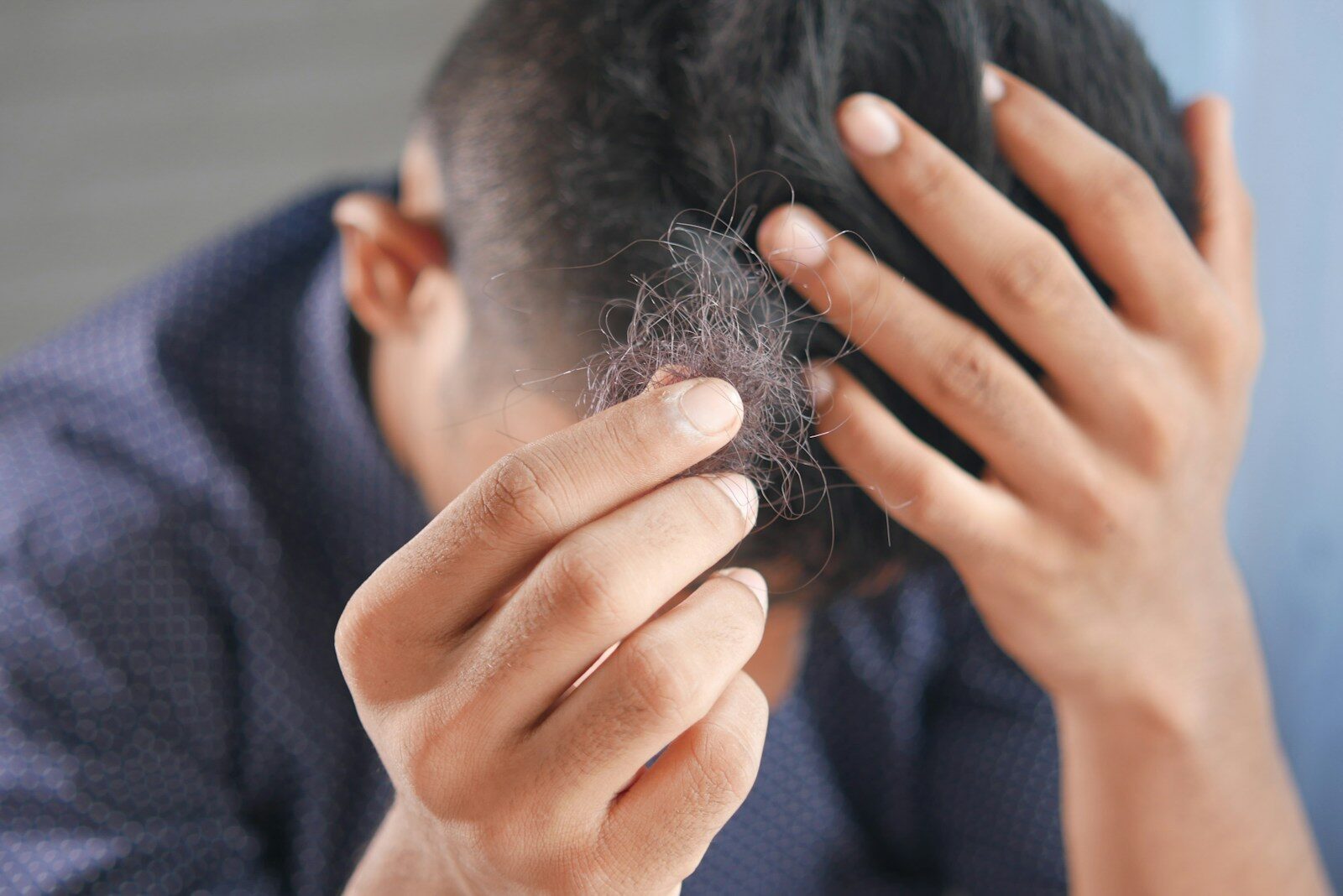
Noticing your hairline moving backward at the temples can be surprisingly stressful. You may first notice it in photographs, under bright lighting, or when styling your hair in front of a mirror.
For some people, a slightly higher hairline is simply a natural feature. For others, recession at the temples can be one of the earliest signs of progressive hair loss.
The important thing is not to panic after seeing a few thinner hairs. Hairlines can naturally change with age, and temporary shedding can also make the front of the scalp look less dense.
But if the temples are gradually becoming more exposed, the corners are moving backward, or the hair in that area is becoming finer, it is worth paying attention.
One of the most common reasons for a receding hairline is hereditary pattern hair loss.
This type of hair loss is influenced by genetics and hormones. In men, it commonly begins around the temples and front hairline before progressing toward the crown in some people.
The process usually happens gradually rather than overnight.
You may notice that the hairs around your temples are becoming thinner and shorter before the area becomes visibly sparse.
This happens because susceptible hair follicles can gradually produce finer, shorter hairs over repeated growth cycles.
A common early sign is a change in the shape of the hairline.
The corners may begin to move backward, creating a subtle V-shaped or M-shaped appearance.
You may initially think it is simply a mature hairline. In some people, it is. In others, it represents the beginning of male pattern hair loss.
The difference is often easier to understand by looking at progression over time rather than judging the hairline from a single photograph.
Take clear photographs from the front and both sides every few months under similar lighting.
This can help you see whether the hairline is actually changing.
Avoid checking it dozens of times a day. Hairlines naturally look different depending on lighting, hairstyle, wetness, and camera angle.
Family history can provide another important clue.
If your father, brothers, grandfathers, or other close relatives experienced early hairline recession or significant thinning, your own risk of pattern hair loss may be higher.
However, genetics are complicated. You cannot accurately predict your future hairline simply by looking at one relative.
A receding hairline does not necessarily mean you will become completely bald.
Pattern hair loss varies significantly from person to person. Some people experience mild temple recession and then remain relatively stable for many years.
Others gradually develop more extensive thinning.
Age also matters.
Many men experience some degree of hairline maturation as they move from their teenage years into adulthood.
A mature hairline can sit slightly higher than a youthful teenage hairline without necessarily indicating aggressive hair loss.
The key question is whether the change continues progressively.
If the temples keep moving backward and the hairs around the hairline become increasingly fine, professional evaluation can help determine whether pattern hair loss is developing.
Stress can also affect how much hair you see falling.
A major physical or emotional stressor can trigger temporary shedding known as telogen effluvium.
This type of shedding generally affects hair more diffusely rather than specifically targeting the temples.
You might notice increased hair in the shower, on your pillow, or while brushing.
The shedding can occur after an illness, major stress, surgery, significant weight loss, or another physiological challenge.
Because the timing can be delayed, people sometimes struggle to connect the shedding with the original trigger.
Temporary shedding may make the hairline appear less dense, but it behaves differently from progressive genetic recession.
Rapid weight loss is another possible trigger for increased shedding.
If you have recently followed a very restrictive diet or lost a significant amount of weight quickly, your hair may respond to the nutritional and physiological stress.
This does not mean that every person who loses weight will experience hair loss.
The concern is particularly relevant when weight loss involves inadequate calorie intake, insufficient protein, or nutritional deficiencies.
Crash dieting is therefore not a good strategy if you are trying to improve your hair.
Your body needs adequate nutrition to support normal hair growth.
Protein is particularly important because hair is primarily composed of keratin, a structural protein.
A diet that consistently provides too little protein can contribute to poor hair quality and increased shedding.
Include appropriate protein sources in your regular meals, such as eggs, dairy products, fish, lean meats, beans, lentils, soy, nuts, and seeds.
Iron deficiency can also be associated with increased hair shedding in some people.
However, taking iron supplements without knowing whether you are deficient is not a good idea.
Too much iron can be harmful, and not every case of hair loss is caused by low iron.
If you have risk factors for deficiency or other symptoms suggesting a nutritional problem, a healthcare professional can determine whether testing is appropriate.
Thyroid problems can also affect the hair cycle.
Both an underactive and overactive thyroid can be associated with hair changes.
When a thyroid problem is responsible, there are often other symptoms as well, although they may not always be obvious.
If your hair loss occurs alongside unexplained changes in energy, weight, temperature tolerance, heart rate, skin, or other aspects of your health, discuss it with a healthcare professional.
Scalp problems can sometimes make hair appear unhealthy or contribute to increased shedding.
Persistent dandruff, inflammation, redness, itching, scaling, or sores should not simply be ignored.
Scratching an irritated scalp can cause mechanical damage and may worsen the problem.
If you have significant scalp symptoms, treating the scalp condition is more important than experimenting with multiple home remedies.
Hair styling can also affect the front hairline.
Repeatedly wearing very tight hairstyles can put continuous tension on the follicles.
This can lead to traction-related hair loss, particularly around areas such as the temples and edges.
If your hairstyle consistently pulls the hair tightly enough to cause discomfort, headaches, tenderness, or visible tension, it is worth changing the style.
The earlier excessive traction is reduced, the better the chance of avoiding continued damage.
Hair extensions can create similar problems when they are heavy or applied too tightly.
Frequent tension in the same area can gradually weaken the hair.
This type of hair loss is different from genetic pattern hair loss, which is why identifying the pattern matters.
Heat and chemical treatments can also cause hair breakage around the front.
Straighteners, curling irons, bleaching, relaxing, and repeated chemical processing can weaken the hair shaft.
If the hair is breaking rather than falling from the follicle, you may notice short hairs around the temples and hairline.
This can create the appearance of thinning even when the follicles themselves are healthy.
A useful clue is the length of the hairs you see.
If many hairs are breaking into short pieces, your problem may involve hair-shaft damage.
If complete hairs are shedding and the density of the hairline is gradually decreasing, the situation may be different.
Your shampoo is unlikely to be the reason your temples are genetically receding.
People often notice more hair in the shower and assume the shampoo caused the loss.
In reality, washing can make already-shed hairs more visible.
Use a shampoo that suits your scalp and wash as often as necessary for your hair type.
There is no need to avoid washing because you are afraid of losing hairs that were already ready to shed.
Another common misconception is that oiling the scalp can permanently reverse a receding hairline.
Hair oils can help condition the hair and reduce dryness or friction, depending on the product and your hair type.
But applying more oil does not necessarily reverse genetic follicle miniaturization.
If your hairline is receding because of hereditary pattern hair loss, treating the underlying process is more important than repeatedly changing oils.
The same applies to onion juice, garlic, lemon, and other popular DIY remedies.
Natural ingredients may sound appealing, but they are not guaranteed treatments for a receding hairline.
Some can also irritate the scalp.
Burning, itching, redness, or inflammation after applying a homemade mixture is not a sign that the remedy is working.
It is a reason to wash it off and stop using it.
Supplements are another area where caution is important.
Hair-growth supplements are heavily marketed, but supplements cannot compensate for a deficiency that does not exist.
Biotin, for example, is essential for normal body function, but taking high doses when you are not deficient does not guarantee thicker hair.
Some supplements can also interact with medications or interfere with laboratory tests.
If you suspect a nutritional deficiency, targeted evaluation is generally more sensible than taking a large collection of supplements.
One of the most useful things you can do at home is monitor the pattern.
Take photographs every two or three months rather than every day.
Use similar lighting, camera distance, hairstyle, and hair condition.
Look at the temples, front hairline, part, and crown.
This creates a much more reliable record than relying on memory.
If you notice clear progression, consider getting evaluated early.
Early evaluation can be particularly valuable when the hairline is changing gradually because some treatments work better when there are still many active follicles to preserve.
Minoxidil is one treatment that may help certain people with pattern hair loss.
It is available in different formulations and strengths depending on the market and individual circumstances.
It does not work for everyone, and it generally requires consistent use over time.
Stopping treatment can lead to loss of the benefits gained from continued treatment.
Because hair loss has many possible causes, it is better to determine what type of hair loss you have before assuming that a particular treatment is appropriate.
Prescription treatments may also be considered for some people with pattern hair loss.
These medications have potential benefits and risks and are not appropriate for everyone.
A qualified healthcare professional can discuss whether a particular treatment fits your situation.
Do not start or stop prescription medication based solely on social media recommendations.
Another important point is that hair growth takes time.
If a treatment is appropriate, do not expect your temples to become noticeably thicker within a few days.
Hair follicles operate through growth cycles, and visible changes can take months.
This is why consistency is often more important than constantly switching products.
If you are trying a new routine every week, it becomes almost impossible to know what is actually helping.
Give evidence-based approaches enough time while monitoring progress realistically.
Be careful with products that promise to “regrow your hairline in seven days” or claim to reverse baldness permanently.
Hair biology does not work that quickly.
Marketing language can make dramatic promises, but a trustworthy hair-loss approach should explain limitations and expected timelines.
A receding hairline can also affect confidence.
It is completely understandable to feel uncomfortable when your appearance starts changing.
However, worrying about every individual hair can make the experience more stressful than it needs to be.
Focus on the overall pattern and your general hair health rather than trying to save every strand.
A good haircut can also make a changing hairline look more balanced.
There is no medically necessary haircut for hair loss, but shorter or textured styles can sometimes make thinning areas less noticeable.
Avoid styles that require constant pulling or aggressive combing.
If you use hair fibers or styling products to make the hairline look fuller, use them as cosmetic tools rather than treatments.
They can improve appearance temporarily but do not change the underlying follicle.
There is also no evidence that shaving the hairline will make it grow back thicker.
Shaving only cuts the visible hair shaft.
It does not change the number of follicles or their growth characteristics.
Similarly, wearing a hat does not cause hereditary baldness.
A clean, comfortable hat is generally fine if you enjoy wearing one.
The bigger concern is avoiding excessive friction, tightness, or prolonged scalp irritation.
If your hairline is receding, you should also consider your overall health.
Maintain a balanced diet, get adequate sleep, stay physically active, manage ongoing stress, and avoid smoking.
These habits support general health and provide your body with a better foundation for normal hair growth.
They cannot guarantee that genetic hair loss will stop, but they are still worthwhile.
Sometimes the most important step is knowing when home care is not enough.
If you develop sudden bald patches, rapid hair loss, scalp pain, burning, redness, sores, severe scaling, or significant inflammation, seek professional advice.
Likewise, if hair loss continues to worsen despite improving your routine, an evaluation can help identify the cause.
A dermatologist or other qualified healthcare professional can examine the scalp and hair pattern and decide whether additional testing is needed.
You do not necessarily need an expensive package of blood tests or a large collection of hair products.
The appropriate evaluation depends on your symptoms, history, examination, and risk factors.
If the cause is obvious from the pattern and history, extensive testing may not always be necessary.
The most important thing is to avoid delaying evaluation because you are hoping that another home remedy will solve the problem.
When it comes to a receding hairline, early awareness is more useful than panic.
A few centimeters of recession do not automatically mean severe baldness.
But progressive temple recession should not be dismissed if the change continues over time.
Watch the pattern, protect the hair, maintain good nutrition, avoid unnecessary scalp irritation, and seek professional advice when the change is persistent or concerning.
Your hairline is not going to change dramatically because of one shampoo, one oil, or one meal.
Hair health is a long-term process.
If the recession is hereditary, evidence-based treatment may offer better options than relying entirely on homemade remedies.
And if the cause is temporary shedding, nutritional deficiency, scalp disease, medication, or another health issue, identifying and addressing that cause can be much more valuable than treating the hairline itself.
The goal is not to chase every hair that falls.
The goal is to understand why your hairline is changing, protect the follicles that remain healthy, and choose an approach that gives you the best realistic chance of maintaining your hair over time.