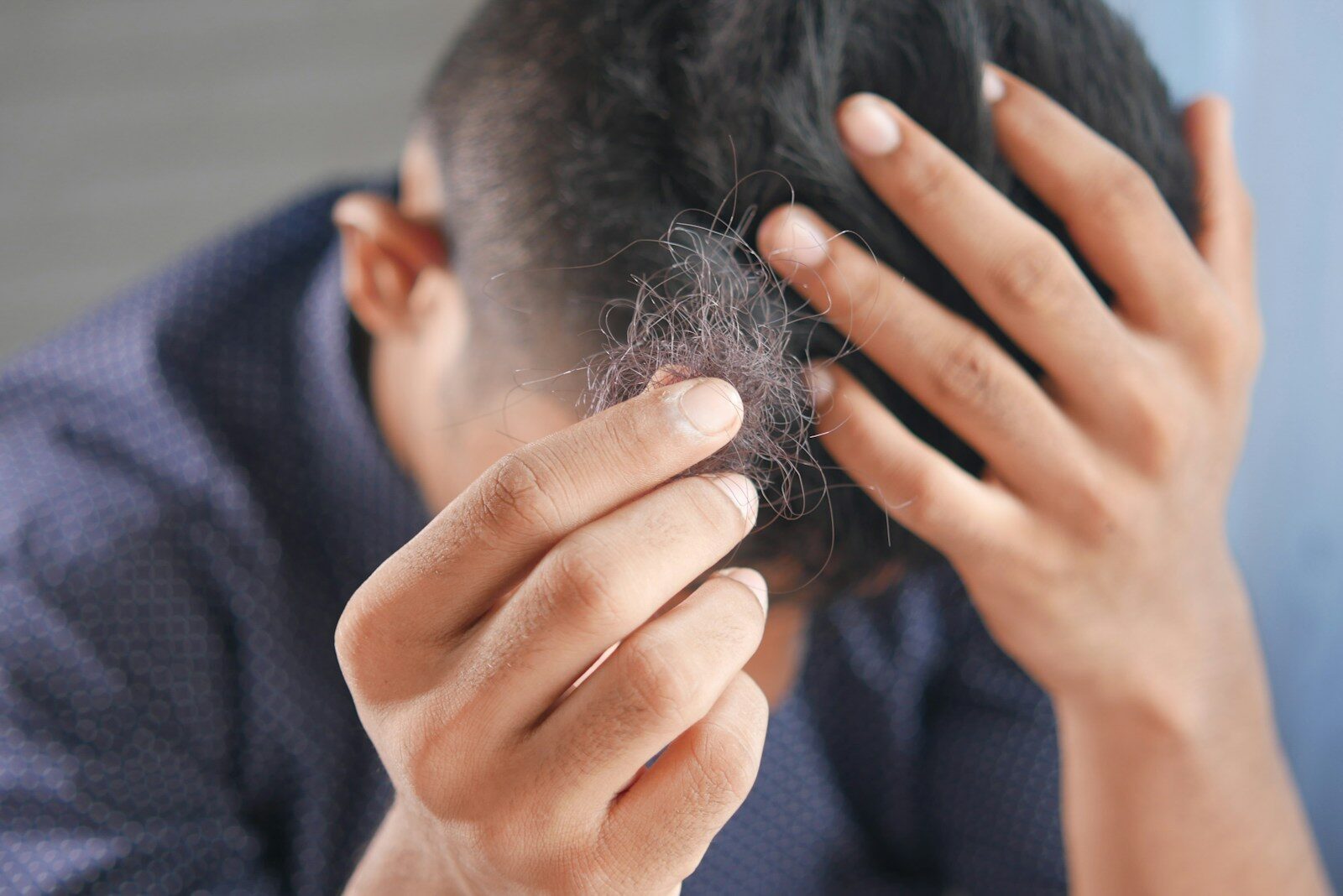
Hair thinning can be frustrating because it often happens slowly. You may not notice it immediately, but one day you realize your ponytail feels smaller, your part looks wider, or your scalp is more visible than before.
Seeing more scalp can naturally make you worry about baldness. But thinning hair does not always mean permanent hair loss.
Hair can appear thinner because of increased shedding, reduced hair density, breakage, changes in the hair shaft, or a combination of different factors.
The first step is understanding what is actually happening.
Normal hair shedding happens every day. Hair follicles naturally move through different stages of growth, rest, and shedding.
The problem is when your usual pattern changes significantly or your overall density continues to decrease.
If your hair has gradually become thinner over several months or years, the cause may be different from sudden heavy shedding that started a few weeks ago.
Female pattern hair loss is one common cause of gradual thinning in women.
It often affects the top of the scalp and may make the central part look wider.
The front hairline may remain relatively unchanged, which is why some women do not realize they are experiencing a pattern of hair loss until the thinning becomes noticeable.
Male pattern hair loss can also begin gradually.
Men may notice thinning around the temples, a receding frontal hairline, or reduced density around the crown.
Genetics plays an important role in pattern hair loss.
If close relatives have experienced similar thinning, you may have a greater likelihood of developing it.
However, having a family history does not guarantee that you will lose your hair in the same way.
Hair thinning can have many causes.
One important distinction is between shedding and thinning.
Excessive shedding means more hairs are entering the shedding phase than usual.
Thinning refers to a reduction in overall hair density or an increase in the visibility of the scalp.
These two problems can occur separately or together.
For example, a person may experience temporary excessive shedding after an illness and then notice that the hair looks thinner.
Someone who already has hereditary hair loss may also experience a temporary shedding episode that makes the underlying thinning more obvious.
Stress is a common reason for increased shedding.
Significant emotional or physical stress can affect the hair-growth cycle.
Major life changes, severe illness, surgery, high fever, rapid weight loss, and other physical stressors can sometimes trigger temporary excessive shedding.
One confusing part is the delay.
Hair may not start shedding immediately after the stressful event.
You may notice increased hair fall weeks or months later.
This means you should think about what happened before the thinning became obvious.
Ask yourself whether you recently experienced an illness, major stress, rapid weight loss, restrictive dieting, pregnancy, surgery, or another significant physical change.
The timeline can provide useful clues.
Pregnancy is another situation that can dramatically change the hair cycle.
Many women notice thicker-looking hair during pregnancy.
After childbirth, hormone levels change and more hairs can enter the shedding phase.
Postpartum hair shedding can therefore make the hair appear much thinner for a period of time.
In many cases, this process is temporary.
However, persistent thinning after the postpartum period should not automatically be blamed on pregnancy.
Other causes may also be present.
Hormonal changes outside pregnancy can influence hair as well.
Menopause is one example.
Changes in hormone levels around menopause can affect hair density and texture.
Some women notice a widening part or gradual reduction in thickness.
Women with hormonal conditions may also experience hair changes.
If hair thinning occurs alongside irregular periods, acne, increased facial or body hair, unexpected weight changes, or other hormonal symptoms, discuss the combination with a healthcare professional.
Thyroid disorders can also affect hair.
Hair changes may occur alongside symptoms such as unusual fatigue, changes in weight, temperature sensitivity, changes in heart rate, or other health problems.
Hair thinning alone cannot diagnose a thyroid condition.
But if several symptoms appear together, medical evaluation may be appropriate.
Nutritional problems are another possible contributor.
Hair follicles require adequate energy and nutrients to function normally.
If your diet is severely restricted, your body may not receive enough protein, iron, zinc, vitamin B12, or other nutrients.
This can affect hair growth.
Rapid weight loss deserves particular attention.
People sometimes assume that losing weight quickly is always positive.
But if weight loss occurs through extreme calorie restriction, the body can experience physical stress.
In some people, increased hair shedding can follow.
A balanced approach to weight management is preferable to crash dieting.
If you are trying to lose weight, focus on adequate protein, vegetables, fruits, whole grains, healthy fats, and other nutrient-rich foods.
You do not need to starve yourself to achieve healthier body weight.
Protein is especially important because hair is primarily made from keratin, a structural protein.
If your protein intake is very low, hair production can be affected.
Protein can come from eggs, fish, poultry, dairy products, lentils, beans, soy, nuts, seeds, and other foods depending on your dietary preferences.
The goal is adequate overall nutrition rather than eating one specific “hair-growth food.”
Iron is another nutrient that may be relevant.
Iron deficiency can contribute to hair shedding in some people.
Women may have increased risk because of menstrual blood loss, pregnancy, or other factors.
However, you should not automatically take iron because your hair is thinning.
Too much iron can be harmful.
If deficiency is suspected, discuss appropriate testing with a healthcare professional.
The same caution applies to other supplements.
Hair supplements are heavily marketed, often promising thicker hair within weeks.
You may see products containing biotin, collagen, zinc, vitamin D, iron, herbal extracts, and other ingredients.
Some nutrients are essential for normal hair health.
But taking more of a nutrient does not automatically make hair grow faster.
Supplements are most useful when there is a genuine deficiency or medical reason for using them.
High doses can sometimes create unwanted effects.
Biotin is a good example.
Biotin deficiency can affect hair, but true deficiency is uncommon in people who consume a varied diet.
Taking large amounts simply because your hair is thinning is not necessarily useful.
High-dose biotin can also interfere with some laboratory tests.
If you take supplements, tell your healthcare professional about them.
Another important cause of thinning is hair breakage.
Your hair may look less dense because strands are snapping before they reach their natural length.
Heat styling is one possible contributor.
Frequent use of straighteners, curling irons, and very hot blow dryers can weaken the hair shaft.
Chemical treatments can also contribute.
Bleaching, relaxing, perming, and repeated coloring can make hair more fragile.
If you see many short hairs, split ends, or uneven lengths, breakage may be part of the problem.
Reducing mechanical and chemical damage can help protect the remaining hair.
Use gentle brushing.
Avoid pulling through knots.
Reduce excessive heat.
Use suitable conditioning products.
Give chemically treated hair time to recover.
Another factor is tight hairstyles.
Regularly wearing tight ponytails, buns, braids, extensions, or other styles that pull strongly on the scalp can contribute to traction-related hair loss.
The warning signs can include scalp tenderness, pain, bumps, broken hairs around the hairline, or thinning where the hair is repeatedly pulled.
A hairstyle should not cause pain.
If your scalp hurts after styling your hair, loosen the style.
Changing hairstyles and reducing tension can help protect the follicles.
Scalp health is another important part of the picture.
Dandruff can cause flakes and itching.
Severe itching may lead to repeated scratching, which can irritate the scalp.
Dandruff itself is not usually the main cause of progressive pattern hair loss.
However, a person can have dandruff and another form of hair loss at the same time.
If your scalp is severely itchy, red, painful, swollen, crusted, or producing discharge, do not assume that you simply have ordinary dandruff.
Other scalp conditions can look similar.
Psoriasis, eczema, seborrheic dermatitis, and scalp infections can all affect the scalp and may sometimes contribute to hair problems.
A dermatologist can help identify the cause.
Another pattern that should not be ignored is sudden patchy hair loss.
If you notice a smooth, round area without hair, this is different from gradual thinning.
Alopecia areata is one possible cause of patchy hair loss.
Other conditions can also cause bald patches.
If the loss is sudden or clearly defined, professional evaluation is appropriate.
Scalp infections can also produce patchy loss.
Scaling, broken hairs, redness, swelling, and discomfort may occur.
These symptoms may require specific treatment.
Do not rely only on oils or home remedies if you suspect an infection.
Another concern is scarring hair loss.
Some inflammatory scalp conditions can damage follicles and cause permanent changes if they are not appropriately managed.
Symptoms may include persistent redness, burning, itching, pain, scaling, or changes in the appearance of the scalp.
If hair loss is accompanied by significant scalp inflammation, seek professional evaluation.
The earlier an underlying inflammatory condition is identified, the better.
Another common question is whether shampoo causes hair thinning.
Normal shampooing does not usually cause the underlying follicle-related hair loss.
When you wash your hair, loose hairs that were already ready to shed become visible.
If you wash your hair only once or twice a week, several days of shedding may appear together.
That can make the amount seem unusually large.
You generally do not need to stop washing your hair because you are afraid of seeing hair in the shower.
Instead, maintain an appropriate scalp-care routine.
Choose products that suit your scalp.
If you have dandruff, use an appropriate dandruff treatment.
If your scalp is sensitive, avoid products that cause irritation.
Another myth is that brushing your hair causes baldness.
Gentle brushing does not normally cause genetic hair loss.
Aggressive brushing can cause breakage, especially when hair is wet or tangled.
Use gentle movements.
Avoid repeatedly pulling through knots.
The goal is to reduce unnecessary mechanical damage.
Hair oil is another popular solution.
Oil can make hair feel softer and may reduce dryness and friction.
But oil cannot treat every type of hair loss.
If your hair is thinning because of genetics, thyroid disease, nutritional deficiency, or another medical condition, applying oil does not address the underlying cause.
You can use oil as part of your grooming routine if your scalp tolerates it.
Just keep your expectations realistic.
Coconut oil is often recommended for thinning hair.
It may help condition the hair and reduce some forms of hair damage.
But it should not be presented as a universal treatment for hair loss.
The same applies to rosemary oil.
It is popular in natural hair-care routines, but progressive thinning should not be managed solely with an oil.
If your hair density is continuing to decline, identify the cause.
Onion juice is another widely discussed home remedy.
You may see dramatic claims about regrowing hair naturally.
Be cautious with such claims.
Onion juice is not a guaranteed treatment for every form of hair loss.
It can also irritate sensitive skin.
If you develop burning, redness, itching, or a rash after applying any home remedy, stop using it.
Natural does not automatically mean safe or effective.
Another important issue is sleep.
Sleep disruption can occur alongside stress and other lifestyle problems.
It is not usually the sole explanation for progressive genetic hair loss.
However, maintaining a healthy sleep routine supports overall well-being.
If you regularly struggle with sleep, try to improve your routine where possible.
If sleep problems are severe or persistent, discuss them with a healthcare professional.
Stress management can also support overall health.
You do not need to eliminate every source of stress.
Instead, focus on practical strategies that fit your life.
Regular exercise, time outdoors, relaxation practices, hobbies, social support, and professional counseling can all be useful depending on the individual.
The goal is to make stress more manageable rather than expecting a completely stress-free life.
Another important lifestyle factor is smoking.
Smoking can negatively affect overall health.
If you smoke, quitting can provide broad health benefits.
Do not expect quitting alone to reverse genetic hair loss, but improving your overall health is worthwhile.
Excessive alcohol consumption can also affect nutrition and general health.
If your diet is poor, addressing overall lifestyle habits is more useful than buying expensive hair supplements.
There is no need for a “hair detox.”
Your body already has natural systems for processing waste.
Extreme detox diets can actually reduce nutrient intake.
If you are trying to support hair health, eat a varied and adequate diet instead.
Another question is whether drinking more water makes hair thicker.
Adequate hydration is important for overall health.
But drinking excessive amounts of water will not automatically increase hair density.
There is no magic hydration level that guarantees hair regrowth.
Drink regularly according to your body’s needs.
Another common myth is that cutting your hair makes it grow faster.
Hair grows from follicles in the scalp.
Trimming the ends can remove split ends and improve appearance, but it does not increase the biological rate of growth.
Shaving the head does not make follicles produce thicker hair either.
Freshly shaved hair may look thicker because the ends are blunt.
The follicle itself has not become larger.
Another question is whether wearing a cap causes hair thinning.
Normal hat use is not a typical cause of genetic hair loss.
A very tight or irritating hat can be uncomfortable, but wearing a normal cap does not usually cause baldness.
One of the most important things you can do is avoid comparing your hair to photographs or videos online.
Lighting, camera angles, hair styling, editing, and hair products can dramatically change how density appears.
Someone may look like they have extremely thick hair in a photograph because of styling and lighting.
Another person may appear much thinner because the hair is wet or parted differently.
Compare your own hair under similar conditions instead.
Photographs taken every few months can help you see genuine changes.
If your part is getting wider, photograph it from the same angle.
If your crown is becoming more visible, take consistent photographs.
Avoid checking multiple times a day.
Hair density does not change dramatically from morning to evening.
Constant checking can increase anxiety without providing useful information.
Another helpful step is to track major health events.
If you notice increased shedding, write down when it started.
Then think about what happened several months earlier.
This can help identify possible triggers.
A dermatologist may also ask about these events during an evaluation.
Your family history is important too.
Tell your healthcare professional if close relatives have experienced pattern hair loss.
But remember that genetics is only one part of the picture.
Your medical history, medications, nutritional status, hormonal health, and scalp condition can also matter.
If you take prescription medications, do not stop them because you think they are causing hair loss.
Some medicines can contribute to shedding in certain people.
But stopping medication without medical guidance can be dangerous.
Discuss the timing and possible side effects with the prescribing professional.
Another factor is pregnancy and postpartum recovery.
If you recently gave birth, increased shedding may be related to normal postpartum changes.
But persistent thinning, patchy loss, or significant scalp symptoms should still be assessed.
The same principle applies after surgery or major illness.
Temporary shedding can occur after physical stress.
Recovery can take time.
If the hair continues to thin progressively, investigate further.
One of the biggest mistakes people make is assuming every hair problem is caused by a vitamin deficiency.
Nutritional deficiencies are possible.
But genetics, hormones, scalp disorders, medications, and physical damage can all play roles.
Taking several supplements at once may not solve the problem.
A better approach is to identify whether a deficiency actually exists.
A healthcare professional can decide whether testing is appropriate based on your symptoms and history.
Treatment depends on the cause.
For pattern hair loss, minoxidil is one established treatment option for some people.
It may help slow hair loss and support regrowth in certain cases.
However, it does not work for every type of hair loss.
It also requires patience.
Hair growth is slow, so results should not be judged after a few days.
If you are pregnant, trying to become pregnant, or breastfeeding, discuss hair-loss treatments with a healthcare professional before using them.
Do not assume that a treatment suitable for someone else is automatically suitable for you.
Other medical treatments may be considered depending on the type of hair loss.
Some women may be candidates for prescription treatments for pattern hair loss.
These medicines can have side effects and may not be appropriate for everyone.
Professional guidance is important.
Hair transplantation can also be considered for selected people with suitable permanent hair loss.
But it is not the first solution for unexplained sudden thinning.
The cause should be understood before considering a procedure.
A transplant cannot correct an untreated nutritional deficiency, thyroid problem, active scalp infection, or temporary shedding condition.
Another important point is that hair treatments take time.
You may see marketing claims promising dramatic growth within a few weeks.
Be skeptical of unrealistic promises.
Hair follicles have biological limitations.
Even effective treatments require time.
Progress should be assessed over months.
A consistent routine is more useful than constantly switching products.
If you start a new treatment every week, it becomes impossible to know what is helping.
Introduce changes gradually.
Follow product instructions.
Stop products that cause significant irritation.
Give appropriate treatments enough time to work.
If your hair continues to thin, seek professional advice rather than endlessly experimenting.
Another issue is hair texture.
Fine hair naturally shows more scalp than thick hair.
Two people can have the same number of follicles but appear to have different density because their hair strands have different diameters.
Hair that is oily or wet can also look flatter and thinner.
This does not automatically mean you are losing hair.
Look at changes over time rather than one day’s appearance.
Hairstyling can also change how dense your hair looks.
A middle part may expose more scalp than a side part.
Bright overhead lighting can make the scalp look more visible.
This is why consistent photographs are useful.
Another important point is age.
Hair density can change as you get older.
But significant progressive thinning should not simply be dismissed as normal aging.
Many forms of hair loss can be evaluated and managed.
Early assessment can provide more clarity.
If you are noticing thinning in your 20s or 30s, you do not need to wait until you are older to ask about it.
Hair loss can begin at different ages.
The cause matters more than age alone.
If your hair is becoming thinner, start by asking what type of change you are experiencing.
Is more hair falling out?
Is your part becoming wider?
Is your hairline receding?
Is your crown becoming more visible?
Are you seeing short broken hairs?
Are there smooth bald patches?
Is your scalp itchy or painful?
These questions can help distinguish different possibilities.
If the hair is shedding from all over the scalp, temporary excessive shedding may be involved.
If the part is gradually widening, pattern hair loss may be possible.
If the hairline is receding, pattern hair loss may be involved.
If the hair is snapping, breakage may be the main problem.
If there are bald patches, professional evaluation is important.
If the scalp is inflamed, painful, or heavily scaling, seek medical advice.
The right treatment depends on the cause.
There is no single shampoo, oil, supplement, or home remedy that can fix every type of hair thinning.
This is why diagnosis matters.
A healthy diet is valuable.
Gentle hair care is valuable.
Stress management is valuable.
But these habits should support appropriate treatment rather than replace it when a medical condition is involved.
If your thinning is caused by genetics, lifestyle changes alone may not stop progression.
If your thinning is caused by a nutrient deficiency, correcting the deficiency may help.
If your hair is breaking from excessive styling, reducing damage may improve its appearance.
If the problem is temporary shedding after illness or stress, the hair may recover with time.
If you have a scalp disorder, treating the scalp may be necessary.
The answer depends on the reason.
Hair thinning can be emotionally difficult.
You may feel less confident.
You may avoid certain hairstyles.
You may constantly check the mirror.
You may worry that other people notice.
These feelings are understandable.
Try not to let hair loss become a reason to blame yourself.
Many causes are outside your control.
Genetics, hormonal changes, illness, pregnancy, and other biological factors can affect hair.
The goal is not perfection.
The goal is understanding what is happening and taking sensible action.
If hair loss is affecting your confidence significantly, talking to someone you trust can help.
Professional support can also be useful if anxiety about appearance becomes overwhelming.
Hair health should be part of overall health, not the other way around.
If you are concerned about thinning hair today, start with simple steps.
Eat a balanced diet.
Make sure you are getting enough protein.
Avoid crash diets.
Be cautious with supplements.
Protect your hair from excessive heat and chemical processing.
Avoid consistently tight hairstyles.
Handle wet hair gently.
Keep your scalp comfortable and clean.
Treat dandruff when necessary.
Manage stress where possible.
Get enough rest.
Track changes with occasional photographs.
And seek professional evaluation if the thinning is persistent, progressive, sudden, patchy, painful, or associated with scalp inflammation.
Do not spend large amounts of money before you understand the cause.
Do not believe every viral claim about miracle oils.
Do not assume that every supplement is harmless.
Do not wait years to evaluate progressive thinning simply because you hope it will disappear.
At the same time, do not panic over every strand.
Hair naturally sheds.
Your goal is to identify a meaningful change in density or shedding rather than reacting to normal daily hair turnover.
Thinning hair is a symptom, not a diagnosis.
Once you know what is causing it, the next steps become much clearer.
You may need patience.
You may need better nutrition.
You may need to reduce hair damage.
You may need scalp treatment.
You may need medical treatment.
Or you may simply need reassurance that a temporary shedding episode is likely to improve.
The important thing is to avoid treating every type of hair loss the same way.
Healthy hair starts with healthy habits, but persistent hair thinning deserves more than guesswork.
Pay attention to the pattern.
Think about the timeline.
Look after your scalp.
Protect your hair.
Support your overall health.
And seek professional advice when the change is significant or persistent.
The earlier you understand what is happening, the easier it becomes to make an informed decision about your hair and your health.