Poco has expanded its X-series smartphone lineup in India with the launch of the Poco X8 and Poco X8 Power. The two new smartphones bring large silicon-carbon batteries, high-refresh-rate AMOLED displays, Snapdragon processors and multiple durability certifications to the mid-range segment.
The Poco X8 is positioned as the more affordable model, while the Poco X8 Power is designed for buyers who want maximum battery capacity along with stronger performance and faster charging.
The Poco X8 starts at Rs 29,999 in India, while the Poco X8 Power carries a starting price of Rs 35,999. Both smartphones are scheduled to go on sale in India from September 11 at 12 noon through Flipkart.
Poco is also offering launch benefits on the two devices. Depending on the applicable offer, buyers can receive a Rs 2,000 coupon along with a Rs 1,000 bank offer or exchange benefit, bringing the effective starting prices down to Rs 26,999 for the Poco X8 and Rs 32,999 for the Poco X8 Power.
The launch gives consumers two new options in a segment where manufacturers are increasingly focusing on large batteries, premium displays and longer software support.
The biggest highlight of the Poco X8 Power is its 10,000mAh silicon-carbon battery. It is one of the largest battery capacities available in a mainstream smartphone in India, giving the device a clear endurance-focused identity.
The Poco X8 also comes with an unusually large battery. It packs a 9,000mAh silicon-carbon cell, which is significantly larger than the batteries found in many conventional mid-range smartphones.
The X8 Power supports 100W Xiaomi HyperCharge, while the standard X8 supports 67W fast charging. The Power model also supports 27W wired reverse charging, whereas the X8 supports reverse charging at up to 22.5W.
Poco is including a 100W charger with the X8 Power, allowing buyers to take advantage of the phone’s high-speed charging capability without having to purchase a compatible charger separately.
Both smartphones feature a 6.83-inch 1.5K AMOLED display. The panel supports a refresh rate of up to 120Hz, making scrolling, animations and compatible games appear smoother than on conventional 60Hz displays.
The displays offer a resolution of 2772 × 1280 pixels and support 12-bit colour depth. Poco has also rated the panels for peak brightness of up to 3,500 nits, although actual brightness can vary depending on usage conditions and display mode.
The Poco X8 Power additionally supports HDR10+ and Dolby Vision, making it particularly suitable for users who frequently watch high-quality video content on their phones.
Both models come with stereo speakers, Dolby Atmos and Hi-Res Audio support. These features are intended to provide a more immersive experience while watching movies, streaming shows or playing games without headphones.
Screen protection is provided by Corning Gorilla Glass Victus 2. Both phones also feature optical in-display fingerprint sensors, adding to the premium nature of their displays.
Poco has also placed considerable emphasis on durability. The X8 and X8 Power carry IP66, IP68, IP69 and IP69K ratings, providing protection against dust and different forms of water exposure under the relevant testing conditions.
The phones have also received Five-Star Quality Certification from SGS and TÜV, according to Poco’s launch information.
On the performance side, the two smartphones use different Snapdragon chipsets. The Poco X8 is powered by Qualcomm’s Snapdragon 6s Gen 4 Mobile Platform, while the Poco X8 Power introduces the Snapdragon 6 Gen 5 Mobile Platform to the Indian market.
The Snapdragon 6s Gen 4 on the Poco X8 is built using a 4nm process and has CPU speeds reaching up to 2.4GHz. The smartphone is available with up to 8GB of RAM and up to 256GB of internal storage.
The Poco X8 Power gets a more advanced memory and storage configuration. It uses LPDDR5X RAM and UFS 4.1 storage, with the phone offering up to 8GB of RAM and 256GB of storage in the configurations announced for India.
Poco has claimed that the X8 Power can cross the one-million mark on AnTuTu, although benchmark performance can vary depending on software versions, testing conditions and device settings.
Both phones run Xiaomi’s HyperOS 3 based on Android 16. Poco has promised four years of Android operating system updates and six years of security updates for the two smartphones.
The software commitment could make the X8 series more attractive to buyers who plan to keep their smartphones for several years rather than replacing them frequently.
The camera systems also differ between the two models.
The Poco X8 features a 50-megapixel primary rear camera with optical image stabilisation and an f/1.8 aperture. It is accompanied by a 2-megapixel depth sensor.
For selfies and video calls, the standard model has a 16-megapixel front camera.
The Poco X8 Power gets a more versatile dual-camera setup. Its main camera uses a 50-megapixel Sony IMX882 sensor with optical image stabilisation and an f/1.5 aperture. An 8-megapixel ultrawide camera sits alongside the primary sensor.
The front camera on the X8 Power has a 32-megapixel sensor, giving it a higher-resolution selfie camera than the standard X8.
Another notable difference is video recording. Poco says the X8 Power can record 4K video at 30 frames per second using both its rear and front cameras.
The company has also added a range of AI-powered image editing features. These include tools such as Glare Removal, Erase Pro, Image Expansion and Image Enhancement, which are designed to help users modify and improve photographs directly on the phone.
In terms of design, the Poco X8 and X8 Power share the overall visual language of the new X-series but have some differences.
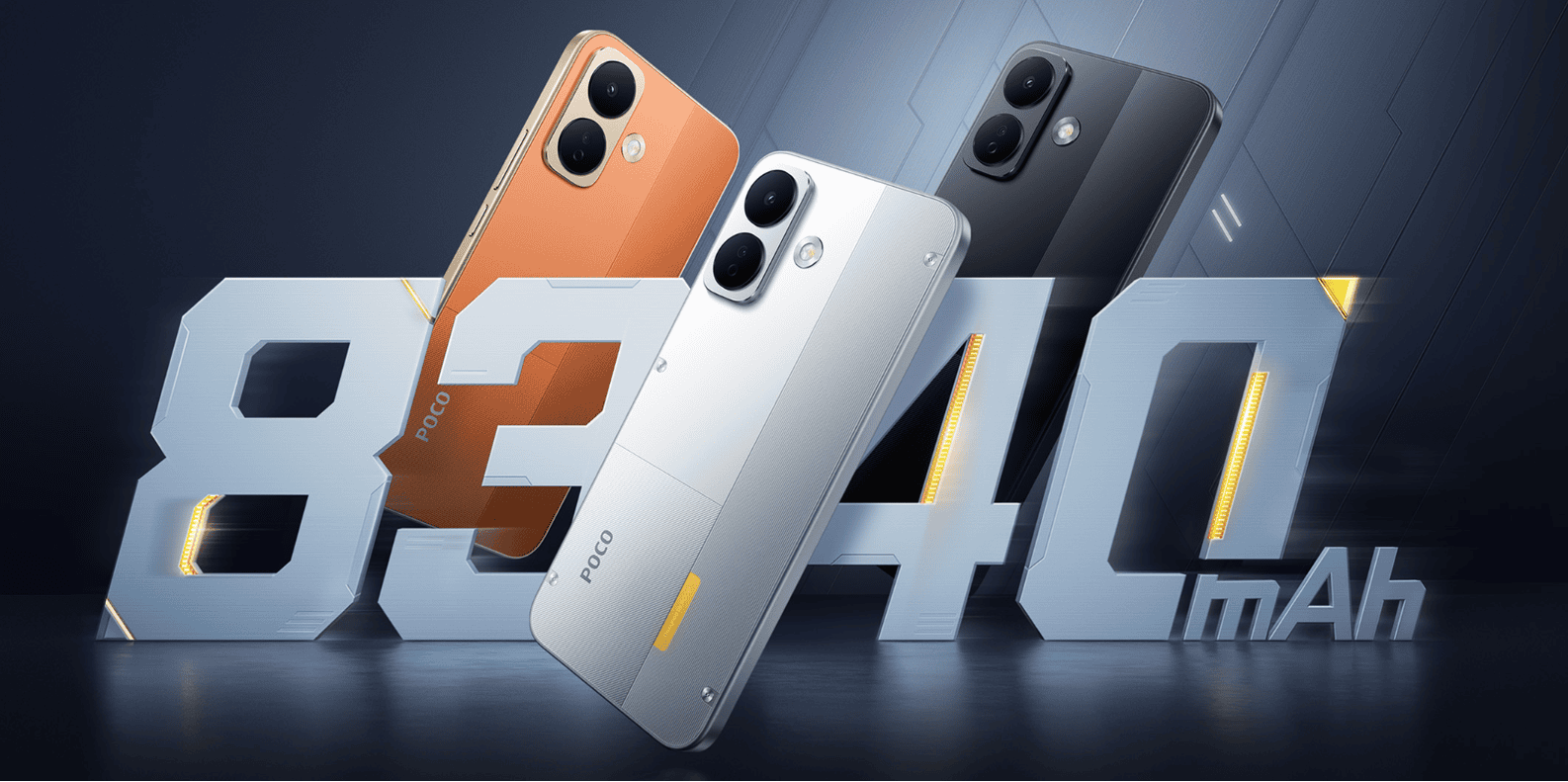
The Poco X8 uses a vertically positioned rectangular camera module with two circular camera cutouts and a flash positioned alongside it. Its rear panel has a split design, while the frame is flat and made from plastic.
Colour choices also influence the appearance of the standard model. The announced Indian variants include Black, Fiery Orange and Frost White.
The Poco X8 Power takes a slightly more premium-looking approach. Its camera module is more square-shaped, while the Yellow version combines a black camera module and black frame with a contrasting yellow rear panel.
The X8 Power also uses a vegan-leather-style finish on the rear. Despite its enormous battery, Poco has kept the phone’s thickness at around 8.65mm, while its weight is approximately 223 grams.
The large batteries are likely to be the biggest reason for consumers to consider either device. For people who regularly travel, play games, stream videos or spend long periods away from a charger, the additional battery capacity could offer a significant practical advantage.
The 10,000mAh capacity of the X8 Power is particularly notable because smartphones with batteries of this size remain relatively uncommon in the mainstream market.
The X8’s 9,000mAh battery also gives it a significant advantage over many competing smartphones in the same broad price category. However, battery endurance will depend on factors such as display brightness, network connectivity, processor load, gaming and background applications.
The two phones also target slightly different buyers. The standard Poco X8 is aimed at consumers who want a large battery and AMOLED display while keeping the purchase price below Rs 30,000.
The X8 Power is positioned higher, offering the larger battery, faster 100W charging, newer Snapdragon 6 Gen 5 processor, faster memory and storage standards, an ultrawide camera and a higher-resolution front camera.
The pricing puts the two devices into a highly competitive portion of India’s smartphone market. Buyers in this range can choose between smartphones focused on gaming performance, cameras, charging speeds, displays or battery life.
Poco’s approach with the X8 series is clearly centred on endurance. Instead of competing solely through camera specifications or flagship-level processors, the company has combined very large batteries with high-quality AMOLED panels and improved durability.
The 1.5K 120Hz AMOLED display is another important part of the package. A high-resolution panel with a 120Hz refresh rate can benefit both entertainment and everyday use, particularly when combined with stereo speakers and Dolby Atmos.
The X8 Power is arguably the more distinctive of the two devices because of its 10,000mAh battery. The challenge for Poco will be convincing buyers that the additional battery capacity and upgraded hardware justify the higher price compared with the standard X8.
The upcoming sale date will give consumers an opportunity to purchase the devices through Flipkart. Both models are expected to receive attention from buyers looking for long battery life without moving into the premium flagship segment.
With the Poco X8 and Poco X8 Power, Poco has strengthened its X8 lineup in India with two smartphones that share a common display and software platform but take different approaches to performance, cameras, charging and battery capacity.
The Poco X8 begins at Rs 29,999, while the Poco X8 Power starts at Rs 35,999. With launch offers potentially reducing their effective prices further, the two phones could become notable options for buyers prioritising battery life, AMOLED displays and long-term software support.
The Poco X8 and X8 Power will officially go on sale in India on September 11 at 12 noon. For consumers who consider battery endurance a top priority, the X8 Power’s 10,000mAh cell and 100W charging are likely to remain its biggest selling points, while the standard X8 offers a more affordable route to the same large-screen, large-battery experience.