
Hair fall can become even more worrying when you cannot understand why it is happening. You may be eating reasonably well, using good hair products, and following a regular routine, yet suddenly notice much more hair coming out in the shower or while brushing.
One possible reason is stress.
Stress can affect the body in many ways, and hair is not immune to those changes. After a period of significant physical or emotional stress, some people experience noticeably increased shedding.
The frustrating part is that stress-related hair fall often does not happen immediately. You may go through a stressful period and feel completely fine about your hair at first, only to notice increased shedding weeks or months later.
This delayed pattern can make it difficult to connect the two events.
The good news is that stress-related shedding is often temporary when the underlying trigger is addressed. However, not every case of hair fall is caused by stress, and persistent or progressive hair loss deserves proper evaluation.
How Stress Can Affect Your Hair
Your hair follicles constantly move through different stages of a growth cycle. Individual hairs grow for a period of time, transition through another stage, and eventually rest before being shed.
Normally, only a portion of your follicles are in the shedding phase at any one time.
A significant physical or emotional stressor can disrupt this normal cycle in some people.
More follicles may enter the resting phase around the same period. After the resting period, those hairs can shed more noticeably.
This type of temporary shedding is commonly known as telogen effluvium.
The important point is that stress does not necessarily make every hair fall out immediately.
Instead, the body’s response to a major stressor can alter the hair-growth cycle, with noticeable shedding appearing later.
What Is Telogen Effluvium?
Telogen effluvium is a type of temporary hair shedding that can occur after a significant physiological or psychological trigger.
Stress is one possible trigger, but it is not the only one.
Illness, surgery, major weight loss, restrictive dieting, hormonal changes, nutritional problems, and other physical stresses can also contribute.
The shedding is generally diffuse, meaning hair loss occurs across the scalp rather than producing one clearly defined bald patch.
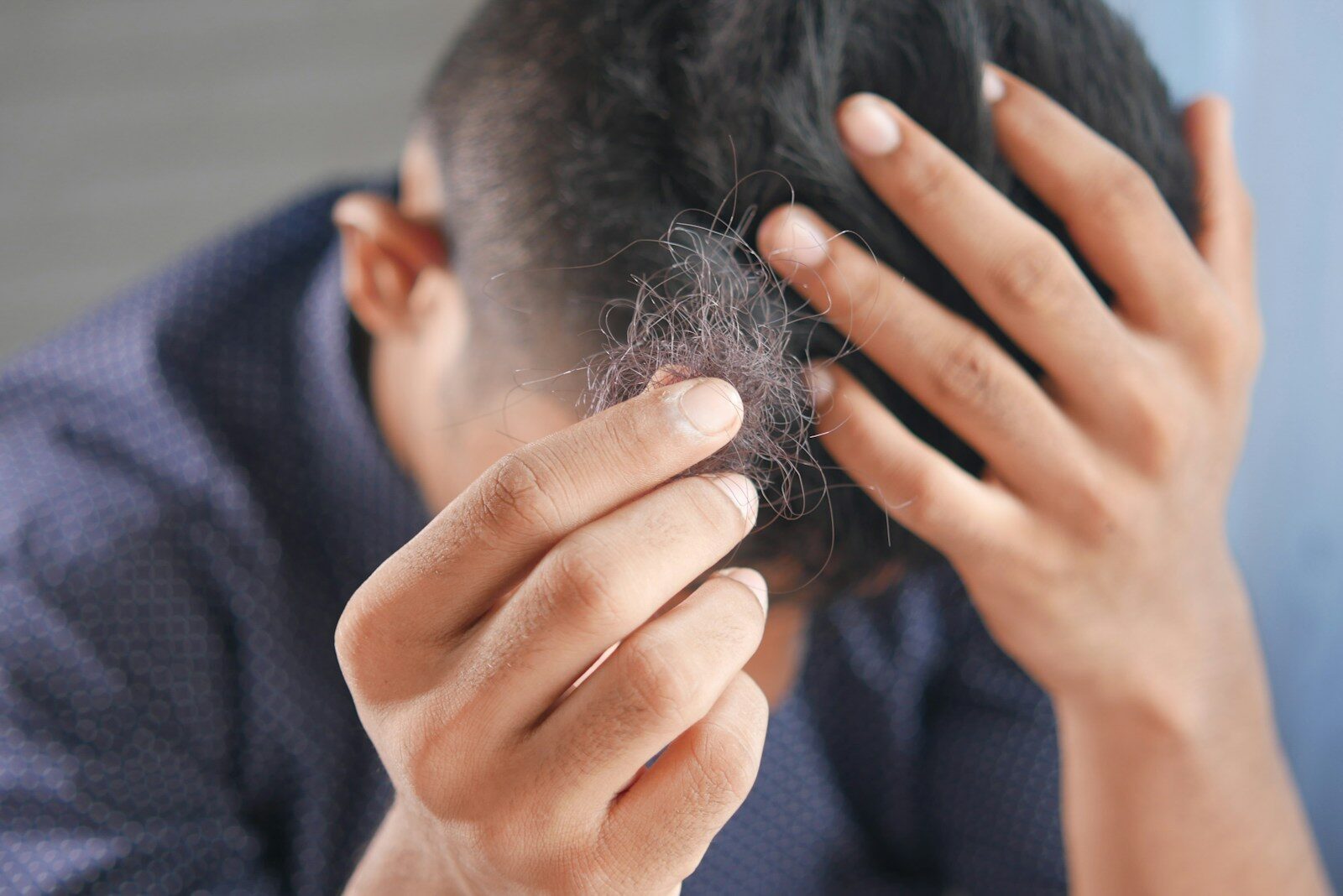
You might notice more hair on your pillow, in your shower drain, on your clothing, or in your brush.
Some people describe it as suddenly feeling as though their hair is everywhere.
Why Does Stress-Related Hair Fall Happen Months Later?
This is one of the most confusing parts of stress-related shedding.
Imagine that you experience several weeks of intense stress in January.
Your hair may look completely normal in January and February.
Then, sometime later, you suddenly notice much more shedding.
It can feel as though the hair loss appeared out of nowhere.
However, the hair cycle can explain why the timing is delayed.
Because follicles do not immediately shed the moment a stress response occurs, the visible change may happen considerably later.
This means you should think about what happened in the preceding weeks or months rather than focusing only on what happened yesterday.
Ask yourself whether you experienced a major illness, high emotional stress, rapid weight loss, surgery, severe sleep disruption, or another significant change.
That history can provide an important clue.
What Kind of Stress Can Trigger Hair Shedding?
Not everyone who experiences everyday stress develops noticeable hair loss.
Normal daily frustrations, a busy workday, or a single stressful conversation are not automatically going to cause telogen effluvium.
The concern is generally greater when stress is significant, prolonged, or accompanied by physical strain.
Examples can include major emotional distress, prolonged anxiety, relationship difficulties, bereavement, intense work pressure, financial problems, major life changes, or other situations that place substantial strain on the body or mind.
Physical stress can also be important.
A severe infection, high fever, surgery, hospitalization, or significant injury may affect the hair cycle.
Rapid weight loss and severe calorie restriction can also place physiological stress on the body.
This is why someone may experience hair shedding after what initially seems like an unrelated health or lifestyle event.
Signs That Your Hair Fall May Be Stress Related
One of the most noticeable signs is increased shedding from all over the scalp.
You may see more complete hairs coming out when washing, brushing, or running your hands through your hair.
The hairline may not necessarily show a sharply defined bald area.
Instead, the overall volume of your hair may gradually appear lower.
You might also notice that your ponytail feels thinner or that your hair seems less dense than it was previously.
Another clue is timing.
If increased shedding began after a major stressful or physically demanding period, telogen effluvium becomes one possibility.
However, timing alone cannot prove that stress is responsible.
Other causes can produce similar symptoms.
Stress Hair Fall vs. Genetic Hair Loss
This distinction is extremely important.
Hereditary pattern hair loss usually develops progressively and tends to follow recognizable patterns.
In men, it may begin with temple recession, a receding hairline, or thinning at the crown.
In women, it often presents as widening of the central part or diffuse thinning over the top of the scalp.
Stress-related shedding is generally more diffuse.
Someone can also have both conditions at the same time.
For example, a person may have early hereditary hair loss and then experience an episode of stress-related shedding.
The temporary shedding can make the underlying pattern hair loss appear much more noticeable.
If your hairline has been gradually receding for several years, stress alone may not explain the change.
Can Anxiety Cause Hair Fall?
Severe or prolonged psychological stress may contribute to increased shedding in some people.
However, it is important not to create another source of anxiety by constantly worrying about whether you are losing hair because you are stressed.
Hair loss itself can become stressful.
You notice more hair falling.
You become worried.
You start checking your scalp repeatedly.
You search online for remedies.
You worry every time you shower.
That anxiety can become part of an unpleasant cycle.
Instead of monitoring individual hairs, pay attention to the overall pattern and take occasional photographs under similar lighting.
Does Lack of Sleep Cause Hair Fall?
Sleep and hair health are often discussed together, but the relationship is more complicated than simply saying that sleeping fewer hours directly causes baldness.
Poor sleep can contribute to overall physical and psychological stress.
If you are consistently sleeping poorly because of work, lifestyle changes, illness, or emotional stress, improving your sleep can be an important part of taking care of your overall health.
However, sleeping longer should not be presented as a guaranteed cure for genetic hair loss.
Healthy sleep is supportive, not a replacement for appropriate treatment when an underlying hair disorder exists.
Can Stress Cause Permanent Hair Loss?
Stress-related telogen effluvium is often temporary.
When the trigger is addressed and the hair cycle returns toward normal, shedding can gradually decrease.
However, the recovery process takes time.
Hair follicles do not instantly return to their previous appearance when stress decreases.
You may first notice that the amount of shedding is falling.
Later, small new hairs may become visible.
Over time, overall density can improve.
The exact timeline varies between individuals.
Persistent stress can also make the situation more complicated if another cause of hair loss is present at the same time.
For this reason, continuing or worsening hair loss should not automatically be dismissed as stress.
How Long Does Stress-Related Hair Fall Last?
There is no exact number of days that applies to everyone.
The shedding phase can continue for a while even after the original trigger has improved.
This is because the hair-growth cycle needs time to normalize.
You should therefore avoid judging your recovery based on a single week.
Instead, monitor the trend over several weeks and months.
If shedding gradually decreases and your hair begins showing signs of recovery, that can be encouraging.
If the problem continues without improvement or becomes progressively worse, professional evaluation is appropriate.
What Can You Do at Home to Reduce Stress-Related Hair Fall?
The first step is to identify the possible trigger.
Think beyond emotional stress.
Ask yourself whether you recently had an illness, significant fever, surgery, rapid weight loss, major dietary restriction, or another substantial physical stress.
If you can identify the trigger, addressing it is often more useful than trying dozens of hair products.
The second step is to improve your overall routine.
Eat regularly and avoid extreme diets.
Make sure your meals provide adequate protein and a broad range of nutrients.
Hair growth is a biological process, and your body needs adequate nutrition to support it.
Good protein sources can include eggs, fish, dairy products, chicken, lentils, beans, soy, nuts, and seeds, depending on your dietary preferences.
Avoid Crash Diets
Rapid weight loss can trigger increased shedding in some people.
This is particularly relevant when weight loss involves severe calorie restriction or inadequate protein intake.
If you are trying to lose weight, aim for a sustainable approach rather than dramatically reducing your food intake.
Your hair does not need to be sacrificed for faster results on the weighing scale.
A balanced weight-management strategy is generally more compatible with long-term health.
Focus on Protein and Balanced Nutrition
Hair is primarily made from keratin, a structural protein.
That does not mean eating excessive amounts of protein will automatically make your hair grow faster.
It means consistently inadequate nutrition can become a problem.
Include a suitable protein source in your meals and maintain a varied diet.
Fruits, vegetables, whole grains, healthy fats, and appropriate protein sources can help provide the nutrients your body needs.
If you suspect that you have a nutritional deficiency, speak with a healthcare professional rather than automatically taking multiple supplements.
Should You Take Hair Supplements?
Not necessarily.
Hair supplements are heavily marketed, but supplements are most useful when they address a genuine deficiency or medically identified need.
Taking high doses of vitamins without a reason can sometimes cause problems.
Biotin is a common example.
Biotin deficiency can affect hair, but taking large doses when you are not deficient is not a guaranteed way to increase hair growth.
Some high-dose supplements can also interfere with laboratory testing.
If you are concerned about iron, vitamin D, vitamin B12, zinc, or another nutrient, discuss whether testing is appropriate before starting large doses.
Manage Stress in a Practical Way
You do not need a perfect stress-free life to have healthy hair.
Stress is part of everyday life.
The goal is to reduce prolonged, overwhelming stress where possible and build habits that help your body recover.
Regular physical activity can be useful.
Walking, cycling, strength training, yoga, stretching, or another activity you enjoy can provide a practical way to stay active.
You do not need an extreme workout routine.
Consistency matters more than intensity.
Relaxation techniques can also help.
Deep breathing, meditation, journaling, spending time outdoors, hobbies, and social connection may help some people manage stress more effectively.
Choose something realistic that you can actually maintain.
Improve Your Sleep Routine
Try to maintain a reasonably consistent sleep and wake schedule.
Create a relaxing bedtime routine and reduce activities that keep your mind highly stimulated immediately before sleep.
If persistent sleep problems are connected to significant stress, anxiety, or another health issue, consider discussing them with a qualified professional.
Better sleep can support your overall health even though it is not a standalone hair-loss treatment.
Be Gentle With Your Hair
When you are already noticing increased shedding, it can be tempting to brush your hair repeatedly or aggressively massage the scalp.
Avoid doing this.
Handle your hair gently.
Use a suitable shampoo and wash your scalp according to its needs.
Avoid aggressive scratching, excessive heat, tight hairstyles, and unnecessary chemical treatments.
If your hair is fragile, minimize bleaching, relaxing, and frequent high-temperature styling.
These steps will not necessarily change the underlying hair cycle, but they can reduce additional breakage.
Can Scalp Massage Help Stress Hair Fall?
A gentle scalp massage can be relaxing and may make hair care feel more comfortable.
Use your fingertips rather than your fingernails.
Avoid aggressive rubbing or pulling.
There is not enough evidence to treat scalp massage as a guaranteed cure for stress-related shedding.
Think of it as a relaxing self-care practice rather than a medical treatment.
What About Hair Oil?
Hair oil can help condition dry hair and reduce friction depending on the product and how it is used.
Coconut oil, for example, can be useful for some types of hair care.
But oil should not be considered a guaranteed treatment for telogen effluvium or hereditary hair loss.
If a particular oil causes itching, redness, or irritation, stop using it.
More oil does not necessarily mean healthier follicles.
Should You Use Onion Juice for Stress Hair Loss?
Onion juice is frequently promoted online as a natural hair-growth remedy.
There has been limited research involving topical onion preparations for certain types of patchy hair loss, but this does not make onion juice a proven treatment for stress-related shedding.
Raw onion juice can also irritate the scalp.
If your scalp burns, becomes red, or develops significant irritation after using it, discontinue the treatment.
There is no reason to tolerate scalp irritation in the hope that it means a remedy is working.
Can Minoxidil Help Stress-Related Hair Fall?
Minoxidil is a recognized treatment for certain forms of hair loss, particularly some types of pattern hair loss.
However, stress-related telogen effluvium is different from hereditary pattern hair loss.
Whether minoxidil is appropriate depends on the individual’s diagnosis and circumstances.
Do not assume that every type of hair shedding requires the same treatment.
If you are unsure whether your shedding is temporary or related to pattern hair loss, a dermatologist or qualified healthcare professional can help determine what is happening.
When Should You See a Doctor?
Not every case of increased shedding requires urgent medical attention.
But persistent, severe, unusual, or rapidly worsening hair loss deserves evaluation.
You should consider seeking professional advice if you develop clearly defined bald patches, sudden extensive shedding, significant scalp redness, pain, burning, sores, crusting, or severe scaling.
You should also seek evaluation if your hair continues to thin progressively despite improving your lifestyle.
The pattern of the hair loss can provide important information.
A receding hairline, temple recession, or crown thinning may suggest pattern hair loss rather than simple stress-related shedding.
Could a Nutritional Deficiency Be Responsible?
Yes, certain nutritional deficiencies can contribute to hair problems.
Iron deficiency is one example, while inadequate overall nutrition can also affect the hair-growth cycle.
However, it is not appropriate to assume that every episode of shedding is caused by a vitamin deficiency.
If your diet has been very restrictive, you have experienced rapid weight loss, or you have other symptoms suggesting a nutritional issue, discuss the situation with a healthcare professional.
Testing can be considered when clinically appropriate.
Could a Thyroid Problem Cause Hair Fall?
Thyroid disorders can affect hair growth and shedding.
If increased hair loss occurs alongside other persistent changes in your health, it may be worth discussing the possibility of a thyroid issue with a healthcare professional.
Hair loss alone cannot diagnose a thyroid disorder.
The important point is to look at the entire health picture rather than treating the hair symptom in isolation.
Can Dandruff Cause Hair Fall at the Same Time?
Dandruff and hair shedding can occur together.
An itchy scalp can encourage frequent scratching, which can contribute to irritation and breakage.
However, ordinary dandruff is not usually responsible for progressive hereditary baldness.
If you have persistent flaking, redness, severe itching, or scalp inflammation along with hair loss, the scalp condition should be assessed appropriately.
How to Track Whether Your Hair Is Improving
Avoid counting every hair that falls.
Daily shedding naturally fluctuates, and washing can make several days’ worth of loose hairs appear at once.
Instead, take photographs every few months.
Photograph the front hairline, temples, crown, and top of the scalp under similar lighting.
Try to keep the camera distance and hairstyle similar.
This gives you a more useful picture of whether density is changing.
You can also pay attention to whether your shower shedding appears to be gradually decreasing.
The overall trend is more meaningful than one unusually heavy wash day.
Why Patience Matters
One of the biggest mistakes people make with hair loss is expecting immediate results.
You may improve your diet today, sleep better tonight, and reduce your stress this week.
Your hair will not necessarily look different tomorrow.
Hair follicles operate on a biological cycle.
Even after the trigger has been addressed, the visible recovery process can take time.
This is especially important with temporary shedding.
Reduced shedding may be the first improvement you notice, followed later by visible regrowth.
Can Stress Hair Fall Come Back?
It can.
If the underlying trigger happens again, another episode of shedding may occur.
For example, repeated severe dieting, major illness, prolonged stress, or another physiological challenge may affect the hair cycle again.
That does not mean you need to live in fear of another episode.
Instead, focus on maintaining sustainable habits and addressing major health issues early.
The Emotional Side of Hair Loss
Hair loss can affect confidence, mood, and self-image.
It is normal to feel frustrated when your appearance changes unexpectedly.
Try not to let hair monitoring consume your day.
Checking the mirror repeatedly will not speed up recovery.
If hair loss is causing significant emotional distress, talking with someone you trust or a qualified mental-health professional can be helpful.
Taking care of your emotional well-being is part of taking care of your overall health.
The Bottom Line
Stress can contribute to temporary hair shedding, particularly when the stress is significant or accompanied by physical strain.
This type of shedding is often diffuse and may become noticeable weeks or months after the original trigger.
The most important step is to identify what happened before the shedding started.
Look beyond emotional stress and consider illness, fever, surgery, rapid weight loss, restrictive dieting, and other major physical changes.
Support your recovery with adequate nutrition, enough protein, reasonable sleep, regular physical activity, stress-management strategies, and gentle hair care.
Avoid crash diets, aggressive scalp treatments, excessive heat, tight hairstyles, and unproven remedies that irritate the scalp.
Most importantly, do not assume that every case of hair fall is caused by stress.
If you have progressive thinning, a receding hairline, crown loss, bald patches, significant scalp symptoms, or persistent shedding, professional evaluation can help determine the real cause.
Stress-related hair fall can look alarming, but increased shedding does not automatically mean permanent baldness.
With the right approach, understanding the trigger and giving the hair cycle enough time can be far more useful than chasing another quick-fix hair remedy.