Hair fall can have many causes, but one nutritional problem deserves particular attention: iron deficiency.
If you have recently noticed more hair shedding than usual, thinner-looking hair, or a gradual reduction in overall hair density, you may wonder whether low iron could be responsible.
Iron plays an important role in the body, including processes involved in normal cell function and oxygen transport. When iron stores become too low, some people can experience increased hair shedding.
However, this does not mean that every case of hair fall is caused by iron deficiency.
Hair loss can also result from genetics, hormonal changes, illness, stress, rapid weight loss, thyroid disorders, scalp conditions, medications, and other nutritional problems.
The most useful approach is therefore to understand whether iron deficiency is actually present rather than taking iron supplements simply because your hair is falling.
What Is Iron Deficiency?
Iron deficiency means the body does not have enough iron to meet its needs.
Iron is needed to make hemoglobin, the protein in red blood cells that helps carry oxygen throughout the body.
When iron deficiency becomes significant, it can eventually lead to iron-deficiency anemia.
However, iron stores can become low before anemia develops.
This distinction matters because someone may have low iron stores without realizing that anything is wrong.
Hair shedding can sometimes be one of the symptoms that brings attention to a nutritional problem, although it is not specific to iron deficiency.
Can Low Iron Really Cause Hair Fall?
Iron deficiency can be associated with increased hair shedding.
One possible explanation is that rapidly growing tissues, including hair follicles, require adequate nutrients and energy to function normally.
When the body is under nutritional stress, the hair-growth cycle can be affected.
In some people, this may contribute to a type of diffuse shedding.
The shedding may appear across the scalp rather than producing one sharply defined bald patch.
But it is important not to assume that iron deficiency is the cause simply because the shedding is diffuse.
Many different conditions can produce a similar pattern.
What Does Iron-Deficiency Hair Loss Look Like?
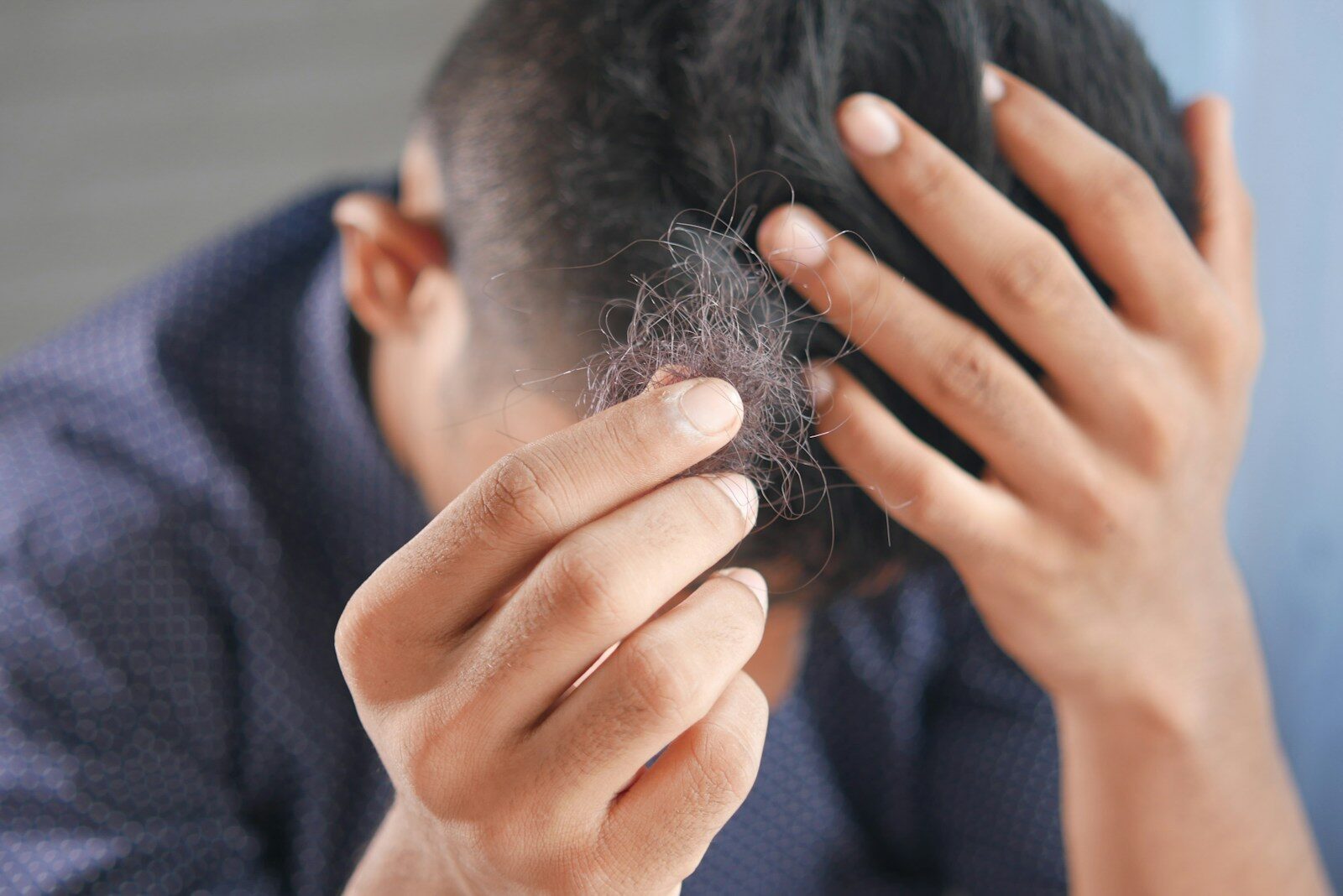
Hair loss related to nutritional problems often appears as increased overall shedding.
You may notice more hair on your pillow, in the shower, on your clothing, or in your brush.
Your ponytail may feel thinner, or your overall hair volume may appear reduced.
Unlike classic pattern hair loss, there may not be a clearly defined receding hairline or isolated bald patch.
However, people can have more than one type of hair loss at the same time.
For example, someone with hereditary pattern hair loss could also develop iron deficiency.
In that situation, correcting iron deficiency may help with the shedding component without completely reversing genetic thinning.
What Are the Symptoms of Iron Deficiency?
Hair loss is only one possible clue.
Other symptoms can include tiredness, weakness, reduced exercise tolerance, headaches, dizziness, pale skin, shortness of breath with exertion, or feeling unusually cold.
Some people may experience unusual cravings, such as craving ice.
Not everyone with low iron experiences obvious symptoms.
That is why symptoms alone cannot confirm iron deficiency.
A healthcare professional may recommend blood tests when iron deficiency is suspected.
Who Is More Likely to Develop Iron Deficiency?
Iron deficiency can affect many different people.
People who lose blood regularly can be at increased risk.
For example, heavy menstrual bleeding is a common reason some women develop iron deficiency.
Pregnancy can also increase iron requirements.
People who follow restrictive diets may have difficulty getting enough iron, particularly if the diet is poorly planned.
Certain gastrointestinal conditions can affect iron absorption.
Regular blood donation may also reduce iron stores in some people.
The risk depends on the individual’s diet, health, blood loss, absorption, and overall circumstances.
Can Women Have Hair Fall Because of Low Iron?
Yes, iron deficiency can be relevant when evaluating hair shedding in women.
Women with heavy menstrual bleeding may be particularly susceptible to low iron stores.
Pregnancy and the postpartum period can also involve major changes in iron requirements and hair shedding.
However, postpartum hair loss is often related to hormonal changes and the normal hair-cycle transition after pregnancy.
It should not automatically be blamed on iron deficiency.
If hair shedding is significant or persistent, the underlying cause should be evaluated rather than assumed.
Can Men Have Hair Fall Due to Iron Deficiency?
Men can also develop iron deficiency, although the reasons may differ.
Dietary insufficiency, gastrointestinal blood loss, malabsorption, frequent blood donation, or another underlying issue can contribute.
If an adult man develops unexplained iron deficiency, identifying why the iron is low can be particularly important.
Simply taking an iron supplement without investigating the cause may overlook an underlying health problem.
Iron Deficiency vs. Male Pattern Hair Loss
These two conditions can look very different.
Male pattern hair loss commonly affects the temples, front hairline, and crown.
You may gradually notice a receding hairline or an increasingly visible scalp at the crown.
Iron-related shedding is more likely to produce diffuse loss across the scalp.
However, real life is not always perfectly clear-cut.
A person can have hereditary hair loss and temporary shedding simultaneously.
This is why looking only at the location of the hair loss may not provide the full answer.
Iron Deficiency vs. Stress-Related Hair Fall
Stress can trigger telogen effluvium, a temporary type of increased shedding.
Iron deficiency can also contribute to diffuse hair shedding in some people.
The two can even occur together.
For example, someone may experience prolonged stress while eating poorly and developing low iron intake.
The resulting hair shedding may have multiple contributing factors.
A detailed history and, when appropriate, blood testing can help separate these possibilities.
What Blood Tests Check for Iron Deficiency?
A healthcare professional may use blood tests to evaluate iron status.
A complete blood count can provide information about red blood cells and whether anemia is present.
Ferritin is commonly used as a marker of stored iron.
Other iron-related tests may sometimes be considered depending on the situation.
The appropriate tests and interpretation depend on your symptoms and medical history.
One important point is that a single laboratory value should not always be interpreted in isolation.
Ferritin can be affected by inflammation and other factors.
Your healthcare professional can interpret the results in context.
Should You Get Your Iron Levels Tested for Hair Fall?
Testing may be appropriate when your history or symptoms suggest a possible deficiency.
It is particularly worth discussing with a healthcare professional if you have increased shedding along with symptoms of iron deficiency, heavy menstrual bleeding, a restrictive diet, recent major blood loss, gastrointestinal problems, or another risk factor.
Not everyone with hair fall needs iron testing.
The decision should be individualized.
Testing is generally more useful than guessing.
Should You Take Iron Supplements for Hair Loss?
You should not automatically start iron supplements simply because you are experiencing hair fall.
Iron is an essential nutrient, but excessive iron can be harmful.
If a deficiency is confirmed or strongly suspected by a healthcare professional, supplementation may be recommended.
The dose and duration depend on the severity of the deficiency and the individual’s circumstances.
Taking a higher dose does not necessarily mean faster hair growth.
The goal is to correct the deficiency safely.
How Long Does It Take for Hair to Recover After Iron Deficiency?
Hair recovery is not immediate.
Even after iron levels improve, the hair-growth cycle needs time to respond.
If iron deficiency contributed to the shedding, the amount of hair fall may gradually decrease first.
Visible improvement in density can take longer.
Hair grows slowly, so judging the result after one or two weeks is unrealistic.
Your healthcare professional may recommend repeat testing to determine whether the deficiency has actually been corrected.
Best Foods for Iron
Food can be an important part of maintaining healthy iron levels.
There are two broad dietary forms of iron: heme iron, found mainly in animal foods, and non-heme iron, found primarily in plant foods.
Heme-iron sources include meat, poultry, and seafood.
Plant sources include lentils, beans, chickpeas, tofu, spinach, some nuts and seeds, and iron-fortified foods.
The amount of iron absorbed by the body varies depending on the food and the overall meal.
This means simply looking at the number of milligrams listed in a food is not the entire story.
How Can You Improve Iron Absorption From Food?
Vitamin C can improve the absorption of non-heme iron.
Including foods such as citrus fruits, guava, tomatoes, bell peppers, berries, or other vitamin-C-rich foods alongside plant sources of iron can be helpful.
Food combinations can therefore matter.
For example, a meal containing lentils along with a vitamin-C-rich vegetable or fruit may provide a useful combination.
This is a general nutrition strategy, not a replacement for treatment when a significant deficiency has already developed.
What About Tea and Coffee?
Tea and coffee contain compounds that can reduce the absorption of non-heme iron when consumed around meals.
If you are trying to improve iron intake or have been diagnosed with iron deficiency, your healthcare professional or dietitian may advise you about timing beverages away from iron-rich meals or supplements.
You do not necessarily have to eliminate tea or coffee.
Timing may be more practical than complete avoidance.
Can a Vegetarian Diet Cause Iron Deficiency?
A vegetarian diet does not automatically cause iron deficiency.
Many plant foods contain iron, and a well-planned vegetarian diet can provide adequate nutrition.
However, plant-based iron is generally less readily absorbed than heme iron.
People following vegetarian or vegan diets may therefore need to pay particular attention to total iron intake and dietary combinations.
If you experience persistent hair shedding and follow a restrictive diet, discussing your nutritional intake with a healthcare professional can be useful.
Does Eating More Spinach Stop Hair Fall?
Spinach is nutritious and contains iron along with other nutrients.
But eating spinach alone is not a treatment for every type of hair loss.
If your hair fall is caused by genetic pattern hair loss, eating more spinach will not reverse the genetic process.
If you have significant iron deficiency, food may be part of the solution, but the appropriate treatment depends on how severe the deficiency is and why it developed.
There is no single “superfood” that can guarantee hair regrowth.
What About Iron-Rich Supplements and Hair Gummies?
Hair gummies and beauty supplements are often marketed as convenient solutions for thinning hair.
Some contain iron, while others contain biotin, zinc, vitamin D, or multiple ingredients.
The problem is that you may not need all of them.
Taking unnecessary nutrients in high amounts can create side effects or interfere with other aspects of health.
Iron-containing supplements should be used carefully because excess iron can accumulate and become harmful.
Choose supplementation based on an identified need rather than advertising claims.
Can Iron Deficiency Cause Brittle Hair?
Nutritional problems can affect hair quality as well as shedding.
If the hair shaft becomes dry, weak, or fragile, you may notice more breakage.
Breakage is different from hair shedding.
A broken hair snaps somewhere along its length, while a naturally shed hair has completed its cycle and detached from the follicle.
Both can occur simultaneously.
If you are experiencing breakage, reduce heat styling, harsh chemical treatments, aggressive brushing, and other sources of mechanical damage.
Can Low Iron Cause a Receding Hairline?
A receding hairline is more strongly associated with pattern hair loss than with simple iron deficiency.
If your temples are gradually moving backward or the crown is thinning progressively, hereditary hair loss should be considered.
Iron deficiency can cause diffuse shedding, but it does not typically create the classic pattern of progressive temple recession.
If you notice both increased shedding and a receding hairline, there may be more than one issue involved.
Does Iron Deficiency Cause Hair Loss in Children?
Children can develop iron deficiency, and nutritional problems can affect growth and development.
Hair changes should not be self-treated with iron supplements in children.
If a child is experiencing significant hair loss, poor growth, unusual fatigue, pale skin, or other concerning symptoms, a pediatric healthcare professional should evaluate the situation.
The cause may be nutritional, dermatological, medical, or related to another issue.
Can Low Ferritin Cause Hair Fall Without Anemia?
This is a more complicated question.
Ferritin reflects stored iron, but the relationship between ferritin levels and hair loss is not simple.
Some people with low iron stores may experience shedding even when they do not meet criteria for anemia.
However, low ferritin is not proof that iron deficiency is responsible for every case of hair loss.
Ferritin can also be influenced by inflammation and other conditions.
A healthcare professional should interpret your result together with your symptoms, medical history, blood count, and other relevant findings.
Why You Should Not Self-Diagnose Iron Deficiency
Hair fall is a symptom, not a diagnosis.
If you assume that low iron is responsible, you could miss another cause.
For example, hereditary hair loss, thyroid disease, scalp inflammation, medication-related shedding, hormonal changes, or recent illness can all produce hair changes.
Taking iron when your iron levels are normal will not necessarily improve those conditions.
Finding the actual cause is more important than choosing the most popular supplement.
Other Nutrients That Can Affect Hair
Iron is not the only nutrient relevant to hair health.
Inadequate protein, zinc, vitamin D, vitamin B12, and other nutritional problems may be associated with hair changes in certain circumstances.
However, this does not mean everyone with hair fall should take a multivitamin.
Testing and supplementation should be guided by individual risk factors and professional advice.
A balanced diet is generally a better foundation than taking a large collection of supplements.
Could a Medical Condition Be Causing Low Iron?
Yes.
Iron deficiency can result from inadequate dietary intake, increased requirements, poor absorption, or blood loss.
In some adults, unexplained iron deficiency may require investigation for a source of bleeding or another underlying problem.
This is particularly important when the deficiency is significant or keeps returning.
Treating the low iron without addressing the reason it became low may not solve the problem permanently.
Can Heavy Periods Cause Hair Fall?
Heavy menstrual bleeding can lead to substantial iron loss over time.
If your periods are unusually heavy and you are also experiencing fatigue or increased hair shedding, it is worth discussing the possibility of iron deficiency with a healthcare professional.
Do not assume that heavy periods are something you simply have to tolerate.
There are medical approaches for managing excessive menstrual bleeding, depending on its cause.
Can Pregnancy Affect Iron and Hair?
Pregnancy increases the body’s nutritional demands, including iron requirements.
Some pregnant people develop iron deficiency and may require supplementation under medical guidance.
Pregnancy and the postpartum period can also cause major changes in the hair-growth cycle.
After childbirth, many women experience increased shedding as hormone levels change.
This postpartum shedding is not automatically evidence of iron deficiency.
If shedding is severe or prolonged, discuss it with your healthcare professional.
What Happens After Iron Treatment Starts?
If iron deficiency is confirmed and treatment begins, the first priority is restoring healthy iron levels.
You should not expect immediate hair growth.
The body needs time to replenish iron stores, and hair follicles need time to move through their normal cycles.
Continue treatment exactly as advised.
Do not increase the dose because your hair is still shedding after a few weeks.
If you experience side effects from an iron supplement, discuss them with your healthcare professional rather than simply abandoning treatment or doubling the dose later.
Can You Prevent Iron-Related Hair Fall?
Prevention starts with adequate nutrition and awareness of your individual risk factors.
Eat a varied diet containing iron-rich foods.
If you follow a vegetarian or vegan diet, pay attention to iron sources and overall nutrition.
If you have heavy menstrual bleeding, frequent blood donation, gastrointestinal problems, or another reason for increased iron loss, discuss the issue with a healthcare professional.
Avoid taking high-dose iron “just in case.”
The objective is to maintain appropriate iron levels, not to maximize them.
When Hair Fall Needs More Than Nutrition
If your hair continues to thin despite correcting a confirmed iron deficiency, do not automatically assume you need more iron.
Another cause may be involved.
Look for patterns such as temple recession, crown thinning, widening of the part, patchy bald areas, or persistent scalp symptoms.
These patterns can provide important clues.
A dermatologist can evaluate the scalp and hair pattern and determine whether another form of hair loss is present.
Warning Signs You Should Not Ignore
Sudden, severe hair loss should be evaluated rather than treated only with dietary changes.
The same applies to clearly defined bald patches.
Scalp pain, burning, redness, sores, crusting, severe scaling, or inflammation can indicate a scalp condition that needs specific treatment.
Unexplained fatigue, significant weight changes, persistent weakness, shortness of breath, dizziness, or other concerning symptoms should also be discussed with a healthcare professional.
Hair loss can sometimes be an early clue that something else deserves attention.
The Bottom Line
Iron deficiency can contribute to increased hair shedding in some people, particularly when iron stores are significantly low.
But hair fall does not automatically mean that your iron is low.
The pattern of hair loss, your diet, medical history, symptoms, blood loss, recent illnesses, and other factors all matter.
If you suspect iron deficiency, testing is generally more useful than guessing.
Eat a balanced diet and include appropriate iron-rich foods, but do not start high-dose iron supplements without a clear reason.
If deficiency is confirmed, follow the recommended treatment and give your body and hair enough time to recover.
Remember that correcting iron deficiency may improve shedding when low iron is genuinely contributing to the problem, but it will not necessarily reverse genetic hair loss or another unrelated condition.
The smartest approach to hair fall is therefore not simply to ask, “Which supplement should I take?”
Ask a better question: “Why is my hair falling, and is there evidence that iron is part of the problem?”
Once the underlying cause is understood, you have a much better chance of choosing the right treatment and protecting your hair in the long run.