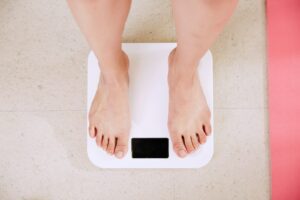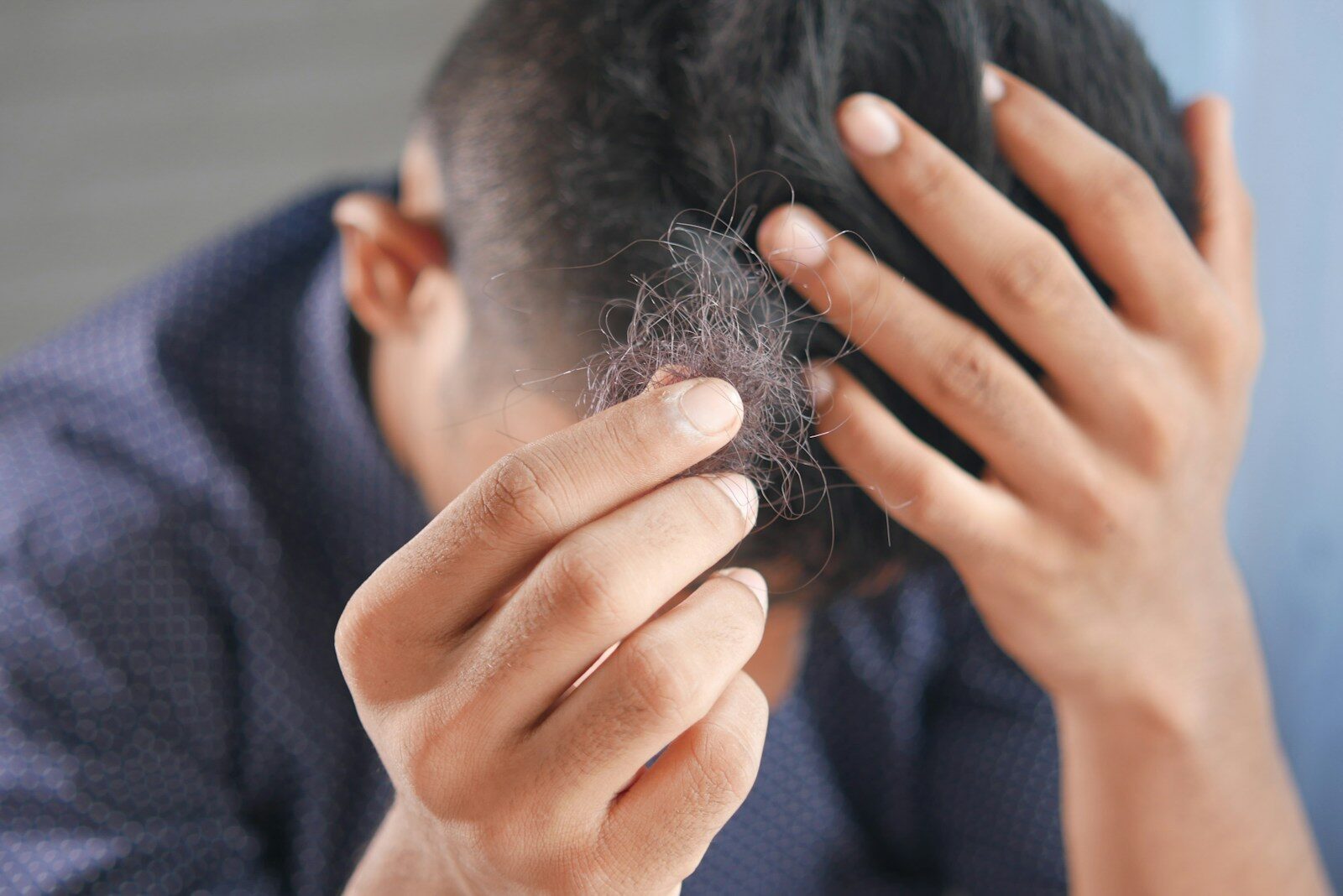

Losing weight can feel like a major achievement, but sometimes another change appears that you were not expecting: increased hair fall.
You may notice more hair on your pillow, in the shower, on your brush, or around the bathroom sink.
This can be alarming, especially when you have worked hard to improve your health and suddenly feel that your hair is getting thinner.
The good news is that hair shedding after significant weight loss is often temporary.
However, it should not simply be ignored, because rapid weight loss, restrictive diets, inadequate protein, nutritional deficiencies, illness, stress, and other factors can all contribute to excessive shedding.
Hair loss is complicated because the trigger may happen weeks or months before the shedding becomes noticeable.
One common form of temporary excessive shedding is called telogen effluvium. It can occur after physical stress on the body, including significant weight loss and nutritional changes.
This means that the hair you are losing today may be responding to something that happened several months earlier.
That delay can make the problem confusing.
You might think your new shampoo caused the hair fall, when the real trigger could have been the rapid weight loss you experienced earlier.
The first thing to understand is that some hair shedding is normal.
People naturally lose hair every day as part of the hair-growth cycle.
The American Academy of Dermatology explains that losing around 50 to 100 hairs a day can be normal. (aad.org)
The concern is when your normal shedding pattern changes significantly.
You may notice large amounts of hair coming out during washing, increased shedding while brushing, a thinner ponytail, a wider part, or more visible scalp.
These signs are more meaningful than trying to count every individual strand.
One of the biggest reasons weight loss can be associated with hair shedding is insufficient nutrition.
When someone dramatically reduces food intake, the body may not receive enough energy and nutrients to support all normal biological processes.
Hair growth is not considered an essential survival function.
When the body is under significant nutritional stress, hair production can be affected.
This is one reason crash diets can be problematic.
You may see the number on the weighing scale fall quickly, but your body may also be responding to the sudden change.
Protein is particularly important.
Hair is primarily composed of a protein called keratin, so adequate protein intake is important for normal hair production.
If you have significantly reduced your food intake or eliminated major food groups, check whether you are still getting enough protein.
Depending on your diet, protein can come from eggs, fish, poultry, dairy products, lentils, beans, soy, nuts, seeds, and other protein-rich foods.
You do not need to eat one specific “hair-growth food.”
The bigger goal is a balanced diet that provides enough protein and overall nutrition.
Iron is another nutrient that can become relevant when investigating hair loss.
Iron deficiency can be associated with hair loss in some people.
Women may be particularly affected when dietary intake is inadequate or when there are significant iron losses.
But this does not mean you should automatically start taking iron supplements.
Too much iron can be harmful.
If your hair shedding is significant and you have risk factors for iron deficiency, talk to a healthcare professional about whether testing is appropriate.
The same principle applies to other vitamins and minerals.
You may see advertisements promising that biotin, zinc, vitamin D, or another supplement will stop your hair fall.
But taking a supplement is not the same as correcting a deficiency.
The American Academy of Dermatology warns that excessive amounts of certain supplements can actually contribute to hair loss. (aad.org)
So before buying a large collection of hair supplements, look at your diet and discuss possible deficiencies with a healthcare professional.
Rapid weight loss is another important factor.
There is a difference between gradual, sustainable weight management and losing a substantial amount of weight very quickly.
Rapid weight loss can place physiological stress on the body.
It can also make it harder to consume enough protein, calories, vitamins, and minerals.
This does not mean that everyone who loses weight will experience hair loss.
Many people lose weight without developing significant shedding.
The risk becomes more relevant when the weight loss is rapid, the diet is highly restrictive, or nutritional intake becomes inadequate.
If you are using a medically prescribed weight-loss treatment, do not stop it simply because you notice hair shedding.
Instead, tell your healthcare professional.
They can help determine whether the shedding may be associated with rapid weight loss, reduced food intake, nutritional issues, another medical condition, or something unrelated.
This is particularly relevant because medications used for weight management have received considerable attention in connection with hair shedding.
The medication may not necessarily be directly damaging the hair follicles.
Instead, rapid weight loss, lower calorie intake, reduced appetite, and nutritional changes may be contributing factors.
That distinction is important.
If you are losing weight with a medication and notice significant hair loss, discuss it with the healthcare professional managing your treatment rather than making medication changes yourself.
Another factor is stress.
Weight loss itself can become a stressful experience.
You may be changing your diet, increasing exercise, tracking calories, worrying about the scale, and adjusting your daily routine.
If significant emotional stress occurs alongside rapid weight loss, it may add another potential trigger for excessive shedding.
Your body does not necessarily respond to one isolated factor.
Several factors can happen at the same time.
For example, someone may lose weight rapidly, eat less protein, sleep poorly, experience stress, and develop an illness.
The resulting hair shedding may be the result of the overall physiological stress rather than one single cause.
That is why trying to identify one culprit from an internet search can be misleading.
Another important question is whether you are actually experiencing hair shedding or hair breakage.
These are not the same thing.
Shedding means hairs are leaving the scalp as part of the hair cycle.
Breakage means the hair shaft is snapping somewhere along its length.
If you notice many short hairs, split ends, uneven lengths, dryness, and brittle strands, breakage may be contributing to the appearance of thinning.
Weight loss can indirectly contribute to breakage if your hair becomes more fragile due to nutritional stress.
Heat styling, bleaching, coloring, chemical treatments, and aggressive brushing can add to the problem.
This is why hair care should become gentler when you are already experiencing shedding.
Avoid extremely tight ponytails, buns, braids, and extensions.
Repeated tension can contribute to traction alopecia.
The American Academy of Dermatology warns that hairstyles that continuously pull on the hair can cause hair loss and, if the damage continues, potentially permanent follicle damage. (aad.org)
You do not have to stop styling your hair completely.
The goal is to avoid constant pulling and give your scalp regular breaks.
If your hairstyle causes pain or tenderness, that is a useful warning sign.
Heat styling should also be reduced when possible.
High temperatures can weaken the hair shaft and increase breakage.
Use lower heat settings and avoid repeatedly applying heat to the same area.
If your hair is already dry or damaged, focus on gentle handling and conditioning.
Washing your hair is usually not the cause of weight-loss-related shedding.
Many people become frightened when they see a lot of hair in the shower.
But the shower is often simply where already-shed hairs become visible.
If you wash your hair every few days, several days’ worth of normal shedding may appear together.
That can make the amount seem much larger.
You do not need to stop washing your hair because you are afraid of seeing loose strands.
Keep your scalp clean according to your hair and scalp needs.
If you have persistent dandruff, itching, redness, scaling, pain, or other scalp symptoms, consider getting professional advice.
A healthy scalp is an important part of overall hair care.
Another common question is whether oil can reverse hair fall after weight loss.
Hair oils can help with dryness, softness, and manageability.
They may make the hair feel healthier.
But they do not correct inadequate calorie intake, protein deficiency, iron deficiency, thyroid disease, or the physiological effects of rapid weight loss.
That means oiling can be part of your hair-care routine, but it should not be your main strategy for weight-loss-related shedding.
The same applies to onion juice and other viral home remedies.
A natural remedy may sound attractive because it seems simple.
But if your hair shedding is being triggered by nutritional or physiological stress, applying something to the scalp does not address the underlying problem.
The most useful step is to improve the factors that are actually contributing to the shedding.
This starts with your diet.
Instead of focusing on a single “hair-growth food,” look at your overall eating pattern.
Are you eating enough?
Are you getting enough protein?
Are you eating a variety of foods?
Have you eliminated entire food groups?
Are you skipping meals regularly?
Are you experiencing an unusually low appetite?
Are you continuing to lose weight rapidly?
These questions can tell you more than any supplement advertisement.
If your appetite has decreased significantly, especially while using a weight-loss medication, it can be worth discussing your nutrition with your healthcare professional or a registered dietitian.
The goal is not necessarily to stop losing weight.
The goal is to make sure your weight-management approach remains nutritionally adequate.
This is particularly important when weight loss is substantial.
You may also want to pay attention to the pace of your weight loss.
Very rapid changes can be a signal that your calorie intake has dropped more than intended.
If you are losing weight much faster than your healthcare professional recommended, discuss it with them.
A healthy weight-management strategy should consider your overall health rather than focusing only on the scale.
Hair recovery also requires patience.
This is one of the hardest parts.
When you notice hair fall, you naturally want the problem fixed immediately.
You may buy a new supplement and expect results within days.
But hair follicles work according to biological cycles.
If the shedding was triggered by weight loss, the hair cycle may take time to normalize even after your nutrition improves.
You may therefore continue seeing shedding for a while after correcting the original trigger.
That does not automatically mean your efforts have failed.
The hair needs time to move through its cycle.
This is why before-and-after comparisons should be made over months rather than days.
Taking photographs can help.
Choose the same lighting and angle.
Take one photograph every few months.
This can help you see whether your part is becoming wider, whether scalp visibility is changing, and whether new growth is appearing.
Daily mirror checking can make small fluctuations feel much more significant than they actually are.
If the shedding is temporary, you may eventually notice fewer hairs coming out and gradual improvement in fullness.
However, not every case of hair loss after weight loss is necessarily caused by weight loss.
This is an important point.
You could lose weight and experience hair thinning for an entirely different reason.
For example, hereditary hair loss can begin or progress around the same time.
A thyroid problem can cause hair changes.
Iron deficiency can contribute.
Hormonal changes can play a role.
Certain medications can affect hair.
A scalp condition can also cause hair loss.
So if your hair loss is persistent or progressive, do not automatically assume that weight loss is the only explanation.
Look at the pattern.
Temporary excessive shedding often involves increased shedding across the scalp.
Hereditary hair loss may appear as gradual thinning, a widening part, or reduced density around the crown.
Alopecia areata can produce smooth patches of hair loss.
Scalp disorders may cause itching, redness, scaling, pain, or inflammation.
These patterns can help determine whether you should seek professional evaluation.
If you have a widening part that continues to progress, do not assume it will automatically reverse when your weight stabilizes.
Female pattern hair loss is common and can coexist with temporary shedding.
This is particularly important for women because temporary shedding can sometimes make underlying hereditary thinning more noticeable.
A dermatologist can distinguish between these possibilities.
Men can also experience both temporary shedding and hereditary hair loss.
For example, someone may lose weight quickly and experience telogen effluvium while also having a genetically receding hairline.
Treating only the weight-loss-related shedding would not necessarily address the hereditary component.
This is another reason diagnosis matters.
If your hair fall started after weight loss, write down when the weight loss occurred and when the shedding began.
The timeline can be useful.
If the weight loss happened several months before the shedding, that may fit with temporary excessive shedding.
If the hairline had been gradually receding for several years, there may be a genetic component.
If the shedding started immediately after beginning a new medication, mention that as well.
Your healthcare professional can use these details to build a more complete picture.
You should also consider how much weight you lost and how quickly.
A small gradual change is different from a dramatic loss over a short period.
The more significant the physiological stress, the more likely it may be to influence the hair cycle.
But there is no single amount of weight loss that guarantees hair shedding.
Individual responses vary.
Your nutritional status, genetics, health, medications, hormones, and other factors all matter.
If you are following a very low-calorie diet, do not continue simply because it promises faster results.
Rapid weight loss is not automatically better.
A sustainable approach is usually easier to maintain and can help you meet nutritional needs more consistently.
If you are taking a prescription weight-loss medication, follow the plan given by your healthcare professional.
If you are struggling to eat enough because of reduced appetite, nausea, or other side effects, tell them.
Do not assume that severe appetite suppression is something you simply have to tolerate.
Your overall health matters more than achieving a particular number on the scale as quickly as possible.
Supplements are another area where people often spend unnecessary money.
You may see products containing biotin, collagen, zinc, vitamin D, iron, or multiple herbal ingredients.
Some nutrients are important for hair health.
But supplementation should be based on actual nutritional needs.
The AAD warns that taking too much of certain supplements can contribute to hair loss rather than preventing it. (aad.org)
This is why a balanced diet is usually a better foundation than a cupboard full of supplements.
If you suspect a deficiency, speak with a healthcare professional.
They may recommend appropriate testing depending on your symptoms and medical history.
Do not assume that because a supplement is sold without a prescription it is automatically harmless.
Another question people ask is whether collagen can stop hair fall.
Collagen supplements are widely marketed for skin, hair, and nails.
However, they should not be considered a universal treatment for hair loss.
If your diet already provides adequate protein, adding a collagen supplement does not necessarily address the underlying cause of your shedding.
Focus first on overall nutrition.
The same principle applies to “hair gummies.”
They may contain vitamins and other ingredients, but the colorful packaging does not make them a treatment for every form of hair loss.
The best supplement is the one you actually need.
Sleep and exercise also deserve attention.
Exercise is generally beneficial for overall health and can be part of a healthy weight-management routine.
But suddenly combining aggressive calorie restriction with intense daily exercise can increase the physical stress on your body.
If you are losing weight and also exercising heavily, make sure your nutrition and recovery are appropriate.
Rest days and adequate nutrition are not obstacles to health.
They are part of it.
Stress management can also be useful.
You do not need to eliminate every stressful event from your life.
That is unrealistic.
Instead, focus on manageable habits such as consistent sleep, regular meals, physical activity appropriate for your health, relaxation, social support, and professional help when needed.
The goal is to support your overall health while your hair cycle recovers.
If the shedding becomes severe, do not wait indefinitely.
A dermatologist can evaluate your scalp and hair and determine whether the pattern fits temporary shedding or another type of hair loss.
Your doctor may ask about recent weight changes, diet, illnesses, stress, medications, family history, hormonal changes, and hair-care practices.
Depending on the situation, blood tests may be considered to look for nutritional deficiencies, thyroid problems, or other conditions.
The exact tests should be based on your symptoms and medical history rather than ordering every possible test.
You should also seek professional attention if you develop bald patches.
A smooth, round patch of hair loss is not the typical pattern of ordinary weight-loss-related shedding.
Alopecia areata is one possible cause.
Similarly, scalp pain, redness, crusting, severe scaling, or inflammation should not simply be attributed to dieting.
These symptoms can point toward a scalp disorder that requires specific treatment.
If you are experiencing eyebrow or eyelash loss along with scalp hair loss, professional evaluation is also important.
The same applies if your hairline is rapidly receding or if your scalp is becoming increasingly visible.
The goal is not to frighten you.
It is to make sure that a potentially treatable condition is not being overlooked.
If the diagnosis is temporary excessive shedding caused by weight loss, the outlook can be encouraging.
Once the body recovers from the trigger and nutritional intake improves, the hair-growth cycle can gradually normalize.
But recovery is not instant.
Hair grows slowly, so visible improvement can take months.
You may first notice less shedding.
Then you may see small new hairs.
Eventually, those hairs become longer and contribute to overall density.
This process takes patience.
Do not judge recovery by a single shower.
Look at the overall trend.
If you are concerned about your appearance while waiting for recovery, there are simple cosmetic strategies that can help.
A suitable haircut can make thinning less noticeable.
Avoid hairstyles that pull tightly on the scalp.
Volumizing products can temporarily improve the appearance of density.
Hair fibers can also provide temporary cosmetic coverage for some people.
These options do not treat the underlying cause, but they can make the waiting period easier.
Your emotional response matters too.
Hair loss can affect confidence, self-image, and quality of life.
If you feel embarrassed or anxious, remember that you are not alone.
Hair shedding after major physical changes is common, and many causes are manageable.
The important thing is to avoid turning that anxiety into impulsive treatment decisions.
Do not spend hundreds of dollars on products simply because you are frightened.
Do not start multiple supplements at once.
Do not stop prescribed medication without medical guidance.
And do not believe claims that promise guaranteed regrowth within days.
A sensible plan is much more useful.
Review your weight-loss approach.
Make sure your diet is nutritionally adequate.
Get enough protein.
Avoid unnecessary restrictions.
Take care of your scalp.
Reduce heat and chemical damage.
Avoid tight hairstyles.
Manage stress and prioritize sleep.
Monitor your hair over time.
And seek professional evaluation if the shedding is severe, persistent, patchy, or progressive.
One of the most reassuring things to remember is that seeing hair fall after weight loss does not automatically mean you have permanently damaged your follicles.
Temporary shedding and permanent hair loss are different problems.
The challenge is figuring out which one you have.
If the hair is simply shedding because the body experienced a temporary physiological stress, recovery may occur once the trigger is addressed.
If you have hereditary hair loss at the same time, treatment may be necessary to protect existing density.
If you have a nutritional deficiency, correcting it may be important.
If you have a thyroid disorder or another medical condition, treating the underlying condition becomes the priority.
The cause determines the solution.
That is the most important message.
Do not let the phrase “hair loss after weight loss” convince you that there is only one explanation.
Your body is more complicated than that.
Weight loss may be the trigger, but nutrition, genetics, hormones, stress, medications, and health conditions can all influence what happens next.
If you have recently lost weight and started noticing hair shedding, start by reviewing the timeline.
Ask when the weight loss began.
Ask how quickly it happened.
Think about what you were eating.
Consider whether your protein intake changed.
Think about recent illness, stress, sleep, and medications.
Look at the pattern of the hair loss.
Then decide whether you need professional evaluation.
The best natural strategy is not a miracle oil.
It is giving your body enough nutrition, avoiding unnecessary physical stress, protecting the hair from damage, and allowing the hair cycle time to recover.
If the problem is temporary, patience can be one of the most important parts of treatment.
If the problem is not temporary, early diagnosis can help you find an appropriate evidence-based treatment.
Either way, you do not need to face hair loss by guessing.
Understand the cause first.
Then choose the right solution.
Is hair loss after weight loss normal? Temporary excessive shedding can occur after significant or rapid weight loss, particularly when calorie or nutrient intake becomes inadequate. It is not inevitable, but it is a recognized pattern of hair shedding.
How long after weight loss does hair fall start? Hair shedding can become noticeable weeks or months after a major physical stressor. The timing varies from person to person.
Will hair grow back after weight-loss-related shedding? In many cases of temporary excessive shedding, hair gradually returns toward normal after the underlying trigger is resolved. Recovery can take months because hair growth is slow.
Does rapid weight loss cause hair loss? Rapid weight loss can trigger excessive shedding, particularly when it involves severe calorie restriction or inadequate nutrition.
Can dieting cause hair fall? Yes. Highly restrictive diets can make it difficult to obtain enough calories, protein, iron, and other nutrients needed for normal hair growth.
Does protein deficiency cause hair loss? Inadequate protein intake can contribute to hair problems. Maintaining adequate protein intake is important during weight management.
Should I take biotin after losing weight? Do not automatically take high-dose biotin. If you suspect a nutritional deficiency, discuss it with a healthcare professional rather than guessing.
Should I take iron for hair loss after weight loss? Only when there is an appropriate medical reason. Excessive iron can be harmful, so iron supplementation should be discussed with a healthcare professional.
Can weight-loss injections cause hair loss? Hair shedding has been reported in some people undergoing treatment with weight-loss medications, but rapid weight loss, reduced food intake, and nutritional changes may also contribute. Do not stop prescribed medication without discussing the issue with your healthcare professional.
Can hair oil stop hair loss after weight loss? Oil may improve hair softness and reduce dryness, but it does not correct nutritional or physiological causes of weight-loss-related shedding.
Does shampoo make hair fall worse? Shampooing generally does not cause follicle-related hair loss. Washing can simply make hairs that were already ready to shed more visible.
Can tight hairstyles make weight-loss hair fall worse? Tight hairstyles can independently contribute to traction alopecia. Reducing tension is especially sensible when hair is already fragile.
Should I stop washing my hair if it is falling out? No. Maintain appropriate scalp hygiene. Seeing loose hairs during washing does not mean shampoo caused the shedding.
Can stress and weight loss cause hair loss together? Yes. Several physical and emotional stressors can occur simultaneously, and the combination may increase the likelihood of excessive shedding.
What foods should I eat after weight loss to support hair growth? Focus on a balanced diet with adequate protein and a variety of nutrient-rich foods. Eggs, fish, dairy, lentils, beans, soy, nuts, seeds, vegetables, fruits, and whole grains can all contribute to a balanced eating pattern.
Can crash dieting cause permanent baldness? Crash dieting more commonly causes temporary excessive shedding, but severe or prolonged nutritional problems can be harmful. Other forms of hair loss can also coexist, so persistent thinning should be evaluated.
Why is my hair still falling out after my weight stabilized? Hair shedding may continue for some time after the original trigger has resolved because hair follicles operate on a delayed growth cycle. Persistent or progressive loss should nevertheless be assessed.
How can I tell if my hair loss is temporary? Temporary shedding often involves increased hair coming out across the scalp after a significant physical trigger. Progressive widening of the part, receding hairline, bald patches, or continuing density loss may indicate another type of hair loss.
When should I see a dermatologist? Seek professional evaluation if hair loss is sudden, severe, patchy, rapidly progressing, associated with scalp pain or inflammation, or continuing for several months.
Can minoxidil help hair loss after weight loss? Minoxidil is used for certain types of hair loss, particularly pattern hair loss. It is not automatically the right treatment for temporary shedding caused by weight loss. A diagnosis can help determine whether it is appropriate.
Does hair fall after weight loss mean my diet is unhealthy? Not necessarily. Hair shedding can occur even with a generally healthy diet after substantial physiological changes. However, reviewing your calorie, protein, vitamin, and mineral intake is worthwhile when significant shedding develops.
Medical Disclaimer: This article is intended for general educational purposes and does not replace individualized medical advice, diagnosis, or treatment. Hair loss has many possible causes. If you experience sudden, severe, patchy, painful, or rapidly progressive hair loss, consult a qualified dermatologist or healthcare professional.