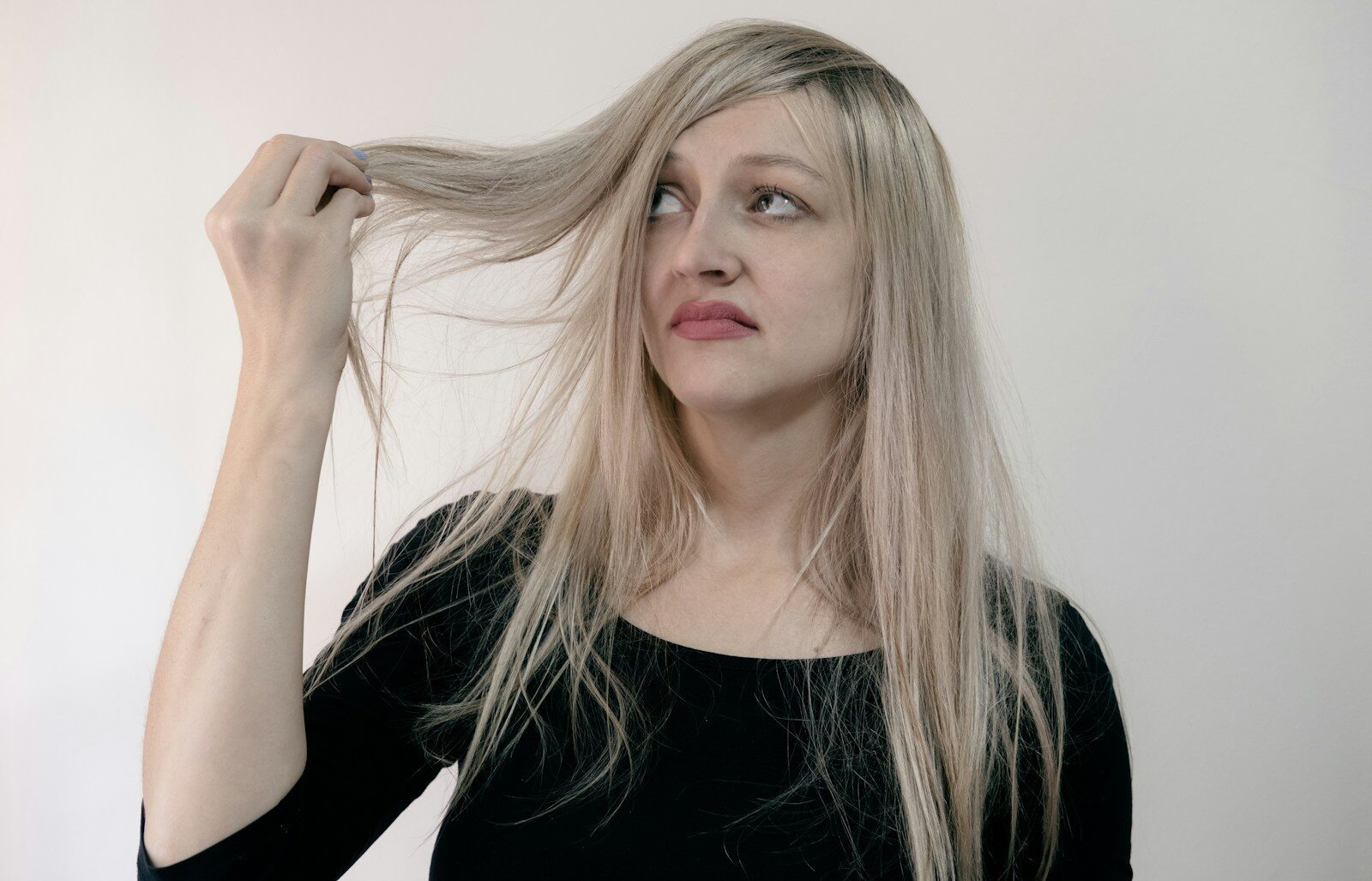
Hair fall after pregnancy is one of the most common changes new mothers notice after childbirth.
You may feel excited to see your baby growing while simultaneously wondering why so much hair is suddenly appearing on your pillow, clothes, brush, and bathroom floor.
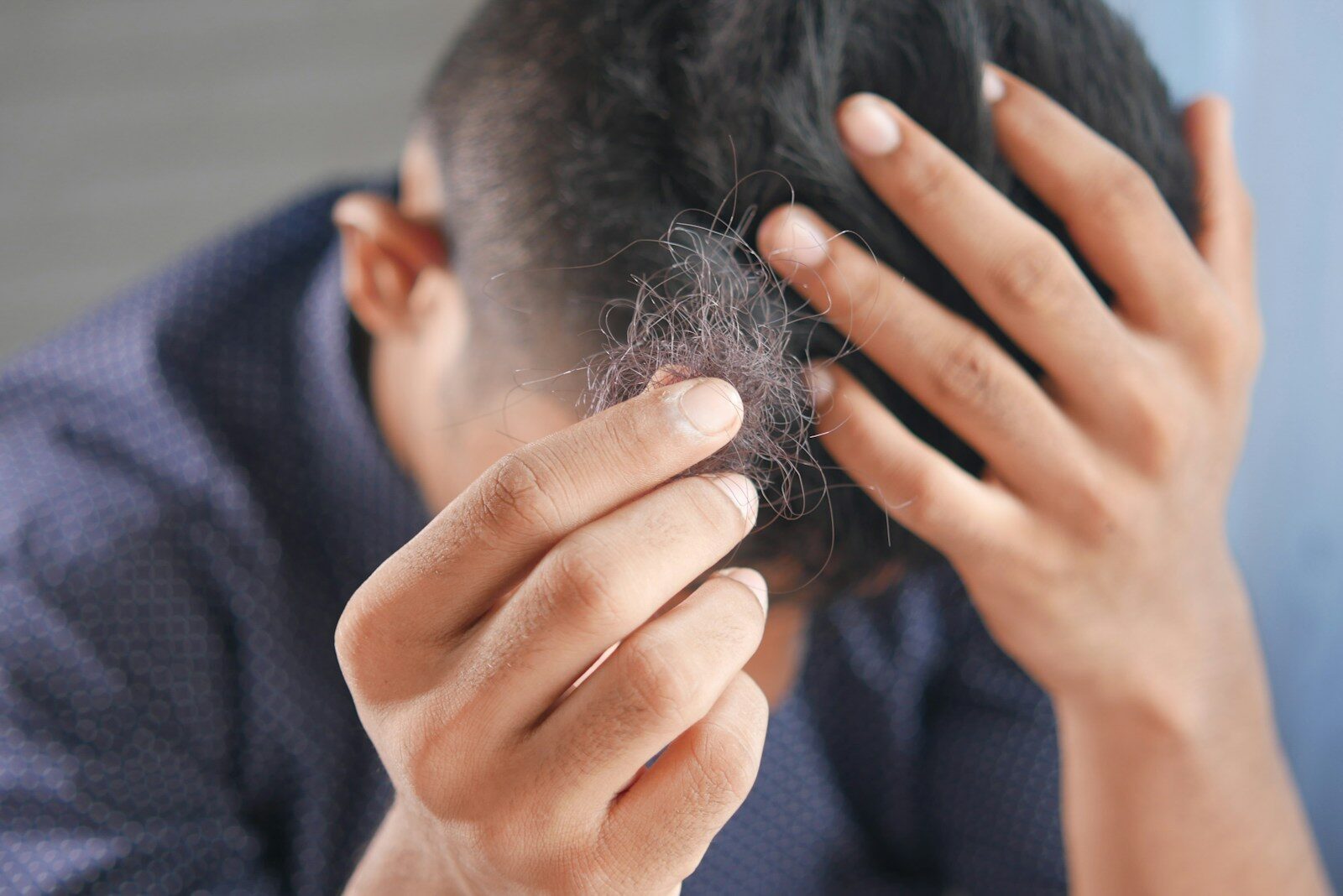
For some women, the shedding can look dramatic.
It may feel as though the hair is falling out in handfuls.
This can be frightening, but postpartum hair shedding is often a temporary change related to the normal hair-growth cycle and the hormonal changes that happen after pregnancy.
During pregnancy, hormonal changes can keep more hairs in the active growth phase for longer than usual.
As a result, many women notice that their hair appears thicker or fuller during pregnancy.
After delivery, hormone levels change.
Some of those hairs eventually move into the resting and shedding phase.
The result can be a noticeable increase in hair shedding.
This is often called postpartum hair loss or postpartum shedding.
The important thing to understand is that you may not actually be losing all the hair you gained during pregnancy.
Instead, some of the hairs that remained in the growth phase during pregnancy are now completing their natural cycle.
That is why the shedding can appear suddenly.
You may look at your hair one day and think something is seriously wrong.
In many cases, the process is temporary.
Postpartum shedding commonly becomes noticeable a few months after childbirth rather than immediately after delivery.
This delayed timing often surprises new mothers.
You may already be adjusting to feeding, sleep disruption, recovery, and caring for your baby when the hair fall begins.
It can therefore feel like another problem has suddenly appeared.
The good news is that postpartum shedding usually improves with time.
Hair follicles do not instantly return to their previous cycle.
The body needs time to adjust after pregnancy.
This means you may continue noticing increased shedding for a while before things gradually settle down.
Hair recovery also takes time because hair grows slowly.
Even after the shedding decreases, it can take months for your hair to regain its previous appearance.
Small new hairs may eventually become visible around the hairline or part.
These short hairs can sometimes look messy or difficult to style.
But they can also be a sign that new growth is occurring.
One of the most common questions new mothers ask is whether postpartum hair loss means they are going bald.
Usually, postpartum shedding does not mean permanent baldness.
The amount of hair that comes out can look alarming, but the process is often temporary.
However, not every case of hair loss after childbirth is caused only by postpartum hormonal changes.
Pregnancy and childbirth place significant demands on the body.
Nutrition, sleep, stress, blood loss, hormonal changes, thyroid problems, and other health issues can also influence hair growth.
This is why persistent or unusual hair loss should not automatically be blamed on postpartum shedding.
The timing can provide an important clue.
If your hair shedding increased a few months after delivery and is spread fairly evenly across the scalp, postpartum shedding may be a likely explanation.
If you develop a clearly defined bald patch, severe scalp inflammation, or rapidly progressive thinning, another cause may need to be considered.
A smooth, round patch of hair loss is not the typical appearance of ordinary postpartum shedding.
Another important factor is nutrition.
Pregnancy and breastfeeding can increase nutritional demands.
If you are not eating enough or have difficulty maintaining a balanced diet, nutritional deficiencies can contribute to hair problems.
This does not mean you need a complicated postpartum hair diet.
You need adequate overall nutrition.
Protein is particularly important because hair is largely made from keratin, a structural protein.
Foods such as eggs, fish, poultry, dairy products, lentils, beans, soy, nuts, and seeds can provide protein depending on your dietary preferences.
Try to include a variety of foods rather than relying on one so-called hair-growth food.
If your appetite is low or you are struggling to eat regularly, talk with a healthcare professional or qualified dietitian.
Iron can also be important after childbirth.
Blood loss during delivery can contribute to iron deficiency in some women.
Iron deficiency may be associated with hair shedding, fatigue, weakness, and other symptoms.
But you should not automatically start taking high-dose iron because your hair is falling.
Too much iron can be harmful.
If iron deficiency is suspected, your healthcare professional can determine whether testing is appropriate.
The same principle applies to other supplements.
Postpartum hair supplements are widely advertised.
You may see products containing biotin, iron, zinc, vitamin D, collagen, or herbal ingredients.
Some nutrients are essential for normal hair growth.
But taking large amounts of supplements without knowing whether you need them is not necessarily helpful.
More vitamins do not automatically mean more hair.
In some cases, excessive amounts of certain nutrients can cause health problems and may even contribute to hair loss.
If you are already taking a prenatal or postpartum supplement recommended by your healthcare professional, do not automatically add several additional products.
Discuss your nutritional needs first.
Breastfeeding can make this even more important.
Your nutritional requirements may be different from what they were before pregnancy.
A healthcare professional can help you understand whether your current diet and supplements are appropriate.
Another common question is whether breastfeeding itself causes hair loss.
Breastfeeding is not necessarily the direct cause of postpartum shedding.
The hormonal and physiological changes associated with pregnancy and the postpartum period are more important factors.
Breastfeeding can, however, affect nutritional and energy requirements.
If you are breastfeeding and not eating enough, nutritional stress may add another factor.
That is why adequate nutrition and hydration matter.
Another concern is stress.
Having a new baby can be wonderful and exhausting at the same time.
Sleep may become unpredictable.
Your routine changes.
You may be worried about feeding, recovery, work, finances, or your baby’s health.
Significant emotional or physical stress can contribute to excessive hair shedding.
This means postpartum hair loss may sometimes involve several factors at once.
Pregnancy-related hormonal changes may be the main trigger, while sleep disruption, stress, nutritional changes, or illness can influence the situation.
This does not mean you need to achieve a completely stress-free life.
That is unrealistic for a new parent.
Instead, focus on getting support where possible.
Accept help from family and friends.
Rest when you can.
Eat regular meals.
Ask for assistance with household responsibilities.
If you feel emotionally overwhelmed, speak with a healthcare professional.
Your mental health matters just as much as your hair.
Another question is whether lack of sleep causes postpartum hair loss.
Sleep deprivation alone is unlikely to explain every case of postpartum shedding.
However, poor sleep is common after childbirth and can occur alongside stress, hormonal changes, nutritional challenges, and other factors.
Getting enough rest may be difficult with a newborn, so do not blame yourself.
The goal is to get as much recovery time as realistically possible.
If someone can help you with the baby so you can sleep, accept that support when appropriate.
Another common concern is whether shampooing makes postpartum hair loss worse.
Usually, washing your hair does not cause the underlying postpartum shedding.
The hairs that are already ready to leave the scalp may simply become more visible during washing.
If you wash your hair less frequently, you may see a larger amount of hair when you finally wash it.
That does not necessarily mean the shampoo caused the loss.
Continue a scalp-care routine that works for you.
Choose a gentle shampoo if your scalp is sensitive.
You do not need to avoid washing your hair because you are afraid of seeing loose strands.
Your scalp still needs appropriate hygiene.
Another myth is that brushing makes postpartum hair loss worse.
Gentle brushing does not normally cause the underlying hair-cycle change.
However, aggressive brushing can cause breakage.
Be particularly careful when your hair is wet because wet hair can be more vulnerable to mechanical damage.
Use gentle movements and avoid pulling through knots.
A wide-toothed comb may be useful for detangling.
Hair ties can also matter.
New mothers often put their hair into a quick ponytail or bun because they have limited time.
There is nothing wrong with tying your hair.
The problem is constant tight tension.
Repeatedly pulling hair into tight hairstyles can contribute to traction-related hair loss.
Choose looser hairstyles when possible.
If your scalp feels sore after tying your hair, loosen it.
Hair should not hurt because of the way it is styled.
Heat styling is another factor.
You may not have time for a complicated hair-care routine after childbirth, and that is perfectly understandable.
If possible, reduce frequent use of very hot blow dryers, straighteners, and curling tools.
Excessive heat can damage the hair shaft and increase breakage.
This is different from postpartum shedding, but reducing breakage can help your hair appear healthier while it recovers.
Chemical treatments should also be approached carefully.
Bleaching, coloring, straightening, relaxing, and other chemical processes can weaken the hair shaft.
If your hair feels unusually fragile after pregnancy, consider reducing harsh treatments until it becomes stronger.
You do not have to stop coloring your hair permanently.
The goal is simply to avoid unnecessary damage when your hair is already changing.
Another common question is whether hair oil can stop postpartum hair fall.
Hair oils can make the hair feel softer and may reduce dryness.
They can be part of a personal grooming routine.
But oil cannot reverse the hormonal changes responsible for postpartum shedding.
If the shedding is caused by the normal postpartum hair cycle, applying more oil will not immediately stop the hairs from entering the shedding phase.
You can use oil if your hair and scalp tolerate it, but do not expect it to cure postpartum hair loss.
The same caution applies to onion juice, garlic, aloe vera, rosemary oil, and other viral remedies.
Natural ingredients may be popular online, but popularity does not mean they are proven treatments for postpartum hair loss.
Some products can also irritate sensitive skin.
If your scalp burns, becomes red, or develops a rash after using a home remedy, stop using it.
Another question is whether cutting your hair can reduce postpartum hair loss.
Cutting your hair can make it easier to manage.
A shorter haircut may also make the hair look fuller because damaged ends are removed.
But cutting does not change what is happening inside the follicles.
It does not stop postpartum shedding.
Hair grows from the scalp, not from the ends.
Similarly, shaving your head will not make the follicles produce thicker hair.
Newly shaved hair may look thicker because of the blunt end, but the number and size of follicles remain unchanged.
One of the biggest mistakes new mothers can make is starting several supplements at the same time.
You may feel desperate to stop the shedding.
You may buy a multivitamin, biotin gummies, collagen powder, iron tablets, hair oil, scalp serum, and a special shampoo.
But if your hair loss continues, you will not know which products are useful or unnecessary.
More importantly, some supplements may not be appropriate while breastfeeding or when combined with other medications.
Discuss supplements with your healthcare professional, especially if you are breastfeeding.
Another important factor is postpartum thyroid disease.
Thyroid changes can occur after pregnancy and may affect overall health and hair.
Postpartum thyroiditis is one condition that can occur after childbirth.
Hair loss can occur with thyroid problems, but it is usually accompanied by other symptoms depending on the phase of the condition.
If you experience significant fatigue, unusual weight changes, rapid heartbeat, feeling unusually cold or hot, changes in mood, or other concerning symptoms alongside persistent hair loss, talk with your healthcare professional.
Do not assume every symptom is simply part of being a new mother.
Postpartum recovery is complicated, but persistent symptoms deserve attention.
Another concern is anemia.
Blood loss during childbirth can contribute to low iron levels in some women.
If hair shedding is accompanied by unusual tiredness, weakness, dizziness, shortness of breath, or other symptoms, discuss the possibility of anemia with your healthcare professional.
Do not self-treat with large doses of iron without appropriate guidance.
Another factor is the type of hair loss.
Postpartum shedding typically causes increased shedding across the scalp.
If you notice a specific area becoming bald, the cause may be different.
Alopecia areata can cause smooth, clearly defined patches of hair loss.
Scalp infections can cause scaling, broken hairs, redness, swelling, or discomfort.
Inflammatory scalp conditions can cause redness, itching, pain, or scaling.
These situations deserve professional evaluation.
If you notice a bald patch, do not panic.
But do not assume it is ordinary postpartum shedding either.
A dermatologist can examine the area and determine what is happening.
Another useful clue is whether your hairline is changing.
Some women notice thinning around the temples after childbirth.
This may be part of postpartum shedding.
But if the hairline continues to thin progressively or the part keeps widening long after the initial postpartum shedding should have improved, another form of hair loss may be present.
Female pattern hair loss can occur independently of pregnancy.
Pregnancy-related shedding can also make previously subtle thinning more noticeable.
This is why persistent hair loss deserves assessment rather than being blamed indefinitely on childbirth.
Your family history can provide useful information.
If women in your family have experienced progressive thinning, you may have a genetic predisposition to female pattern hair loss.
That does not mean you will definitely develop it.
It simply provides another piece of information.
The pattern of thinning is more important than family history alone.
Another question is whether postpartum hair loss affects everyone.
No.
Some women notice dramatic shedding.
Others notice only a small increase.
Some may barely notice a change.
The experience varies depending on the individual’s hair cycle, hormone changes, genetics, nutrition, and other factors.
Having a lot of shedding does not necessarily mean something is medically wrong.
Likewise, having very little shedding does not mean your postpartum recovery is unusual.
Bodies respond differently.
Another question is whether postpartum hair loss can be prevented.
There is no guaranteed way to prevent normal postpartum shedding because it is linked to changes in the hair cycle after pregnancy.
However, you can support your overall health.
Eat enough.
Get adequate protein.
Maintain a varied diet.
Address confirmed nutritional deficiencies.
Avoid crash diets.
Be gentle with your hair.
Avoid unnecessary chemical treatments.
Reduce tight hairstyles.
Limit excessive heat.
Manage stress where possible.
And seek professional advice if the pattern is unusual.
These habits support healthy hair without promising to eliminate normal postpartum shedding.
Crash dieting deserves special attention.
Some new mothers may want to lose pregnancy weight quickly.
This can create additional nutritional stress.
Rapid weight loss and severe calorie restriction can themselves trigger increased hair shedding.
Trying to lose weight aggressively while recovering from childbirth can therefore make the situation more complicated.
Give your body time to recover.
If you want to lose weight after pregnancy, discuss an appropriate approach with your healthcare professional, especially if you are breastfeeding.
Your nutritional needs matter.
Another important point is hydration.
Drinking enough fluids supports overall health, especially when breastfeeding.
But there is no special amount of water that will directly stop postpartum hair loss.
You do not need to force excessive amounts of water.
Drink regularly according to your needs and follow medical advice if you have a condition that affects fluid intake.
Another popular question is whether prenatal vitamins prevent postpartum hair loss.
Prenatal vitamins can help provide nutrients during pregnancy and may be recommended for certain individuals.
But they do not guarantee that postpartum shedding will not occur.
The underlying hair-cycle change can happen even when nutrition is adequate.
Continue supplements according to your healthcare professional’s advice rather than taking extra doses for hair growth.
If you have stopped your prenatal supplement after delivery, ask your healthcare professional whether you should continue it, particularly if you are breastfeeding.
Another concern is whether breastfeeding permanently changes hair.
Breastfeeding itself does not mean that your hair will permanently become thinner.
Postpartum hormonal changes can temporarily affect shedding.
Other factors such as nutrition, stress, and sleep can also influence hair.
Most importantly, do not assume that breastfeeding means you have to accept severe or progressive hair loss without evaluation.
If something seems unusual, get professional advice.
Another question is whether postpartum hair loss means you have a vitamin deficiency.
Not necessarily.
Postpartum shedding can occur even when your nutrient levels are normal.
However, nutritional deficiencies can also cause hair loss.
The two situations can coexist.
This is why testing should be based on your symptoms and medical history rather than automatically assuming one explanation.
A healthcare professional may consider tests when there are reasons to suspect anemia, thyroid disease, or nutritional deficiencies.
Another mistake is comparing your hair recovery with another new mother’s.
One person may stop shedding relatively quickly.
Another may continue shedding longer.
Hair thickness, genetics, pregnancy experience, nutritional status, and many other factors differ.
Your recovery does not have to follow someone else’s timeline.
Focus on your own pattern.
Photographs can help.
Take pictures of your hairline, part, and crown under similar lighting every few months.
This can help you see whether density is improving.
Daily checking can make normal changes seem much more dramatic.
You can also keep a simple timeline.
Write down your delivery date.
Note when shedding started.
Record major illnesses, medications, significant weight changes, and other health changes.
If you later see a dermatologist, this information can help them understand the sequence.
Another useful step is to pay attention to new growth.
Small hairs around the hairline can be difficult to style.
They may stick upward or look uneven.
But they can be a normal part of regrowth.
Do not automatically interpret every short hair as breakage.
Look at the overall picture.
If your hair is gradually becoming fuller again, that is encouraging.
If the scalp is becoming increasingly visible or the part continues widening, seek evaluation.
Another important issue is emotional well-being.
Hair loss can feel especially difficult during a period when your body already looks and feels different.
You may be recovering from childbirth, adjusting to a new identity, dealing with sleep deprivation, and adapting to changes in your appearance.
It is understandable if hair loss affects your confidence.
Try not to judge yourself harshly.
Your body has gone through a major physiological event.
You do not need to look exactly the same immediately after childbirth.
Give yourself time.
If hair loss is causing significant anxiety or affecting your daily life, talk to someone you trust or a healthcare professional.
You deserve support.
Postpartum mental health also deserves attention.
If you experience persistent sadness, intense anxiety, hopelessness, difficulty functioning, or frightening thoughts after childbirth, seek professional help promptly.
Hair loss should never be considered more important than your mental and physical well-being.
Another common question is whether minoxidil is necessary for postpartum hair loss.
Not automatically.
Temporary postpartum shedding often improves naturally.
Minoxidil is used for certain forms of hair loss, particularly pattern hair loss, but it is not something every woman with postpartum shedding needs.
If you are breastfeeding or pregnant again, discuss any medication with your healthcare professional before using it.
Do not assume that a product is appropriate simply because it is available without a prescription.
The same principle applies to prescription hair-loss treatments.
Pregnancy, breastfeeding, and postpartum recovery can affect which treatments are appropriate.
Medical guidance matters.
If the shedding is simply postpartum telogen shedding, the most important approach may be patience, nutrition, gentle hair care, and evaluation if the course is unusual.
If another condition is identified, treatment can be targeted to that cause.
This is why diagnosis comes before treatment.
Another thing to remember is that postpartum hair loss does not mean your body has failed.
It is not a sign that you did something wrong.
You did not cause it by using the wrong shampoo.
You did not cause it by washing your hair.
You did not cause it because you did not use a special oil during pregnancy.
The process is often related to normal biological changes.
Avoid blaming yourself.
If your hair fall is temporary, it should gradually improve.
If it is not improving, that does not mean you have done something wrong either.
It simply means another cause may need to be considered.
A dermatologist can help identify that cause.
If you are experiencing postpartum hair fall today, start with the basics.
Eat enough.
Include protein-rich foods.
Maintain a balanced diet.
Follow your healthcare professional’s advice about supplements.
Avoid extreme dieting.
Wash your hair normally.
Use gentle grooming.
Avoid tight hairstyles.
Limit excessive heat.
Protect fragile hair from chemical damage.
Manage stress as realistically as possible.
Get rest when you can.
And monitor the pattern over time.
If the shedding is severe, patchy, painful, or continuing without improvement, seek professional advice.
There is no need to panic every time you see hair in the shower.
Postpartum shedding can look much worse than it actually is.
At the same time, do not dismiss persistent or unusual hair loss simply because you recently gave birth.
Both reassurance and evaluation have a place.
The most useful question is not simply, “How much hair am I losing?”
Ask, “What pattern is my hair loss following, and how is it changing over time?”
That question can help separate temporary postpartum shedding from other causes.
If the hair is shedding evenly across the scalp and the timing fits the postpartum period, temporary shedding may be likely.
If you have smooth bald patches, significant scalp symptoms, rapidly progressive thinning, or other health changes, get evaluated.
If your hairline or part continues to change long after the initial shedding period, consider whether another form of hair loss may be involved.
Hair recovery is a gradual process.
The goal is not to force the hair to grow overnight.
The goal is to support your body, protect the hair you have, identify problems when they occur, and give the normal hair cycle time to recover.
For many new mothers, the excessive shedding eventually settles.
The hair may not look exactly the same immediately, but gradual improvement can occur.
Be patient with the process.
Be gentle with yourself.
And remember that a few months of hair shedding does not define your long-term hair health.
Is hair fall after pregnancy normal? Increased shedding after pregnancy is common and often related to hormonal changes that affect the natural hair-growth cycle.
When does postpartum hair loss start? Postpartum shedding often becomes noticeable a few months after childbirth rather than immediately after delivery.
How long does postpartum hair loss last? The duration varies between individuals. Shedding generally improves gradually, but it can take several months for hair density to visibly recover.
Will my hair grow back after pregnancy? In many cases, postpartum shedding is temporary and hair gradually regains fullness as the hair cycle normalizes.
Does breastfeeding cause hair loss? Breastfeeding itself is not necessarily the direct cause of postpartum shedding. Hormonal and physiological changes after pregnancy are important factors, while nutrition and stress can also influence hair health.
Can postpartum hair loss cause bald spots? Typical postpartum shedding is generally diffuse rather than a single smooth bald patch. A clearly defined bald spot should be evaluated because it can have another cause.
Why am I losing so much hair after childbirth? Hormonal changes after pregnancy can cause many hairs that remained in the growth phase during pregnancy to enter the shedding phase.
Can stress after childbirth cause hair fall? Significant physical or emotional stress can contribute to excessive shedding and may occur alongside normal postpartum hair changes.
Can lack of sleep cause postpartum hair loss? Sleep disruption is common after childbirth and can occur alongside stress and other factors affecting overall health, but postpartum shedding is not usually explained by sleep loss alone.
Can low iron cause hair loss after pregnancy? Iron deficiency can contribute to hair shedding, and blood loss during childbirth may increase the risk for some women. Testing should be discussed with a healthcare professional before starting iron supplements.
Should I take biotin after pregnancy for hair growth? Do not automatically take high-dose biotin. Supplements are most useful when there is a genuine nutritional need.
Should I continue prenatal vitamins after delivery? Whether you should continue depends on your individual circumstances, diet, breastfeeding status, and healthcare professional’s recommendations.
Can crash dieting after pregnancy cause hair fall? Yes. Severe calorie restriction and rapid weight loss can create additional physical and nutritional stress and may contribute to increased shedding.
Can hair oil stop postpartum hair loss? Hair oil may improve softness and manageability, but it does not reverse the hormonal changes associated with normal postpartum shedding.
Can onion juice stop postpartum hair fall? Onion juice should not be considered a guaranteed treatment for postpartum shedding. Focus on overall health and seek professional advice if the hair loss is unusual.
Does cutting hair reduce postpartum hair loss? Cutting hair can make it easier to manage but does not change the hair-growth cycle or stop shedding from the follicles.
Does shaving the head make postpartum hair grow thicker? No. Shaving changes the appearance of the hair shaft but does not increase the number or size of hair follicles.
Does shampoo make postpartum hair fall worse? Normal shampooing generally does not cause the underlying postpartum shedding. Washing simply makes loose hairs more visible.
Should I stop washing my hair after pregnancy? No. Continue appropriate scalp hygiene and use gentle products that suit your scalp.
Can tight hairstyles cause postpartum hair loss? Tight hairstyles can cause traction-related hair loss independently of postpartum shedding. Loose hairstyles are preferable if your scalp feels sore or your hair is fragile.
Can heat styling make postpartum hair loss worse? Excessive heat can damage the hair shaft and increase breakage, which can make the hair appear thinner even though it is different from follicle-related shedding.
Can thyroid problems cause hair loss after pregnancy? Yes. Thyroid changes can affect hair growth, and postpartum thyroid problems can occur in some women.
What are signs that postpartum hair loss may need medical attention? Seek professional evaluation if you develop smooth bald patches, rapidly worsening thinning, significant scalp pain or inflammation, eyebrow or eyelash loss, severe scaling, or other unusual symptoms.
Can postpartum hair loss reveal female pattern hair loss? It can make previously subtle thinning more noticeable. If your part continues widening or density continues decreasing after the postpartum shedding period, a dermatologist can evaluate for other causes.
Can I use minoxidil for postpartum hair loss? Minoxidil is used for certain types of hair loss but is not automatically necessary for normal postpartum shedding. If you are pregnant, breastfeeding, or planning another pregnancy, discuss its use with a healthcare professional.
Can postpartum hair loss be permanent? Normal postpartum shedding is often temporary, but persistent or progressive hair loss can have other causes and should be evaluated.
What foods are good for postpartum hair recovery? Focus on a balanced diet with adequate protein and a variety of nutrient-rich foods. Eggs, fish, dairy products, lentils, beans, soy, nuts, seeds, vegetables, fruits, and whole grains can all contribute to overall nutritional health.
How can I reduce postpartum hair fall naturally? You cannot always prevent normal postpartum shedding, but you can support healthy hair by eating adequately, getting enough protein, avoiding crash diets, managing stress, protecting hair from excessive heat and tension, and maintaining appropriate scalp care.
When should I see a dermatologist after pregnancy? Consider professional evaluation if hair loss is severe, patchy, rapidly progressive, associated with scalp symptoms, or continuing without improvement.
Medical Disclaimer: This article is intended for general educational purposes and does not replace individualized medical advice, diagnosis, or treatment. Hair loss after pregnancy can have several causes. If you experience sudden, severe, patchy, painful, or rapidly progressive hair loss, or if you have other concerning postpartum symptoms, consult a qualified dermatologist or healthcare professional.