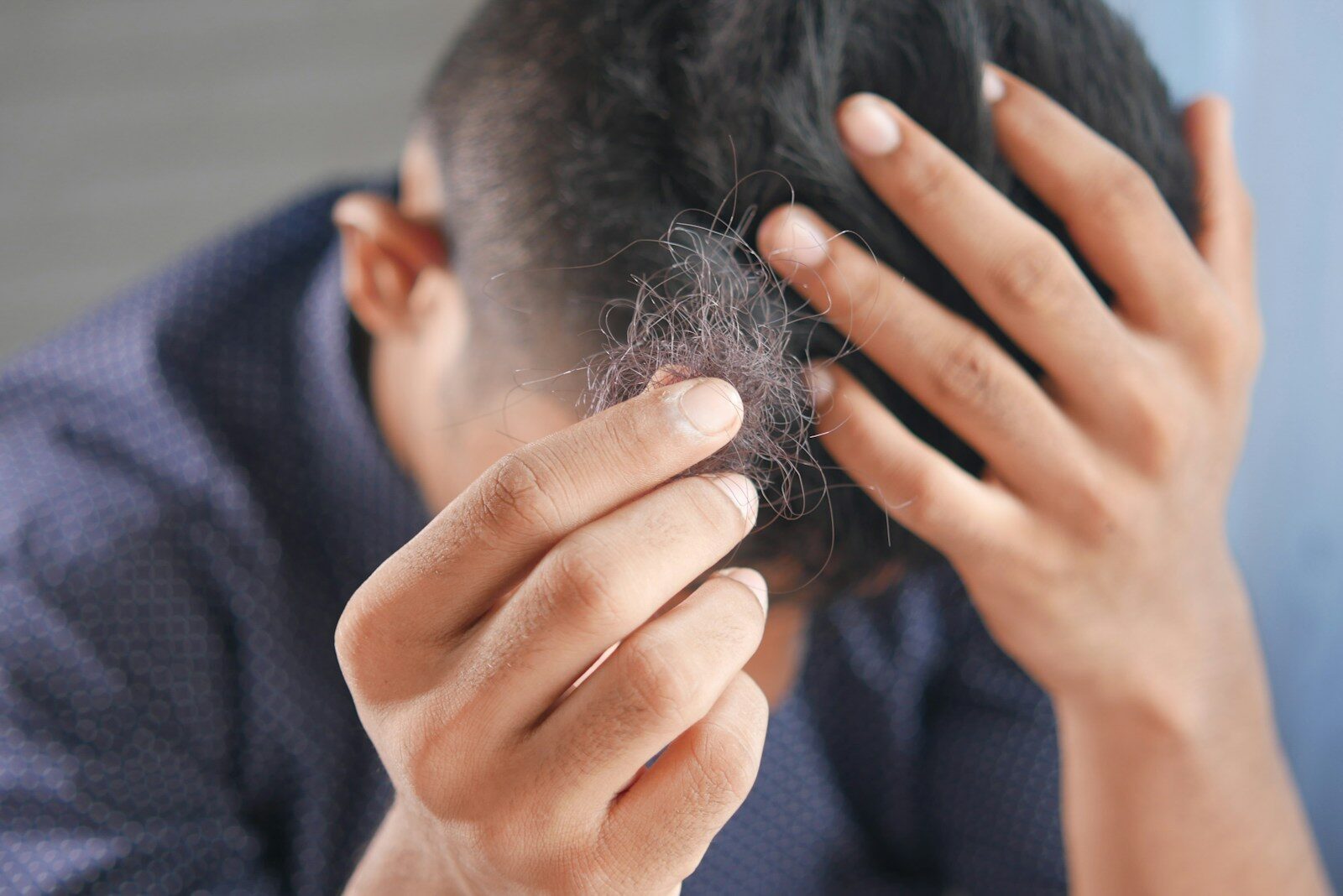

Hair fall after fever can be confusing. You may recover from the fever, return to your normal routine, and then suddenly notice much more hair on your pillow, comb, clothes, or shower floor.
At first, it may seem like the fever and hair loss are unrelated. But the timing can actually make sense because hair follicles respond to physical stress with a delay.
A significant fever or illness can temporarily disturb the normal hair-growth cycle. In some people, more hairs enter the resting phase at the same time, eventually leading to increased shedding.
This temporary shedding is commonly associated with a condition called telogen effluvium.
Telogen effluvium does not usually mean that your hair follicles have been permanently damaged. Instead, it means that a larger number of hairs have shifted into the resting and shedding phase.
One of the most important things to understand is that hair fall may not start while you are actually sick.
You might have a fever in one month and notice significant shedding later. This delay can make it difficult to identify the original trigger.
The body goes through several changes during an illness. Fever, inflammation, reduced food intake, dehydration, poor sleep, physical stress, and certain medications can all occur around the same time.
Any combination of these factors may contribute to increased shedding.
A mild fever that lasts for a short period does not necessarily cause noticeable hair loss.
More significant illness, especially when accompanied by high fever, prolonged recovery, hospitalization, major stress, or reduced nutrition, is more likely to be followed by temporary shedding.
This does not mean everyone who experiences a fever will lose hair.
Hair follicles respond differently from person to person. Some people may notice no change at all, while others may experience substantial shedding several weeks later.
The amount of hair you see can also depend on your existing hair density and washing routine.
If you have long or thick hair, even normal shedding can look dramatic.
If you wash your hair only a few times a week, you may also notice more loose strands during a single wash.
The key issue is whether your overall shedding has clearly increased compared with your usual pattern.
Telogen effluvium generally causes diffuse shedding.
Instead of one sharply defined bald patch, you may notice that hair seems thinner throughout the scalp.
Your part may look slightly wider, your ponytail may feel smaller, or you may simply notice significantly more hair coming out during washing and brushing.
This pattern is different from some other forms of hair loss.
For example, alopecia areata can cause clearly defined patches of hair loss, while hereditary pattern hair loss usually develops gradually in characteristic areas.
A dermatologist can help distinguish these conditions.
One of the most common questions is whether fever itself causes hair loss.
The answer is that the body’s physical stress response to significant illness can contribute to shedding.
It is not necessarily the temperature alone that explains the problem.
The illness, inflammatory response, nutritional changes, stress, and other physiological changes occurring around the same time can all play a role.
A high fever can also reduce appetite.
When you are sick, you may eat much less than usual for several days. If the illness lasts longer, your overall intake of protein, calories, vitamins, and minerals may fall significantly.
This temporary nutritional stress can add to the effects of illness.
Protein is especially important for hair because hair is primarily composed of keratin, a structural protein.
If you are recovering from illness, try to return gradually to a balanced diet that provides adequate protein and other essential nutrients.
You do not need a complicated diet.
Depending on your dietary preferences, protein can come from foods such as eggs, dairy products, fish, poultry, soy, lentils, beans, and other nutrient-rich sources.
If you have a medical condition that affects your diet, follow the advice of your healthcare professional rather than making major nutritional changes on your own.
Another factor is weight loss during illness.
Some people lose several kilograms because they have little appetite or are eating very little while sick.
Rapid or significant weight loss can itself become a trigger for temporary hair shedding.
This means that a person may have several potential triggers at once.
For example, an infection may cause fever, the fever may reduce appetite, reduced appetite may lead to weight loss and lower protein intake, and the combined physical stress may influence the hair cycle.
This is why it is often impossible to blame hair fall on one single factor.
Dehydration is another common concern during fever.
When you are sick, you may lose fluids through sweating, vomiting, diarrhea, or simply drinking less.
Maintaining adequate fluid intake during recovery is important for general health.
However, drinking extra water alone is not a treatment for telogen effluvium.
Hydration should be viewed as part of recovery rather than a direct hair-regrowth remedy.
Rest is equally important.
Your body needs energy to recover from illness, and inadequate sleep can add to physical stress.
Try to maintain a regular sleep schedule as you return to normal activities.
You do not need to completely avoid exercise after recovering from a fever, but you should allow your body to recover appropriately.
Returning too quickly to intense exercise while you are still weak or eating inadequately may place additional stress on the body.
Follow medical advice regarding when it is appropriate to resume strenuous activity.
Stress can also play a role.
Being seriously ill can be emotionally stressful, especially if the illness involves hospitalization, prolonged symptoms, missed work, financial concerns, or fear about your health.
Psychological stress can affect the hair cycle in some people.
This does not mean that hair loss is “just in your head.”
The body’s physiological response to stress can have real effects on biological processes, including the hair-growth cycle.
If you notice increased shedding after a stressful illness, try not to become trapped in a cycle of constantly checking your hair.
Repeatedly counting individual hairs can increase anxiety without providing useful information.
Instead, monitor the overall pattern.
Take occasional photographs of your hairline and part under similar lighting.
Compare them over several weeks rather than checking the mirror multiple times each day.
Another common concern is whether the hair that falls out after a fever will grow back.
When the shedding is truly telogen effluvium and there is no other underlying hair disorder, regrowth is often possible.
However, hair recovery is slow.
The follicles need time to return to their normal growth cycle, and newly growing hairs need time to become visible and contribute to overall thickness.
This is why you should not expect your hair to become thick again immediately after your fever disappears.
The first improvement you may notice is a reduction in shedding.
Later, small new hairs may become visible.
These short hairs can sometimes look uneven or messy, particularly around the hairline.
That is often a normal part of regrowth.
However, not every case of post-fever hair loss is automatically temporary.
An illness can sometimes reveal an underlying hair-loss condition that was already developing.
For example, if you already had hereditary pattern hair loss, temporary shedding can make the thinning appear much more noticeable.
Once the temporary shedding settles, the underlying pattern may still be visible.
This is why persistent thinning deserves evaluation.
Another possibility is that the illness occurred at the same time as another health problem.
Thyroid disorders, iron deficiency, nutritional deficiencies, hormonal changes, autoimmune conditions, scalp disorders, and certain medications can all contribute to hair loss.
A dermatologist can consider your complete history rather than focusing only on the previous fever.
If your hair loss began after an illness, tell the doctor exactly when you were sick and when the shedding began.
The timing can provide useful clues.
Mention whether you had a high fever, how long the illness lasted, whether you lost weight, whether your appetite changed, and whether you experienced significant stress.
Also mention any medications you started around that period.
Do not stop prescribed medication simply because you suspect it may be related to hair loss.
Your healthcare professional can assess whether the medication is likely to be contributing and whether any change is appropriate.
Another question people ask is whether antibiotics cause hair loss after fever.
Some medications can contribute to hair loss in certain circumstances, but it is not appropriate to assume that an antibiotic is responsible simply because you took one before the shedding began.
The infection itself may be a more relevant trigger.
The timing and overall medical history matter.
Similarly, people sometimes blame their shampoo immediately after noticing post-fever shedding.
Ordinary shampooing does not generally cause this type of temporary hair shedding.
Washing simply makes already-loose hairs easier to see.
You may notice a large number of strands around the drain because washing dislodges hairs that were already in the shedding phase.
This is especially noticeable when you have not washed your hair for several days.
You do not need to stop washing your hair because you are experiencing telogen effluvium.
Keeping your scalp clean is important.
Choose a shampoo that suits your scalp and avoid products that cause irritation or burning.
If your scalp becomes itchy, red, painful, heavily flaky, or develops sores, talk with a dermatologist because another scalp condition may be present.
Gentle hair care is also useful during periods of increased shedding.
Avoid excessive pulling when brushing or detangling.
Be careful with tight hairstyles that place continuous tension on the roots.
Frequent tight ponytails, buns, braids, or extensions can contribute to traction-related hair loss.
Heat styling can also contribute to breakage.
Straighteners, curling irons, and high-temperature blow-drying can weaken the hair shaft when used excessively.
This does not usually explain telogen effluvium, but it can make your hair look thinner because more strands are breaking.
Understanding the difference between shedding and breakage can help.
A naturally shed hair usually comes out from the follicle.
Broken hair may appear as shorter pieces of different lengths.
If you are seeing lots of short, damaged hairs, you may have a hair-shaft problem in addition to increased shedding.
Chemical treatments can also contribute to breakage.
Frequent bleaching, coloring, relaxing, or other aggressive treatments can weaken already-fragile hair.
If your hair is shedding heavily after illness, consider giving it a break from unnecessary chemical processing until its condition improves.
Hair oils can make hair feel smoother, but they are not a guaranteed treatment for post-fever hair shedding.
There is no need to apply multiple oils or complicated mixtures to the scalp in the hope of stopping telogen effluvium.
The underlying trigger and your overall health are more important.
The same applies to hair-growth supplements.
A supplement may be useful if you have a confirmed nutritional deficiency, but taking large doses of vitamins without knowing whether you need them is not a reliable treatment.
Some nutrients can be harmful in excessive amounts.
A balanced diet is generally a better starting point.
If you suspect a deficiency, discuss it with a healthcare professional.
Depending on your symptoms and history, they may decide whether blood tests are appropriate.
Iron deficiency is one possible contributor to hair shedding, but it is not the explanation for every case.
Vitamin D, vitamin B12, thyroid function, and other factors may also be considered depending on the individual situation.
Testing should be personalized rather than based on a universal list of laboratory tests.
Another important point is that hair fall can sometimes begin after COVID-19 or another significant viral infection.
Many people have reported increased shedding following infections, and the underlying explanation can be similar to other forms of illness-related telogen effluvium.
The same principle applies: the body experiences a significant physiological stressor, and the hair cycle may respond later.
This does not mean every case of hair loss following an infection is caused by the infection itself.
Other factors occurring during recovery should also be considered.
For example, reduced appetite, weight loss, stress, poor sleep, and nutritional deficiencies may all contribute.
The recovery period matters.
Some people return to normal eating and activity quickly, while others remain physically stressed for weeks.
If your recovery is prolonged, your hair may take longer to return to its previous cycle.
Patience is therefore important.
You may see dramatic shedding and assume that you will become bald, but temporary shedding does not automatically lead to permanent baldness.
The appearance can be alarming even when the underlying follicles remain capable of producing new hair.
However, you should seek medical evaluation if the hair loss is sudden and severe, occurs in clearly defined patches, continues to worsen, or is accompanied by scalp symptoms.
A dermatologist should also evaluate significant thinning that persists beyond the expected recovery period.
If you have unexplained weight loss, persistent fever, severe fatigue, or other ongoing symptoms along with hair loss, seek medical attention rather than focusing only on the hair.
Hair changes can sometimes be a sign of a broader health problem.
People with existing hair-loss conditions should also be cautious about assuming that everything is temporary.
If your part continues to widen or your hairline continues to recede after the shedding period, you may have an underlying form of pattern hair loss.
Early diagnosis can make treatment more straightforward.
Minoxidil is one treatment that may be considered for certain types of hair loss, but it is not appropriate for every cause.
A dermatologist can determine whether it is suitable based on the type of hair loss and your individual circumstances.
Other treatments may also be available depending on the diagnosis.
Avoid buying prescription treatments online or using medications recommended by someone who has a completely different hair-loss pattern.
Hair loss is not one single condition.
The treatment that helps one person may not be useful for another.
One of the best things you can do after a significant illness is focus on recovery rather than obsessing over every shed hair.
Eat adequately.
Get enough rest.
Stay appropriately hydrated.
Return to normal activity gradually.
Avoid unnecessary crash diets.
Protect your hair from excessive pulling and heat.
And seek medical advice if the shedding is significant or persistent.
You should also avoid extreme attempts to stop hair fall.
Shaving your head will not stop the underlying shedding process.
Changing shampoo every few days will not necessarily solve the problem.
Taking large amounts of biotin or other supplements without a confirmed need is not a reliable strategy.
Applying dozens of products to the scalp may actually create irritation.
A simple routine is usually better.
It is also important to understand that hair growth cannot be rushed easily.
The hair follicle follows a biological cycle that takes time.
Even when the original trigger has disappeared, the effects may remain visible for a while.
This is why many people become discouraged after a few weeks.
They expect immediate regrowth but do not see it.
Hair recovery should be measured over months rather than days.
Reduced shedding is often an encouraging early sign.
Gradual improvement in density can follow.
If you see new short hairs appearing, that may also be a positive sign, although a dermatologist is better placed to determine whether the changes represent regrowth.
There is no guaranteed way to prevent every case of post-fever shedding.
You cannot always control whether you become seriously ill or develop a high fever.
What you can do is support your recovery.
Avoid unnecessarily restrictive eating during and after illness.
Once your appetite returns, aim for balanced meals.
Make sure you are getting adequate protein and a variety of nutrient-rich foods.
If you are struggling to eat normally after an illness, discuss it with your healthcare professional.
This is particularly important if you have lost significant weight.
Do not rush back into an aggressive weight-loss program immediately after recovering from a serious illness.
Your body may need time to return to its normal nutritional and physiological state.
If weight management is one of your goals, a sustainable plan is generally preferable to extreme calorie restriction.
Another useful habit is to maintain realistic expectations.
Normal hair shedding never reaches zero.
Even people with very healthy hair lose strands every day.
The concern is a meaningful change from your normal pattern.
If you notice significantly more hair coming out consistently after a fever, it is reasonable to monitor the situation without immediately assuming the worst.
If the shedding remains heavy or you notice visible thinning, professional evaluation can provide reassurance and help identify other causes.
So, can fever cause hair fall?
A significant fever or illness can contribute to temporary increased shedding, often through a stress-related shift in the hair cycle.
The shedding may appear weeks or months after the illness, which is why the connection is easy to miss.
For many people, this type of shedding can improve as the body recovers and the hair cycle returns toward normal.
But persistent, patchy, painful, or progressive hair loss should not simply be blamed on a previous fever.
The most sensible approach is to look at the complete picture.
Consider the illness, timing, nutrition, weight changes, stress, medications, scalp condition, and your previous hair history.
If necessary, get evaluated by a dermatologist.
Hair fall after fever can be alarming, but it does not automatically mean permanent hair loss. Give your body time to recover, take care of your nutrition and scalp, avoid unnecessary hair damage, and seek professional advice when the pattern does not look like ordinary temporary shedding.