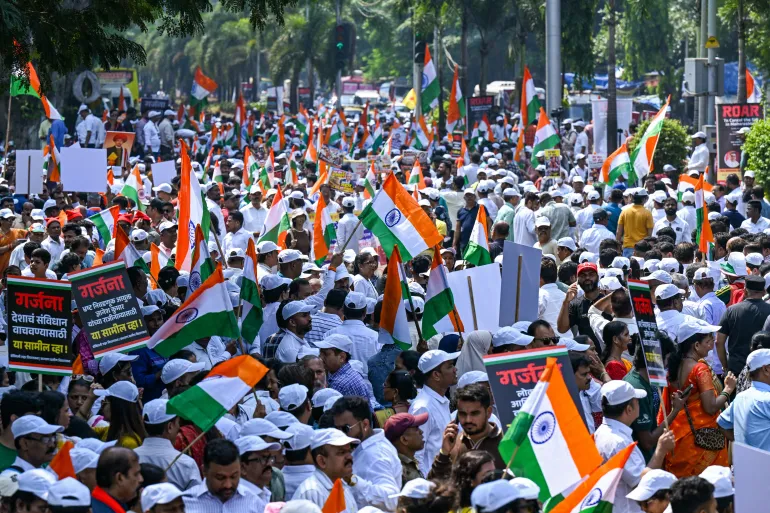
The Gyanesh Kumar Row intensified in New Delhi on October 7, 2026, as INDIA bloc leaders and MPs returned to the streets to protest against Chief Election Commissioner Gyanesh Kumar and demand his resignation. The Opposition has also called for the withdrawal of the Special Intensive Revision (SIR) of electoral rolls, alleging that the exercise has raised serious concerns about voter inclusion and the transparency of the electoral process. The Election Commission and the BJP have rejected the allegations and defended the voter-list revision process.
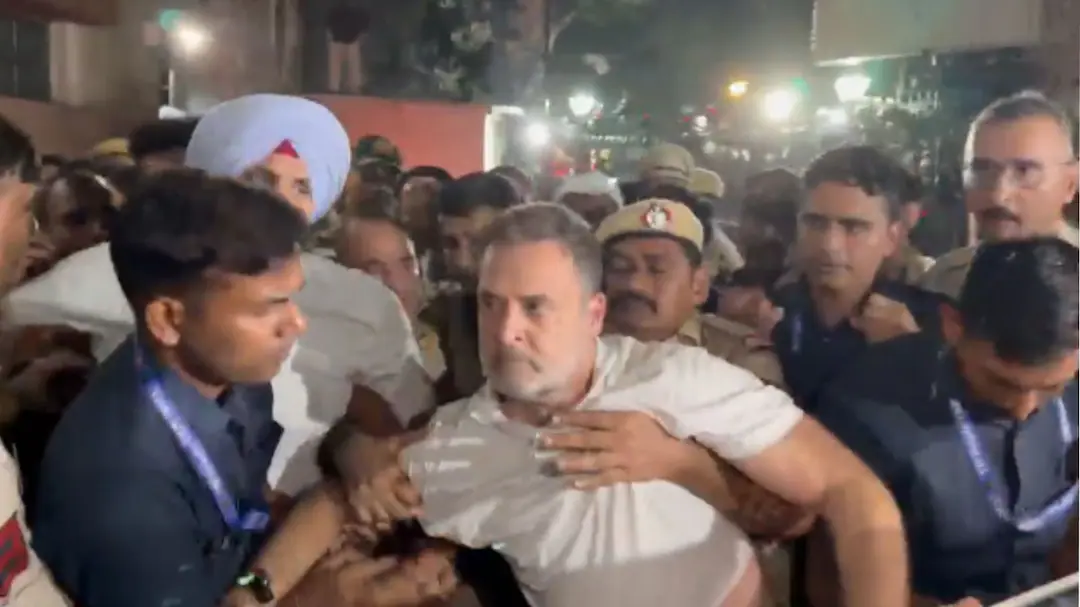
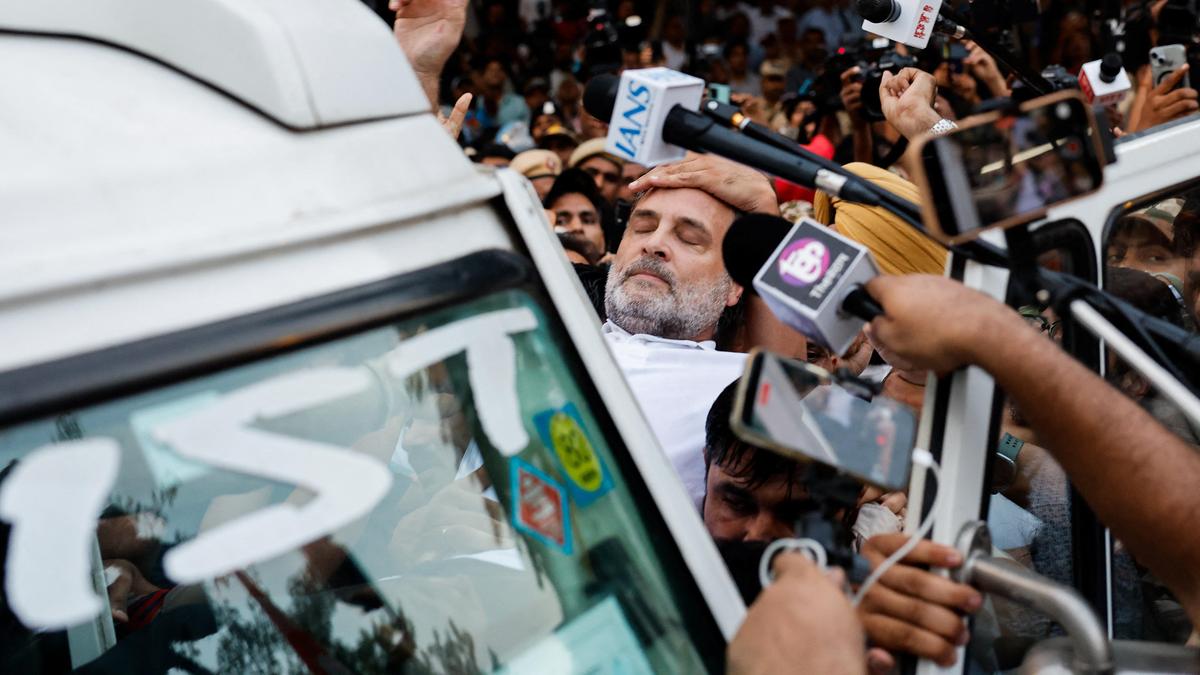
Wednesday’s protest came a day after a major confrontation between Opposition MPs and Delhi Police near the Election Commission headquarters. On October 6, Rahul Gandhi, Priyanka Gandhi Vadra and other opposition leaders attempted to move towards the poll body’s office and later staged a sit-in at Akashvani Bhawan, located roughly 200 metres from the Election Commission headquarters. The protest continued for several hours before police detained the leaders.
The Gyanesh Kumar Row has now developed into a continuing political confrontation involving the Congress and other Opposition parties, the Election Commission, the BJP and protest groups. The immediate dispute centres on the SIR exercise, through which electoral rolls are being revised. Opposition parties have raised concerns about the possible deletion of eligible voters, while the Election Commission maintains that electoral-roll revision is part of its responsibility to ensure that voter lists remain accurate.
Congress president Mallikarjun Kharge said the INDIA bloc would continue protesting until its demands were addressed. According to NDTV’s live coverage, Kharge announced that all INDIA alliance partners would protest at Jantar Mantar against Gyanesh Kumar. The bloc is demanding Kumar’s resignation as well as the scrapping of the SIR exercise.
The latest protest was planned at Jantar Mantar, the designated demonstration site in central Delhi. However, Delhi Police deployed heavy security and multiple layers of barricading around the area ahead of the Opposition’s arrival. Paramilitary personnel were also deployed as authorities sought to prevent protesters from moving beyond permitted areas.
Police have also reiterated that demonstrations at Jantar Mantar require prior permission. According to Delhi Police, organisers are required to submit an application to the Deputy Commissioner of Police, New Delhi District, at least 10 days before a proposed demonstration. The police have additionally pointed to restrictions on protests in parts of the Central Vista area.
The Gyanesh Kumar Row gained further momentum after Tuesday’s events, when opposition MPs initially marched from Parliament towards the Election Commission. The police stopped the march near Akashvani Bhawan. Rahul Gandhi and Priyanka Gandhi Vadra subsequently remained at the location for several hours, demanding access to the Election Commissioners. Police eventually removed the protesters and detained them.
According to the Election Commission’s account reported by Hindustan Times, the poll panel had sought to send a senior official to engage with the protesting MPs, but the proposal was not accepted by the Opposition. The Election Commission also said it considered the demand for a meeting at Parliament House Annexe unusual and maintained that proper channels should be followed.
Delhi Police, meanwhile, said that no permission had been sought for the October 6 protest and that authorities learned about the demonstration through social media, according to the Hindustan Times live updates. The disagreement over permission has added another dimension to the confrontation between the protesters and law-enforcement agencies.
The Opposition’s central political argument concerns the SIR of electoral rolls. Leaders have alleged that the revision could result in eligible voters being excluded. They have demanded greater transparency about additions and deletions in voter lists and have sought mechanisms through which citizens can challenge the removal of their names.
The Election Commission, however, has rejected suggestions that the revision is intended to benefit one political party. The poll body has maintained that electoral rolls require periodic revision to identify eligible voters and remove entries that are no longer valid. The BJP has similarly dismissed the Opposition’s allegations and accused it of questioning constitutional institutions after electoral setbacks.
The Gyanesh Kumar Row has also been influenced by reports concerning disagreements within the Election Commission over aspects of voter-list revision. Reuters reported that protests intensified following an Indian Express report that raised questions about internal differences within the poll panel regarding the revision process. The allegations have increased political pressure on the Election Commission, although the broader claims of wrongdoing remain disputed.
Rahul Gandhi has been among the most prominent voices demanding Gyanesh Kumar’s resignation. During the protests, Gandhi accused the Election Commission of undermining the voting process and described the issue as a fight over democratic rights. These are political allegations made by the Opposition and have not been established as findings against the Election Commission.
The BJP and Election Commission have taken a contrasting position. They have rejected claims of deliberate electoral manipulation and maintained that the SIR process is aimed at improving the accuracy of voter lists. As the dispute continues, the competing claims remain at the centre of the political debate.
The events of October 6 also resulted in the detention of several senior opposition leaders. Rahul Gandhi and Priyanka Gandhi were among those taken into custody after the sit-in at Akashvani Bhawan. They were subsequently released later that night. The episode became one of the most visible confrontations so far in the Gyanesh Kumar Row.
Wednesday’s developments showed that the Opposition intends to maintain pressure rather than treat Tuesday’s detention as the end of the protest campaign. Rahul Gandhi and other MPs again moved towards the Jantar Mantar protest site following a lunch meeting organised by Congress president Mallikarjun Kharge. Police attempted to prevent the group from reaching the site through certain routes, resulting in another confrontation.
Reuters reported that Gandhi and several lawmakers were detained again on Wednesday after attempting to reach the designated protest area. Congress members accompanying the leaders also participated in the demonstration, while police and paramilitary personnel maintained a heavy presence around central Delhi.
The protests have extended beyond the INDIA bloc. Student groups, activists and the Cockroach Janta Party (CJP) have also been organising demonstrations against Gyanesh Kumar and raising concerns about the electoral-roll revision. The CJP has announced a proposed October 10 protest at Jantar Mantar and has formally informed Delhi Police about its plans.
CJP spokesperson Saurav Das said the group had submitted a formal notification to Delhi Police regarding its October 10 demonstration. The proposed protest is also focused on concerns over voter lists and what the organisation describes as “vote theft” and election-related issues. Those descriptions represent the group’s political position and are not established findings by the Election Commission or a court.
The planned CJP demonstration has added to the security challenge facing Delhi Police. Authorities are already managing multiple groups seeking to protest in central Delhi, with police having registered several FIRs during earlier demonstrations and deployed additional forces around restricted areas.
The Gyanesh Kumar Row has also exposed differences in the approach of Opposition parties. While several INDIA bloc leaders participated in the protests, not every party has taken part in every programme. The Samajwadi Party, for example, participated in Tuesday’s major march but was absent from Wednesday’s lunch meeting hosted by Kharge, according to the Indian Express. The party has not publicly provided an official explanation for its absence from that meeting.
The issue is particularly significant because electoral rolls directly determine who can participate in elections. Any large-scale revision therefore has practical consequences for voters, political parties and election administrators. At the same time, electoral authorities have a responsibility to maintain accurate lists and remove duplicate, deceased or otherwise ineligible entries.
The dispute is consequently not limited to the question of Gyanesh Kumar’s individual position. It has developed into a wider argument over how voter-list revisions should be conducted, what information should be made public, how voters can challenge deletions and how the Election Commission should communicate its decisions.
For the Opposition, the demand for Gyanesh Kumar’s resignation is connected to its broader allegations regarding the SIR process. Leaders have argued that the Election Commission must provide greater transparency and accountability before the revision proceeds further. They have also sought assurances that eligible voters will not be removed from electoral rolls without adequate safeguards.
For the Election Commission and BJP, the issue is different. Their position is that electoral-roll revision is an institutional responsibility and that allegations of systematic manipulation are unfounded. The Commission has continued with the revision process despite the protests, while the BJP has criticised the Opposition’s campaign against the poll body.
The Gyanesh Kumar Row is also being watched because of the growing involvement of youth and civil-society groups. The CJP has sought to position its proposed October 10 demonstration as a youth-led campaign, while student organisations have also participated in earlier protests. This has expanded the controversy beyond the formal political Opposition.
The legal and administrative dimensions of the dispute are likely to remain important. Questions concerning voter-list revisions, procedural safeguards and the authority of the Election Commission can ultimately be examined through appropriate institutional and judicial processes. Political statements made during demonstrations, however, should be distinguished from findings established through such proceedings.
The immediate situation remains fluid. The INDIA bloc has indicated that it intends to continue its campaign against Gyanesh Kumar, while further protests are being planned by other groups. Delhi Police is maintaining heightened security around Jantar Mantar and other sensitive areas, with restrictions and permission requirements continuing to apply to demonstrations.
The Gyanesh Kumar Row therefore remains a major political and institutional dispute in New Delhi. The Opposition is demanding the CEC’s resignation and cancellation of the SIR exercise, while the Election Commission and BJP reject allegations of electoral manipulation. With repeated protests, police detentions, planned demonstrations and continuing debate over voter-list revisions, the controversy is likely to remain in focus in the coming days.
For voters, the most important issue is the accuracy and accessibility of electoral rolls. Regardless of the competing political positions, eligible voters need clear information about their registration status and the procedures available if their names are missing or incorrect. The continuing debate around SIR is likely to keep these questions at the centre of public attention as the Election Commission moves ahead with the electoral-roll revision process.