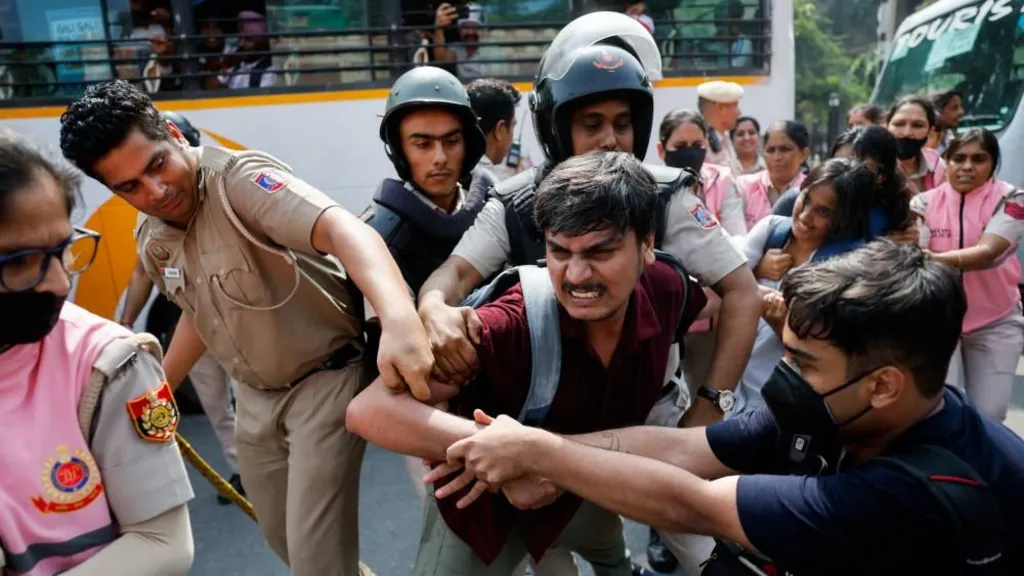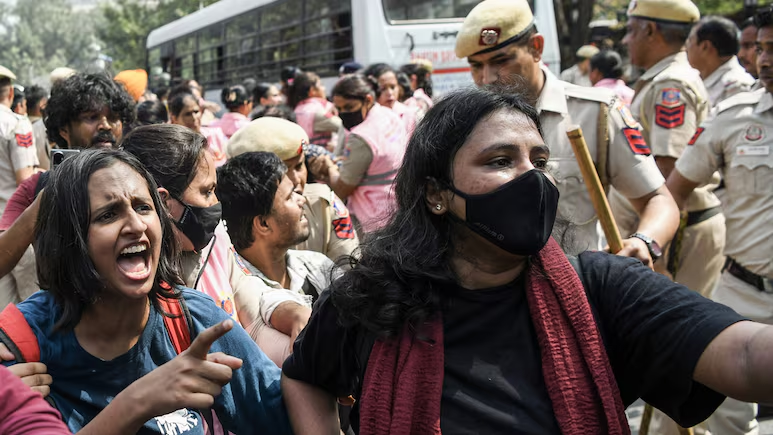
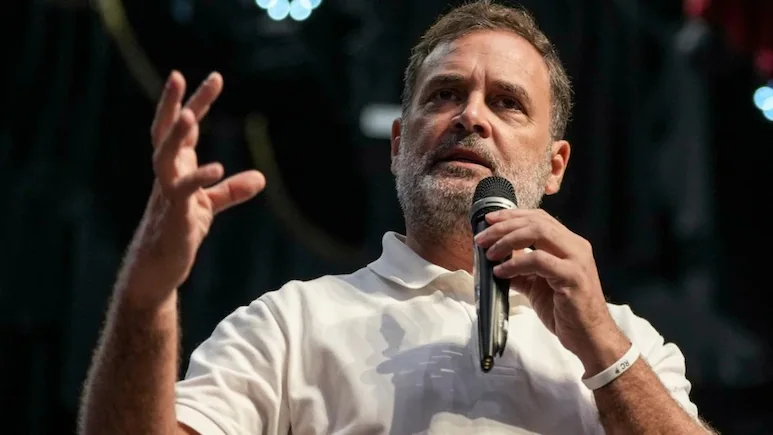
The Gyanesh Kumar Row intensified on September 27 as the BJP mounted a coordinated political response to Congress leader Rahul Gandhi’s allegations against Chief Election Commissioner Gyanesh Kumar. The BJP has brought several of its Chief Ministers and senior leaders into the debate, while Congress continues to demand accountability from the Election Commission and has announced nationwide protests over what it describes as concerns surrounding electoral-roll revisions.
The Gyanesh Kumar Row centres on allegations concerning the functioning of the Election Commission of India and the Special Intensive Revision, or SIR, of electoral rolls. The controversy intensified after a report in The Indian Express said Election Commissioners Sukhbir Singh Sandhu and Vivek Joshi had raised objections on multiple occasions to decisions connected with the voter-list revision process. The Election Commission has subsequently stated that decisions on SIR were taken unanimously by the three-member commission.
The Gyanesh Kumar Row has become a major political issue between the BJP and Congress, with both sides presenting different interpretations of the Election Commission’s recent clarification. The BJP has argued that the commission’s statement addresses the concerns about alleged differences within the poll panel, while Congress has questioned whether the clarification answers all the issues raised by reports about internal objections.
Rahul Gandhi has continued his criticism of the Gyanesh Kumar Row, alleging that the Chief Election Commissioner was placed in charge of what he described as “match-fixing” elections by Prime Minister Narendra Modi and Union Home Minister Amit Shah. Gandhi made the allegation after citing a report claiming that Gyanesh Kumar had approached former Kerala Chief Secretary Jiji Thomson about contesting an election on a BJP ticket after retirement. The claim about that alleged conversation has not been independently established in the available reporting.
The Gyanesh Kumar Row also involves the Election Commission’s response to the controversy surrounding the SIR process. The commission said that its decisions were taken with the concurrence of all three commissioners. The statement came after media reports described objections attributed to the two Election Commissioners and raised questions about whether there had been differences within the constitutional body.
The BJP’s response to the Gyanesh Kumar Row has involved several senior leaders. BJP leaders have defended the Election Commission and argued that Congress is making allegations without sufficient basis. Former Union Minister Ravi Shankar Prasad said the commission’s clarification established that decisions related to SIR had been taken with the concurrence of all three commissioners.
The Gyanesh Kumar Row has also drawn responses from BJP Chief Ministers. The NDTV report said the party was using statements from around a dozen Chief Ministers and senior leaders as part of its political response to Rahul Gandhi’s allegations. Maharashtra Chief Minister Devendra Fadnavis, for example, criticised Gandhi’s allegations and accused him of attempting to create doubts about constitutional institutions. These are political claims made by BJP leaders and represent the party’s response to the controversy.
The Gyanesh Kumar Row is occurring against the background of the wider SIR controversy. The Special Intensive Revision involves the verification and revision of electoral rolls. The process has already been challenged and debated in court, with political parties raising questions about voter inclusion, deletion procedures and documentation requirements. The Supreme Court has considered challenges related to the SIR process, while the Election Commission has continued to defend its legal and constitutional basis.
The Gyanesh Kumar Row gained further momentum after reports suggested that Election Commissioners Sukhbir Singh Sandhu and Vivek Joshi had objected on at least 14 occasions over a 10-month period to certain SIR-related decisions. The Indian Express reported that the objections concerned decisions allegedly taken without their knowledge as well as concerns over processes. The Election Commission has not accepted the interpretation that its final decisions were divided, instead maintaining that the decisions recorded in its official proceedings were unanimous.
The Gyanesh Kumar Row therefore involves an important distinction between reported internal objections and final institutional decisions. Reports may document concerns raised during the decision-making process, while the Election Commission’s official position is that the final decisions were unanimous. Establishing whether individual objections materially affected the functioning of the commission would require examination of the relevant records and procedures.
The Congress response to the Gyanesh Kumar Row has remained focused on demands for greater accountability. Congress general secretary KC Venugopal held a virtual meeting with more than 1,000 District Congress Committee presidents on September 27 ahead of protests planned for Monday. The party has continued to press its allegations concerning the Election Commission and electoral-roll revision.
The Gyanesh Kumar Row has also brought other Opposition parties into the dispute. The INDIA bloc is scheduled to meet on September 30 to discuss allegations surrounding electoral-roll manipulation under the SIR process and the demand for Gyanesh Kumar’s resignation. Several Opposition parties have indicated that they intend to coordinate their response to the issue.
The Election Commission’s position remains central to the Gyanesh Kumar Row. According to its September 26 clarification, decisions concerning SIR were taken unanimously by the commission. The poll body has therefore rejected the suggestion that final decisions were imposed by the Chief Election Commissioner without the concurrence of the other Election Commissioners.
The Gyanesh Kumar Row has also produced a debate over the distinction between political criticism and evidence concerning the functioning of an independent constitutional institution. Congress has raised allegations based on media reports and its interpretation of the SIR process, while the BJP has relied on the Election Commission’s clarification to challenge those allegations. The competing claims remain part of the political debate and should be distinguished from independently established findings.
Another element of the Gyanesh Kumar Row concerns an allegation involving former Kerala Chief Secretary Jiji Thomson. Thomson reportedly claimed that Gyanesh Kumar had approached him in 2016 and suggested that he contest on a BJP ticket after retirement. Rahul Gandhi cited the claim while attacking the CEC. The allegation has become part of the political controversy, but a reported allegation by an individual is not by itself proof of the underlying claim.
The Gyanesh Kumar Row has also generated criticism of Rahul Gandhi from BJP leaders. BJP spokespersons have described his allegations as baseless and have argued that Congress should focus on electoral contests rather than questioning constitutional institutions. BJP leaders have also pointed to the Election Commission’s clarification that SIR-related decisions were unanimous.
Congress, meanwhile, has rejected the BJP’s interpretation of the Gyanesh Kumar Row. Party leaders have argued that the Election Commission’s statement does not resolve all questions arising from reports of internal objections. NDTV reported that Congress described the commission’s clarification as insufficient and continued to raise questions about the decision-making process.
The Gyanesh Kumar Row has therefore developed around three separate but connected issues. The first is the reported internal objections within the Election Commission over aspects of SIR. The second is the commission’s official statement that its final decisions were unanimous. The third is the broader political dispute between Congress and the BJP over the credibility and functioning of the poll panel.
The Gyanesh Kumar Row also has implications for the ongoing revision of electoral rolls. Any dispute over the process has consequences for political parties and voters because electoral rolls determine who is eligible to participate in elections. Questions concerning inclusion, deletion, verification and appeals therefore have both administrative and political significance.
The Election Commission has continued to oversee the SIR process despite the Gyanesh Kumar Row. In Delhi, for example, the deadline for filing claims and objections has been extended to October 30, while the deadline for disposing of notices, claims and objections has been extended to November 30. These administrative timelines are separate from the political allegations surrounding the commission’s internal functioning.
The Gyanesh Kumar Row has also led to calls for Gyanesh Kumar’s removal from the post of Chief Election Commissioner. Rahul Gandhi and several Opposition leaders have demanded his resignation, while the BJP has defended the poll panel and criticised the allegations against its leadership. The INDIA bloc is expected to discuss the issue further at its September 30 meeting.
The controversy is being closely watched because the Election Commission occupies a constitutional position in India’s electoral system. Any dispute over its decision-making process can attract political attention, particularly when it involves voter-roll revision ahead of future elections. At the same time, allegations about institutional functioning need to be separated from established findings and official records.
The Gyanesh Kumar Row has also generated public discussion about transparency within the Election Commission. Reports of internal objections have raised questions about how disagreements between commissioners are recorded and communicated, while the commission’s response has emphasised the final unanimous nature of its decisions. Further documentation or official disclosures could provide greater clarity about the sequence of events.
The BJP’s decision to involve Chief Ministers and senior leaders in the Gyanesh Kumar Row reflects the political importance the party has attached to defending the Election Commission. The party’s response has sought to counter Rahul Gandhi’s allegations and emphasise the poll body’s statement that its decisions were unanimous.
Congress, on the other hand, is preparing organisationally for further protests. KC Venugopal’s meeting with more than 1,000 district-level party presidents indicates that the party intends to take its concerns beyond Parliament and national-level press conferences. The planned protests are expected to focus on the Election Commission and the issues raised around SIR.
The Gyanesh Kumar Row remains a developing political and institutional controversy. The Election Commission has issued its clarification, the BJP has supported that position, and Congress continues to question the poll panel’s functioning. Meanwhile, allegations involving Gyanesh Kumar’s reported interaction with a former Kerala bureaucrat have added another dimension to the dispute.
For now, the Gyanesh Kumar Row should be understood through the competing claims and the available institutional record. The Election Commission says SIR decisions were unanimous, while Opposition parties have questioned reports about internal objections and demanded greater accountability. Political statements from both sides remain part of the ongoing dispute rather than independent findings about the allegations.
The coming days are likely to see further developments in the Gyanesh Kumar Row, particularly with Congress protests scheduled and the INDIA bloc meeting planned for September 30. Any new Election Commission documents, judicial proceedings, formal complaints or responses from the individuals named in the allegations could provide additional information about the issues at the centre of the controversy.
The Gyanesh Kumar Row has consequently become one of the most prominent political debates surrounding India’s electoral institutions in September 2026. While the BJP is defending the Election Commission’s official position and Congress continues to demand accountability, the factual questions surrounding the reported internal objections, SIR procedures and other allegations remain important areas for continued scrutiny.