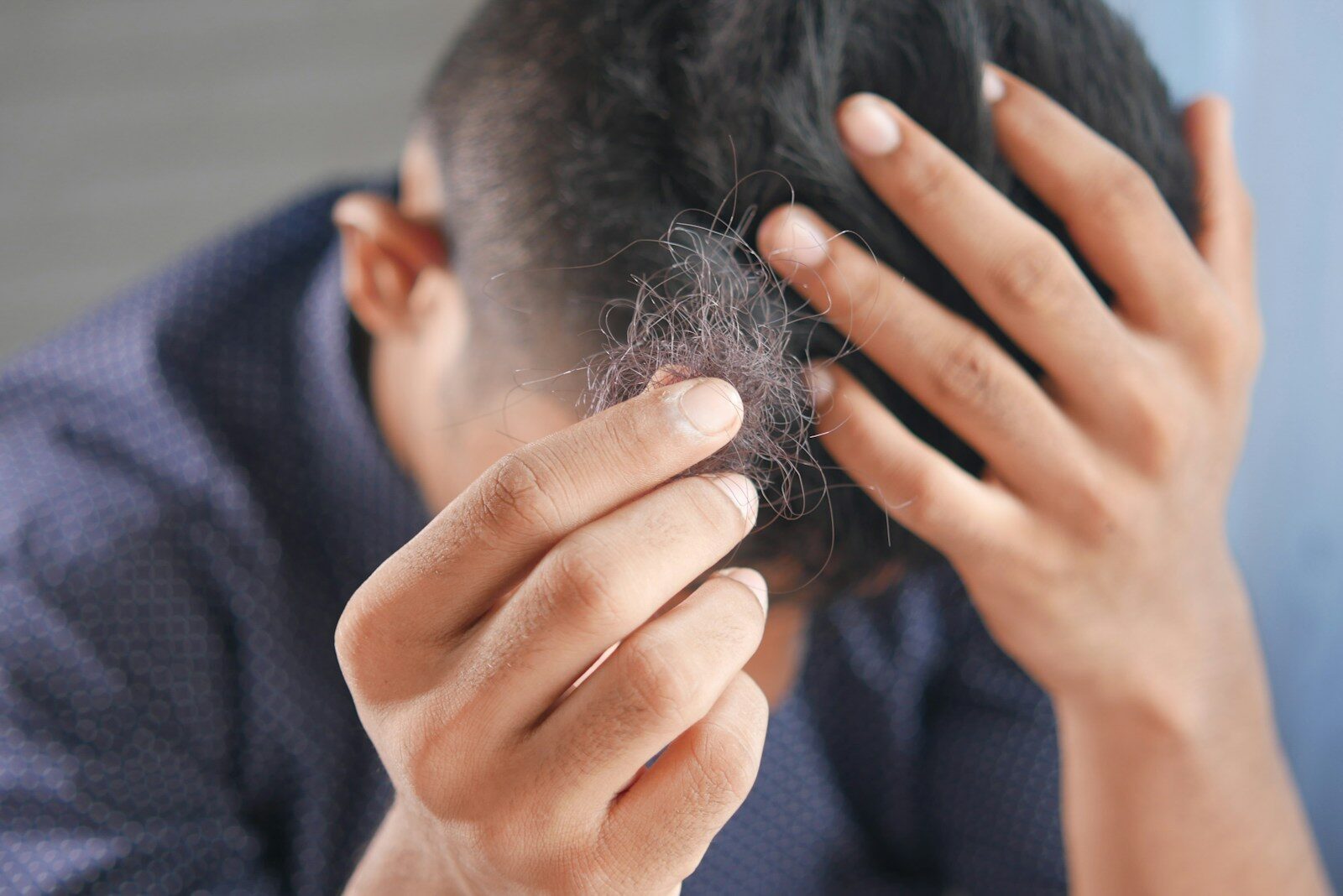
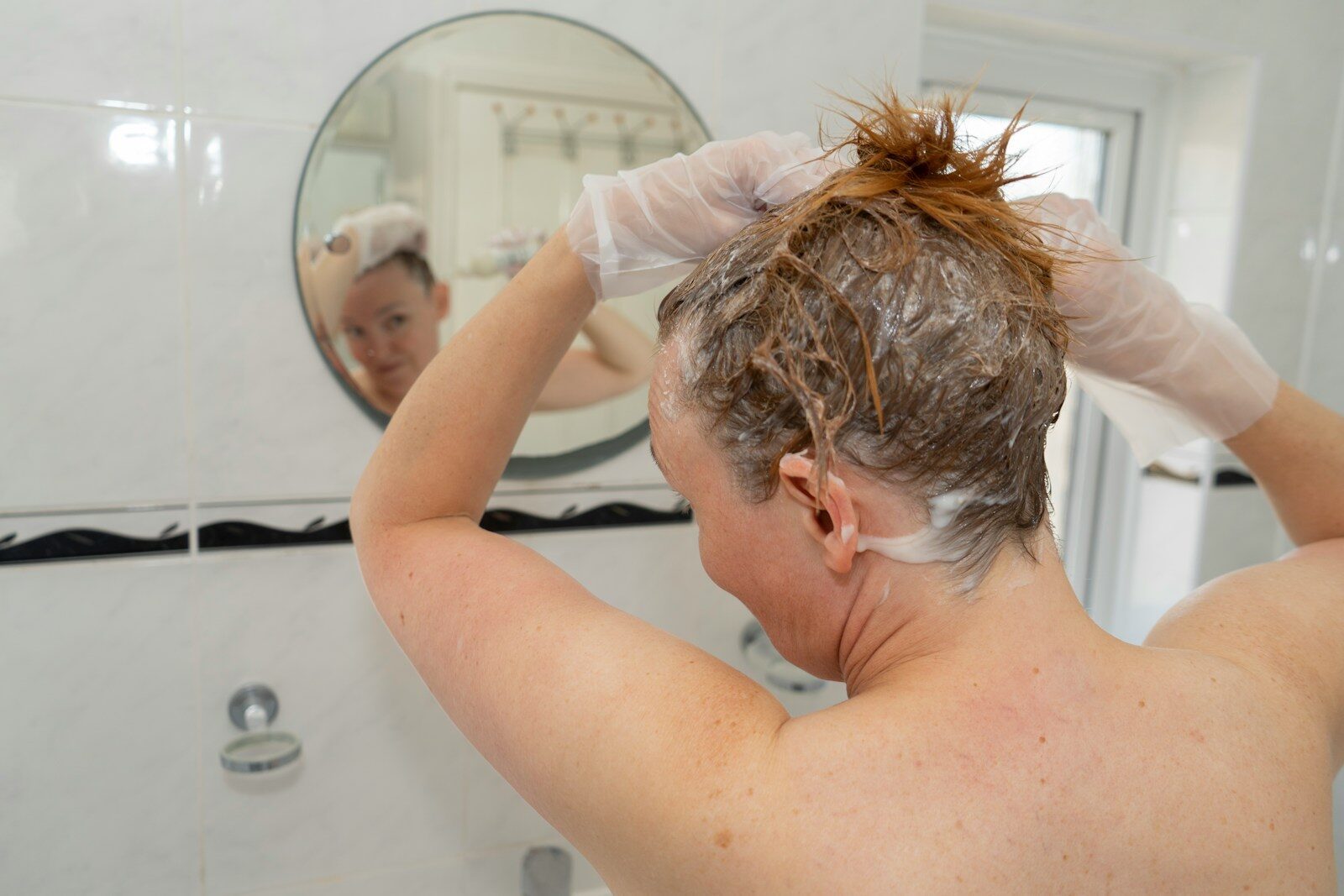
Seeing hair strands in your hands while shampooing can be alarming. Many people immediately wonder whether their shampoo is causing hair loss or whether washing their hair too often is making their hair thinner.
This is one of the most common questions people ask when they start experiencing increased shedding.
The good news is that ordinary shampooing does not usually cause permanent hair loss. Washing your hair can make loose hairs more noticeable, but that does not necessarily mean the shampoo caused those hairs to fall out.
Hair naturally goes through a growth cycle. Some hairs are actively growing, some are resting, and some eventually detach from the follicle and shed.
When you wash your hair, you may simply remove hairs that were already ready to fall out.
This is why you can sometimes see a surprisingly large amount of hair in the shower even when your follicles are healthy.
The situation becomes different when a shampoo causes scalp irritation or when your hair-care routine leads to significant breakage.
A harsh product may irritate your scalp, while aggressive washing or rough handling can damage fragile hair.
But this is different from shampoo causing hereditary pattern hair loss.
If you are noticing gradual thinning, a widening part, a receding hairline, or reduced density around the crown, the underlying cause is more likely to involve genetics, hormones, medical conditions, nutritional factors, or another form of hair loss rather than ordinary shampooing.
Understanding the difference between shedding, breakage, and true hair loss can make the situation much less confusing.
Hair shedding happens when a hair naturally leaves the follicle after completing part of its growth cycle.
Breakage happens when the hair shaft snaps somewhere along its length.
Hair loss can refer to reduced hair density or loss of hairs because follicles are no longer producing hair normally.
These problems can look similar, but they are not the same.
If you see long strands coming out from the scalp, you may be noticing shedding.
If you see many short pieces of different lengths, you may be dealing with breakage.
If you can see more scalp over time or notice a receding hairline or widening part, you may have a true hair-loss condition.
Your shampoo routine can influence the condition of the hair shaft and scalp, but it is not usually responsible for genetic hair loss.
Another common misconception is that washing your hair every day causes excessive shedding.
There is no universal rule that daily washing causes hair loss.
Some people have oily scalps and may need frequent washing, while others with dry or curly hair may prefer to wash less often.
The ideal washing frequency depends on your scalp, hair type, lifestyle, sweating, styling products, and personal preference.
If your scalp becomes oily, uncomfortable, or heavily coated with products between washes, washing may be useful.
If your scalp is dry or easily irritated, washing too frequently with a harsh cleanser may make the problem worse.
The goal is not to wash as little as possible.
The goal is to keep the scalp clean and comfortable without unnecessarily irritating it.
This is especially important if you have dandruff or another scalp condition.
Dandruff can cause itching and flaking, and constant scratching can create additional irritation.
If your scalp is persistently itchy, red, painful, inflamed, or heavily flaky, consider getting it evaluated rather than assuming you simply need a different cosmetic shampoo.
Some people also believe that shampoo strips the natural oils from the scalp and therefore causes hair loss.
A shampoo can remove oil from the scalp, which is part of its normal cleansing function.
The problem arises when a product is too harsh for your particular scalp and causes excessive dryness, irritation, or discomfort.
If your scalp feels tight, burning, unusually dry, or irritated after every wash, your product may not be suitable for you.
Changing to a gentler formulation may help improve comfort.
However, improving scalp comfort does not necessarily treat an underlying medical form of hair loss.
This distinction is important.
A shampoo can support scalp hygiene.
It cannot be expected to reverse every cause of hair thinning.
For example, hereditary pattern hair loss is driven largely by genetic and hormonal factors.
Changing shampoos may make your hair feel cleaner or smoother, but it is unlikely to stop that underlying process.
Similarly, hair shedding caused by significant illness, major stress, rapid weight loss, or certain nutritional problems is not usually solved simply by switching shampoos.
If the increased shedding started after a high fever or significant illness, the timing may be more important than the shampoo you are currently using.
A temporary shedding condition called telogen effluvium can occur after physical stress.
The shedding may begin weeks or months after the original trigger, which can make people blame their current hair products.
The same thing can happen after rapid weight loss.
If you recently followed a restrictive diet or lost a significant amount of weight quickly, your hair may respond later with increased shedding.
In that situation, changing shampoo will not address the main trigger.
Nutrition can also influence hair health.
Hair production requires adequate energy, protein, vitamins, and minerals.
If your diet is very restrictive, your body may not receive enough nutrients to support normal hair growth.
Protein is particularly important because hair is primarily made of keratin, a structural protein.
If you are experiencing increased shedding while dieting, focus on maintaining a nutritionally balanced eating pattern rather than relying on hair products alone.
Foods such as eggs, dairy products, fish, poultry, soy, beans, lentils, nuts, and seeds can contribute protein depending on your dietary preferences.
If you have dietary restrictions or a medical condition, personalized advice from a qualified healthcare professional may be useful.
Iron deficiency is another possible contributor to hair shedding.
However, not everyone with hair loss has low iron.
You should not automatically start iron supplements simply because you are losing hair.
Taking unnecessary high doses can be harmful.
If a deficiency is suspected, a healthcare professional can determine whether testing is appropriate.
The same applies to vitamin D, vitamin B12, zinc, and other nutrients.
Hair supplements are heavily marketed, but taking more vitamins does not automatically produce more hair.
If your nutrition is already adequate, supplements may not solve the underlying problem.
A common mistake is to change shampoo, conditioner, oil, serum, supplements, and diet all at once.
When this happens, it becomes difficult to understand what is actually affecting your hair.
A simpler approach is often better.
Choose hair-care products that suit your scalp, avoid unnecessary damage, maintain balanced nutrition, and investigate persistent hair loss properly.
Another question is whether anti-dandruff shampoo causes hair fall.
Medicated shampoos can sometimes cause dryness or irritation in sensitive individuals, but that does not mean they generally cause permanent hair loss.
In fact, treating an underlying scalp condition can be an important part of maintaining a healthy scalp environment.
If a medicated shampoo causes significant irritation, stop using it and discuss alternatives with a healthcare professional.
Do not continue using a product that consistently causes burning or inflammation simply because it is marketed for scalp health.
The way you shampoo can also make a difference to hair breakage.
You do not need to aggressively scrub your hair.
Focus on gently cleansing the scalp with your fingertips rather than scratching with your nails.
Your scalp should be cleaned without causing unnecessary friction.
When rinsing, allow the water to remove the product rather than repeatedly rubbing the hair lengths.
Conditioner can be useful for reducing friction and improving manageability, especially if your hair is dry, curly, chemically treated, or prone to tangling.
Conditioner does not usually cause hair loss either.
If you notice more hair in your hands while applying conditioner, the same explanation often applies: loose hairs may simply become easier to remove during washing.
Wet hair also requires careful handling.
Hair can be more vulnerable to mechanical damage when wet, particularly if it is already chemically processed or fragile.
Avoid aggressively pulling through knots.
Use a gentle detangling method and minimize unnecessary tugging.
Towels can also contribute to mechanical damage if you rub your hair aggressively.
Instead of vigorously rubbing wet hair, gently squeeze out excess water and handle it carefully.
This is particularly useful if your hair is long, fine, curly, bleached, or otherwise fragile.
Heat styling is another factor people sometimes confuse with shampoo-related hair loss.
If you wash your hair and then immediately use a very hot blow dryer, straightener, or curling tool, the resulting damage may be blamed on the shampoo.
In reality, the problem may be repeated heat exposure.
Frequent high-temperature styling can weaken the hair shaft and increase breakage.
This can make your hair appear thinner even when the follicles themselves are healthy.
Chemical treatments can create a similar issue.
Bleaching, coloring, relaxing, perming, and other chemical processes can weaken the hair when performed frequently or improperly.
If your hair has become dry, brittle, or uneven in length, consider whether breakage rather than shedding is contributing to the appearance of hair loss.
Another popular concern is whether changing shampoo frequently causes hair fall.
There is no general rule that changing shampoos automatically causes hair loss.
However, if every new product causes itching, burning, dryness, or redness, your scalp may be sensitive to one or more ingredients.
A consistent, comfortable routine is usually preferable to constantly experimenting with products.
You also do not need the most expensive shampoo to have healthy hair.
Price does not automatically determine whether a shampoo is appropriate for your scalp.
The right product is one that cleans effectively without causing unnecessary irritation and works well with your hair type.
If your scalp is oily, you may prefer a cleansing routine that removes excess oil effectively.
If your scalp is dry or sensitive, a gentler approach may be more comfortable.
People with curly or textured hair may have different washing needs than people with straight, fine hair.
There is no single shampoo schedule that works for everyone.
Another misconception is that shampooing removes hair from the roots and therefore causes permanent thinning.
A shampoo does not normally pull healthy hairs out of their follicles.
Some hairs that are already in the shedding phase may detach during washing.
This is why you may notice more hair in the shower without actually experiencing shampoo-induced hair loss.
The same principle applies to brushing.
Brushing can remove hairs that were already loose.
It does not mean that every hair on your brush was damaged by the brush.
Of course, aggressive brushing can cause breakage.
The goal is to brush gently and avoid unnecessary pulling.
Hair extensions can also create problems when they place prolonged tension on the roots.
If you wear extensions, tight braids, ponytails, buns, or other styles that pull on the scalp, pay attention to discomfort.
Pain or persistent tightness is not something you should simply tolerate for the sake of a hairstyle.
Repeated tension can contribute to traction-related hair loss.
Changing hairstyles and reducing tension can help protect the follicles.
Another factor to consider is scalp inflammation.
A healthy scalp does not need to be completely free of natural oil, but persistent redness, scaling, burning, itching, or pain deserves attention.
Conditions such as dermatitis, psoriasis, fungal infections, and other scalp disorders can affect the scalp and sometimes contribute to hair problems.
A cosmetic shampoo may not be enough to treat these conditions.
If your scalp symptoms continue despite basic care, consider seeing a dermatologist.
One of the biggest warning signs is a sudden change in hair density.
If you suddenly develop a bald patch, do not assume your shampoo caused it.
Patchy hair loss can have several causes and should be medically evaluated.
Similarly, if your hairline is gradually receding or your crown is becoming thinner, changing shampoos is unlikely to address the underlying cause.
These patterns can be associated with hereditary hair loss.
In women, a widening middle part can be an early sign of pattern hair loss.
In men, recession at the temples or thinning at the crown can be an early sign.
Early evaluation can be useful because some progressive forms of hair loss can be managed more effectively when treatment begins earlier.
A dermatologist can examine your scalp and hair pattern and determine whether you are experiencing excessive shedding, pattern hair loss, breakage, or another condition.
Depending on your history and symptoms, additional testing may or may not be necessary.
There is no universal blood test that explains every case of hair loss.
Testing should generally be guided by your individual symptoms and medical history.
Another question people ask is whether shampoo can make hair grow faster.
Most ordinary shampoos are designed primarily to cleanse the scalp and hair.
They should not be viewed as guaranteed hair-growth treatments.
Some products are marketed as strengthening or volumizing shampoos, and they may improve the cosmetic appearance of hair.
For example, a volumizing product may make fine hair look fuller.
That is different from increasing the number of hair follicles or reversing a medical cause of hair loss.
This distinction is important when evaluating hair-growth claims.
If a product promises dramatic regrowth in a few days or weeks, be cautious.
Hair grows slowly, and genuine improvement in hair density generally takes time.
Some medical treatments can help certain types of hair loss, but they require realistic expectations and consistent use.
Minoxidil is one example of a treatment that may be appropriate for some forms of pattern hair loss.
It is not a universal treatment for every cause of shedding.
If you are considering it, discuss whether it is appropriate for your particular situation with a qualified healthcare professional.
Other treatments may be recommended depending on the diagnosis.
The important thing is to treat the cause rather than simply treating the symptom.
If your hair fall began suddenly, think about what happened during the previous few months.
Did you have a high fever?
Were you seriously ill?
Did you lose weight quickly?
Did you start a restrictive diet?
Did you experience major emotional stress?
Did you give birth?
Did you start a new medication?
Did you notice hormonal changes?
Did you begin wearing tighter hairstyles?
Did you increase bleaching or heat styling?
These details may provide more useful information than the brand of shampoo you are currently using.
A simple hair diary can sometimes help.
You can record major health events, significant diet changes, medications, and when you first noticed increased shedding.
There is no need to count every hair.
Instead, track the overall pattern.
Photographs can also be useful.
Take pictures of your hairline, part, and crown under similar lighting every few weeks.
This can help you determine whether density is actually changing.
Checking your hair repeatedly throughout the day can increase anxiety without giving you useful information.
Remember that lighting, wetness, oil, hairstyle, and hair length can dramatically change how thick your hair appears.
Another common question is whether shampoo should be avoided during periods of heavy shedding.
Usually, there is no reason to stop washing your hair simply because you are experiencing increased shedding.
Avoiding washing does not necessarily stop the hair cycle.
In fact, delaying washing for too long may allow oil, sweat, styling products, and flakes to accumulate on the scalp.
The better approach is to use a washing routine appropriate for your scalp and hair type.
If your hair is shedding heavily, handle it gently rather than avoiding basic hygiene.
If you are worried about losing hair in the shower, remember that many of those strands may already have completed their natural cycle.
The shower is simply where you notice them.
This can create the impression that washing is causing the problem when it may only be revealing it.
Another myth is that cold water prevents hair fall while hot water causes baldness.
Water temperature can affect comfort and scalp dryness, but ordinary shower temperatures are not generally responsible for hereditary hair loss.
Extremely hot water may irritate or dry the scalp in some people, so comfortably warm water is a reasonable choice.
But changing the water temperature alone is unlikely to solve significant hair thinning.
Similarly, there is no special shampooing technique that can permanently stop genetic hair loss.
Healthy scalp care is useful, but it should not replace appropriate medical treatment when a medical condition is present.
If you have persistent dandruff, use products designed to address the condition rather than simply buying stronger cosmetic shampoos.
Some medicated shampoos contain active ingredients that can help manage dandruff and related scalp problems.
The right ingredient depends on the specific condition.
If over-the-counter care does not improve persistent symptoms, professional assessment is worthwhile.
It is also important to consider your overall health.
Hair loss can sometimes occur alongside thyroid problems, nutritional deficiencies, hormonal changes, autoimmune conditions, medication effects, and other medical issues.
If you have hair loss along with unexplained weight changes, persistent fatigue, hormonal symptoms, or other unusual changes, mention them to your healthcare professional.
Do not assume that everything is caused by shampoo.
Your hair is part of your overall health, and significant changes deserve to be considered in context.
One of the most frustrating parts of hair loss is that people often try to solve it by buying more products.
A new shampoo may be followed by a new oil, then a serum, then supplements, then another shampoo.
This can become expensive without addressing the actual cause.
Instead, start with the basics.
Keep the scalp clean.
Choose products that do not irritate you.
Handle wet hair gently.
Reduce excessive heat and chemical processing.
Avoid tight hairstyles.
Maintain adequate nutrition.
Get enough sleep.
Manage stress.
And investigate persistent or progressive hair loss.
If your hair is simply shedding temporarily after an illness or stressful event, the most important factor may be giving the hair cycle time to recover.
If you have hereditary pattern hair loss, medical treatment may be more important than changing shampoos.
If you have a scalp disorder, treating the scalp condition may be the priority.
If you have nutritional deficiency, correcting the deficiency may be necessary.
Different causes require different solutions.
So, does shampoo cause hair fall?
For most people, normal shampooing does not cause permanent hair loss. It can make already-loose hairs more visible, while harsh products or rough handling can contribute to scalp irritation and hair breakage.
If you notice persistent thinning, a widening part, a receding hairline, bald patches, or a major increase in shedding, look beyond your shampoo.
The real cause may be genetics, physical stress, illness, rapid weight loss, nutrition, hormones, medications, scalp conditions, or another hair-loss disorder.
The best hair-care routine is not necessarily the one with the most products.
It is the one that keeps your scalp comfortable, minimizes damage, and supports healthy hair while any underlying condition is properly addressed.
If your hair has recently started falling more than usual, do not panic and do not immediately blame your shampoo.
Look at the pattern, think about what has changed in your health and lifestyle, and seek professional advice if the problem continues or becomes visibly worse.
Understanding what your shampoo can and cannot do is the first step toward treating hair fall realistically rather than chasing products that promise more than they can deliver.