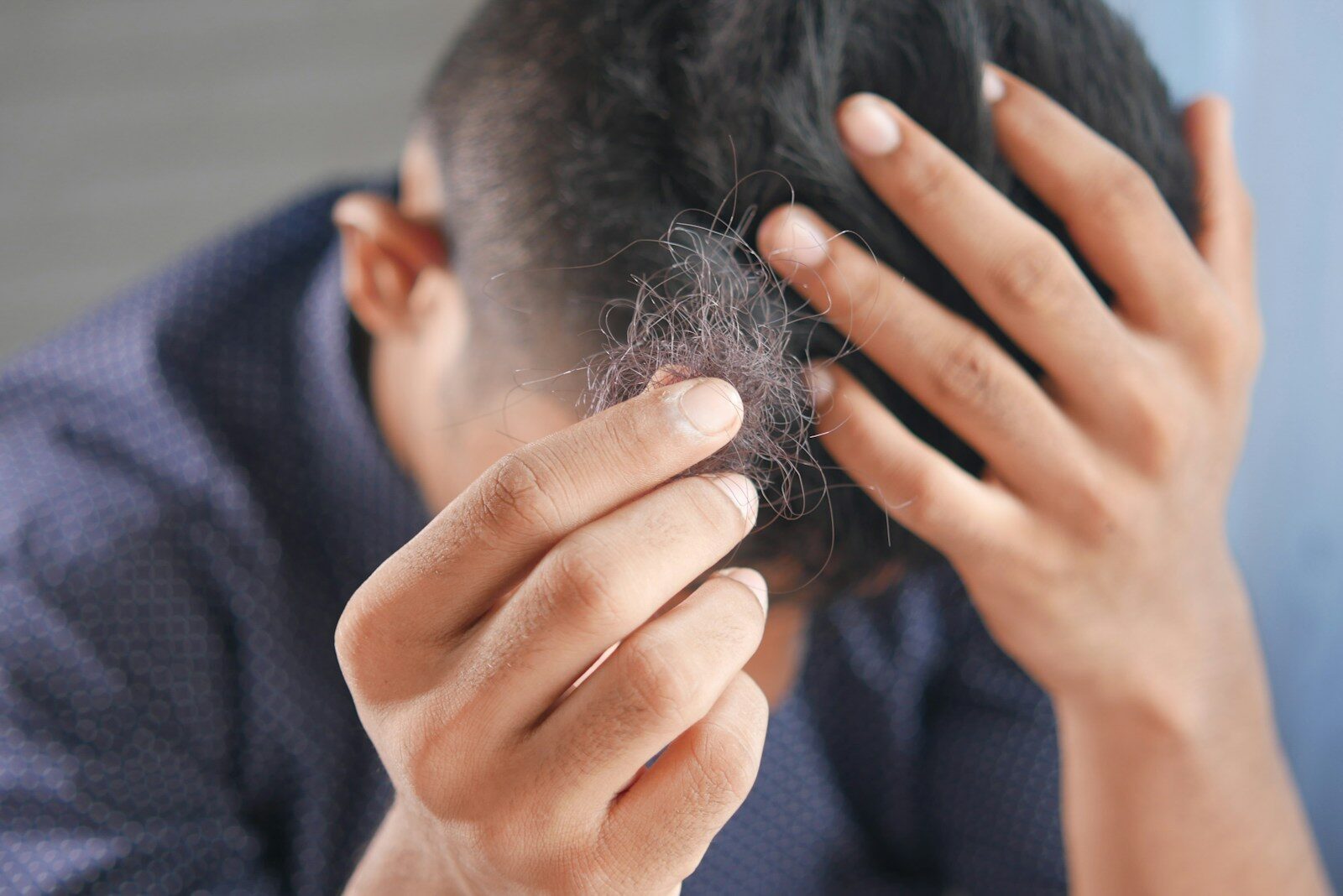
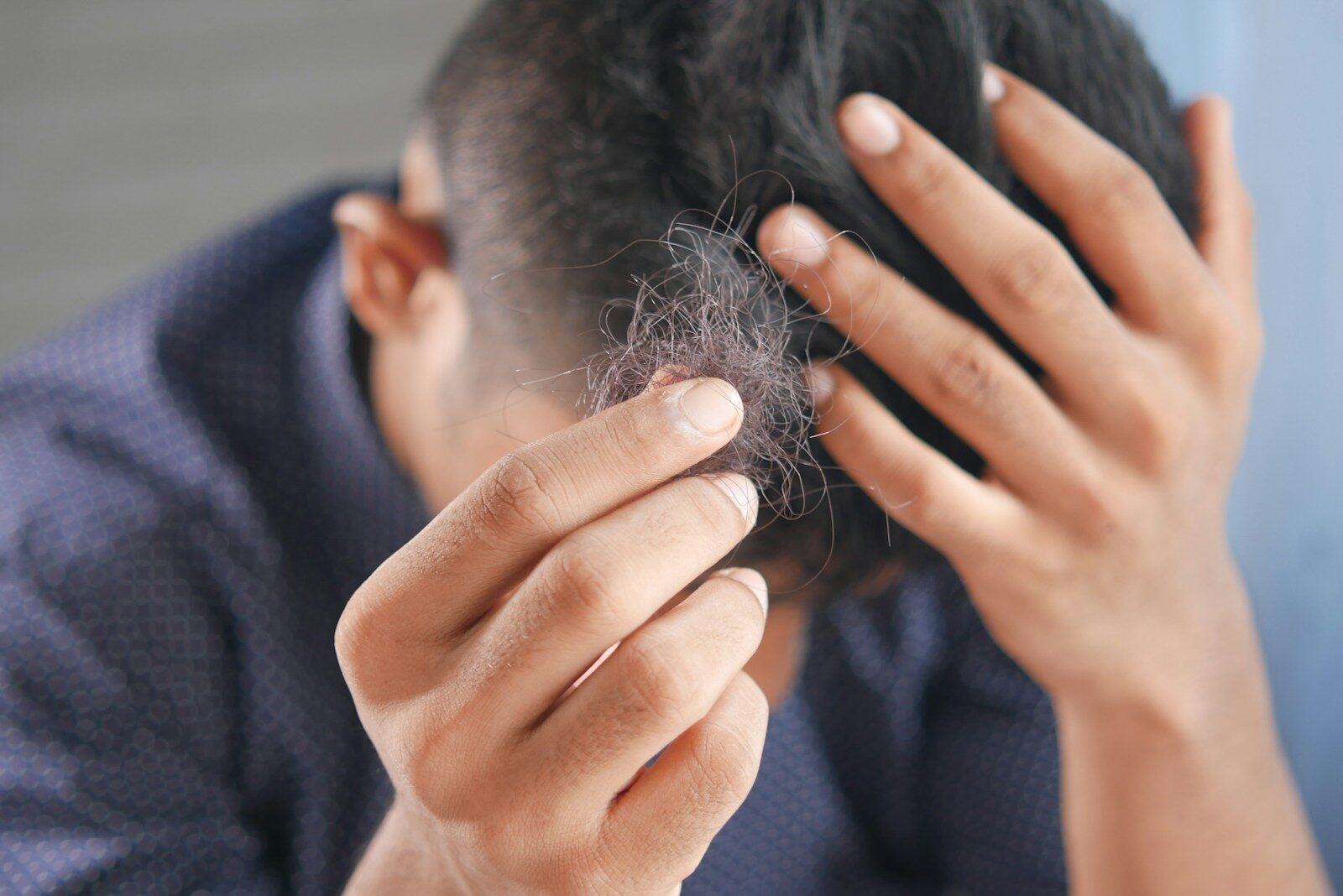
Hair changes are a normal part of getting older, but noticeable thinning can still be worrying.
You may notice that your hair does not feel as dense as it did a few years ago. Your ponytail may feel smaller, your crown may look more visible, or your hairline may slowly change.
For many people, these changes happen gradually.
The hair may become finer.
Growth may slow down.
Individual strands may not grow as long as they once did.
And hereditary hair loss may become more noticeable with age.
This does not mean that every person will become bald.
It also does not mean that all age-related hair loss should simply be accepted without investigation.
Hair thinning can be influenced by genetics, hormones, nutrition, medical conditions, medications, stress, scalp health, and hair-care habits.
Age is only one part of the picture.
One of the biggest changes that happens over time is that hair follicles can gradually produce finer strands.
This process is especially important in pattern hair loss.
In men, hereditary hair loss commonly affects the temples, frontal hairline, and crown.
In women, it often appears as a widening part or reduced density over the top of the scalp.
These changes can become more noticeable with age because the affected follicles gradually produce thinner hairs.
The process is often slow.
You may not notice anything dramatic from one month to the next.
But when you compare photographs taken several years apart, the difference can become obvious.
This is why occasional photographs can be useful.
Take pictures of the front hairline, temples, part, and crown under similar lighting.
You do not need to check every day.
Hair density does not meaningfully change from morning to evening.
Looking at longer-term trends is more useful.
Another reason hair can appear thinner with age is that the growth phase of the hair cycle may change.
Hair follicles naturally move through growth, resting, and shedding phases.
As people get older, the cycle can change and hair may spend less time actively growing.
This can result in shorter or finer strands.
That does not necessarily mean the follicles are dead.
But it can reduce overall visual density.
Hair texture can also change.
Some people notice that their hair becomes drier, more fragile, or more difficult to style as they age.
Others notice increased frizz or reduced shine.
These changes can make thinning feel even more noticeable.
Hair shaft damage can add to the problem.
Years of heat styling, chemical treatments, coloring, bleaching, and tight hairstyles can weaken hair.
The result may be breakage.
Breakage is different from follicle-related hair loss.
A person may have healthy follicles but still have hair that looks thin because the shafts are repeatedly snapping.
If your hair is becoming brittle, pay attention to how you style it.
Reduce excessive heat.
Use lower temperatures.
Avoid repeatedly bleaching already damaged hair.
Use appropriate conditioning products.
Detangle gently.
Avoid pulling aggressively through knots.
These simple habits can help preserve the hair you already have.
Genetics remains one of the biggest reasons hair becomes thinner with age.
If your parents, siblings, or close relatives experienced pattern hair loss, you may have a greater likelihood of developing a similar pattern.
However, genetics is not completely predictable.
You may inherit a tendency toward thinning but experience it differently from your relatives.
The age of onset, severity, and pattern can vary.
This is why looking at your own hair pattern matters more than trying to predict your future based only on your family.
Men often notice age-related pattern hair loss earlier than women.
A receding hairline may begin in the 20s or 30s and gradually progress over time.
The crown can also become thinner.
Some men experience slow progression for decades.
Others notice faster changes.
Female pattern hair loss can also begin earlier than many people expect.
Some women notice changes in their 20s or 30s.
Others do not notice significant thinning until later in life.
The part may gradually widen.
Hair over the crown may appear less dense.
The front hairline may remain relatively preserved.
Hormonal changes can influence this process.
Menopause is a major example.
During and after menopause, changes in hormone levels can affect hair density and texture.
Some women notice that their hair becomes finer.
The part may become more visible.
Growth may slow.
Hair may also become drier.
But menopause does not automatically explain every case of hair loss.
Thyroid disorders, nutritional deficiencies, stress, medications, and hereditary hair loss can also contribute.
If thinning becomes significant, do not assume that nothing can be done simply because you are getting older.
Another common cause of hair fall with age is nutritional deficiency.
Older adults may eat less for many reasons.
Appetite can decrease.
Dental problems can make eating difficult.
Certain medications can affect appetite.
Digestive conditions can reduce nutrient absorption.
Restrictive diets can also create problems.
If the body does not receive enough protein, iron, vitamins, or minerals, hair can be affected.
Protein remains important at every age.
Hair is primarily made of keratin, a structural protein.
If your diet is low in protein, hair growth may be affected.
Include protein-rich foods that fit your preferences and health needs.
Eggs, fish, dairy products, poultry, beans, lentils, soy, nuts, and seeds are examples.
The goal is not to eat excessive protein.
The goal is adequate nutrition.
Iron can also matter.
Iron deficiency can contribute to hair shedding in some people.
Women with heavy menstrual bleeding may have increased risk before menopause.
Older adults can also develop iron deficiency for other medical reasons.
Do not take iron supplements simply because your hair is thinning.
Too much iron can be harmful.
If deficiency is suspected, discuss testing with a healthcare professional.
Vitamin B12 can also become relevant with age.
Some older adults may have difficulty absorbing it properly.
Vitamin D, zinc, and other nutrients can also be important depending on the individual.
Again, this does not mean every person with thinning hair should start taking several supplements.
Supplements should be based on a genuine need.
Hair gummies and high-dose vitamins are heavily marketed, but they are not universal treatments.
Biotin is a common example.
Taking high doses of biotin does not automatically make aging hair thicker.
If you are not deficient, it may not address the cause.
High-dose biotin can also interfere with some laboratory tests.
Always tell your healthcare professional about the supplements you use.
Another important cause of thinning with age is medication.
People often take more medications as they get older.
Certain medicines can contribute to hair shedding in some individuals.
If your hair changed after starting a new medication, mention the timing to your healthcare professional.
Do not stop prescribed medication on your own.
The medication may be essential for your health.
Your doctor can determine whether it could be contributing and whether another cause is more likely.
Thyroid problems are another important consideration.
Thyroid disorders become more common with age and can affect hair growth.
Hair thinning may occur alongside symptoms such as fatigue, unexpected weight changes, temperature sensitivity, changes in heart rate, or other concerns.
Hair loss by itself cannot diagnose a thyroid condition.
But if you have several symptoms, professional evaluation may be appropriate.
Stress can also influence hair at any age.
Major emotional stress, illness, surgery, or other physical stressors can trigger temporary excessive shedding.
This can happen in younger and older adults.
The hair may begin shedding weeks or months after the triggering event.
If you suddenly notice more hair fall, think back several months.
Were you seriously ill?
Did you have surgery?
Did you experience major emotional stress?
Did you lose weight rapidly?
Did your diet change?
Did you start a new medication?
These questions can help identify possible triggers.
Illness is particularly relevant in older adults.
A serious infection, high fever, hospitalization, or surgery can place significant stress on the body.
Temporary shedding may follow.
This can be frightening because the hair loss may begin after you have already recovered.
The timing is important.
If the shedding is diffuse and began after a major health event, temporary excessive shedding may be involved.
However, persistent thinning still deserves attention.
Another factor is rapid weight loss.
Some older adults lose weight unintentionally because of illness, reduced appetite, or medication side effects.
Others may follow restrictive diets.
Significant weight loss can create physical and nutritional stress.
If you are losing weight without trying, speak with a healthcare professional.
Unintentional weight loss deserves medical evaluation whether or not hair loss is present.
If you are intentionally losing weight, avoid extreme calorie restriction.
Balanced nutrition supports both overall health and hair.
Scalp health also changes with age.
Some people develop a drier scalp.
Others experience more irritation or sensitivity.
Dandruff can occur at any age.
Persistent itching, redness, pain, scaling, crusting, or sores should not simply be blamed on aging.
These symptoms can indicate a scalp condition that requires treatment.
Psoriasis, eczema, seborrheic dermatitis, infections, and inflammatory disorders can affect the scalp.
Some scalp conditions can contribute to hair loss.
If the scalp is painful or inflamed, seek professional evaluation.
Another important issue is scarring hair loss.
Certain inflammatory conditions can damage follicles and lead to permanent hair loss.
These conditions can occur at different ages.
Symptoms may include redness, burning, itching, pain, scaling, or changes in the skin around areas of hair loss.
If you notice these symptoms, do not delay evaluation.
Protecting healthy follicles is easier than trying to regrow hair after a follicle has been permanently damaged.
Another pattern to watch for is sudden bald patches.
Age-related hair thinning usually develops gradually.
A smooth, round bald patch appearing suddenly is different.
Alopecia areata is one possible cause.
Other conditions can also cause patchy hair loss.
A sudden bald patch deserves professional evaluation rather than being dismissed as aging.
Another question people often ask is whether hair becomes permanently thinner after 40 or 50.
Not necessarily.
Some changes are related to aging and genetics.
But some forms of hair loss are temporary or treatable.
The key is identifying the cause.
For example, hair shedding caused by iron deficiency may improve after the deficiency is corrected.
Hair loss related to thyroid disease may improve when the underlying condition is treated.
Temporary shedding after illness may gradually recover.
Pattern hair loss can often be managed, although it usually requires ongoing treatment.
This is why age should not be used as an excuse to ignore significant hair loss.
Another common misconception is that changing shampoo can reverse age-related thinning.
A shampoo can help clean the scalp and improve the appearance of hair.
Some shampoos can help manage dandruff or other scalp conditions.
But shampoo does not reverse genetic follicle miniaturization.
If your hair is gradually thinning because of pattern hair loss, a shampoo alone is unlikely to stop the process.
The same applies to hair oil.
Oil can improve softness, reduce dryness, and make hair easier to manage.
But it does not treat every cause of hair loss.
If you enjoy oiling and your scalp tolerates it, there is no problem with including it in your routine.
Just do not expect it to reverse hereditary thinning.
Coconut oil may help condition hair.
Rosemary oil is popular in hair-care discussions.
Onion juice is widely promoted online.
But none of these should be considered guaranteed treatments for age-related hair loss.
If thinning is progressive, identify the cause instead of relying exclusively on home remedies.
Natural products can also cause irritation.
If your scalp becomes red, itchy, swollen, or painful after applying something, stop using it.
Natural does not automatically mean safe.
Another important habit is avoiding tight hairstyles.
Repeated pulling can damage follicles over time.
This is particularly relevant if hair density is already reduced.
Tight ponytails, buns, braids, extensions, and similar styles can place repeated tension on the scalp.
If your hairstyle hurts, loosen it.
If you notice thinning around areas where the hair is repeatedly pulled, give those areas a break.
Traction-related hair loss can become more difficult to reverse when the pulling continues for years.
Heat styling should also be used carefully.
Hair can become more fragile with age.
High temperatures can worsen breakage.
Use lower heat settings.
Avoid frequent straightening or curling when the hair is already brittle.
Chemical treatments should be spaced appropriately.
Bleaching, coloring, relaxing, or perming can weaken hair.
If you enjoy coloring your hair, you do not necessarily need to stop.
The goal is to reduce unnecessary damage.
Another common question is whether washing hair frequently causes age-related hair loss.
Normal washing does not usually cause follicle-related hair loss.
Loose hairs simply become visible during shampooing.
If you wash less frequently, you may see more hairs at once.
That does not mean shampoo caused the shedding.
Choose a washing routine that suits your scalp.
Do not avoid cleansing because you are afraid of hair in the shower.
Another myth is that brushing less will prevent baldness.
Gentle brushing is fine.
The problem is aggressive brushing.
If your hair is fragile, rough brushing can cause breakage.
Use a suitable brush or comb.
Detangle carefully.
Do not pull through knots.
Another question is whether cutting hair shorter makes it thicker.
Cutting can make the ends look fuller because damaged or thin ends are removed.
But it does not increase the number of hair follicles.
A shorter haircut may create the appearance of greater density.
That can be useful cosmetically.
But the underlying follicle count remains unchanged.
Shaving your head also does not make the follicles stronger.
Freshly shaved hair appears thicker because of the blunt cut.
The follicle itself has not changed.
Another common myth is that wearing hats causes baldness.
Normal hat use does not cause hereditary hair loss.
If a hat is extremely tight or causes irritation, choose a more comfortable one.
But ordinary hats are not a typical cause of age-related thinning.
Another important point is sleep.
Sleep patterns can change with age.
Poor sleep can affect overall well-being and may occur alongside stress or health conditions.
But poor sleep alone is not usually the main reason for progressive hereditary thinning.
If sleep problems are significant, address them for your overall health.
Do not rely on a hair product to solve an underlying sleep issue.
Exercise can also support overall health as you age.
Regular physical activity can help maintain cardiovascular health, strength, and mental well-being.
It is not a direct cure for hair loss.
But a healthy lifestyle supports the body as a whole.
Avoid extreme exercise combined with inadequate nutrition.
Balance matters.
Smoking is another lifestyle factor worth addressing.
Smoking can negatively affect overall health.
Quitting provides significant health benefits at any age.
Do not expect quitting alone to regrow all lost hair, but improving circulation and general health is beneficial.
Excessive alcohol intake can also affect nutrition and health.
If your hair is thinning, look at your overall lifestyle rather than searching only for a topical product.
Another factor that becomes more important with age is chronic disease.
Conditions affecting digestion, hormones, metabolism, or immune function can influence hair.
If hair loss appears alongside other unexplained symptoms, mention the combination to your healthcare professional.
Do not treat hair loss in isolation if the rest of your body is also telling you something has changed.
Another useful habit is keeping a simple health timeline.
If your hair suddenly starts shedding, write down when it began.
Then think about the months before it started.
Note illnesses, surgeries, medication changes, weight changes, major stress, dietary changes, and other health events.
This information can help a healthcare professional identify possible triggers.
Family history is also useful.
Tell your dermatologist if close relatives experienced pattern hair loss.
But remember that family history does not explain everything.
Your pattern, timeline, scalp condition, and overall health are equally important.
Treatment depends on the cause.
For pattern hair loss, minoxidil is one established treatment that may help some people slow hair loss and support regrowth.
It does not work for every type of hair loss.
It also requires consistent use and realistic expectations.
Hair growth takes time.
Do not expect major changes after a few days.
Other treatments may be considered depending on the individual.
Men with hereditary hair loss may discuss prescription options with a healthcare professional.
Women may also have other treatment options depending on the type of hair loss and medical history.
Pregnancy status, medications, and other health factors can influence which treatments are appropriate.
Never use someone else’s prescription medication because it worked for them.
Hair transplantation is another option for selected people with permanent pattern hair loss.
But age alone does not determine whether someone is a good candidate.
The stability of hair loss, donor hair, medical history, expectations, and scalp health all matter.
A transplant is also not the solution for temporary shedding or an active scalp disorder.
The cause should be understood first.
Cosmetic approaches can also help.
A shorter haircut can create the appearance of fuller hair.
Changing the part can make the scalp less visible.
Volumizing products can improve the appearance of density.
Hair fibers can provide temporary cosmetic coverage for some people.
These options do not treat the cause, but they can improve confidence.
There is nothing wrong with using cosmetic solutions while managing hair loss.
Another important issue is emotional well-being.
Hair changes can be difficult at any age.
You may feel as though thinning hair makes you look older than you feel.
You may become self-conscious about photographs or social situations.
These feelings are understandable.
Try not to let hair loss become the only thing you focus on.
Aging involves many changes, but hair thinning does not determine your value or attractiveness.
If hair loss causes significant anxiety, discussing it with someone you trust or seeking professional support can help.
It is also useful to remember that hair density naturally varies.
Some people have fine hair throughout their lives.
Others have very thick hair when younger and notice gradual thinning later.
A visible scalp under bright lighting does not automatically mean severe hair loss.
Compare changes over time rather than judging one photograph or one bad hair day.
Wet hair also looks thinner than dry hair.
Oily hair may appear flatter and reveal more scalp.
A strong overhead light can exaggerate thinning.
This is why consistent photographs are useful.
If you are worried about whether your hair is truly getting thinner, take pictures under similar conditions every few months.
If the change is progressive, seek evaluation.
Another important question is when hair loss should be considered abnormal for your age.
Age-related change is usually gradual.
Sudden dramatic shedding deserves attention.
Smooth bald patches deserve attention.
Hair loss associated with significant scalp redness, pain, burning, swelling, or sores deserves attention.
Hair loss involving the eyebrows or eyelashes can also be important.
Rapidly worsening thinning should not simply be blamed on age.
These patterns may indicate another condition.
Another warning sign is unexplained weight loss.
If you are losing weight without trying and your hair is thinning, seek medical advice.
The hair may be only one sign of a broader health issue.
Persistent fatigue, weakness, digestive problems, or other systemic symptoms should also be discussed with a healthcare professional.
Another important point is that not all hair loss can be completely reversed.
Some hereditary forms are chronic.
Some scarring conditions can permanently damage follicles.
But early diagnosis can still be valuable.
Treatment may help preserve existing hair, slow progression, or improve density.
Waiting until the hair loss is severe can reduce the available options.
If you notice a persistent pattern of thinning, it is reasonable to ask for professional advice.
You do not have to wait until most of your hair is gone.
A dermatologist can examine the scalp and hair and help determine the most likely cause.
They may ask about family history, diet, medications, hormonal changes, recent illness, weight changes, stress, and hair-care practices.
Depending on your symptoms, additional testing may be considered.
Not every person needs every blood test.
Testing should be based on your medical history and examination.
Another common mistake is self-diagnosing from social media.
You may see a video showing someone’s thinning part and decide that you have exactly the same condition.
But similar-looking hair loss can have different causes.
Photos alone are not enough.
The pattern, symptoms, timeline, and scalp examination matter.
Use online information to understand possibilities, not to diagnose yourself.
Another mistake is spending large amounts of money on unproven products.
Hair-loss marketing often targets people’s fear of aging.
Products may promise younger-looking hair, instant regrowth, or thicker follicles within days.
Be skeptical.
Hair biology does not work that quickly.
Real hair growth is slow.
Any treatment claiming dramatic permanent regrowth in a very short period deserves scrutiny.
Simple, consistent care is usually more useful than constantly changing products.
Maintain a balanced diet.
Get adequate protein.
Avoid extreme dieting.
Use supplements only when appropriate.
Protect your hair from heat and chemical damage.
Avoid constant tension.
Keep your scalp healthy.
Manage chronic health conditions appropriately.
Get regular medical care.
And monitor your hair over time.
These habits cannot stop every genetic change.
But they support your overall health and reduce avoidable damage.
If you are experiencing hair thinning as you get older, do not panic.
Some change can be normal.
But do not ignore progressive or unusual loss either.
Look at the pattern.
Consider your family history.
Think about recent health changes.
Review your medications.
Look at your diet.
Check your scalp.
Notice whether the hair is shedding, thinning, or breaking.
This information can help you understand what may be happening.
The biggest mistake is assuming that age alone explains everything.
Your hair may be changing because of aging and genetics.
Or a nutritional issue may be contributing.
You may have temporary shedding after illness.
You may have a thyroid problem.
You may have scalp inflammation.
You may have hair breakage from years of styling.
Several factors can happen together.
This is why the best approach is personalized.
Hair care after 40, 50, or 60 does not need to become complicated.
You do not need dozens of anti-aging hair products.
You need a routine that protects your scalp and hair.
Use suitable cleansing.
Condition appropriately.
Reduce excessive damage.
Eat well.
Maintain your health.
Pay attention to changes.
And seek professional advice when needed.
Hair aging is gradual.
Your response can also be gradual and thoughtful.
You do not need to chase every new remedy.
You do not need to panic when you notice a few more hairs.
And you do not have to accept significant unexplained thinning without asking why it is happening.
Understanding the cause gives you options.
Sometimes the answer is reassurance.
Sometimes it is better nutrition.
Sometimes it is treating an underlying health problem.
Sometimes it is reducing damage.
And sometimes it is starting evidence-based treatment for pattern hair loss.
The important thing is to make decisions based on the cause rather than your age alone.
Hair can change with age, but healthy habits and appropriate treatment can help you protect the hair you have and maintain scalp health for years to come.