
Apple’s iPhone lineup has become more complicated than ever in 2026. With the arrival of the iPhone 18 Pro, iPhone 18 Pro Max and Apple’s first foldable iPhone Duo, buyers now have more ways to spend their money than simply choosing between a standard iPhone and a Pro model.
The latest generation has also changed the definition of Apple’s most expensive and most capable iPhone. The iPhone 18 Pro Max remains the conventional flagship, while the iPhone Duo introduces a completely different form factor and a price that pushes Apple’s smartphone range into a new category.
For buyers trying to decide which iPhone is actually worth purchasing, the answer depends heavily on what they value most. The biggest screen, best camera system, longest battery life, portability, value and foldable design all point toward different models.
Macworld’s broader iPhone buying guides have traditionally separated Apple’s lineup according to those priorities rather than simply declaring the most expensive model the best for everyone. Its previous ranking placed the iPhone 17 Pro Max at the top for users seeking the biggest display, longest battery life and strongest camera system, while the standard iPhone 17 was considered the better choice for most people.
With the 2026 generation now available, the iPhone 18 Pro Max takes that flagship position for buyers who want Apple’s most capable traditional smartphone.
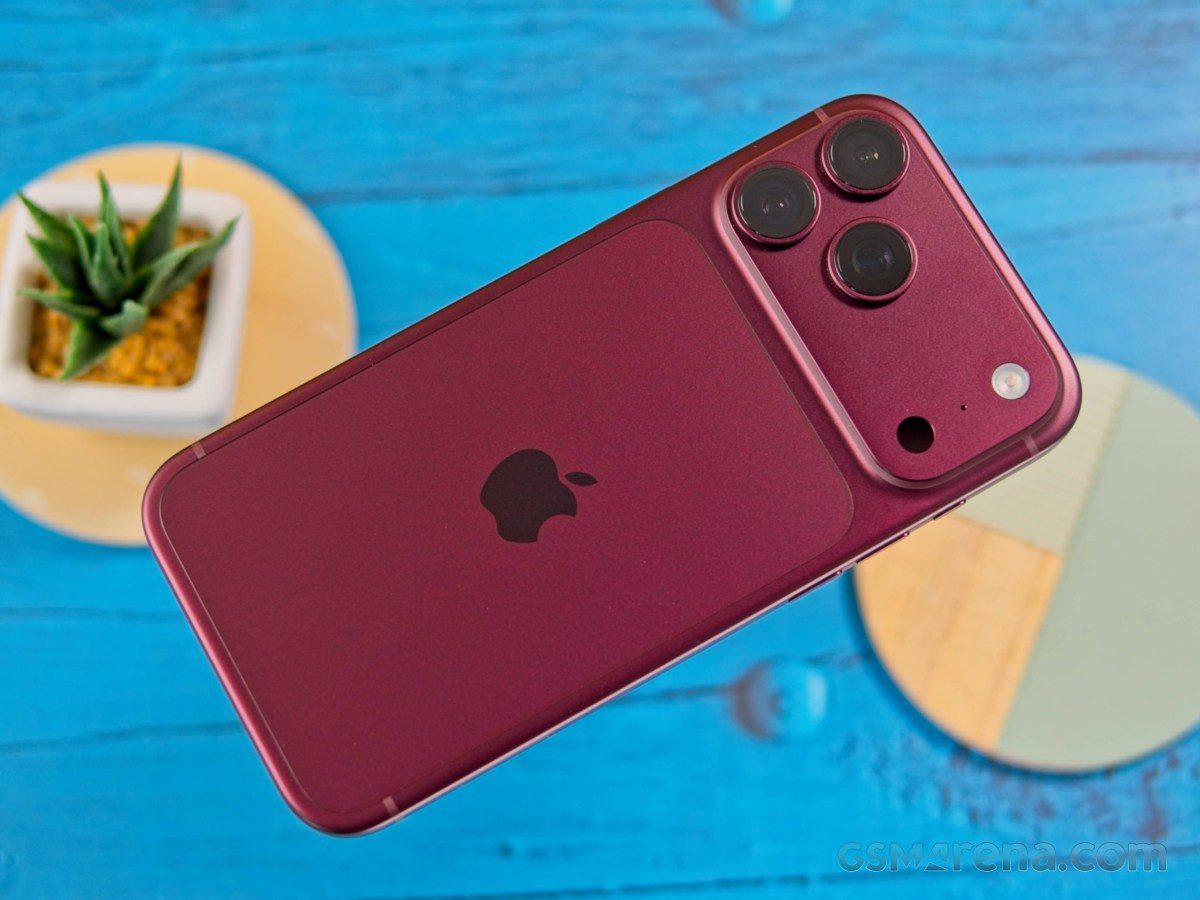
The iPhone 18 Pro Max comes with a 6.9-inch Super Retina XDR OLED display featuring ProMotion with adaptive refresh rates up to 120Hz. It also gets Apple’s new A20 Pro chip and a 48MP Pro Fusion camera system with a variable-aperture main camera, 48MP ultra-wide and 48MP telephoto hardware.
For photography enthusiasts, the camera system is one of the biggest reasons to choose the Pro Max.
The 48MP Fusion Main camera supports multiple aperture settings, while the 48MP Fusion Telephoto provides 4x optical zoom and up to 8x optical-quality zoom. Apple also offers professional controls for aperture, shutter speed, white balance and other photography settings.
The iPhone 18 Pro Max is also the strongest choice for users who regularly shoot video.
Apple supports advanced recording formats including ProRes, ProRes RAW and Apple Log 2, while the new 18MP Center Stage front camera adds more flexibility for video calls and content creation. The front camera can automatically keep subjects in frame during compatible calls and recordings.
Battery life is another major advantage.
Apple rates the iPhone 18 Pro Max for up to 29 hours of typical use and up to 43 hours of video playback. That gives it a clear advantage for people who spend long days gaming, travelling, recording video or consuming media.
But the Pro Max is not automatically the best iPhone for everyone.
Its size and price make it excessive for users who simply want a fast, reliable iPhone with a great camera and long software support. For those people, the smaller iPhone 18 Pro may be the more sensible flagship.
The iPhone 18 Pro uses a 6.3-inch display while retaining the same A20 Pro processor family and advanced Pro camera architecture. It also offers the same 48MP Fusion camera system, including the variable-aperture main camera and 48MP ultra-wide.
This makes the iPhone 18 Pro arguably the better-balanced choice for users who want flagship performance without carrying Apple’s largest conventional smartphone.
The smaller display does mean less screen real estate for gaming and video editing, and its battery capacity is lower than the Pro Max. Apple rates it for up to 23 hours of typical use and up to 34 hours of video playback.
For many buyers, however, that trade-off will be worth it.
The iPhone 18 Pro delivers much of the Pro Max experience in a smaller package, making it particularly attractive to photographers, content creators and power users who don’t want a 6.9-inch phone.
Then there is the most unusual iPhone of 2026: the iPhone Duo.
Apple’s first foldable iPhone is not simply a larger version of the Pro. It introduces a fundamentally different design, with an outer display and a larger foldable inner display. Macworld describes the Duo as a device built around flexibility, with iOS adapting to the different screen configurations and orientations.
The iPhone Duo starts at $1,999 in the United States, making it roughly twice the starting price of some conventional iPhone models. Pre-orders begin October 16, with general availability scheduled for October 23.
In India, Apple has positioned the Duo even further into premium territory, with the starting price at ₹2,99,900.
That makes the iPhone Duo difficult to recommend purely on value.
But value is not really the point.
The Duo is designed for customers who specifically want a foldable iPhone. Its inner display provides a substantially larger workspace, while Apple’s software allows users to run applications side by side and take advantage of the device’s different orientations.
The foldable also uses the A20 Pro chip, meaning buyers do not have to sacrifice Apple’s newest processor simply because they choose the unconventional design. Apple has also equipped the Duo with its N1 wireless networking chip and C2 modem.
Its camera system, however, is different from the iPhone 18 Pro and Pro Max.
The Duo has a 48MP Fusion Main camera and a 48MP Fusion Ultra Wide camera, but it does not include the Pro models’ dedicated 48MP telephoto system or the variable-aperture main camera.
That distinction is important for photography enthusiasts.
If the primary goal is to get Apple’s best camera hardware, the iPhone 18 Pro Max remains the stronger choice. If the primary goal is to own an iPhone that can transform into a larger screen device, the Duo is the more compelling option.
The Duo also brings some interesting practical features that conventional iPhones cannot replicate.
Users can open the device to use the larger inner screen, partially fold it for hands-free viewing or photography, and use the outer display while the phone is folded. Apple’s software can adapt the interface depending on how the device is positioned.
Apple has also focused heavily on durability.
The Duo uses a titanium frame and an advanced hinge design, along with an IP68 rating for water and dust resistance. Its inner display uses a nano-texture finish designed to reduce reflections and make the fold less noticeable.
Battery life is surprisingly competitive for a foldable.
Apple claims up to 44 hours of video playback using the outer display and up to 31 hours using the inner display. The phone also supports MagSafe and Qi wireless charging.
For users who have been waiting years for Apple to enter the foldable market, these features could make the Duo the most exciting iPhone of the year.
For everyone else, the high price is likely to remain the biggest obstacle.
The standard iPhone 18 occupies a different position in the lineup.
Unlike the Pro models, it is aimed more directly at mainstream buyers who want a modern iPhone without paying flagship Pro prices. It does not have the same camera hardware or professional video capabilities, but for everyday photography, social media, messaging, streaming and general use, those differences may not matter to most people.
This is where the distinction between “best iPhone” and “best iPhone for most people” becomes important.
A person who spends hours every day taking photos and recording videos could benefit enormously from the Pro camera system. A person who mostly uses Instagram, WhatsApp, YouTube, banking apps and everyday productivity software may gain little from paying significantly more for those capabilities.
The same principle applies to the iPhone 18 Pro Max.
Its larger screen and longer battery life are excellent for gaming, editing and media consumption, but they also make the device larger and more expensive. Someone who values comfortable one-handed use may actually prefer the smaller Pro.
Older models can also remain relevant if their prices are attractive.
Macworld’s previous buying guides have consistently noted that older iPhones can make sense when discounts are substantial, but full-price older models become less attractive when newer devices offer significantly better features.
That advice becomes particularly important in 2026 because Apple has changed its pricing strategy in India.
The company increased prices for several existing iPhone models after the iPhone 18 Pro launch. The standard iPhone 17, for example, moved to a starting price of ₹99,900 in India, while other models also received substantial increases.
As a result, buyers should not automatically assume that choosing last year’s model will provide the usual savings.
The decision therefore becomes more dependent on actual street prices, retailer discounts and trade-in offers.
For someone who wants the best camera, the iPhone 18 Pro Max is the obvious choice.
Its combination of three 48MP rear cameras, variable aperture, long-range telephoto capabilities, professional controls and advanced video recording makes it Apple’s strongest conventional camera phone.
For someone who wants the best overall balance of flagship features and size, the iPhone 18 Pro makes more sense.
It retains the A20 Pro chip and much of the Pro camera experience while using a smaller 6.3-inch body.
For someone who wants the biggest screen and longest battery life, the iPhone 18 Pro Max remains the strongest conventional choice.
For someone who wants the most innovative iPhone, the iPhone Duo stands apart.
Its foldable design, two-display experience, flexible software and A20 Pro processor make it unlike any previous iPhone. Macworld’s early analysis highlights the device’s ability to adapt iOS to different orientations and screen configurations as one of its defining features.
For someone who wants the best value, the standard iPhone 18 is likely to remain the more logical choice, assuming its pricing stays meaningfully below the Pro models.
And for existing iPhone 17 Pro or Pro Max owners, upgrading may not be necessary unless they specifically want the new camera system, A20 Pro performance, improved battery characteristics or other new features.
The 2026 lineup therefore does not have one universally correct winner.
The iPhone 18 Pro Max is the strongest traditional flagship. The iPhone 18 Pro is the more compact high-end option. The iPhone Duo is Apple’s most ambitious and unusual device. The standard iPhone remains the model aimed at buyers who care more about everyday value than professional hardware.
That is also why simply choosing the most expensive iPhone can be misleading.
The iPhone Duo costs more than the Pro Max but does not have the same camera configuration. The Pro Max has a stronger traditional photography system but lacks the Duo’s foldable display. The smaller Pro gives up some battery and screen size but offers nearly the same core Pro performance.
Apple’s 2026 lineup is therefore less about finding a single winner and more about finding the phone that best matches how you actually use it.
If money is no object and the priority is maximum traditional iPhone capability, the iPhone 18 Pro Max is the safest recommendation.
If you want the newest Apple design and a completely different way to use an iPhone, the iPhone Duo is the most exciting choice.
If you want flagship performance and cameras without the enormous Pro Max form factor, choose the iPhone 18 Pro.
And if you simply want a powerful modern iPhone without paying for features you may never use, the standard model remains the more sensible direction.
In 2026, Apple’s best iPhone is no longer necessarily the one with the highest price. It is the one whose hardware matches what you actually need.