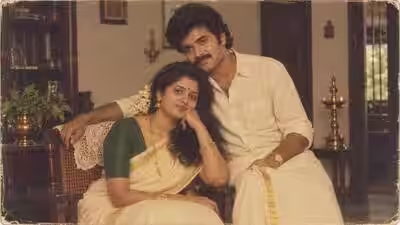
The 1980s AI Photo Trend has become popular on social media, with users transforming their modern photographs into realistic-looking images inspired by the fashion, photography and visual culture of the 1980s. The trend has now taken a regional turn, with people using ChatGPT to create Kerala-style retro photographs featuring traditional clothing, hairstyles, jewellery, homes and analogue photography effects.
The 1980s AI Photo Trend is different from simply applying a vintage filter to an existing photograph. AI image-generation tools can modify clothing, hairstyles, backgrounds, lighting and other visual details while keeping the person’s facial identity recognisable. For Kerala-inspired images, users can add elements such as kasavu sarees, mundus, traditional gold jewellery and period-appropriate Kerala interiors to make the result feel more authentic.
The 1980s AI Photo Trend has gained attention particularly on Instagram, where users are sharing images that look like old family albums, wedding photographs and studio portraits. The visual style generally includes warm lighting, soft focus, slightly faded colours and subtle analogue film grain. These details help AI-generated images resemble photographs captured on film cameras several decades ago.
For people interested in trying the 1980s AI Photo Trend, the quality of the prompt can make a major difference. Instead of simply asking ChatGPT to “make this photo look old,” users can specify the decade, location, clothing, hairstyle, setting, lighting and photography style. This gives the image generator clearer instructions and can produce a more convincing period-inspired result.
One popular prompt for the 1980s AI Photo Trend is a classic Malayali family portrait. Users can upload a photograph and ask ChatGPT to recreate it as an authentic mid-1980s Kerala family photograph while preserving the identities and natural facial features of everyone in the original image. Traditional kasavu sarees, shirts and mundus, simple jewellery, wooden furniture and a modest Kerala home can be included to establish the period and regional setting.
A suitable prompt can ask ChatGPT to recreate the uploaded photograph as an authentic Malayali family portrait from Kerala in the mid-1980s. The prompt can specify that women’s clothing should include traditional Kerala kasavu sarees and men’s clothing should feature period-appropriate shirts and mundus. It can also request warm studio lighting, soft focus, subtle film grain and slightly faded colours while asking the tool to avoid making the photograph look artificially aged.
Another popular variation of the 1980s AI Photo Trend focuses on Kerala wedding portraits. Users can transform a modern couple’s photograph into an image resembling an old Kerala wedding studio photograph. A cream-and-gold kasavu saree, traditional Kerala gold jewellery, a mundu and a simple wedding-studio backdrop can help create the desired period aesthetic.
For a Kerala wedding version of the 1980s AI Photo Trend, users can instruct ChatGPT to retain the original facial features and identities while changing the clothing and surroundings. Warm studio lighting, soft focus, analogue film grain and realistic faded colours can be added. It is also useful to specifically request that the image avoid excessive sepia tones or artificial ageing, because these effects can make the result appear more like a modern filter than an authentic old photograph.
The college portrait is another format becoming popular through the 1980s AI Photo Trend. Students and former students can use old or recent photographs to create an image inspired by the look of a Kerala college photograph from the decade. The prompt can preserve the person’s face and expression while introducing period-appropriate clothing, hairstyles and a simple Malayali visual style.
For this version of the 1980s AI Photo Trend, users can ask for a photorealistic photograph that appears to have been captured with an analogue camera during the 1980s. The prompt can specifically request that modern objects, excessive vintage effects and artificial sepia tones be avoided. This helps the final image maintain a natural photographic appearance rather than looking like a heavily edited digital picture.
A fourth option in the 1980s AI Photo Trend takes inspiration from Malayalam cinema. Kerala’s film culture provides a strong visual reference for creating dramatic retro portraits. Users can ask ChatGPT to transform a photograph into an 1980s Malayalam cinema-inspired studio portrait while maintaining the person’s original identity and natural expression.
The Malayalam cinema version of the 1980s AI Photo Trend can include period-accurate hairstyles, clothing and makeup along with dramatic studio lighting. Subtle film grain, soft focus and analogue-camera characteristics can further strengthen the cinematic effect. The aim is to recreate the visual atmosphere of an old Malayalam film portrait rather than simply applying a generic retro effect.
The fifth popular idea for the 1980s AI Photo Trend is a vintage Malayali woman portrait. In this version, users can transform a modern photograph into a glamorous but realistic 1980s Kerala studio photograph. Traditional sarees, classic gold earrings, bangles, a simple bindi and a voluminous hairstyle associated with the period can be included in the prompt.
Users can ask ChatGPT to preserve the person’s natural facial features and identity while introducing traditional Kerala styling. Warm studio lighting, subtle film grain and slightly faded colours can make the final image resemble a genuine photograph from the period. The prompt can also request natural colours rather than excessive sepia effects.
The 1980s AI Photo Trend has become particularly interesting because regional details can make AI-generated photographs feel more personal. Instead of creating a generic Western-style vintage portrait, users can specify cultural elements associated with Kerala and Malayali life. This can include traditional clothing, architecture, jewellery, furniture and local cinematic influences.
The 1980s AI Photo Trend also demonstrates how AI image generation is changing the way people interact with personal photographs. Older generations may have physical family albums containing photographs from the 1980s, while younger users can now digitally recreate similar visual styles using current photographs. The technology provides a creative way to experiment with historical aesthetics without requiring professional photography equipment.
However, users trying the 1980s AI Photo Trend should remember that AI-generated images are interpretations rather than genuine historical photographs. An AI tool may sometimes introduce inaccurate clothing, jewellery, architecture or hairstyles. Giving the prompt specific instructions about the year, location and cultural details can help reduce these inconsistencies.
The 1980s AI Photo Trend can also produce better results when users clearly specify which parts of the original photograph should remain unchanged. Instructions to preserve facial identity, facial structure, skin tone, age and natural expression can help prevent unnecessary changes to the subject. At the same time, users can ask the AI to modify only the clothing, hairstyle, background and photographic characteristics.
Another useful approach to the 1980s AI Photo Trend is to specify what should not appear in the image. Modern smartphones, contemporary furniture, current fashion, digital-looking effects and modern architecture can make a supposed 1980s photograph look unrealistic. Asking the AI to remove such elements can help create a more convincing period-inspired result.
The 1980s AI Photo Trend is also part of a wider wave of AI-generated nostalgia content. Similar trends are now appearing around different decades, including the 1960s, 1970s and 1990s. Users can change the year in their prompts and adjust clothing, hairstyles, architecture and camera characteristics to match the chosen period.
The 1980s AI Photo Trend has therefore evolved beyond a simple social-media filter. It combines AI image generation with regional culture and nostalgia, allowing users to recreate photographs inspired by specific places and periods. The Kerala version has gained attention because it brings together familiar elements of Malayali culture with the distinctive visual language of analogue photography.
For anyone experimenting with the 1980s AI Photo Trend, specificity is the key to getting better results. Mentioning “Kerala,” “mid-1980s,” “kasavu saree,” “mundu,” “traditional gold jewellery,” “analogue film grain,” “soft focus” and “warm studio lighting” gives the image generator considerably more context than a general request for a vintage photograph.
The 1980s AI Photo Trend also offers several possibilities beyond family portraits. Users can experiment with college photographs, wedding pictures, village scenes and Malayalam cinema-inspired portraits. Each concept can be adjusted by changing the setting, clothing, lighting and camera style while keeping the central subject recognisable.
The popularity of the 1980s AI Photo Trend shows how quickly AI-generated visual formats can become social-media trends. What begins as a general retro aesthetic can quickly develop into region-specific variations as users add their own cultural references. The Kerala-inspired version is one example of how technology can combine modern AI capabilities with memories and visual traditions from the past.
For users looking to recreate an authentic-looking Kerala photograph, the 1980s AI Photo Trend works best when the prompt clearly describes both the cultural setting and the photographic characteristics of the era. The goal is not simply to make a modern photograph appear old, but to recreate the clothing, environment, composition and analogue-camera feel associated with an actual 1980s photograph.
As the 1980s AI Photo Trend continues spreading across social platforms, more users are likely to experiment with regional variations and personalised prompts. Kerala-style portraits are already showing how AI can transform an ordinary photograph into a nostalgic visual inspired by Malayali culture, classic family albums and Malayalam cinema. The trend combines technology and nostalgia in a way that makes old-fashioned photography styles accessible to a new generation.