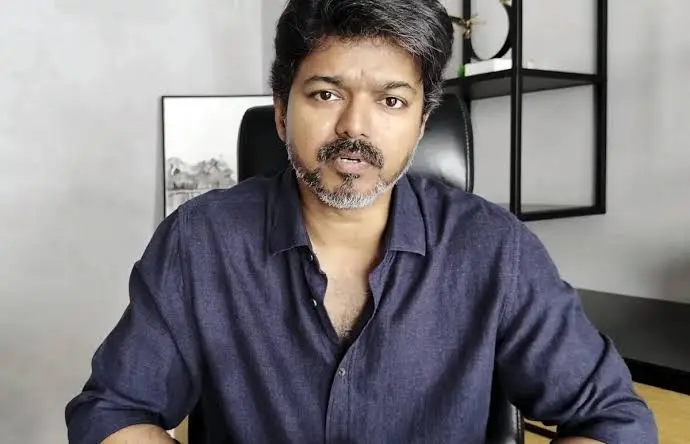
Tamil Nadu Chief Minister C. Joseph Vijay has emerged as an unexpected name in the national political conversation, with growing voices within his Tamilaga Vettri Kazhagam (TVK) projecting him as a potential future Prime Minister of India. However, the rapid rise of the “Vijay for PM” narrative has also triggered questions about whether the actor-turned-politician has established enough political and administrative experience to make such a national ambition realistic.
Vijay became Tamil Nadu Chief Minister only a few months ago, making his emergence in a national prime-ministerial preference survey particularly notable. The India Today Mood of the Nation survey placed him as the third-most preferred choice for Prime Minister, behind Narendra Modi and Rahul Gandhi. Vijay received 9.2 per cent support in the survey, compared with 48.7 per cent for Modi and 27.1 per cent for Rahul Gandhi.
The survey has provided fresh momentum to supporters who believe Vijay could eventually expand his political influence beyond Tamil Nadu. Some senior TVK leaders have already openly described him as a potential future national leader.
Tamil Nadu Human Resources Management Minister D. Sarathkumar publicly praised Vijay and said he could become the next Prime Minister. Public Works Minister Aadhav Arjuna has also argued that the next Prime Minister should come from southern India and suggested Tamil Nadu as the ideal state for producing such a leader.
Another senior TVK leader, K.A. Sengottaiyan, has similarly spoken about Vijay’s potential to influence Indian politics beyond Tamil Nadu. Such statements indicate that the idea is no longer restricted to supporters on social media and has become part of the political messaging coming from within the ruling party.
At the same time, the Prime Ministerial discussion remains highly premature.
Vijay has only recently taken charge of Tamil Nadu’s government, meaning his performance as Chief Minister will likely become the first major test of whether he can establish himself as a serious administrator rather than simply a popular political figure.
His transition from cinema to politics has been unusually rapid. Vijay spent decades as one of Tamil cinema’s biggest stars before launching TVK and entering electoral politics.
His enormous fan base gave him an immediate political platform, but converting popularity into an effective political organisation and governance model is a much more complicated challenge.
The current debate therefore centres on whether Vijay’s popularity can translate into a sustainable political ideology and administrative record.
Supporters point to the electoral success of TVK and Vijay’s ability to attract politicians from established parties. Several AIADMK legislators have reportedly left their party to join TVK, strengthening Vijay’s position in the state political landscape.
Such political realignment can be interpreted in two ways.
Supporters may see it as evidence that established politicians believe Vijay has a strong future and that TVK is becoming a serious political force.
Critics, however, can interpret the same developments as conventional political consolidation rather than evidence of a new political model.
Vijay’s government has also relied on alliances with parties including Congress, Left parties, Indian Union Muslim League and VCK. The alliance-building strategy helped him establish a majority and strengthen his government, but it has also raised questions about the ideological direction of TVK.
The ideological question is perhaps the biggest challenge facing Vijay if he wants to develop a national political profile.
Vijay has described the BJP as an ideological opponent, but critics argue that simply identifying an opponent does not provide a complete political philosophy.
A national leader needs to clearly communicate positions on economic policy, federalism, social welfare, national security, taxation, industrial development, education and relations between the Centre and states.
TVK’s political identity is still developing, and Vijay has not yet been in office long enough to establish a detailed long-term governance record.
His position on delimitation has also attracted attention because of changes in his political messaging on the issue.
Delimitation is particularly sensitive in southern states because population-based redistribution of parliamentary constituencies could affect the political representation of states that have successfully controlled population growth.
Tamil Nadu has historically been vocal about protecting the political weight of states that achieved better demographic outcomes.
Vijay’s lack of a consistently articulated position on such a major federal issue has therefore raised questions about the clarity of his national political outlook.
His approach to development projects has also become part of the debate.
The government has cancelled or put several projects initiated by the previous administration on hold, including projects associated with the Parandur airport, Kanchipuram redevelopment, Chennai’s proposed sports city and a stadium project in Coimbatore.
Supporters can argue that a new government has the right to reassess projects inherited from its predecessor and redirect public resources toward its own priorities.
Critics, however, may question whether such decisions are based on long-term policy considerations or political differences with the previous administration.
The administration has also introduced an anti-corruption helpline through which citizens can submit audio and video evidence of alleged bribery by government officials.
The initiative has attracted attention because it gives ordinary citizens a direct channel to report corruption.
Such a mechanism could become an important part of Vijay’s governance image if it results in effective action against corrupt officials.
However, the effectiveness of any anti-corruption system ultimately depends on how complaints are investigated and whether action is taken consistently.
Vijay’s government has also faced controversy over administrative decisions.
A circular restricting students from participating in protests organised by Left parties and the Cockroach Janata Party generated criticism and was eventually withdrawn.
The episode raised questions about decision-making within the government, particularly because the political leadership did not immediately provide clear answers about responsibility for the controversial order.
Vijay’s limited engagement with the media has added another layer to these questions.
Unlike many political leaders who regularly interact with journalists, Vijay has largely avoided press conferences and direct media engagement since becoming Chief Minister.
His ministers have also been relatively restrained in their interaction with the media.
Supporters could argue that avoiding constant media appearances allows the government to focus on administration rather than political messaging.
Critics, however, believe that a Chief Minister should regularly explain government decisions and answer questions about controversial policies.
For a leader being projected as a future Prime Minister, communication becomes particularly important.
India’s Prime Minister operates on a national stage where political decisions affect hundreds of millions of people across very different regions and communities.
A potential national leader must therefore demonstrate the ability to communicate a coherent vision to audiences beyond their home state.
Vijay has not yet had enough time to demonstrate that capability.
The national survey result itself also needs to be viewed in context.
A preference survey does not mean that 9.2 per cent of voters are committed to voting for Vijay in a future general election.
It measures public preference at a particular moment and can be influenced by popularity, media visibility and public curiosity.
The fact that Vijay has entered the top three despite having relatively little political experience is significant, but it does not establish a national electoral base.
The Lok Sabha has 543 elected seats, and a party or alliance needs a majority of at least 272 seats to form a government on its own or with sufficient support.
For Vijay to become Prime Minister, TVK would therefore need to develop a national political organisation or become the central force in a broad coalition capable of securing the required parliamentary support.
That would be a much larger challenge than winning an election in Tamil Nadu.
Tamil Nadu itself has 39 Lok Sabha constituencies, meaning even complete dominance of the state’s parliamentary seats would not be enough to produce a national majority.
A national expansion would require TVK to build a political presence in other states, understand local political issues and develop alliances beyond Tamil Nadu.
That process could take many years.
For now, Vijay’s political future is more closely tied to his performance in Tamil Nadu.
His government needs to demonstrate that it can deliver on welfare promises, improve public services, manage infrastructure projects, attract investment and maintain law and order.
Economic performance will also be closely watched.
Tamil Nadu is one of India’s largest and most industrialised states, with major automobile, electronics, manufacturing, technology and services sectors.
Any Chief Minister seeking national political credibility would need to demonstrate an ability to manage such a complex economy.
Vijay’s supporters have already promoted claims about rapid improvements in areas such as electronics exports and governance, but some viral social-media claims have been criticised as exaggerated or unsupported.
This makes credible communication particularly important for TVK.
The party will need to distinguish between genuine government achievements and promotional content if it wants to establish itself as a serious political organisation.
The BJP has already dominated national politics for years, while the Congress remains the country’s principal opposition force.
Regional parties have historically played an important role in Indian coalition politics, but transforming a regional movement into a national political force is difficult.
Several regional leaders have attempted national expansion in the past with varying degrees of success.
Vijay’s celebrity status gives him a significant advantage in terms of public recognition.
His films have created a fan network across India, and his name is familiar to millions of people outside Tamil Nadu.
However, electoral politics operates differently from entertainment.
Film popularity does not automatically translate into votes, organisational strength or policy credibility.
Vijay will therefore have to demonstrate that his supporters can be converted into active political workers and that TVK can build a strong organisation at the booth, constituency and district levels.
The party will also have to manage internal expectations.
When senior leaders begin publicly describing their leader as a future Prime Minister only months after taking office, it can create the impression that the party is looking beyond immediate governance.
That is precisely the criticism coming from Congress leaders in Tamil Nadu.
Congress leaders have dismissed the “Vijay for PM” campaign as premature and suggested that TVK supporters are still operating from a fan-club mentality.
Congress MP Karti Chidambaram has pointed to the constitutional and electoral reality that the Prime Minister is ultimately determined by parliamentary numbers.
The criticism reflects a broader political argument: national leadership cannot be established simply through popularity or public declarations.
A potential Prime Minister must build enough electoral strength to command a majority in the Lok Sabha or lead an alliance capable of doing so.
For Vijay, that remains a distant possibility rather than an immediate political objective.
His supporters, however, see his rapid rise as evidence that public sentiment can change quickly.
The survey’s 9.2 per cent preference figure is significant precisely because Vijay has only recently entered electoral politics.
If he can maintain popularity while demonstrating effective governance, his national profile could grow further.
But the opposite is also possible.
If his government struggles with administration, internal disagreements or controversial decisions, the novelty surrounding his political image could fade.
The next few years will therefore be crucial for determining whether Vijay becomes a lasting political force or remains primarily a highly popular regional leader.
The question of ideology will also become increasingly important.
Vijay’s opposition to the BJP gives TVK a broad political direction, but it does not necessarily define the party’s complete worldview.
His alliances with Congress, Left parties and other regional forces suggest a willingness to cooperate with different political groups when circumstances require it.
That flexibility may help him in Tamil Nadu, but national expansion would require greater clarity on economic and social policies.
Vijay will also need to explain how his political vision differs from the established Dravidian parties that have dominated Tamil Nadu politics for decades.
The DMK and AIADMK have deep organisational networks, long political histories and established voter bases.
TVK’s challenge is to persuade voters that it offers something more than a new face using familiar political methods.
This is particularly important because many of the issues associated with Vijay’s government, including welfare measures, alliances, anti-corruption initiatives and development projects, are already part of traditional Tamil Nadu politics.
His success will depend on whether he can create a distinctive governance model.
The Prime Ministerial discussion is therefore likely to remain more symbolic than practical for now.
Vijay’s immediate responsibility is running Tamil Nadu.
If he succeeds in delivering visible improvements over a full term, his national ambitions may become more credible.
If he fails to establish a strong administrative record, the current national popularity could prove temporary.
His limited time in office makes it too early to reach a definitive conclusion.
The comparison with other political leaders who moved from cinema to politics is inevitable.
Tamil Nadu has produced some of India’s most successful actor-politicians, including M.G. Ramachandran and Jayalalithaa.
Both built powerful political organisations and developed strong administrative identities over many years.
Vijay is entering a political environment shaped by that history.
His supporters clearly see parallels with earlier Tamil cinema icons, but replicating their success will require much more than celebrity.
It will require organisational discipline, policy clarity, electoral strategy and sustained public trust.
The national debate around Vijay is therefore likely to continue as his government completes more time in office.
The “Vijay for PM” slogan has already moved from fan discussions into formal political statements and national surveys.
But the distance between being a popular Prime Ministerial preference and becoming a realistic national candidate is enormous.
Vijay currently has the opportunity to close that gap by proving himself as Chief Minister first.
His performance in Tamil Nadu will determine whether the national conversation around him becomes stronger or gradually disappears.
For now, the Prime Ministerial ambitions surrounding Vijay remain aspirational.
His 9.2 per cent preference in the Mood of the Nation survey demonstrates that he has quickly attracted national attention, but it does not provide evidence of a national electoral organisation.
The next test will be governance.
If Vijay can turn his political popularity into measurable improvements in Tamil Nadu, establish a clearer ideology and build a strong organisation beyond his traditional fan base, his national ambitions could become more credible.
Until then, the “Vijay for PM” campaign remains a sign of his extraordinary early political popularity rather than proof that he is ready for the country’s highest elected office.