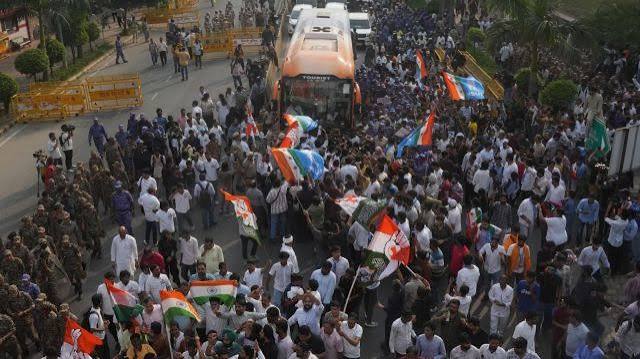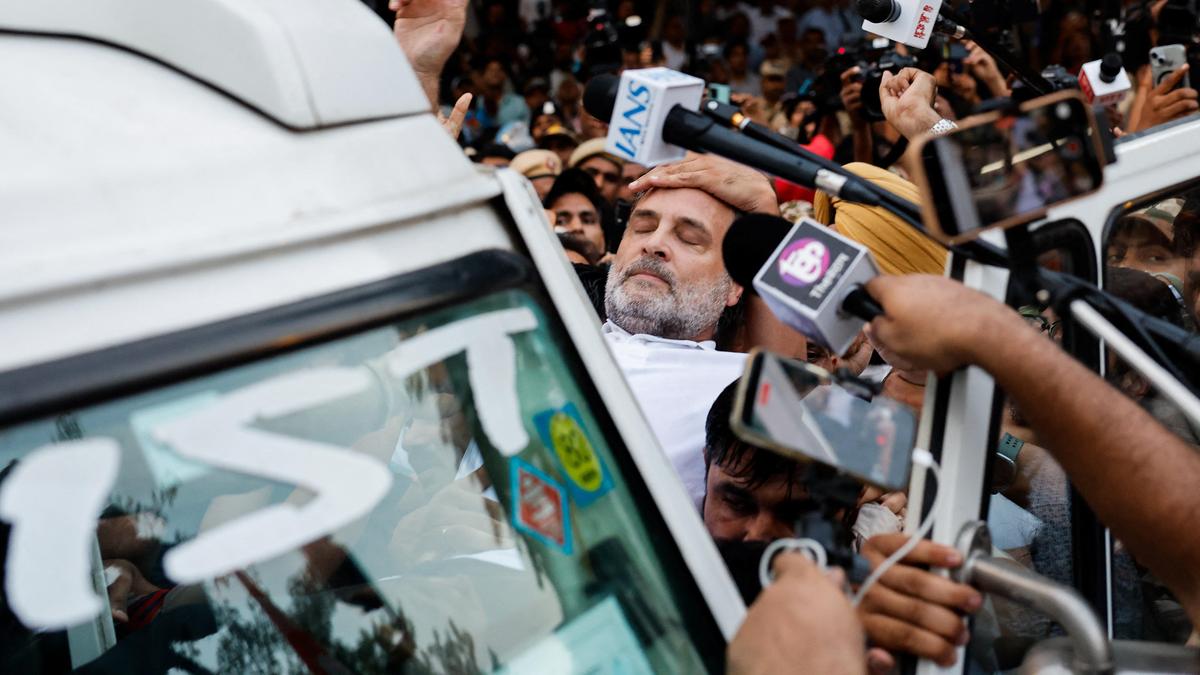
The Supreme Court on Delhi Metro curbs issue came into focus on October 9, 2026, after the top court questioned extensive restrictions imposed on public transport in Delhi ahead of the Cockroach Janta Party (CJP) protest scheduled for October 10. The court said authorities could regulate movement for security reasons but should not bring essential transport services to a complete halt, leaving commuters without practical alternatives. It asked the Centre to reconsider restrictions affecting Metro stations, train services and road access to ensure that security measures remained proportionate to the situation.
The hearing focused on the impact of these restrictions on ordinary residents, including office workers, students, elderly passengers and people travelling to Delhi from neighbouring areas such as Gurugram and Greater Noida. The court emphasised that public transport is an essential service for thousands of people who depend on it for daily travel.
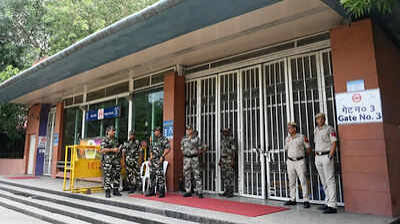
The dispute arose after authorities announced restrictions affecting 57 Metro stations and cancelled several trains ahead of the planned demonstration. The Supreme Court questioned whether such widespread measures were necessary and asked the government to distinguish between regulating transport and shutting it down entirely.
Why Did the Supreme Court Question Delhi Metro Restrictions?
The Supreme Court on Delhi Metro curbs issue came before a bench led by Chief Justice of India Surya Kant, along with Justices Joymalya Bagchi and V Mohana. The court was hearing a petition challenging transport restrictions imposed before the planned CJP demonstration.
The petition was filed by Communist Party of India (Marxist) general secretary MA Baby. Senior advocate and MP Kapil Sibal represented the petitioner and raised concerns about Metro station closures and train cancellations. He argued that the measures were making it difficult for people to move around the national capital despite the protest being described as peaceful by the petitioner’s side.
The court’s concern was not limited to the protest organisers or demonstrators. It focused on the wider effect of the restrictions on commuters who depend on public transport for work, education and other essential activities.
Chief Justice Surya Kant questioned the complete closure of Metro station entrances and asked the Centre to reduce the number of stations affected. The court observed that there was a clear difference between imposing restrictions and prohibiting services entirely.
The bench also highlighted that not every commuter owns a car or has access to private transport. A blanket shutdown could therefore create significant difficulties for people who rely on Metro and railway services to travel across the city.
Supreme Court Says Public Transport Cannot Be Completely Halted
During the hearing, the Supreme Court made clear that security authorities have the power to regulate movement, but that power should not automatically result in the complete suspension of essential transport services.
The court criticised what it viewed as excessive restrictions and said a complete prohibition on Metro and other train movements was not an appropriate response when more limited measures could be considered. It asked the Centre to reassess the notifications and take a proportionate approach.
The bench stressed the difference between restricting movement and completely closing transport services. It indicated that authorities could reduce the frequency of Metro trains if necessary, but should not stop services entirely.
This distinction was central to the court’s observations: security arrangements could be adjusted to manage crowds without depriving the public of access to transport.
The court also raised concerns about road closures and directed that authorities assess which areas genuinely required restrictions and which could remain accessible. The objective was to limit potential security risks while reducing disruption to the wider population.
The court’s remarks underline the importance of proportionality when public authorities impose restrictions that affect large numbers of people. Measures taken for security purposes must also account for the practical consequences for residents and commuters.
Centre Promises to Reconsider Transport Restrictions
Solicitor General Tushar Mehta, appearing for the Centre, told the court that he would consult the government and that proportionate measures would be taken.
Mehta also referred to the previous CJP protest in July and mentioned violence associated with that event as part of the security concerns surrounding the planned demonstration. The government’s position was that precautions were necessary to manage potential risks.
The Supreme Court did not deny the authorities’ ability to take security measures. Instead, it questioned whether closing large numbers of Metro stations and cancelling trains was an excessive response to the anticipated gathering.
In its observations, the bench said the notifications appeared to impose a complete ban on essential public transport. After the court highlighted the distinction between total prohibition and regulated movement, the Solicitor General agreed to ask the authorities to reassess the restrictions.
The assurance marked an important development in the hearing. However, the government still needed to determine the specific changes to transport arrangements and communicate any revised measures to the public.
57 Metro Stations Affected Ahead of the October 10 Protest
Before the Supreme Court’s intervention, authorities had announced restrictions affecting 57 Metro stations in view of the proposed October 10 demonstration and concerns about crowds moving towards sensitive areas.
According to the advisory reported by NDTV, entry and exit gates at the affected stations were scheduled to close from 9 pm on Friday, October 9. Metro trains passing through the affected stations could also operate at reduced frequencies.
The restrictions were intended to help authorities manage crowd movement and maintain security around sensitive locations. However, the scale of the measures prompted questions about their effect on residents who use the Metro as their primary means of transport.
Metro services are an important part of daily travel in Delhi and the surrounding National Capital Region. People commuting from Gurugram, Greater Noida and other parts of the region often rely on the network to reach workplaces, educational institutions, hospitals and commercial areas.
The court’s intervention sought to ensure that security planning did not unnecessarily prevent these commuters from travelling. It asked authorities to consider more targeted measures instead of imposing widespread closures.
Passengers needed clear and timely information about which stations would remain accessible, whether service frequencies would change and how revised arrangements would affect their journeys.
Several Delhi-Bound Trains Also Cancelled
The transport disruption extended beyond the Delhi Metro. The NDTV report said several trains scheduled to arrive at New Delhi and Hazrat Nizamuddin railway stations had been cancelled ahead of the planned protest.
According to the report, a total of 61 Delhi-bound trains were cancelled between Friday, October 9, and Saturday, October 10. These cancellations added to concerns about travel disruption for people arriving in the capital from other cities and states.
The railway restrictions were part of the wider security arrangements announced before the demonstration. However, the Supreme Court’s observations indicated that authorities needed to reconsider whether a complete suspension of certain services was justified.
For passengers, train cancellations can have consequences beyond inconvenience. Travellers may need to change connections, arrange alternative transport, reschedule appointments or find accommodation if their journeys are disrupted.
The court’s focus on public convenience was therefore relevant to both urban commuters and people travelling to Delhi by rail. Its request for proportionate measures placed the emphasis on managing security risks while preserving access to essential transport wherever possible.
Supreme Court Highlights Commuters’ Access to Essential Services
A central aspect of the hearing was the effect of the restrictions on ordinary citizens. The Supreme Court emphasised that young people, elderly passengers and working commuters all depend on transport services.
The bench specifically referred to people travelling into Delhi from Gurugram, Greater Noida, East Delhi and South Delhi for their livelihoods. It said the complete closure of station entrances could affect hundreds and thousands of commuters who had no convenient alternative.
This concern reflects the practical role of public transport in a large metropolitan area. While authorities may need to control access to specific locations during a demonstration, broad restrictions can affect people who have no connection to the protest.
The court’s approach was to distinguish between restrictions aimed at managing a particular risk and measures that prevent people from accessing essential services across a wider area.
The hearing also highlighted the need for coordination between government departments, police and transport authorities. Decisions about station closures, train operations and road access can affect one another, making it important that restrictions are clearly defined and regularly assessed.
Security Concerns Behind the CJP Protest Restrictions
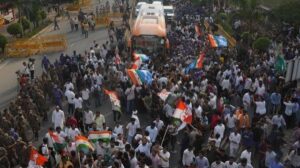
Authorities imposed the restrictions ahead of the Cockroach Janta Party’s planned October 10 protest. The gathering was expected to draw attention to demands concerning Chief Election Commissioner Gyanesh Kumar.
Security concerns included the possibility of crowds moving towards sensitive areas. The government also referred to the previous CJP protest in July while explaining why precautions were being considered.
The planned demonstration came amid a broader dispute over the Election Commission’s voter-verification initiative. Critics have raised concerns about deletions from electoral rolls, while the authorities have defended the verification process. The planned protest was connected to demands for the Chief Election Commissioner’s resignation.
The Supreme Court’s hearing was primarily concerned with the legality and proportionality of restrictions affecting transport and public movement. It did not mean that authorities were prohibited from implementing security arrangements. Rather, the court asked the government to ensure that any restrictions were appropriately targeted.
Balancing public safety with daily life is a recurring challenge during large demonstrations. Authorities must assess potential crowd movement and security risks while also considering how restrictions affect people who need to travel for work, education, medical care and other essential purposes.
Right to Protest and the Need for Lawful Restrictions
The broader legal debate involves two important considerations: the right to peaceful assembly and the responsibility of authorities to maintain public order.
During related proceedings, the Supreme Court stressed that the right to protest must be exercised within the framework of applicable law. The court also sought information about the proposed gathering, including the expected number of participants, to assess how the demonstration could be managed.
These considerations are not necessarily contradictory. Authorities can impose reasonable conditions to maintain safety and public order, while protesters retain rights protected under the law. The challenge is to ensure that restrictions are based on the circumstances and do not unnecessarily interfere with other people’s rights.
In the transport hearing, the court’s focus was on whether the measures imposed on Metro and railway services went too far. Its observations suggested that targeted controls and adjusted service frequencies could be considered instead of complete closures.
The court also indicated that road restrictions should be reviewed in light of local conditions. This approach would allow authorities to concentrate security measures where they are needed while keeping other routes and services available.
What the Supreme Court’s Observations Mean for Delhi Commuters
For commuters, the immediate issue was whether the government would revise its transport restrictions before the planned October 10 protest.
The Solicitor General’s assurance that proportionate measures would be considered offered a path towards reducing the disruption. However, passengers still needed to rely on official announcements from Metro and railway authorities for confirmed information about operational changes.
People planning to travel during the affected period would need to check the latest station advisories, train status updates and traffic notifications before leaving. They could also need to allow extra time for journeys if services were operating at reduced frequencies or alternative routes were crowded.
The Supreme Court’s observations did not mean that all restrictions would automatically disappear. Authorities could continue to impose targeted security measures where required, subject to the applicable directions and revised arrangements.
The central point was that public transport should not be completely halted simply because a protest is planned. The court asked the government to find a balance between preventing disorder and preserving the transport options that residents depend on.
Conclusion
The Supreme Court on Delhi Metro curbs issue arose after extensive restrictions were announced ahead of the Cockroach Janta Party’s planned October 10 protest. The court questioned the closure of 57 Metro stations and the cancellation of Delhi-bound trains, stressing that security measures should not leave ordinary commuters without access to essential transport.
The bench led by Chief Justice Surya Kant asked the Centre to reconsider the restrictions and distinguish between regulating services and prohibiting them entirely. Solicitor General Tushar Mehta assured the court that he would consult the government and that proportionate measures would be considered.
The hearing highlighted the need to balance public safety, peaceful assembly and the daily requirements of residents. While authorities retain the power to manage security risks, the court emphasised that such action should account for the impact on workers, students, elderly passengers and others who depend on public transport.
The final impact on commuters would depend on the revised arrangements announced by the relevant authorities. The case serves as a reminder that security planning in a major city must consider not only the event prompting restrictions but also the wider public’s need to travel and access essential services.