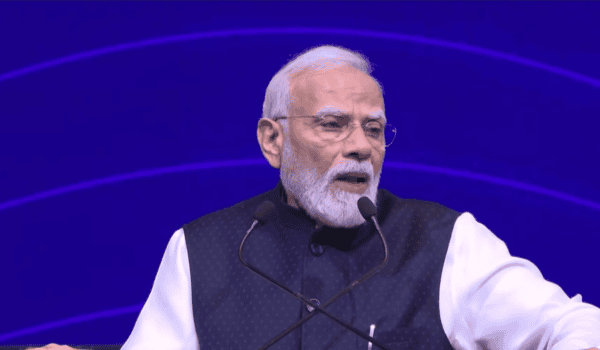
Prime Minister Narendra Modi inaugurated the fifth edition of SEMICON India 2026 at Yashobhoomi in New Delhi on September 17, bringing together global semiconductor companies, policymakers, investors, researchers and technology leaders. The three-day conference and exhibition, running from September 17 to 19, is focused on strengthening India’s semiconductor ecosystem and expanding the country’s role in global chip manufacturing and electronics supply chains.
The theme of SEMICON India 2026 is “Silicon to Systems: Building the Ecosystem,” reflecting India’s effort to develop capabilities across the semiconductor value chain rather than concentrating only on chip manufacturing. The event covers areas including semiconductor fabrication, packaging, equipment, materials, chip design, artificial intelligence, supply chains, research, innovation and workforce development.
The scale of SEMICON India 2026 highlights growing international interest in India’s semiconductor plans. Updated government information ahead of the event said more than 600 companies and representatives from 52 countries were expected to participate. The exhibition also includes dedicated international pavilions representing countries with significant semiconductor capabilities and business interests.
Prime Minister Modi’s participation in SEMICON India 2026 comes as India attempts to position itself as a trusted alternative manufacturing and technology base amid changes in the global semiconductor supply chain. Speaking at the event, Modi said the world needs new and reliable semiconductor manufacturing bases and presented India as ready to play a larger role in meeting that requirement.
The SEMICON India 2026 event also follows a high-level semiconductor CEO roundtable chaired by Modi on September 16. Leaders from major global semiconductor companies participated, including representatives associated with Micron Technology, ASML, Infineon Technologies, Applied Materials, Tokyo Electron, AMD, Intel and Tata Electronics. The discussions focused on India’s semiconductor ecosystem and opportunities for manufacturing, research and investment.
India’s semiconductor programme forms the policy backdrop to SEMICON India 2026. Under the first phase of the Semicon India Programme, the government has approved 12 semiconductor projects. The government has also approved Semicon 2.0, which is intended to build on the first phase and further develop a resilient domestic semiconductor ecosystem.
A key message at SEMICON India 2026 is that India’s semiconductor ambitions are beginning to move from project approvals toward actual production. Government information released before the conference said three of the 12 projects approved under Semicon 1.0 had begun commercial production. Modi similarly highlighted at the inauguration that India’s semiconductor journey is moving from planning and construction toward factory output and commercial manufacturing.
The government is also using SEMICON India 2026 to highlight India’s chip-design capabilities. According to the Ministry of Electronics and Information Technology, advanced design tools have been provided to more than 332 academic institutions and 105 startups, while 24 startups have received approval under the Design Linked Incentive scheme. These programmes are intended to strengthen domestic innovation alongside large-scale semiconductor manufacturing.
The broader objective behind SEMICON India 2026 is to create an ecosystem that extends from semiconductor research and chip design to fabrication, assembly, testing, packaging and electronics products. Developing these interconnected segments is important because semiconductor manufacturing depends on highly specialised equipment, materials, chemicals, engineering expertise and global supply networks.
One of the biggest investment announcements surrounding SEMICON India 2026 came from U.S.-based semiconductor equipment company Applied Materials. The company announced plans to invest $5 billion in India over the next decade, with the investment expected to support research, supply-chain development and workforce expansion. The announcement underlined the growing interest of international semiconductor suppliers in India’s emerging ecosystem.
The investment announcement at SEMICON India 2026 is particularly significant because semiconductor equipment is a critical part of chip production. Building fabrication facilities alone is not enough to establish a complete semiconductor industry; countries also need access to advanced manufacturing equipment, materials, technical expertise and reliable suppliers. India’s strategy is therefore increasingly focused on attracting companies across different parts of the value chain.
Another major focus of SEMICON India 2026 is India’s growing domestic demand for semiconductors. Chips are essential for smartphones, automobiles, telecommunications equipment, data centres, industrial machinery, consumer electronics, defence systems and artificial intelligence infrastructure. Government officials have said India’s semiconductor requirement could rise substantially over the coming years as digitisation and electronics manufacturing expand.
The global environment also makes SEMICON India 2026 particularly important. Demand for advanced chips is rising rapidly because of artificial intelligence and data-centre expansion, while geopolitical tensions have encouraged governments and companies to diversify semiconductor production. Reuters reported that India has committed more than $21 billion in semiconductor incentives as it seeks to attract manufacturing and reduce its dependence on imported chips.
The conference programme at SEMICON India 2026 includes keynote addresses, panel discussions, fireside chats and international roundtables. Sessions cover manufacturing and technology, AI and digital transformation, supply chains, chemicals and materials, sustainability, government policy, product design, startups, talent development and market expansion.
Talent development is another major element of SEMICON India 2026 because semiconductor manufacturing requires highly specialised engineers and technicians. The event includes workforce-development initiatives alongside engagement with academic institutions and students. A dedicated session on women’s leadership in the semiconductor sector is also part of the programme.
Startups are receiving significant attention at SEMICON India 2026 as India attempts to build domestic intellectual property and chip-design expertise. The exhibition includes a Startup Pavilion, innovation showcases, a startup pitch competition and a student hackathon. These programmes are designed to connect emerging companies and young innovators with investors, established semiconductor businesses and policymakers.
International collaboration is another central component of SEMICON India 2026. Semiconductor production is one of the world’s most internationally interconnected industries, with chip design, fabrication, packaging, equipment and materials often located in different countries. India is therefore seeking partnerships with established semiconductor economies while simultaneously developing its own domestic manufacturing capabilities.
The exhibition at SEMICON India 2026 provides companies with opportunities to explore technology partnerships, investments and supply-chain arrangements. The presence of global manufacturers, equipment suppliers, materials companies, Indian electronics businesses, startups and government representatives allows participants to discuss projects across multiple stages of semiconductor production.
India’s semiconductor push has already attracted several major projects, but SEMICON India 2026 comes at a stage when execution is becoming increasingly important. Reuters reported that while some chip-packaging projects have started commercial production, India has yet to begin production from a large-scale semiconductor fabrication facility. Tata Electronics’ planned fabrication project in Gujarat has also faced delays, illustrating the technical and execution challenges involved in developing advanced semiconductor manufacturing capacity.
The transition from announcements to production is therefore a major theme at SEMICON India 2026. Establishing a competitive semiconductor ecosystem requires significant capital investment, highly specialised infrastructure and access to technology and skilled workers. It also requires stable policies because semiconductor factories involve long development cycles and investment commitments that can extend over decades.
Prime Minister Modi has called for greater private-sector involvement in research and development as part of the country’s semiconductor expansion. At SEMICON India 2026, he emphasised the need to strengthen innovation alongside manufacturing, indicating that India’s long-term ambitions extend beyond assembling or packaging chips toward developing intellectual property, research capabilities and advanced technologies.
The introduction of Semicon 2.0 provides another important policy backdrop for SEMICON India 2026. The next phase is intended to build upon projects approved during the first semiconductor programme and strengthen areas needed for a complete ecosystem. The government’s objective is to improve India’s resilience while increasing its competitiveness within global semiconductor supply chains.
The SEMICON India 2026 conference also provides state governments with an opportunity to attract semiconductor investments. Multiple state pavilions are part of the exhibition, allowing states to present their infrastructure, industrial policies and investment incentives to companies considering manufacturing, research or supply-chain operations in India.
The international participation at SEMICON India 2026 reflects the global nature of India’s ambitions. Rather than attempting to create an isolated domestic semiconductor industry, the strategy is focused on integrating India into international supply chains while building more manufacturing, design and research capabilities within the country. SEMI has said India’s opportunity is not merely to participate in the global supply chain but to become an integral part of it.
For India’s electronics sector, the outcome of SEMICON India 2026 could have implications well beyond semiconductor companies. A stronger domestic chip ecosystem could support industries including smartphones, automobiles, telecommunications, consumer electronics, industrial automation and artificial intelligence hardware. It could also create opportunities for suppliers involved in chemicals, gases, materials, precision equipment and engineering services.
The conference comes as global chipmakers increasingly evaluate manufacturing locations outside traditional semiconductor centres. The combination of AI-driven demand and geopolitical concerns has encouraged companies to diversify production and supply chains. SEMICON India 2026 gives India an opportunity to present its domestic market, engineering workforce and government incentives to companies considering such diversification.
At the same time, the country’s semiconductor ambitions face substantial challenges. Advanced chip manufacturing requires enormous investment, technical expertise and consistent execution. India’s progress will ultimately depend not only on investment announcements made around SEMICON India 2026, but also on whether approved projects enter production, domestic suppliers develop successfully and the country builds the skilled workforce required by the industry.
The fifth edition of SEMICON India 2026 therefore represents an important stage in India’s semiconductor strategy. With global companies, government representatives, researchers, startups and investors gathering at Yashobhoomi from September 17 to 19, the event is designed to turn policy ambitions into partnerships, investments and technology collaboration.
Overall, SEMICON India 2026 highlights India’s attempt to move from being primarily a major consumer of semiconductors toward becoming an important participant in their design, manufacturing and supply chain. Prime Minister Modi’s inauguration, the participation of hundreds of global companies and new investment announcements demonstrate growing interest in India’s chip ambitions. The longer-term test will be how quickly these investments and approved projects translate into competitive manufacturing, innovation and commercial production.