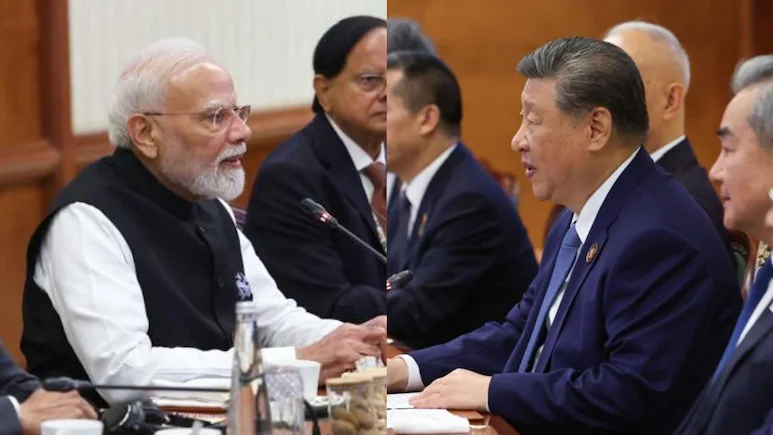
The PM Modi Xi Jinping Meeting in New Delhi on September 12, 2026, brought renewed attention to the future of India-China relations as the two leaders held bilateral talks on the sidelines of the BRICS Summit. Chinese President Xi Jinping, visiting India for the first time in seven years, said the two countries can learn from each other’s strengths, support one another and work toward common development. Prime Minister Narendra Modi, meanwhile, stressed that peace and tranquillity along the border are essential for continued progress in bilateral relations.
The PM Modi Xi Jinping Meeting took place at a significant moment as India hosted the 18th BRICS Summit in New Delhi. Xi’s visit comes amid efforts by both countries to stabilise relations following years of tensions along the Line of Actual Control. The two sides have maintained diplomatic engagement while continuing discussions on border-related issues, trade, investment and other areas of bilateral cooperation.
During the PM Modi Xi Jinping Meeting, Xi Jinping adopted a long-term approach to India-China relations and said China has consistently viewed its relationship with India from a strategic perspective. He noted that although the two countries have different national conditions, they can learn from each other and support each other in achieving common development. His remarks indicated Beijing’s interest in keeping bilateral relations on a stable path while expanding areas of cooperation.
The PM Modi Xi Jinping Meeting also placed the border issue prominently on the agenda. Prime Minister Modi underlined that peace and tranquillity in border areas remain an essential foundation for the continued development of bilateral ties. According to the Ministry of External Affairs, Modi emphasised the importance of both sides observing existing agreements and understandings related to border management.
The PM Modi Xi Jinping Meeting comes after a period in which India and China have taken steps toward reducing tensions along their disputed border. The two countries have previously worked through diplomatic and military channels to manage differences, with the broader objective of preventing border disagreements from disrupting the overall relationship. Modi reiterated the principle that differences should not become disputes and highlighted mutual respect, mutual sensitivity and mutual interest as guiding principles.
Trade and investment were also important components of the PM Modi Xi Jinping Meeting. India and China have extensive economic links, although their trade relationship has long been marked by concerns over imbalance and market access. Discussions between the two leaders therefore have potential significance for businesses in both countries, particularly as New Delhi and Beijing look for ways to manage differences while maintaining economic engagement.
The PM Modi Xi Jinping Meeting was particularly notable because Xi said the two leaders had met 21 times over the years and had reached a series of important understandings that helped guide bilateral relations toward steady development. His reference to the history of leader-level engagement reflected the importance Beijing places on direct communication between the two governments.
For India, the PM Modi Xi Jinping Meeting offered an opportunity to reinforce New Delhi’s position that stable border conditions are necessary for broader cooperation. India has consistently maintained that peace along the border is central to improving bilateral relations. By raising the issue directly during the meeting, Modi linked progress on the boundary question with the wider development of India-China ties.
The PM Modi Xi Jinping Meeting also carried significance for BRICS. China is scheduled to take over the BRICS chairmanship next year and host the 19th BRICS Summit. Xi said China would use the opportunity to build consensus and work with member countries to plan the future of the grouping, describing the next phase as an opportunity to advance BRICS cooperation.
The PM Modi Xi Jinping Meeting therefore had both bilateral and multilateral dimensions. While Modi and Xi discussed India-China relations, their engagement also took place within a larger BRICS framework involving major emerging economies. India has used its BRICS chairmanship to emphasise resilience, innovation, cooperation and sustainability, while seeking greater representation for the Global South in international decision-making.
The PM Modi Xi Jinping Meeting was also important because it followed the adoption of the New Delhi Declaration at the BRICS Summit. The declaration addressed several global issues, including conflicts in West Asia, attacks on civilian infrastructure and the need for humanitarian access. China also indicated that it would work with BRICS members on efforts related to peace and stability in the Middle East.
The PM Modi Xi Jinping Meeting highlighted how India and China can cooperate on certain global and multilateral issues even while disagreements remain between them. Both countries are major members of the Global South and have significant roles in international institutions and economic groupings. Xi argued that India and China have responsibilities toward global development and should work together to contribute to world peace and stability.
The PM Modi Xi Jinping Meeting also reflected a gradual effort to rebuild confidence between the two sides. Relations had deteriorated sharply after the 2020 border crisis, and restoring trust has remained a complicated process. While recent diplomatic contacts have helped create space for engagement, the border question continues to be one of the most sensitive aspects of the relationship.
For India, the PM Modi Xi Jinping Meeting also demonstrated the importance of maintaining strategic autonomy in a changing international environment. New Delhi maintains partnerships with the United States, Europe, Russia and other major powers while simultaneously engaging China through bilateral and multilateral platforms. The presence of Modi, Xi and Russian President Vladimir Putin at the BRICS Summit has attracted particular attention because of the strategic importance of the three countries.
The PM Modi Xi Jinping Meeting may also influence economic discussions between the two countries. India wants greater access to Chinese markets and continues to monitor issues involving trade imbalance, investment and supply chains. At the same time, Chinese companies and policymakers have an interest in maintaining access to one of the world’s fastest-growing major economies. Improved political communication could potentially create a more stable environment for economic discussions, although significant differences remain.
The PM Modi Xi Jinping Meeting was not presented as a resolution of all outstanding disputes. Instead, the statements from both leaders suggested an emphasis on managing differences, maintaining communication and identifying areas where cooperation is possible. The Indian side stressed the need to preserve peace at the border, while Xi emphasised long-term strategic relations and common development.
The PM Modi Xi Jinping Meeting is also significant because Xi’s visit represents his first trip to India in seven years. His arrival in New Delhi for the BRICS Summit therefore carries diplomatic symbolism beyond the bilateral meeting itself. It provides both governments with an opportunity to demonstrate that dialogue between the two Asian powers remains possible despite their unresolved differences.
The PM Modi Xi Jinping Meeting could also shape the diplomatic environment in the months ahead. If border stability continues and military tensions remain contained, India and China may have greater space to focus on trade, investment, technology, people-to-people exchanges and multilateral cooperation. However, progress will depend on how effectively the two sides address their differences and implement commitments reached through diplomatic channels.
The PM Modi Xi Jinping Meeting also highlighted the importance of the three principles identified by Prime Minister Modi: mutual respect, mutual sensitivity and mutual interest. These principles provide a framework through which India wants to manage its relationship with China while protecting its own strategic and security interests. The Indian government has stressed that normalisation of broader relations requires continued peace and stability along the border.
The PM Modi Xi Jinping Meeting could have wider implications for the Global South as well. India and China are among the world’s largest developing economies and major members of BRICS. Their ability to cooperate on economic development, international governance and multilateral reforms could influence discussions about how emerging economies participate in global decision-making. Xi specifically referred to the responsibilities shared by India and China as major Global South countries.
The PM Modi Xi Jinping Meeting therefore represents an important diplomatic engagement rather than simply another summit-level interaction. It combines discussions about the sensitive India-China border with broader questions involving trade, investment, BRICS cooperation and the changing global order. Both sides appear interested in keeping communication channels open while protecting their respective national interests.
The outcome of the PM Modi Xi Jinping Meeting will be closely watched for signs of whether the recent improvement in India-China relations can develop into a more durable phase of engagement. The emphasis on border peace, mutual understanding and long-term development provides a framework for continued talks, but the implementation of agreements and progress on unresolved issues will determine how far the relationship can move forward.
The PM Modi Xi Jinping Meeting ultimately showed that India and China are seeking to manage their differences while exploring opportunities for cooperation. Modi’s emphasis on peace along the border and Xi’s message about learning from each other’s strengths point toward a cautious effort to stabilise relations. With China preparing to take over the BRICS chairmanship in 2027, the two countries are likely to remain important partners and competitors within an increasingly complex global environment.