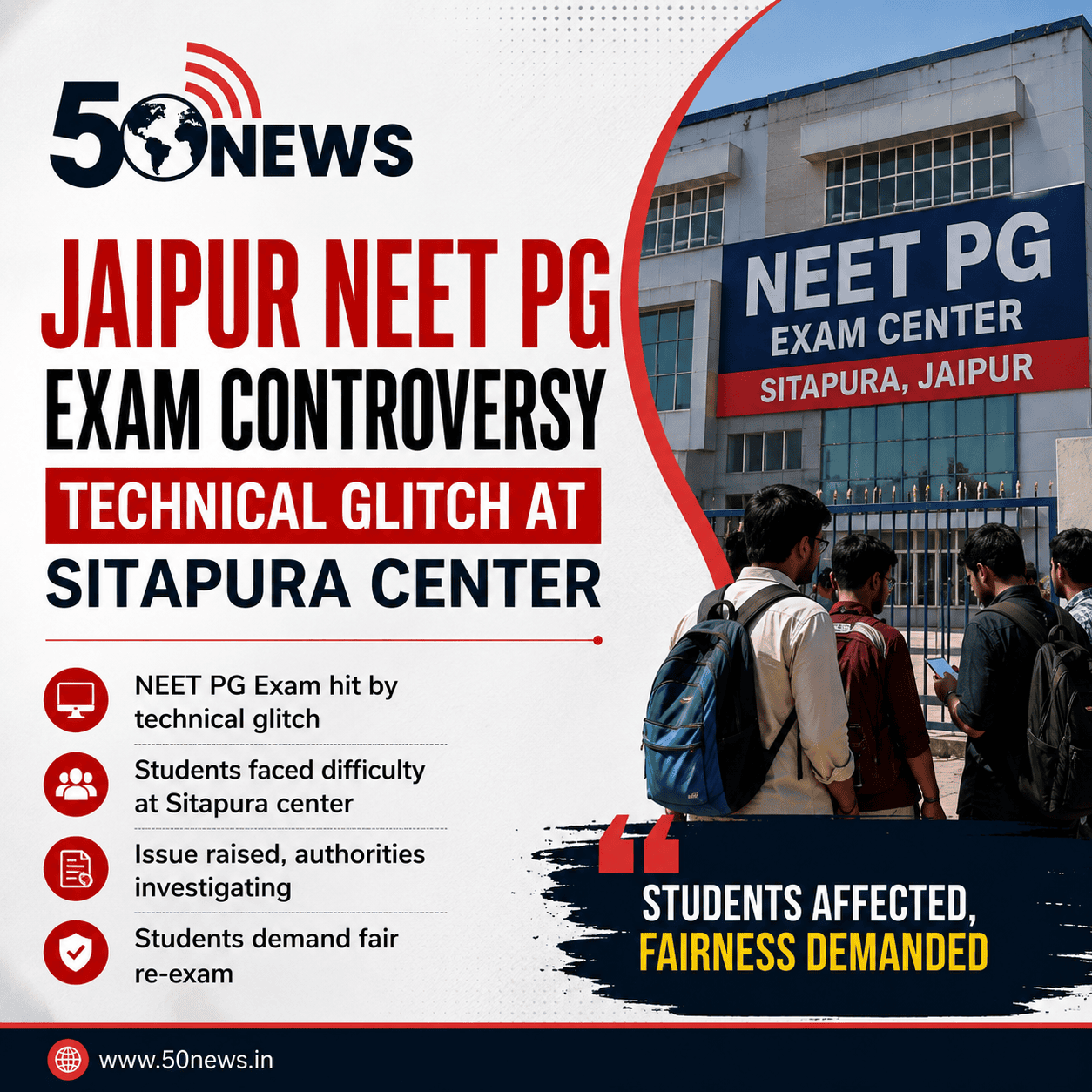
The NEET PG 2026 examination in Jaipur was disrupted on Sunday after technical problems affected candidates at a test centre in the Sitapura area. The computer-based examination, which was scheduled to begin in the morning, faced repeated interruptions and created considerable confusion among medical aspirants.
The incident took place at the iON Digital Zone examination centre in Sitapura, where a large number of candidates had gathered to appear for the postgraduate medical entrance examination.
Candidates had arrived at the centre after months of preparation, with many travelling from different parts of Rajasthan and other states. The technical problems at the centre therefore caused considerable anxiety, particularly because NEET PG is an important examination that determines admission opportunities for postgraduate medical courses.
The examination was scheduled to be conducted from 9 am to 12 noon. However, candidates at the affected centre faced problems with the computer systems and power supply around the scheduled examination time.
Initial reports indicated that a power-related technical fault prevented the examination from starting normally. As the situation continued, candidates were left waiting at the centre while officials attempted to resolve the problem.
The disruption later involved repeated server-related problems. Candidates reported that the server became unstable multiple times after the examination process began or was being attempted.
According to reports from the centre, the server problem occurred two to three times within approximately an hour. The repeated technical failures increased frustration among the candidates, who were concerned that interruptions could affect their performance in an examination where every minute matters.
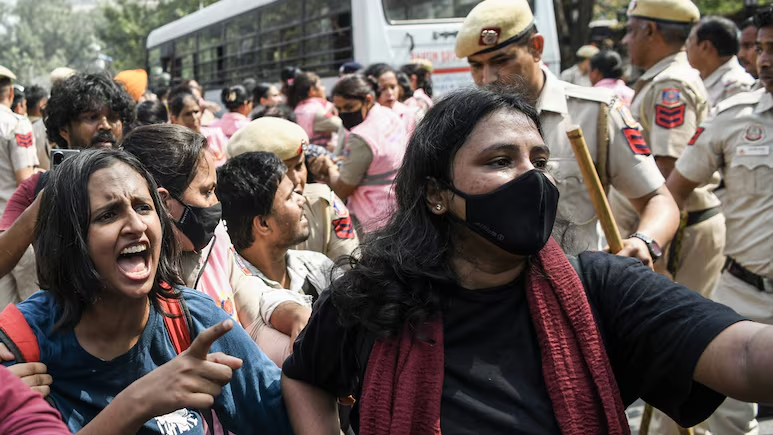
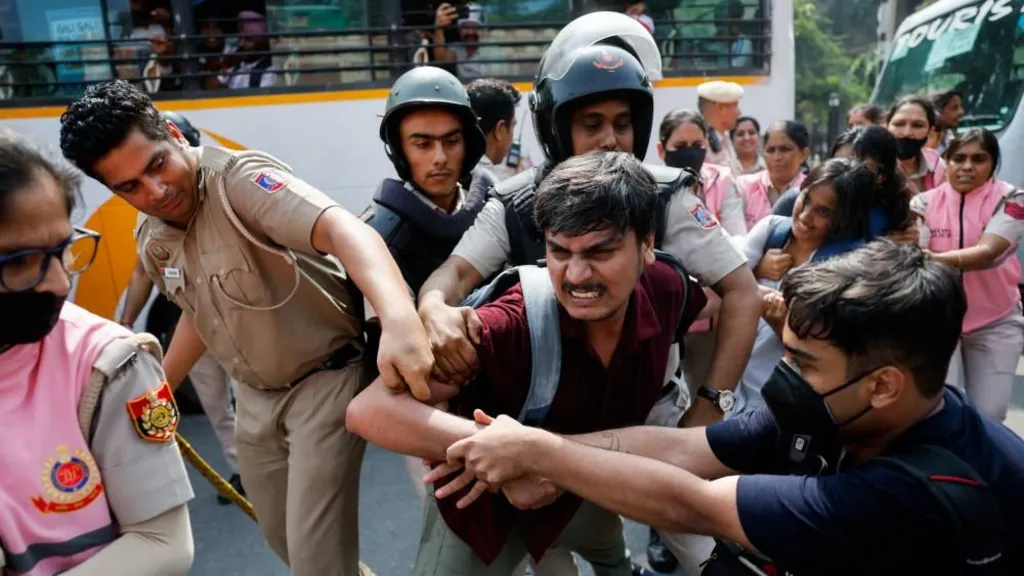
The situation eventually led to protests by candidates outside the examination area. A number of medical aspirants reportedly came out of the examination rooms and expressed anger over the disruption.
Candidates questioned the technical preparedness of the examination centre and demanded clarity about what would happen to their examination. They were particularly concerned about whether the time lost because of the technical problems would be compensated.
The administration was informed about the situation, and officials were sent to the centre to assess the circumstances and communicate with the candidates.
Police personnel were also present at the location as the number of protesting candidates increased. Officials attempted to maintain order while candidates waited for a clear decision regarding the examination.
The incident attracted attention because NEET PG 2026 was being conducted across the country on the same day. Thousands of medical graduates were appearing for the examination as part of the admission process for postgraduate medical programmes.
The examination is conducted by the National Board of Examinations in Medical Sciences. This year’s examination was being held in a single shift at examination centres across multiple cities.
The board had already issued instructions concerning technical disruptions before the examination. According to the examination guidelines, candidates should not lose their allotted examination time because of technical issues.
In the event of a power failure after candidates have logged into the examination system, the examination timer is designed to stop and resume once the technical problem is resolved.
Similarly, if a candidate’s computer becomes disconnected from the primary server, examination officials are required to follow procedures to restore access and continue the examination from the point where it was interrupted.
These provisions are particularly important in a computer-based examination such as NEET PG because candidates are required to complete the paper within a fixed period.
Even a short disruption can create stress for a candidate, especially when the examination involves a large number of questions and requires careful time management.
At the Jaipur centre, however, candidates said the repeated technical problems created uncertainty about whether the examination could continue normally.
The situation became more serious because the problem was not limited to an individual computer. Reports from the centre indicated that multiple candidates were affected by the technical disruption.
The size of the affected group also increased concerns about whether the centre’s technical infrastructure was capable of supporting the examination without interruptions.
Jaipur had several NEET PG examination centres on Sunday, and thousands of candidates were appearing across the city. The Sitapura centre was among the locations where the technical disruption was reported.
Reports indicated that hundreds of candidates were affected at the particular centre, while other reports put the number of candidates at the centre much higher. The exact number affected by the disruption is expected to be clarified through official records.
For candidates who had prepared for the examination for months, the disruption was particularly frustrating. NEET PG is highly competitive, and candidates generally rely on a carefully planned strategy to manage the examination within the allotted time.
Any unexpected interruption can affect concentration and create anxiety, even when the examination timer is eventually adjusted.
The candidates therefore demanded that the authorities ensure a fair solution for everyone affected by the disruption.
The central issue was not only the technical failure but also the uncertainty surrounding the next step. Candidates wanted to know whether they would be allowed to continue the examination, whether their examination would be postponed or whether another arrangement would be made.
As the situation developed, authorities began assessing the technical problems at the centre.
The National Board of Examinations in Medical Sciences subsequently announced an important decision concerning the affected Jaipur centre.
The NEET PG 2026 examination for candidates allotted to the iON Digital Zone Sitapura centre has been rescheduled to September 5.
The decision was taken after the disruption caused by the power-related problem at the centre. The rescheduling is intended to ensure that the affected candidates receive an opportunity to take the examination under proper and uninterrupted conditions.
This decision provides clarity to candidates who were unable to complete the examination normally because of the disruption.
The rescheduling also means that candidates assigned to the affected centre will now have to appear on the revised date rather than being required to continue under compromised conditions.
For the candidates, the new date provides an opportunity to prepare again, although the sudden change may also create additional stress after they had already prepared for the original examination day.
The authorities will now be expected to ensure that the technical infrastructure at the centre is thoroughly checked before the rescheduled examination.
Reliable power supply, backup systems, server connectivity and examination computers will be particularly important when the candidates return for the test.
The incident has also raised broader questions about preparedness at computer-based examination centres.
Large national-level examinations require extensive technical infrastructure because hundreds of candidates may be using computer systems simultaneously. Even a relatively small technical failure can affect a large number of students when it occurs at a major examination centre.
Power backup is especially important. Examination centres generally require uninterrupted electricity because computer systems, networking equipment, servers and other security infrastructure depend on continuous power.
A technical failure during an important examination can have consequences beyond simple inconvenience. Candidates may experience stress, lose concentration or become concerned about whether their examination responses have been saved properly.
For this reason, examination authorities generally maintain backup systems and protocols for handling technical disruptions.
The Jaipur incident has placed renewed attention on whether those systems worked effectively at the affected centre.
Candidates have also raised questions about communication during the disruption. When an examination does not begin at the scheduled time, students need timely and clear information from the authorities.
Lack of information can increase confusion, particularly when hundreds of candidates are waiting inside an examination centre without knowing whether the examination will begin or be postponed.
The authorities now have an opportunity to address those concerns before the September 5 examination.
The technical infrastructure at the Sitapura centre will need to be tested thoroughly, and backup arrangements should be checked to prevent a repeat of the incident.
The examination authorities will also need to communicate the revised schedule clearly to all affected candidates.
Candidates should rely on official communication regarding the rescheduled examination rather than social media messages or unverified information circulating online.
The NEET PG examination is a major step for medical graduates seeking admission to postgraduate courses. The competition is intense, and the outcome can significantly influence the next stage of a candidate’s medical career.
This is why fairness and uniform examination conditions are particularly important.
Candidates appearing at different centres should ideally have comparable examination conditions, including reliable technical infrastructure and uninterrupted access to the examination.
When a technical failure occurs at one centre, authorities must take steps to ensure that affected candidates are not placed at a disadvantage compared with candidates who completed their examination without disruption.
The decision to reschedule the examination at the Jaipur centre is therefore significant because it provides affected candidates with another opportunity under controlled conditions.
The episode also serves as a reminder of the importance of contingency planning for large-scale computer-based examinations.
Technical problems cannot always be eliminated completely, but examination authorities can reduce their impact through adequate backup power, redundant network systems, trained technical staff and clear emergency procedures.
The incident at Sitapura has also created concern among candidates about whether similar problems could occur during future examinations.
Ensuring that the September 5 examination proceeds smoothly will therefore be important for restoring confidence among the affected candidates.
For now, the immediate issue has been addressed through the rescheduling decision. Candidates assigned to the Sitapura centre will have to appear for the NEET PG examination on September 5 according to the revised arrangements announced by the examination authorities.
The candidates will also need to keep track of official instructions regarding reporting time, examination requirements and any other changes associated with the rescheduled test.
The Jaipur incident has highlighted how dependent modern entrance examinations are on technology. While computer-based testing can make examination management more efficient, it also creates a strong dependence on electricity, servers, networks and computer systems.
A failure in any one of these areas can disrupt the examination experience for hundreds of candidates.
The situation at the Sitapura centre eventually escalated into a protest because candidates were worried about the impact of the disruption on their examination.
With the rescheduling decision now in place, attention will shift toward preparations for the revised examination date.
The authorities will need to ensure that the centre is technically ready and that candidates are given a smooth and transparent examination experience.
For the affected medical aspirants, the next few days will involve preparing once again for an examination they had already attempted or expected to take on August 30.
Despite the frustration caused by the disruption, the revised examination provides candidates with another opportunity to compete under proper conditions.
The NEET PG 2026 disruption in Jaipur has therefore become a significant examination-management issue. What began as a technical and power-related problem at the Sitapura centre resulted in candidate protests and ultimately led to the examination being rescheduled for the affected candidates.
The episode has also underlined the importance of reliable infrastructure and effective communication during high-stakes examinations.
With September 5 now set as the revised examination date for candidates allotted to the affected Sitapura centre, the focus will be on ensuring that the technical problems are fully resolved before the candidates return.
For the medical aspirants who spent months preparing for NEET PG, the expectation will be simple: a fair, uninterrupted and properly managed examination where their performance is determined by their preparation rather than by technical problems at the examination centre.