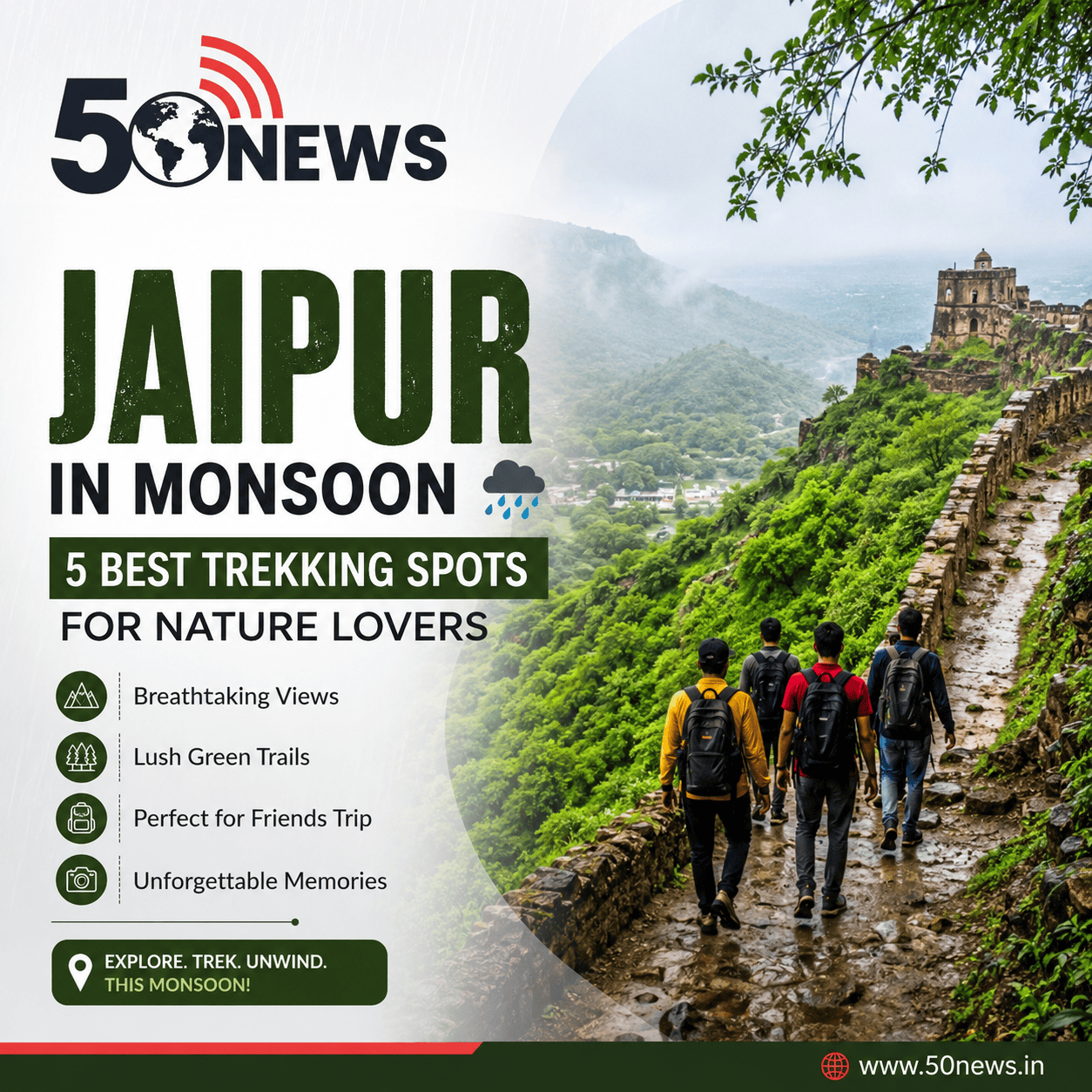
Jaipur may be known for its forts, palaces and colourful markets, but the monsoon season reveals a very different side of the Pink City. As rain reaches the Aravalli hills surrounding Jaipur, the dry landscape turns greener, seasonal streams become active and several trekking routes become especially attractive for nature lovers.
For people looking for a short escape from the city, the rainy season can be a good time to explore Jaipur’s surrounding hills and forest areas. The combination of greenery, cool winds, cloudy skies and rocky trails creates a different experience from the usual sightseeing around the city.
The Jaipur region has several locations recognised for their natural and trekking potential. The Jaipur Development Authority’s planning documents identify areas such as Galta Forest, Jhalana Hills, Nahargarh and Jamwa Ramgarh among potential ecotourism locations, with features including forests, hills, trekking routes and scenic landscapes.
Nahargarh is one of the most accessible options for people who want to combine trekking with sightseeing. The hills around Nahargarh become noticeably greener during the monsoon, and the elevated location provides wide views of Jaipur.
The route around Nahargarh can be particularly enjoyable after light rainfall, when the surrounding Aravalli landscape is covered with fresh vegetation. The combination of hills, forest patches and the historic fort gives visitors the opportunity to experience both nature and heritage during the same outing.
However, wet trails can become slippery, particularly on rocky sections. Visitors should avoid rushing on steep stretches and should wear footwear that provides sufficient grip.
Hathni Kund is another destination that attracts considerable attention during the rainy season. Located in the Aravalli hills near the Charan Mandir area, the route becomes more scenic when seasonal water begins flowing through the rocky landscape.
During a good monsoon spell, the area can develop temporary waterfalls and streams. The surrounding hills also become greener, making the trail popular among photographers, trekkers and groups of friends looking for a short outdoor trip.
The journey to Hathni Kund is part of the experience. The trail passes through rocky terrain and forested sections before reaching the water-filled area. The landscape can look dramatically different during the monsoon compared with the dry summer months.
Visitors should nevertheless be careful around flowing water. A stream that appears shallow or calm can become dangerous after heavy rainfall, particularly when water levels rise suddenly upstream.
Galta Forest is another natural area within the Jaipur region where visitors can experience trekking routes surrounded by hills and vegetation. The area is also associated with the historic Galta Ji temple complex, making it an interesting combination of spirituality, nature and outdoor activity.
The hills around Galta can become particularly attractive during the monsoon. Fresh vegetation covers the slopes, while rainwater flows through parts of the surrounding terrain.
People visiting the area should remain on known routes and avoid entering isolated sections of the forest without adequate knowledge of the terrain. Monsoon conditions can change the appearance and accessibility of trails.
Jhalana Hills also offer an opportunity to experience Jaipur’s natural landscape without travelling far outside the city. The area is known for its forest vegetation, wildlife habitat and trekking routes.
The proximity of Jhalana to the city makes it convenient for people who want to spend a few hours outdoors rather than planning a full-day trip. The monsoon season can make the forest landscape more attractive as vegetation becomes greener.
However, Jhalana is also a wildlife-sensitive area. Visitors should follow official rules and avoid wandering into restricted areas or attempting to explore wildlife habitats independently.
Another option around Jaipur is the Jamwa Ramgarh region, where the hills and forest landscape provide opportunities for nature walks and outdoor exploration. The area offers a quieter experience compared with some of Jaipur’s more popular tourist attractions.
The hills around Jamwa Ramgarh can become particularly scenic after rainfall. Clouds over the Aravallis, green slopes and fresh air can make the area appealing for photography and short trips with friends.
For visitors planning a monsoon trekking trip, weather conditions should be the first consideration. Rain can make an otherwise easy trail considerably more difficult.
Rocky paths become slippery when wet, while mud can make uphill and downhill movement challenging. Sudden rainfall can also increase water flow in streams and low-lying areas.
For this reason, trekkers should check the weather forecast before leaving and avoid heading into remote trails when heavy rain is expected.
Starting early in the day can also make a difference. Morning conditions are generally more comfortable for outdoor activity, and trekkers have more daylight available if the route takes longer than expected.
Good footwear is essential. Regular casual shoes may not provide enough grip on wet rocks and muddy trails. Trekking shoes or sturdy sports shoes with a reliable sole are a better choice.
Carrying drinking water is equally important. Even when temperatures are lower during the monsoon, trekking can still require physical effort and cause dehydration.
A lightweight rain jacket or waterproof layer can also be useful because weather around the Aravalli hills can change quickly.
People planning to take cameras or mobile phones for photography should protect their devices from rain and moisture. Monsoon landscapes can provide excellent photography opportunities, but electronic equipment can be damaged if exposed to water.
The biggest attraction of Jaipur’s monsoon trekking routes is the transformation of the landscape. During the hottest months, the Aravalli hills around Jaipur can appear dry and brown. After regular rainfall, the same hills can become covered with fresh green vegetation.
Seasonal waterfalls and streams add another dimension to the experience. Some routes that appear relatively ordinary during dry weather can become much more scenic after several days of rain.
This is also why many local residents prefer short monsoon outings with friends. Instead of travelling several hours to another city, they can explore the natural areas around Jaipur and return home the same day.
Photography is another reason these locations become popular during the rainy season. Cloudy skies, mist around the hills, wet rocks and greenery can create striking backgrounds for photographs.
However, visitors should avoid standing close to unstable edges or waterfalls simply to take pictures. Wet rocks can be extremely slippery, and a photograph is never worth taking an unnecessary risk.
The monsoon also brings more activity to the natural environment. Birds, insects and other wildlife become easier to notice in green forest areas.
Visitors should observe wildlife from a safe distance and avoid feeding animals or disturbing their natural surroundings.
The same principle applies to litter. Plastic bottles, food packaging and other waste can damage these natural areas and create problems for wildlife.
People visiting Jaipur’s trekking destinations should carry their waste back with them and use designated disposal facilities wherever available.
For beginners, it is better to start with a familiar and relatively accessible trail rather than choosing a difficult or isolated route. Experienced trekkers can explore more challenging terrain, but even they should avoid taking unnecessary risks during heavy rainfall.
Going with friends is also safer than trekking alone, particularly when exploring less-developed trails around the hills.
A basic first-aid kit can be useful for longer walks. Minor injuries such as scratches, slips or blisters can happen during trekking, especially on rocky terrain.
Mobile phone connectivity should not be taken for granted in every forest or hill section. Visitors heading toward less-developed areas should inform someone about their plans and avoid entering unfamiliar routes without adequate preparation.
The monsoon season can also bring leeches, insects and muddy trails in forested areas. Wearing suitable clothing and checking shoes and clothing after the trek can help avoid discomfort.
For families and casual visitors, destinations with shorter trails and easier access are generally more suitable. More challenging routes should be chosen according to fitness level and current weather conditions.
One of the advantages of exploring Jaipur during the monsoon is that visitors do not always need an elaborate travel plan. A half-day outing can be enough to experience the changing landscape.
A morning trek followed by a visit to a nearby temple or heritage location can make for a complete weekend plan. Friends can also combine trekking with photography and a simple meal at a safe and permitted location.
The key is to respect the environment and avoid turning natural areas into crowded picnic spots that generate waste or disturb local wildlife.
Jaipur’s surrounding hills are part of the larger Aravalli landscape, one of India’s oldest mountain systems. The natural terrain around the city plays an important role in its ecological character and provides habitat for a variety of plants and animals.
The monsoon highlights this natural side of Jaipur. While tourists often associate the city with its royal architecture, the rainy season demonstrates that the region also has significant opportunities for nature-based recreation.
For people planning a weekend outing in the coming days, places such as Nahargarh, Hathni Kund, Galta Forest, Jhalana Hills and Jamwa Ramgarh can offer different types of outdoor experiences.
The choice of destination should depend on weather conditions, trekking experience and the accessibility of the route.
Above all, visitors should remember that monsoon trekking requires caution. Heavy rainfall can change trail conditions within minutes, and water levels in streams can rise unexpectedly.
Checking local weather updates, avoiding dangerous water crossings, staying on known trails and travelling with companions are simple precautions that can make the experience safer.
Jaipur’s monsoon season offers a temporary transformation of the city’s surrounding landscape. The Aravalli hills become greener, forest trails become more atmospheric and seasonal waterfalls appear in areas that remain mostly dry during other parts of the year.
For those who want to experience a different side of the Pink City, a carefully planned monsoon trek can be an enjoyable way to spend a weekend. With proper preparation and respect for the natural environment, Jaipur’s hills and forests can provide a refreshing escape from the city’s busy streets.