
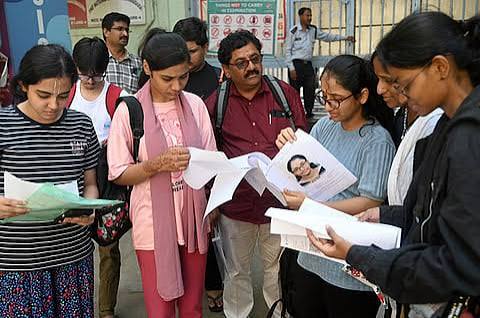
The NEET Computer Based Test transition is set to become one of the biggest changes in India’s medical entrance examination system, with National Testing Agency Director General Abhishek Singh saying that NEET will move from the existing pen-and-paper format to a computer-based system “very soon.” The announcement comes as the NTA continues to strengthen examination security and modernise the way high-stakes tests are conducted across the country.
The NEET Computer Based Test plan has been under consideration for several months, but the latest statement from the NTA chief indicates that the transition is now moving closer to implementation. Speaking to news agency ANI, Abhishek Singh said that almost all major examinations conducted by the NTA are already computer-based, with NEET being the major exception. He described computer-based testing as the future of the examination system.
Under the proposed NEET Computer Based Test system, candidates would answer questions on computers at authorised examination centres instead of marking responses on physical OMR sheets. The shift is expected to require a major expansion of testing infrastructure across the country because NEET is one of India’s largest entrance examinations, with candidates appearing from almost every state and Union territory.
The move toward a NEET Computer Based Test format is also connected with concerns surrounding examination security. NEET has faced serious controversies over examination integrity in recent years, including allegations of paper leaks and malpractice. Authorities have therefore been examining technological solutions that could reduce vulnerabilities associated with printing, transporting and distributing physical question papers.
The NTA has previously told the Supreme Court that NEET-UG would move to computer-based testing from the next examination cycle. In an affidavit submitted in May 2026, the agency said a high-level committee of experts had recommended shifting NEET from pen-and-paper mode to CBT, along with possible multi-session and multi-stage testing.
The NEET Computer Based Test transition was also announced by Union Education Minister Dharmendra Pradhan in May, when he said that NEET would be conducted in CBT mode from the following year. The 2026 re-examination, however, was conducted using the existing pen-and-paper format. This means that the transition is primarily relevant to the next examination cycle and not to the completed NEET-UG 2026 examination.
The latest comments from the NTA director general suggest that preparation for the NEET Computer Based Test involves more than simply installing computers at examination centres. Singh said that infrastructure needs to be augmented and appropriate safeguards need to be built before the system can be implemented at such a large scale. This indicates that the agency is focusing on both technology and security before making the transition.
One of the biggest advantages expected from the NEET Computer Based Test is improved control over the examination process. Digital delivery can reduce the number of physical question-paper handling stages and potentially minimise opportunities for unauthorised access. The NTA has long identified computer-based examinations as a way to reduce risks associated with paper leakage and post-examination manipulation.
The NEET Computer Based Test could also reduce some of the logistical challenges associated with conducting a single-day examination for a very large number of candidates. Printing and securely transporting millions of question papers, maintaining multiple language versions and ensuring that papers reach every centre under strict security protocols require extensive coordination. A properly designed digital system could streamline several of these processes.
However, moving NEET to a NEET Computer Based Test format also presents major challenges. The examination is considerably larger than many other NTA-administered tests, and ensuring that every candidate has access to a reliable computer, stable power supply and secure testing environment will require extensive planning. Rural and remote areas may require additional infrastructure to ensure that students are not disadvantaged because of differences in access to technology.
Another important issue for the NEET Computer Based Test will be maintaining fairness across multiple examination sessions. If millions of candidates cannot be accommodated in a single session, the examination may need to be conducted in multiple shifts. That creates the challenge of ensuring that different question papers are comparable in difficulty. This is one reason why expert committees have discussed multi-session testing and other mechanisms for maintaining fairness.
The possibility of multiple sessions makes the NEET Computer Based Test different from the existing NEET model. Under the current system, candidates generally appear for the examination on the same day and in a common shift. A digital examination could provide greater flexibility, but it would require sophisticated question banks, standardised difficulty assessment and statistical methods to ensure that candidates across different sessions are treated fairly.
The NEET Computer Based Test may also bring changes to the way question papers are delivered. Earlier proposals have included secure digital delivery of questions to examination centres rather than the traditional system of transporting printed papers. Such a system could reduce the number of people who physically handle question papers before the examination begins and potentially strengthen security.
Artificial intelligence is another technology being considered as part of the broader NEET Computer Based Test reform. NTA Director General Abhishek Singh said the agency is examining the use of AI not only for conducting examinations but also for fraud prevention. The technology could be used to analyse logs, data and examination patterns to identify suspicious activity and improve the reliability of the testing process.
The use of AI in the NEET Computer Based Test could potentially extend to monitoring examination centres and identifying unusual patterns. However, any such system would need strong safeguards to ensure that automated tools do not unfairly flag genuine candidates or create privacy concerns. The success of technology-driven examination reforms will therefore depend on transparent rules, human oversight and reliable systems.
The shift to a NEET Computer Based Test also comes after a period in which the NTA has faced intense scrutiny over examination administration. The 2026 NEET examination was cancelled and subsequently re-conducted after allegations of a paper leak, while investigative agencies examined the circumstances surrounding the controversy. The government and NTA have since emphasised the need for stronger safeguards and reforms.
For students preparing for future medical entrance examinations, the NEET Computer Based Test could require a change in preparation strategy. While the syllabus and core academic concepts may remain the same, students will need to become comfortable reading lengthy questions on a screen, navigating between questions and using computer-based answer interfaces. Candidates who have primarily practised through printed mock papers may benefit from gaining experience with digital test platforms.
The NEET Computer Based Test does not necessarily mean that the academic difficulty of NEET will change. The primary difference is expected to be the method through which candidates receive questions and record answers. Students will still need strong preparation in Physics, Chemistry and Biology, but familiarity with the computer interface could become an additional part of examination readiness.
Another important concern surrounding the NEET Computer Based Test is accessibility. Candidates with disabilities and other special requirements will need appropriate facilities in digital examination centres. The NTA has stated that its examination systems are expected to provide fair opportunities for candidates with special needs, and similar provisions will need to be incorporated into the new NEET format.
The transition could also make examination results and administrative processes more efficient. In a computer-based environment, responses can be recorded digitally, reducing the need for physical OMR sheet collection, scanning and manual handling. However, the exact timeline for results will depend on the final examination architecture, the number of sessions and the process used to validate and normalise scores.
The NEET Computer Based Test proposal has received attention because NEET is far larger than most other examinations already conducted by the NTA through computers. The agency will therefore need to create an examination network capable of handling an exceptionally high volume of candidates without technical failures. Any major disruption on examination day could have serious consequences for students who have spent years preparing for the test.
The NTA’s existing experience with CBT examinations could nevertheless help with the NEET Computer Based Test transition. The agency already conducts several major entrance and eligibility examinations online, meaning the basic technological framework and operational expertise are already available. The challenge will be scaling those systems to meet NEET’s enormous candidate volume while maintaining uniform standards across thousands of examination locations.
The NEET Computer Based Test transition is also expected to be accompanied by stronger authentication and monitoring measures. Earlier NTA reform proposals have included multi-layer authentication, enhanced surveillance and greater inter-agency coordination. These measures are intended to strengthen the overall integrity of high-stakes examinations rather than relying on the examination format alone.
The government’s approach indicates that the NEET Computer Based Test is part of a broader examination reform programme. The Radhakrishnan-led high-level committee established after the 2024 examination controversy submitted a comprehensive report containing 101 recommendations, several of which concerned examination security, technology and institutional reforms. The proposed CBT transition is one of the major changes emerging from this wider reform process.
For parents and students, the most important point about the NEET Computer Based Test is that the transition will require clear advance communication from NTA. Candidates will need sufficient time to understand the new format, practise on mock platforms and familiarise themselves with the examination interface. Authorities will also need to clearly announce the number of sessions, examination-centre arrangements and the system for maintaining score equivalence.
The NTA’s latest statement that CBT is the future suggests that the agency does not view the NEET Computer Based Test as a temporary experiment. Instead, the move appears to be part of a long-term effort to bring all major NTA examinations onto a common digital platform. The agency’s official test-administration framework already states that its examinations are intended to be conducted through computer-based testing at technologically equipped centres.
At the same time, the NEET Computer Based Test transition will have to balance technological advantages with practical realities. India has a diverse examination ecosystem, and students come from locations with very different levels of digital infrastructure. Ensuring that a candidate from a remote area receives the same quality of examination experience as someone in a major city will be essential to maintaining public confidence.
Overall, the NEET Computer Based Test represents a major shift in how India’s largest medical entrance examination could be conducted. NTA Director General Abhishek Singh has indicated that the transition will happen very soon, while earlier government and NTA statements have pointed toward the next examination cycle for implementation. With stronger digital infrastructure, AI-assisted security measures and improved safeguards being considered, the move is intended to make NEET more secure and technologically robust.
The final implementation details of the NEET Computer Based Test, including the exact examination date, number of sessions, centre arrangements and technical safeguards, will be important for students preparing for the next NEET cycle. Until NTA issues the final official notification, candidates should continue following the existing syllabus and rely on official NTA announcements for confirmed information about the new computer-based format.