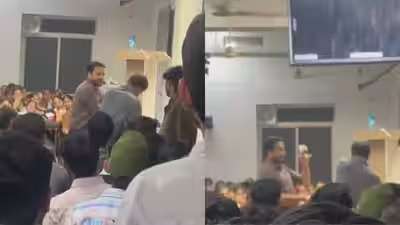
The Jaipur Coaching Teacher Assault Student incident has triggered protests and concern after a video appeared to show a teacher physically assaulting a student inside a classroom at Kalam Academy in Jaipur. According to reports, the incident took place on October 2, and the coaching institute subsequently removed the teacher from service after the video surfaced and students protested outside the centre.
The Jaipur Coaching Teacher Assault Student case came into public focus after footage from inside the classroom circulated on social media. The video reportedly shows teacher Praveen Dan Charan striking a student multiple times, while other reports also describe the teacher kicking the student. The exact circumstances surrounding the incident are still being reported, and claims about what prompted the confrontation have not been independently established.
According to the Times of India report, the incident occurred at the Jaipur centre of Kalam Academy on October 2. The institute later condemned the teacher’s conduct and said that the teacher was removed from service with immediate effect after the management became aware of the incident.
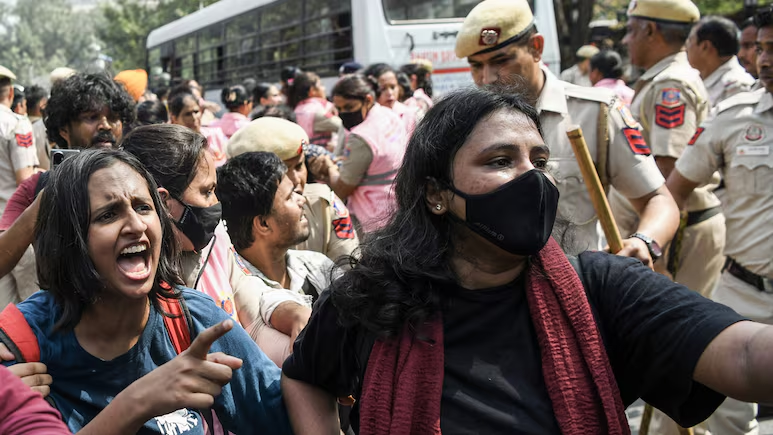
The Jaipur Coaching Teacher Assault Student controversy also led to a student protest outside the coaching centre on Sunday. A large number of students reportedly gathered and demanded strict action against the teacher. Police reached the location as the protest intensified and took steps to disperse the gathering.
Reports from other media outlets provide additional details about the circumstances that allegedly preceded the confrontation. India Today reported that the teacher became angry after a note was found at the coaching centre. The note reportedly contained the words “Kalam balidan mangta hai,” although the exact circumstances in which the note was written or placed remain unclear.
The Jaipur Coaching Teacher Assault Student incident therefore appears to have begun with an interaction inside the classroom before the video emerged publicly. However, the precise sequence of events and the context surrounding the note should be distinguished from what is directly visible in the circulated footage. Further official information would be required to establish the complete circumstances.
The video became a major factor in escalating the issue. Once the footage circulated on social media, students and others associated with the coaching centre reportedly expressed anger and called for action against the teacher. The incident quickly moved beyond the classroom and became a public issue involving students, the coaching management and police.
The Jaipur Coaching Teacher Assault Student case has also raised broader questions about student safety and acceptable disciplinary practices inside coaching centres. Coaching institutes often handle large numbers of students preparing for competitive examinations, making classroom discipline an important part of the educational environment. However, allegations of physical violence against students can raise serious concerns about how discipline is enforced.
According to the Times of India report, the student involved said that what happened to him should not happen to another student and indicated that he would lodge a police complaint. This statement reflects the seriousness with which the student has described the incident, although any criminal or legal allegations would need to be established through the appropriate process.
The coaching institute has taken administrative action by removing the teacher from service. Kalam Academy said it condemned the incident and described the teacher’s conduct as a personal act. The institute’s statement indicates that management did not endorse the reported conduct and acted after the matter came to its attention.
The Jaipur Coaching Teacher Assault Student controversy also resulted in a significant gathering of students outside the institute. India Today reported that the demonstration was led by youth leader Manoj Meena and that police were deployed after the protest became tense. The report said police and protesters clashed and that police used a lathi charge to disperse the gathering.
Other reports have described the protest and police response in somewhat different terms, highlighting the need for caution when interpreting early accounts of a developing incident. The central confirmed development is that students protested following the circulation of the classroom video and that police intervened as tensions increased.
The Jaipur Coaching Teacher Assault Student case has also attracted attention because the incident occurred in an educational setting. Students and parents generally expect coaching centres to provide an environment where academic discipline and student welfare are maintained together.
Teachers have responsibility for maintaining classroom order, but disciplinary action should remain within lawful and appropriate boundaries. Physical confrontation can create risks for students and teachers and can undermine confidence in educational institutions.
The incident has therefore prompted renewed discussion about how coaching centres should handle classroom disputes. Clear disciplinary policies, complaint mechanisms, supervision and appropriate intervention procedures can help institutions address student behaviour without escalating classroom conflicts.
For coaching institutes, incidents involving staff conduct can also affect the wider student community. Students may become concerned about their own safety, while parents may seek clarification about the institute’s policies and the steps being taken after an incident.
The Jaipur Coaching Teacher Assault Student story is particularly significant because coaching centres play an important role in Rajasthan’s education ecosystem. Jaipur is home to numerous coaching and educational institutions serving students preparing for competitive examinations and professional entrance tests.
The controversy also demonstrates how quickly incidents recorded on mobile phones can become public. A classroom video that initially involves a limited number of people can spread widely through social media within hours. Once such footage becomes public, it can generate public pressure before institutions or authorities have completed their assessment of the circumstances.
This creates a challenge for both educational institutions and law enforcement. Management must respond to student concerns while ensuring that allegations are properly examined. Authorities must also distinguish between information visible in a video and claims about events that happened before or after the recording.
In the Jaipur Coaching Teacher Assault Student case, the institute’s decision to remove the teacher represents the administrative response reported so far. Any further legal consequences would depend on whether a police complaint is filed, what evidence is collected and what authorities determine during the investigation.
The student’s reported intention to approach police could potentially lead to another stage of the matter. A police complaint, if filed, would allow authorities to formally examine the allegations and determine whether any offence has been committed. At the time of the available reports, further details about the legal process were still awaited.
The Jaipur Coaching Teacher Assault Student incident also highlights the importance of transparent grievance systems within educational institutions. Students should have a clear way to report concerns involving teachers or other staff members without fear of retaliation.
Parents and students may also expect coaching institutes to communicate clearly when serious incidents occur. A prompt explanation of the action taken can help prevent rumours and provide reassurance to students and families.
At the same time, social media footage should be evaluated carefully. A short video may show an important part of an incident but may not establish everything that happened before the recording began. In this case, multiple reports have described different details regarding the reason for the confrontation, making it important to separate verified information from claims circulating online.
The Jaipur Coaching Teacher Assault Student case has also prompted discussion about the responsibilities of teachers. Teachers are expected to maintain authority in classrooms, but that authority comes with a responsibility to treat students appropriately and handle disagreements through established disciplinary procedures.
Educational institutions can reduce the risk of similar incidents by providing staff training on classroom management, conflict resolution and student welfare. Clear escalation procedures can help teachers seek assistance when a classroom situation becomes difficult rather than attempting to resolve serious conflicts through confrontation.
For students, the incident may also reinforce the importance of knowing the complaint and support mechanisms available at their institutions. Students facing serious concerns should be able to approach responsible management officials, parents or appropriate authorities.
The Jaipur Coaching Teacher Assault Student incident has become a prominent local education story because it combines a viral video, student protests, institutional action and questions about classroom discipline. The teacher’s removal has addressed the institute’s immediate administrative response, but questions about any potential legal action remain subject to further developments.
The case is also a reminder that educational institutions have responsibilities that extend beyond academic results. Student safety, respectful classroom conduct and appropriate disciplinary practices are essential components of a healthy learning environment.
As the situation develops, additional information from the police, the student, the coaching institute or other official sources could provide greater clarity about what happened and whether any formal complaint or legal proceedings follow.
For now, the key developments in the Jaipur Coaching Teacher Assault Student case are that the incident reportedly occurred at Kalam Academy on October 2, a video of the alleged assault later circulated widely, students protested outside the coaching centre, police intervened during the protest, and the institute said the teacher had been removed from service.
The incident has generated wider concern about student treatment in coaching centres and the need for appropriate mechanisms to address classroom disputes. While the administrative action has already been announced, further developments will depend on the outcome of any complaint or inquiry connected with the incident.
For Jaipur’s coaching sector, the episode highlights the importance of maintaining professional standards and ensuring that students have safe and accessible channels for raising concerns. The Jaipur Coaching Teacher Assault Student controversy is likely to remain under attention as authorities, students and the institute respond to the incident and any further legal or administrative developments.