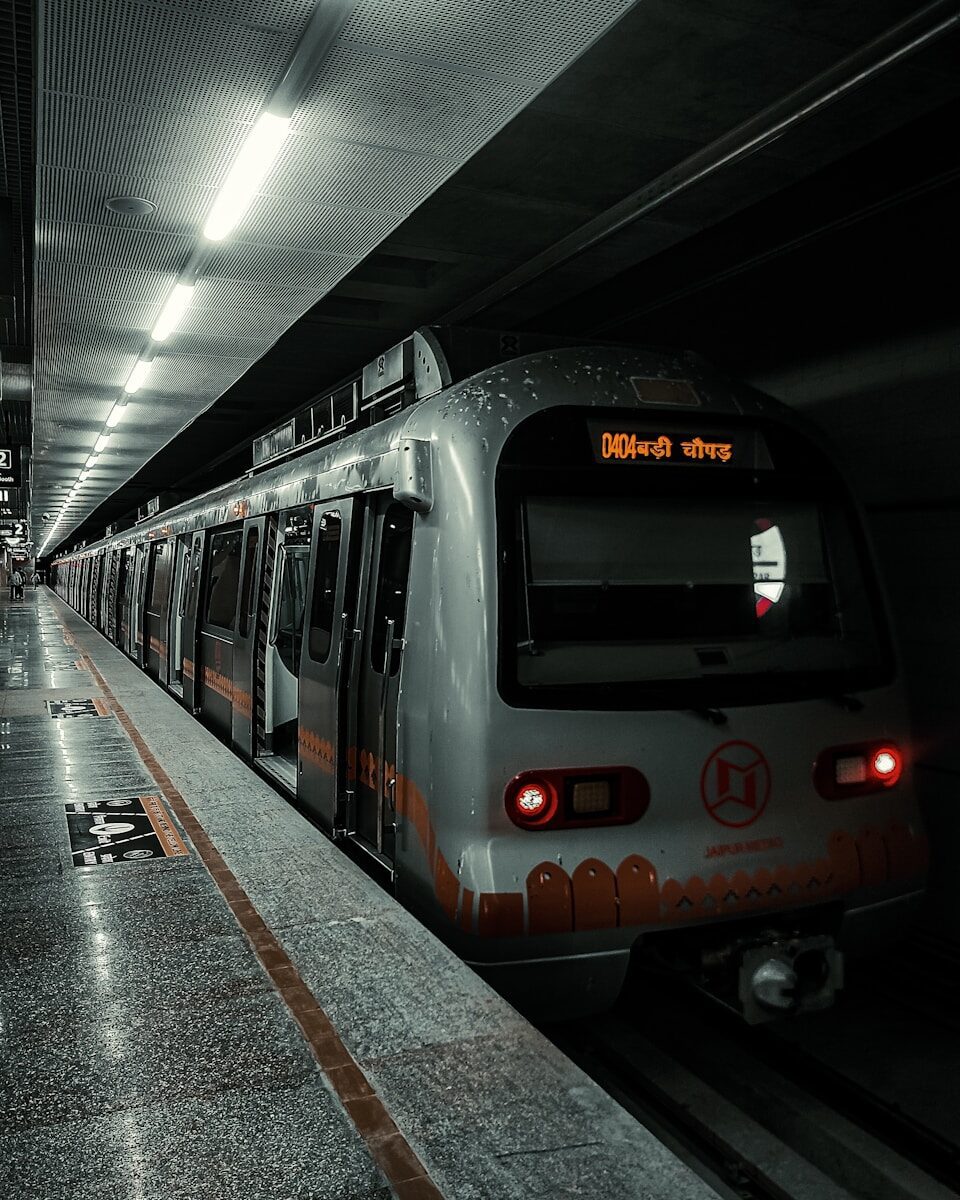
Jaipur Metro Rail Corporation has announced extended services for Krishna Janmashtami celebrations in Jaipur, allowing devotees and visitors to travel later into the night as large crowds are expected in the Walled City.
The special arrangement has been introduced for September 4, when Jaipur will celebrate Janmashtami and thousands of devotees are expected to visit temples and religious sites, particularly the Govind Dev Ji Temple and other locations in and around the old city.
Under the special schedule, Jaipur Metro services will continue until approximately 1:10 AM on September 5. The extended operation is intended to provide an additional public transport option for people returning home after late-night religious programmes and the midnight celebration of Lord Krishna’s birth.
The Jaipur Metro is expected to operate a total of 218 trips during the special arrangement. The extended services are particularly significant because the main Janmashtami celebrations take place around midnight, when regular public transport options can become limited.
The additional Metro services are expected to help reduce pressure on roads and provide commuters with a convenient alternative to private vehicles. The arrangement is also part of wider preparations by Jaipur authorities for the festival.
The Walled City is expected to witness heavy footfall during the celebrations. Govind Dev Ji Temple is likely to be one of the major centres of activity, with devotees arriving throughout the day and remaining in the area for the midnight birth ceremony.
The Jaipur administration has also introduced special traffic arrangements around the temple and surrounding areas. Authorities have planned restrictions on vehicle movement in sensitive locations to manage the expected crowd.
The Govind Dev Ji area has been designated as a no-vehicle zone during the main period of the celebrations. Such restrictions are intended to prioritize pedestrian movement and allow emergency services to operate more effectively.
Visitors travelling to the Walled City have been advised to use designated parking facilities rather than attempting to take private vehicles close to the temple and crowded areas.
Parking arrangements have been made at selected locations, with authorities also providing QR-based information to help visitors identify available parking facilities.
The Metro extension is expected to play an important role in this traffic-management strategy. By allowing commuters to travel later than normal, authorities hope that fewer visitors will depend on cars and two-wheelers during the most crowded hours.
The decision is particularly relevant because Janmashtami celebrations traditionally continue until midnight. Devotees often arrive several hours before the birth ceremony, participate in prayers and bhajans and remain at temples until the midnight puja.
After the celebrations conclude, large numbers of people attempt to leave the Walled City at roughly the same time. The extended Metro schedule is designed to provide an additional option during this late-night rush.
Jaipur Metro currently connects Mansarovar with Badi Chaupar through the city’s major residential, commercial and heritage areas. The route includes the underground section serving the Walled City.
The Metro’s Walled City stations are especially useful during major festivals because they allow passengers to reach the old city without driving into some of the most congested streets.
The existing Jaipur Metro network includes 11 stations and covers nearly 12 kilometres between Mansarovar and Badi Chaupar. Commercial operations on the underground extension from Chandpole to Badi Chaupar began in September 2020.
The Badi Chaupar station is located within the historic Walled City and provides access to several important heritage and commercial areas.
During festivals, however, passenger demand can increase significantly compared with normal days. The extended service is therefore intended to accommodate the additional demand generated by Janmashtami celebrations.
The 218-trip schedule represents a substantial increase in operational coverage for the special occasion. The extended running time will allow commuters to plan their return journeys after the midnight celebrations rather than having to leave early because of the normal Metro closing time.
The arrangement is also expected to benefit people coming from areas outside the immediate Walled City. Passengers can use the Metro to reach central Jaipur and connect with other modes of transport for the final part of their journey.
For many visitors, avoiding the narrow and crowded roads of the old city can make the journey considerably easier during a major festival.
Janmashtami itself is one of the most important Hindu festivals and marks the birth of Lord Krishna. Devotees traditionally observe fasting during the day before gathering for the midnight celebration.
The birth of Krishna is traditionally believed to have taken place at midnight in Mathura. This is why temples across India organize special prayers and celebrations around the Nishita Kaal.
In Jaipur, the Govind Dev Ji Temple holds particular importance during Krishna-related festivals. Large numbers of devotees visit the temple for darshan, prayers and special religious ceremonies.
The expected crowd has prompted authorities to prepare not only transport arrangements but also broader security and traffic measures.
The no-vehicle arrangement around Govind Dev Ji is intended to manage pedestrian movement and reduce the possibility of traffic congestion in the surrounding streets.
Police personnel and other officials are expected to remain deployed in the area to manage crowds and maintain public order.
Visitors have been encouraged to cooperate with traffic and security personnel and use the designated routes and parking areas.
The extended Metro service is therefore part of a broader citywide strategy rather than an isolated transport decision.
Jaipur frequently experiences major congestion around the Walled City during religious festivals. Streets around Govind Dev Ji Temple, Tripolia Bazaar, Badi Chaupar and other major areas can become extremely crowded when large numbers of devotees arrive simultaneously.
Public transport can help reduce the number of private vehicles entering these areas.
The Metro offers another advantage because it operates on a dedicated corridor and is not directly affected by road congestion in the same way as buses, cars and two-wheelers.
Passengers travelling toward the Walled City can therefore avoid spending long periods in traffic during the busiest part of the evening.
The late-night extension is particularly useful because the most important religious ceremony takes place around midnight. Without extended public transport, many visitors would have to arrange private vehicles or leave the celebration before it reaches its traditional conclusion.
By operating until 1:10 AM, the Metro provides a window for devotees to complete their religious activities and begin their journey home.
The exact frequency of trains during the extended period may vary depending on the operational schedule and passenger demand. Commuters should check the latest information from Jaipur Metro before beginning their journey.
The special arrangement is expected to remain focused on September 4 and the early hours of September 5, corresponding with the Janmashtami celebrations.
The timing also coincides with the end of the main midnight celebration. As a result, the final Metro services are expected to be particularly important for devotees leaving the Walled City after midnight.
Authorities are simultaneously preparing for large crowds at other religious locations across Jaipur.
The festival is expected to bring significant movement throughout the city as families visit temples, participate in community celebrations and attend special programmes.
Traffic police are likely to remain active in areas where crowds are expected to be concentrated.
The use of public transport has been encouraged as one way of reducing pressure on the city’s road network. The Metro extension provides an especially useful option for people travelling along its operational corridor.
For regular Metro users, the Janmashtami arrangement represents a temporary change from the normal operating schedule.
Jaipur Metro normally operates for a more limited period during regular days. The extension until 1:10 AM is specifically designed to meet the additional transportation requirements associated with the festival.
The announcement also demonstrates how urban transport systems can be adapted for major cultural and religious events.
Large festivals can produce sudden increases in passenger demand, particularly around specific times such as midnight. Extending Metro operations allows authorities to distribute that demand over a longer period.
It can also help reduce the pressure on roads immediately after the main ceremony.
The arrangement is expected to be particularly helpful for families and elderly devotees who may prefer a more organized public transport option rather than navigating crowded roads late at night.
At the same time, passengers should remain aware that large crowds can still be expected at Metro stations near the Walled City.
Commuters may experience longer waiting times or crowded trains during peak periods. Following staff instructions and allowing other passengers to board and exit safely will be important.
Security checks may also take additional time at busy stations.
The Janmashtami arrangements come as Jaipur continues to see growing demand for public transportation around its heritage areas. The Walled City attracts residents and tourists throughout the year, while festivals can multiply the number of visitors within a short period.
The Jaipur Metro’s connection to Badi Chaupar makes it particularly relevant to such events.
The transport system is operated by Jaipur Metro Rail Corporation, which manages the city’s existing Metro network.
According to the Rajasthan government’s official Metro information, the system’s first commercial service between Chandpole and Mansarovar began in June 2015, while the Chandpole-Badi Chaupar underground section began commercial operations in September 2020.
The existing route therefore provides direct Metro access into the Walled City, making it a practical option for festival visitors.
The special Janmashtami service also comes at a time when Jaipur authorities are working on longer-term expansion of the Metro network. Phase 2 of the project is planned to significantly expand connectivity across the city, although those future developments are separate from the temporary Janmashtami service.
For the immediate festival period, the focus is on using the existing network as efficiently as possible.
The extended operating hours should give commuters greater flexibility. People who attend evening prayers or remain at the temple for the midnight celebration will have additional time to reach the Metro station after the religious programme.
This can be especially important for visitors who do not have private vehicles.
The arrangement may also help people avoid the difficulties associated with finding parking near the Walled City.
During major festivals, parking demand can quickly exceed available spaces. Visitors who choose public transport can avoid that problem while also reducing the number of vehicles entering crowded streets.
The authorities’ decision to combine extended Metro services with traffic restrictions and designated parking reflects a coordinated approach to festival management.
The main objective is to allow devotees to participate in Janmashtami celebrations while maintaining traffic movement and public safety.
The midnight period is expected to be the most challenging time for crowd management. Large groups are likely to leave religious sites simultaneously after the birth ceremony.
The extended Metro operation will provide an additional outlet for those crowds.
For passengers, the key change to remember is the late-night closing time. Instead of ending normal services earlier in the evening, the special Janmashtami schedule will continue until around 1:10 AM.
The 218 planned trips are expected to cover the increased demand throughout the day and into the night.
Commuters should nevertheless plan their journey in advance, particularly if they intend to travel shortly after midnight. Crowded stations and trains are likely during the peak departure period.
The special service is ultimately aimed at making Janmashtami celebrations easier and safer for Jaipur residents and visitors.
As the city prepares for one of its biggest religious celebrations, the combination of extended Metro operations, traffic restrictions and designated parking facilities is expected to ease some of the pressure on the Walled City’s roads.
For devotees planning to attend the midnight celebrations, the Jaipur Metro could prove particularly useful.
With services continuing until approximately 1:10 AM on September 5 and 218 trips scheduled under the special arrangement, passengers will have an additional public transport option after the main Janmashtami celebrations conclude.
The move is expected to support smoother movement around the Walled City while allowing devotees to celebrate Krishna Janmashtami without having to leave early because of limited late-night transport.