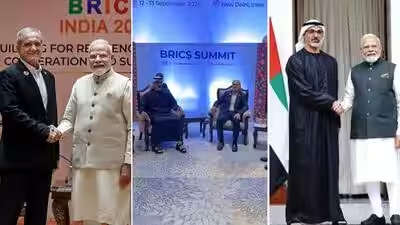
The Iran UAE Relations landscape has shown signs of a possible diplomatic shift after Iranian President Masoud Pezeshkian said Tehran and the United Arab Emirates want to “turn the page” on tensions linked to the ongoing Middle East war. Pezeshkian made the remarks on Sunday, a day after meeting Abu Dhabi Crown Prince Sheikh Khaled bin Mohamed bin Zayed Al Nahyan on the sidelines of the BRICS Summit in New Delhi. The meeting has emerged as one of the notable diplomatic developments surrounding the 2026 BRICS gathering.
The latest development in Iran UAE Relations comes at a particularly sensitive time for the Gulf region. Relations between Tehran and Abu Dhabi have faced serious strain since the wider Middle East conflict began, with military developments and regional security concerns affecting diplomatic and economic ties. Against that backdrop, the direct meeting between Pezeshkian and Sheikh Khaled provided an opportunity for both sides to discuss their relationship and the broader security situation.
According to Pezeshkian, the latest discussions on Iran UAE Relations were constructive and focused on looking beyond past tensions. He said the two sides had agreed to put the past aside, look toward the future and work together to build a better relationship. The statement represents a notable diplomatic signal because it came after months of heightened tensions in the region and at a summit where several major international and regional issues were being discussed.
The meeting is also significant for Iran UAE Relations because it was reportedly the first known face-to-face encounter between Pezeshkian and the Abu Dhabi Crown Prince since the conflict began. The two leaders met in New Delhi during the BRICS Summit, giving India an important diplomatic setting for dialogue between countries that have found themselves on different sides of the regional crisis. The meeting was viewed as an opportunity to explore de-escalation and stability.
The recent movement in Iran UAE Relations does not mean that all differences between Tehran and Abu Dhabi have been resolved. Instead, the comments point toward an attempt to reopen dialogue and prevent existing disagreements from becoming permanent obstacles to cooperation. Pezeshkian’s language about turning the page suggests that Iran is interested in moving toward a more constructive phase, while the meeting itself indicates that communication remains possible despite the difficult regional environment.
The broader background of Iran UAE Relations has become increasingly complicated because of the war and the presence of foreign military forces in the region. Iran has sought to distinguish its relationship with the UAE from the issue of American military facilities in the Gulf. The distinction is important for Tehran because it indicates that Iran may be willing to maintain or improve bilateral relations with Abu Dhabi even while strongly opposing US military involvement in the region.
For the UAE, the latest development in Iran UAE Relations also fits into its broader emphasis on regional stability and diplomacy. During the BRICS meeting, Sheikh Khaled and Pezeshkian discussed regional and international issues of mutual interest, including efforts to promote calm, de-escalation and stability. The UAE has stressed the importance of creating conditions that support peace and development across the region.
The BRICS platform played an important role in bringing Iran UAE Relations into focus because the summit brought together countries with very different positions on the Middle East conflict. India, which is chairing BRICS in 2026, has repeatedly emphasized dialogue and diplomacy as the preferred route for addressing regional disputes. Prime Minister Narendra Modi also reiterated this position during his meeting with Pezeshkian, stressing the need for dialogue, diplomacy, regional stability and the safety of navigation and commerce.
The significance of Iran UAE Relations was further underlined by the BRICS declaration. Leaders called for restraint and peaceful approaches to the deteriorating situation in West Asia, reflecting concerns that continued military escalation could create wider instability. The ability of BRICS members to include language supporting restraint was seen as an important diplomatic outcome given the divergent interests of countries participating in the group.
India’s role is particularly relevant to Iran UAE Relations because New Delhi has maintained relationships with both Tehran and Abu Dhabi while also pursuing its own strategic partnerships with other major powers. India’s BRICS presidency provided a platform where Iranian and Emirati representatives could engage directly at a time when regional diplomacy remains highly sensitive. The meeting therefore also demonstrates how multilateral forums can create opportunities for bilateral discussions that might otherwise be difficult to arrange.
For Iran UAE Relations, economic considerations could become another important factor if the diplomatic opening continues. Iran and the UAE have historically maintained significant commercial connections, despite political disagreements. Greater regional stability could eventually create better conditions for trade, investment, transportation and other forms of economic cooperation. However, any major improvement would depend on the broader security situation and the ability of both countries to address outstanding concerns.
The diplomatic message around Iran UAE Relations also comes at a time when the Middle East conflict has created significant pressure on regional economies and international trade routes. Instability in the Gulf can affect energy markets, shipping, insurance costs and global supply chains. A reduction in tensions between Iran and the UAE could therefore have implications beyond their bilateral relationship, particularly if it contributes to greater regional stability.
The latest comments on Iran UAE Relations should nevertheless be viewed cautiously. Diplomatic statements about turning the page are an important first step, but they do not automatically translate into immediate policy changes. The two countries still have strategic differences, and the wider regional conflict remains unresolved. Future meetings, official announcements and concrete steps will determine whether the current diplomatic signal develops into a sustained improvement in relations.
The meeting also demonstrates the continuing importance of the Gulf states in the evolving Iran UAE Relations equation. The UAE has attempted to maintain diplomatic channels with multiple regional and international powers, while Iran has sought to strengthen ties with neighboring countries and non-Western partners. Both approaches make dialogue particularly important at a time when regional alliances and security calculations are changing rapidly.
The diplomatic opening in Iran UAE Relations could also support broader BRICS efforts to present the grouping as a platform for dialogue among emerging powers. BRICS has expanded its membership and increasingly discusses political, economic and security issues affecting the Global South. The Iran-UAE meeting in New Delhi provided a practical example of how the forum can create space for conversations between countries facing serious regional disagreements.
For President Pezeshkian, the latest development in Iran UAE Relations also fits into Iran’s wider effort to strengthen regional cooperation. His meetings in New Delhi included discussions with Indian leadership, while Iran has continued to emphasize diplomatic engagement with neighboring and regional countries. Pezeshkian has previously spoken about improving relations and cooperation with countries that can contribute to regional stability and economic development.
The UAE’s participation in Iran UAE Relations diplomacy is equally important because Abu Dhabi is a full BRICS member and has increasingly used multilateral platforms to promote economic and diplomatic engagement. The UAE delegation at the New Delhi summit was led by Crown Prince Sheikh Khaled on behalf of President Sheikh Mohamed bin Zayed Al Nahyan. The country’s participation reflected its interest in financial cooperation, energy transition, economic development and stronger engagement among emerging economies.
The latest signal from Iran UAE Relations could therefore become an important development if followed by practical diplomatic measures. Restoring confidence between Tehran and Abu Dhabi would likely require continued communication, efforts to reduce misunderstandings and discussions about regional security. The current meeting does not resolve those issues, but it provides an opening for further engagement at a time when diplomacy is increasingly being viewed as necessary to prevent the conflict from spreading.
For the wider Middle East, improvement in Iran UAE Relations could carry significance beyond the two countries. Iran and the UAE occupy strategically important positions in the Gulf, and their relationship affects trade, shipping, energy security and regional diplomacy. Even limited progress between the two sides could help create additional channels for communication during a period of intense geopolitical uncertainty.
The New Delhi meeting ultimately represents a diplomatic opportunity rather than a completed breakthrough in Iran UAE Relations. Pezeshkian’s statement that Tehran and Abu Dhabi want to move beyond the past and build toward the future sends a positive message, while the UAE’s emphasis on calm, de-escalation and stability suggests room for continued dialogue. Whether this moment develops into a lasting improvement will depend on developments in the wider Middle East conflict and the concrete steps taken by both sides in the coming weeks.