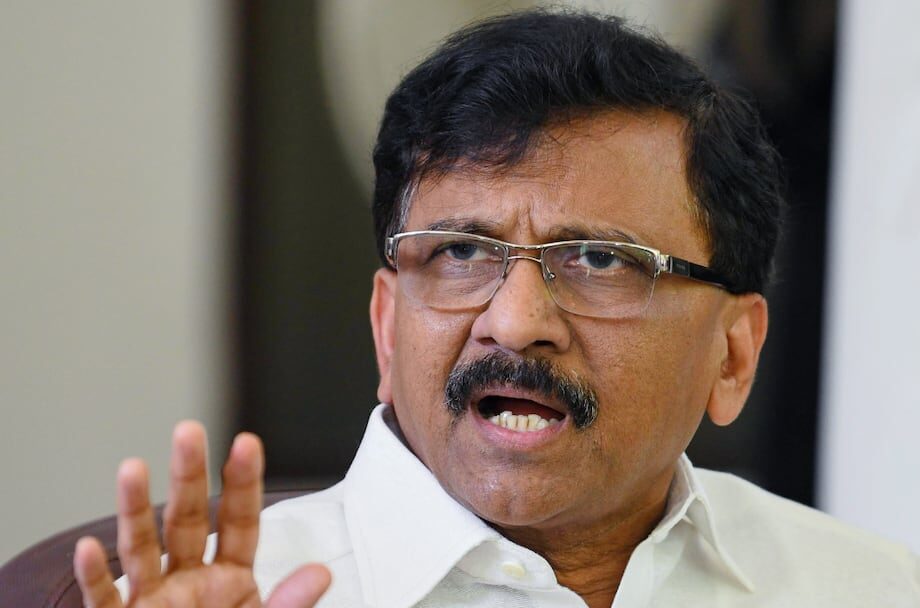
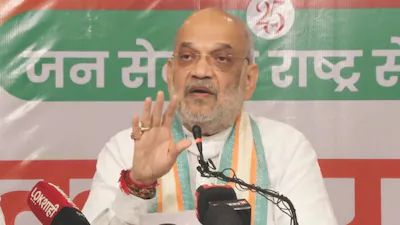
The UCC 21 States Before 2029 announcement has emerged as a major political and legal development after Union Home Minister Amit Shah said the Uniform Civil Code will be implemented in all 21 states governed by the BJP-led National Democratic Alliance before the 2029 Lok Sabha elections. Shah made the statement while addressing reporters in Mumbai on Sunday, September 13, 2026, outlining the government’s plans for expanding the common civil law framework across NDA-ruled states.
The UCC 21 States Before 2029 plan reflects the BJP-led government’s long-standing political commitment to the Uniform Civil Code. Shah said that the UCC has already been introduced in several states and expressed confidence that the remaining NDA-governed states would also move toward implementation before the next general election. The announcement puts the issue of uniform personal laws back at the centre of national political and legal discussion.
The Uniform Civil Code, commonly known as UCC, proposes a common legal framework for personal matters that currently come under different religious personal laws. These areas include marriage, divorce, inheritance and adoption. The UCC 21 States Before 2029 target therefore represents a significant proposed expansion of common civil provisions across states governed by the NDA.
Speaking in Mumbai, Amit Shah said the government had already introduced the UCC in several states and that he was confident it would be implemented in all 21 BJP-NDA ruled states before 2029. His statement was framed as a continuation of reforms that the BJP has promoted over several years, including the abolition of triple talaq and other changes in the legal and constitutional landscape.
The UCC 21 States Before 2029 announcement comes after multiple states have taken steps toward adopting uniform civil laws. Uttarakhand became the first state in independent India to implement a UCC, while Gujarat and Assam subsequently moved forward with their own legislation. Assam’s Assembly passed its UCC Bill in 2026, making it the first state in the Northeast to adopt such legislation.
Uttarakhand’s experience is particularly relevant to the UCC 21 States Before 2029 discussion because it became the first state to put a comprehensive UCC framework into effect. Gujarat also passed its UCC Bill in March 2026, with the Union Home Ministry describing the move as part of the broader commitment to establish uniform laws for citizens.
Assam’s move added another important dimension to the UCC 21 States Before 2029 roadmap. The Assam legislation covers areas including marriage, divorce, succession and live-in relationships, while Scheduled Tribes are excluded from its scope in order to protect constitutional safeguards and customary practices. The state government said the legislation would be enforced after receiving the required presidential approval.
The question of tribal communities is particularly important in the UCC 21 States Before 2029 debate. The framework being discussed in several BJP-ruled states has included exemptions or safeguards for tribal groups to preserve their customary practices, traditions and ethnic identity. This approach has been highlighted by the BJP as a way of balancing uniformity in civil law with constitutional protections for indigenous and tribal communities.
The political significance of the UCC 21 States Before 2029 announcement is also connected to the BJP’s 2024 election manifesto. The party had promised to pursue a Uniform Civil Code, making it one of its key policy commitments. Shah’s latest statement indicates that the party intends to accelerate the state-level implementation process ahead of the 2029 Lok Sabha elections.
For the BJP and its NDA allies, the UCC 21 States Before 2029 initiative is being presented as a step toward equality before the law. Supporters argue that citizens should follow the same civil rules irrespective of their religion, particularly in matters such as marriage, inheritance and divorce. The government has repeatedly linked the proposal to the constitutional principle of equality and the idea of a common legal framework.
At the same time, the UCC 21 States Before 2029 proposal is likely to remain a subject of political and constitutional debate. Personal laws are closely connected with religious customs and community traditions, meaning changes in these areas can generate significant discussion among different social and religious groups. The manner in which individual states draft, debate and implement their respective laws will therefore be important in determining the wider impact of the initiative.
Another important aspect of the UCC 21 States Before 2029 plan is that implementation will take place at the state level rather than through one nationwide UCC law announced by the Centre. States have legislative powers over several areas connected to personal laws, and individual governments have been pursuing their own legislation. As a result, the exact provisions and implementation timelines could differ from one state to another.
The recent developments also show how quickly the UCC debate has expanded in 2026. With Assam becoming the first northeastern state to pass its legislation and other states considering similar measures, the UCC 21 States Before 2029 announcement could encourage additional NDA governments to speed up consultations, drafting and legislative procedures.
Madhya Pradesh has also emerged as another important state in the current UCC 21 States Before 2029 discussion. Reports said the state cabinet approved the UCC in a special meeting in Bhopal, adding to the number of BJP-ruled states moving toward a common civil law framework. This suggests that the policy is already progressing through different stages across NDA-governed states.
West Bengal is another state where the UCC debate has gained momentum, although its political situation is different from several other states mentioned in the UCC 21 States Before 2029 plan. A committee headed by retired Supreme Court judge Ranjana Prakash Desai was approved to examine a draft UCC Bill in the state. The development indicates the issue is expanding beyond states that had previously been at the centre of the UCC discussion.
The legal framework proposed through the UCC 21 States Before 2029 initiative is expected to address several areas of family and civil law. Marriage rules, divorce procedures, inheritance rights and adoption provisions are among the subjects commonly associated with the UCC. Some state-level legislation has also included provisions concerning live-in relationships, although the details differ according to the specific law adopted by each state.
The government’s argument for the UCC 21 States Before 2029 initiative is closely linked to equal treatment under the law. Amit Shah has previously described the BJP’s commitment to uniform civil laws as part of its broader political agenda. In March 2026, after Gujarat passed its UCC Bill, the Home Ministry said the principle of uniform law for every citizen had been a commitment of the party since its inception.
However, implementation will require states to complete several legislative and administrative steps. Depending on the state, governments may need to draft or approve legislation, conduct consultations, pass bills through their assemblies and complete the necessary constitutional procedures. Therefore, the UCC 21 States Before 2029 announcement should be understood as a political target and commitment rather than an indication that all 21 states will immediately have identical laws.
A major question is how different state-level UCC laws will interact with existing central legislation and constitutional protections. The experience of Uttarakhand, Gujarat and Assam could provide models for other states, but governments may make changes according to their own social, cultural and administrative circumstances. This could make the implementation process one of the most closely watched legal developments in the states over the next few years.
The UCC 21 States Before 2029 timeline also gives NDA governments a clear political deadline. The next Lok Sabha elections are scheduled for 2029, meaning states have less than three years to complete the proposed expansion. Shah’s statement therefore signals that the government wants the issue to progress during the current political cycle rather than remain a long-term policy objective without a defined target.
Alongside the UCC 21 States Before 2029 announcement, Shah discussed several other issues during his Mumbai press conference, including national security, criminal justice reforms, Naxalism and illegal immigration. He highlighted the government’s record on measures such as the Bharatiya Nyaya Sanhita and the security operations undertaken during the Modi government.
Shah also spoke about the National Register of Citizens, or NRC, during the interaction. When asked about a possible timeline for implementing the NRC nationally and the use of a 1951 baseline in Manipur, he said discussions were still underway with allies and political parties in the state. Unlike the UCC 21 States Before 2029 announcement, Shah did not provide a specific nationwide deadline for the NRC and said the government would communicate any decision once discussions were complete.
The distinction between the UCC and NRC is important because they involve different policy areas. The UCC 21 States Before 2029 proposal concerns civil and personal laws, while the NRC relates to citizenship documentation and identification. Shah’s comments suggest that the government currently has a clearer political timeline for the expansion of UCC than it does for a nationwide NRC.
The UCC 21 States Before 2029 announcement is also likely to influence state-level politics. Parties supporting the proposal may present it as a measure for legal equality and reform, while opponents may raise questions about religious freedom, customary practices and the effect of common personal laws on different communities. The debate could become particularly prominent in states where legislative proposals are introduced in the coming months.
For citizens, the eventual impact of the UCC 21 States Before 2029 plan will depend on the specific provisions adopted by individual states. A common civil framework could potentially change how marriages are registered, how inheritance is determined, how divorces are processed and how certain family-law disputes are handled. At the same time, exemptions and special provisions may remain relevant for tribal communities and other groups protected under existing constitutional arrangements.
The government’s decision to set a pre-2029 target makes the next phase especially significant for the UCC 21 States Before 2029 initiative. State governments will need to move from political commitments to legislative action if they are to meet the deadline outlined by Shah. The progress of bills, cabinet decisions, consultations and legal approvals will therefore become key indicators of how quickly the policy is expanding.
Overall, the UCC 21 States Before 2029 announcement marks a major step in the BJP-led NDA’s long-running push for uniform civil laws. Amit Shah’s statement establishes a clear political objective: extending the UCC to all 21 NDA-governed states before the 2029 Lok Sabha elections. With Uttarakhand, Gujarat and Assam already moving ahead and other states considering similar legislation, the coming years are likely to see an intense national debate over how a common civil law framework should be designed and implemented.