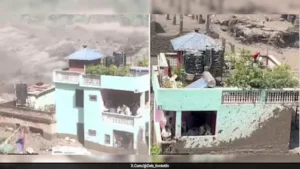
A devastating flash flood swept through the Grand Canyon in Arizona over the weekend, killing at least two people, leaving others unaccounted for and forcing the evacuation of dozens of hikers and visitors. The disaster struck the Bright Angel Creek and Phantom Ranch areas on August 29, when intense rainfall rapidly transformed normally manageable waterways into powerful torrents carrying mud, rocks, trees and other debris.
The National Park Service said the flooding began at approximately 2:30 pm on Saturday. Nearly 80 people were ultimately rescued or evacuated, while one person remained unaccounted for according to the latest official update. The disaster also destroyed or severely damaged trails, footbridges, campgrounds and other infrastructure inside the canyon.
The flood was not caused by one factor alone. Experts and reporting from the area point to a combination of intense monsoon rainfall, the steep terrain of the Grand Canyon, prolonged drought, the aftermath of the 2025 Dragon Bravo wildfire and unusual atmospheric conditions associated with a strong El Niño.
Together, these factors created conditions in which a short period of extremely heavy rain could produce a rapidly moving and highly destructive flood.
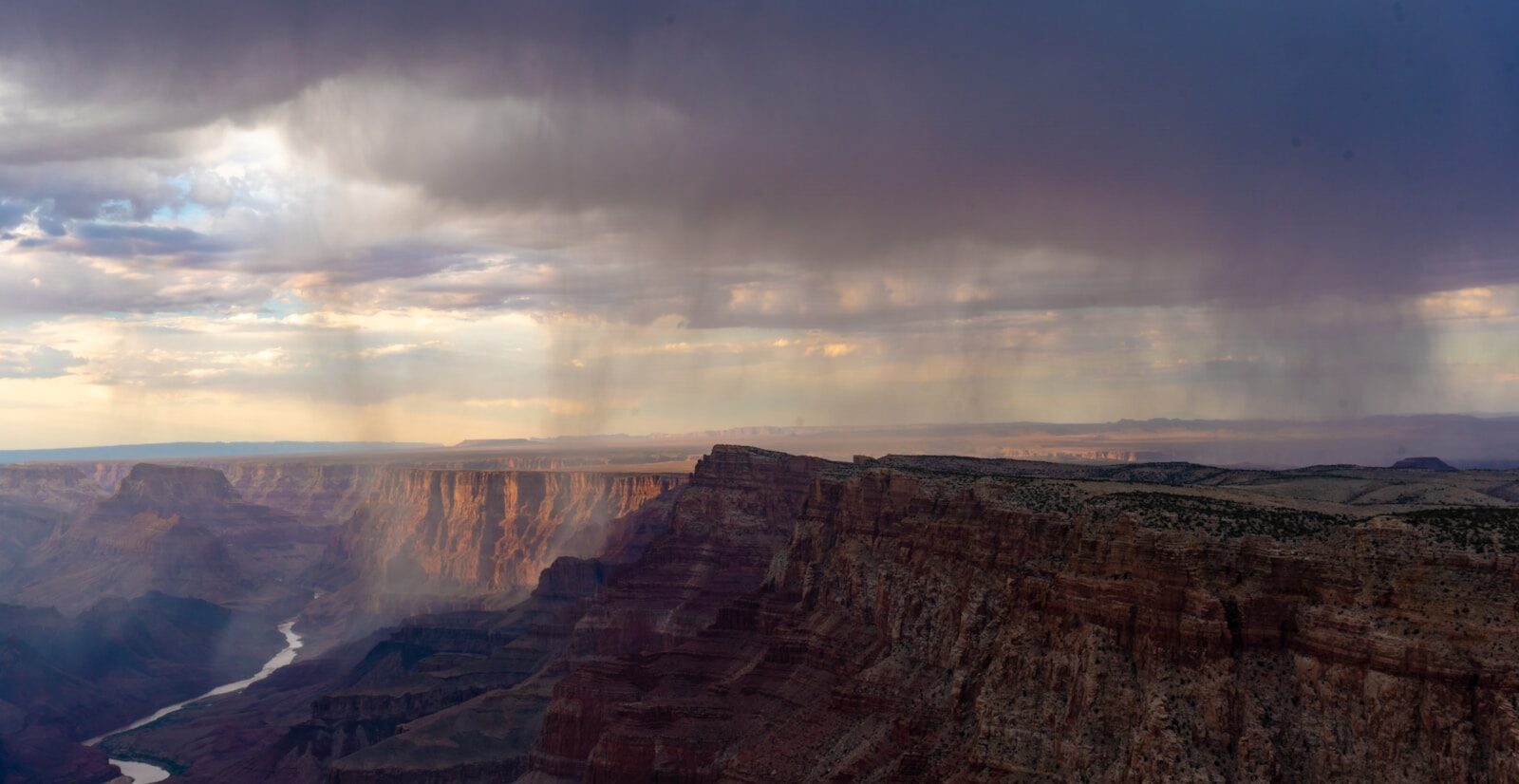
The Grand Canyon is naturally vulnerable to flash flooding. Its steep and narrow terrain can channel water quickly into creeks and side canyons. During the summer monsoon season, thunderstorms can develop rapidly over northern Arizona, and rainfall that might not appear extraordinary in another environment can become extremely dangerous once it reaches the canyon.
The region’s monsoon season generally runs from June through September. During this period, clear skies can change quickly as thunderstorms develop over the surrounding plateau and canyon.
On August 29, the rainfall was particularly intense. Around the Bright Angel Canyon area, approximately 1.24 inches of rain fell over three hours, with about 0.84 inches falling in a single hour. Such rainfall over steep, rocky terrain can generate enormous runoff in a short period.
Once the water began flowing downhill, gravity accelerated it through the canyon system.
Bright Angel Creek, normally a relatively narrow watercourse, rapidly swelled with water and debris. Witnesses described seeing large amounts of mud, logs and other material moving through the creek.
The force of the water was strong enough to destroy nearly all of the footbridges crossing Bright Angel Creek in the affected area. The flood also damaged trails and other infrastructure used by hikers travelling between the canyon rim and the Colorado River.
The steep geography of the Grand Canyon made the situation more dangerous because there was little time for water to spread out.
In flatter areas, floodwater can sometimes move across a broad landscape. Inside the Grand Canyon, however, water is funneled through narrow channels and steep side canyons.
That can transform a heavy downpour into what witnesses described as a wall of rapidly moving water.
Another major factor was the condition of the landscape following the Dragon Bravo wildfire.
The wildfire swept across nearly 150,000 acres in 2025 and caused extensive damage in the North Rim region. It also destroyed the historic Grand Canyon Lodge and left large areas of vegetation burned away.
Normally, vegetation helps slow rainfall as it reaches the ground. Plants, roots and ground cover can help hold soil in place and allow some water to infiltrate the ground.
After a severe wildfire, much of that protective vegetation can disappear.
Rain falling on a burned landscape can therefore run downhill much faster. Loose soil, ash and debris can also be transported by the water, increasing the danger of mudslides and debris flows.
Federal assessments conducted after the Dragon Bravo fire had already identified increased runoff and debris-flow risks in the Bright Angel Creek drainage area.
Officials estimated that runoff risks upstream of Phantom Creek could be between two and eight times greater in some locations because of the wildfire’s impact. The assessment also warned of increased rockfall and instability on trails located within or below the burned area.
This does not mean the wildfire alone caused the August 29 disaster.
The flood was produced by several interacting factors. But the burn scar likely increased the amount and speed of runoff reaching the canyon.
The timing of the rainfall was also critical.
A large amount of water falling over several days can sometimes be absorbed or gradually transported through the landscape. A very intense burst of rainfall over a short period is different.
When rainfall intensity exceeds the ability of soil and rock surfaces to absorb or contain the water, runoff increases sharply.
That is particularly dangerous in an area already affected by drought.
The Grand Canyon region and much of the Colorado River Basin have experienced prolonged drought conditions. Drought can harden and dry the upper soil layer, reducing its ability to absorb sudden heavy rainfall.
When the rain arrives intensely, more water can therefore move across the surface rather than soaking into the ground.
The result is rapid runoff flowing toward lower elevations.
In the Grand Canyon, the steep terrain then accelerates that water further.
This combination of drought and intense rainfall is one of the reasons flash flooding can occur even in an environment that appears extremely dry.
The flood also occurred during an unusually active atmospheric pattern.
Meteorologists and climate scientists have pointed to a strong El Niño and unusually warm Pacific Ocean temperatures as factors contributing to increased atmospheric moisture.
El Niño is a naturally occurring climate pattern involving changes in ocean temperatures and atmospheric circulation across the Pacific. Its effects can extend far beyond the Pacific region.
In the southwestern United States, the current pattern has contributed to an atmosphere capable of carrying large amounts of moisture.
When that moisture encounters the right atmospheric conditions, thunderstorms can release it very quickly.
The relationship between El Niño and this individual flood should not be interpreted as meaning El Niño directly caused the disaster.
Rather, it helped create a background environment that could support unusually moisture-rich storms.
Scientists are also examining the role of long-term climate change.
A warmer atmosphere can hold more moisture, potentially increasing the intensity of extreme precipitation events when the atmospheric conditions are favourable.
Climate scientist Daniel Swain has said the connection between human-caused climate change and the heavy Arizona rainfall is moderately strong. Research he and colleagues published has found that short-duration intense summer rainfall events in the western United States have become about 10% stronger since 2000.
That does not mean every individual flash flood can be attributed directly to climate change.
Instead, scientists are increasingly studying how climate change can alter the background conditions under which extreme events occur.
The Grand Canyon disaster is an example of what researchers describe as a compound extreme, where several hazards or environmental conditions combine to increase the impact of one event.
In this case, drought, wildfire damage, intense rainfall, steep terrain and atmospheric moisture came together.
Each factor increased the potential danger.
The wildfire reduced vegetation.
The drought left the ground less able to absorb a sudden deluge.
The monsoon storm delivered intense rainfall.
The canyon’s steep terrain rapidly channelled the resulting runoff.
The atmospheric conditions provided an unusually large supply of moisture.
The result was a flash flood powerful enough to destroy infrastructure and strand hikers.
The human consequences have been severe.
At least two people died in the disaster, while search and rescue teams continued looking for people who remained unaccounted for. Nearly 80 people were rescued or evacuated from affected parts of the canyon.
One of the confirmed victims was identified as 53-year-old Texas chiropractor John Giusti, who had travelled to the Grand Canyon with friends for a hiking, camping and fishing trip.
The other recovered victim was a 46-year-old man whose body was found near Crystal Rapids along the Colorado River.
The search for missing people has been complicated by continued storms.
Officials warned that additional thunderstorms and heavy rainfall could trigger new flash floods, debris flows and rockfalls.
This meant rescuers had to work in an environment where conditions could deteriorate again with little warning.
The danger also extended to people who had already survived the initial flood.
A canyon can remain hazardous after the main flood wave has passed because unstable rocks, damaged trails, debris and weakened infrastructure can create secondary risks.
The National Park Service therefore closed several important areas.
Phantom Ranch, Bright Angel Campground and the North Kaibab Trail corridor were closed until further notice. The Black Bridge and Silver Bridge crossings over the Colorado River were also closed. River traffic in the affected area was suspended because debris and metal structures had entered the river.
The flood also caused major damage to the park’s water infrastructure.
The Transcanyon Waterline, which supplies water to areas of Grand Canyon National Park, suffered extensive damage.
Officials estimated that around 40% of the pipeline could have been destroyed, although assessments were continuing.
The pipeline is particularly important because it supplies water to Grand Canyon Village and supports millions of visitors over the course of a year.
The damage came while a major rehabilitation project was already underway.
The National Park Service had begun a roughly $208 million project to modernise the water system, with completion expected in 2027.
The project was designed to improve reliability and reduce the vulnerability of the water system to future problems.
The latest flood has now created an additional challenge for that effort.
Because the damaged pipeline cannot immediately provide its normal supply, authorities have imposed water conservation measures.
Some overnight accommodation has been closed, and visitors and residents have been asked to reduce water use.
This demonstrates how a natural disaster deep inside the canyon can affect operations far beyond the immediate flood zone.
The Grand Canyon attracts millions of visitors every year, making emergency preparedness especially important.
The affected area is also popular among experienced hikers because routes such as the North Kaibab Trail and Bright Angel Trail connect the canyon rim with the Colorado River.
However, hiking deep into the canyon during monsoon season carries significant risks.
Weather conditions at the rim may not accurately represent conditions deeper inside the canyon.
A storm several miles away can send water into a canyon drainage even when the immediate area appears relatively dry.
This makes flash floods particularly dangerous because people may not see the rainfall that generates the flood.
The geography also creates communication difficulties.
Radio signals and mobile phone coverage can be limited deep inside the canyon.
Visitors may therefore have less time and fewer opportunities to receive warnings once a storm develops.
This is why park officials have increasingly emphasised weather awareness, emergency communication and evacuation planning for people travelling into remote parts of the canyon.
The latest disaster has also highlighted the dangers created by post-wildfire landscapes.
Burn scars can remain hazardous for years after a fire, particularly during intense rainfall.
Even when vegetation begins to return, soil structure can remain altered, and steep slopes may continue to produce increased runoff, rockfall and debris.
The Dragon Bravo fire therefore remains relevant to safety planning in the Grand Canyon.
Park authorities had been aware of the potential danger before this weekend’s flood.
The challenge is that predicting exactly where and when a post-fire flash flood will occur remains difficult.
A storm may pass over one part of the burned area without causing major damage, while a slightly different storm track can produce a destructive debris flow.
This uncertainty makes early warning and cautious land management especially important.
The disaster has also revived comparisons with a major Bright Angel Canyon flood in 1966.
That earlier event caused extensive destruction in the same general area, demonstrating that the Grand Canyon has experienced catastrophic flash flooding before.
The 1966 flood occurred under very different circumstances and involved a much larger rainfall total, but it remains an important historical example of how dangerous the canyon can become during extreme storms.
The latest event reinforces the fact that flash flooding is not a new phenomenon in the Grand Canyon.
What is changing is the combination of environmental factors surrounding these events.
Scientists are increasingly examining how warming temperatures, drought, wildfire and changes in precipitation patterns can interact.
One of the concerns is that communities and infrastructure may face several hazards at once.
A region can experience prolonged drought, then a major wildfire, followed by intense rainfall that produces flooding and debris flows.
Each event changes the landscape in ways that influence the next hazard.
The Grand Canyon is an especially clear example of this chain.
The 2025 wildfire altered vegetation and soil conditions.
The continuing drought affected the landscape’s ability to absorb water.
The monsoon delivered intense rainfall.
The canyon then concentrated the runoff into narrow channels.
The flood damaged infrastructure and created further hazards for visitors and rescue workers.
The disaster therefore cannot be understood simply as “too much rain.”
It was the result of rain interacting with a highly vulnerable landscape.
For the people who were caught in the flood, the transformation happened extremely quickly.
Survivors described running for their lives as water and debris surged through areas that had previously appeared safe.
Some hikers were forced to move rapidly toward higher ground while park officials organised helicopter evacuations.
Helicopters played a crucial role in removing stranded visitors from affected areas.
The scale of the rescue operation demonstrated the difficulties involved in reaching people deep inside the Grand Canyon.
Search teams had to work around damaged trails and bridges while monitoring weather conditions.
The National Park Service also coordinated with Arizona emergency agencies to evacuate visitors and search for missing people.
The rescue operation is expected to continue as conditions permit.
However, further rain could delay searches and make already damaged areas even more unstable.
Authorities have therefore continued to warn visitors to stay away from closed areas.
The South Rim remains accessible for general daytime visits, but significant restrictions are in place in areas affected by the flood.
Overnight accommodation inside affected parts of the park has been restricted because of both safety concerns and water-supply problems.
The damage to the water pipeline is particularly serious because the Grand Canyon cannot simply rely on nearby alternative sources.
The park’s remote geography makes infrastructure repair extremely complicated.
Repair crews often have to transport equipment into the canyon using helicopters or other specialised methods.
The latest damage could therefore take considerable time to assess and repair.
For visitors planning trips to the Grand Canyon, the incident serves as an important warning about the risks of monsoon-season travel.
A sunny morning does not guarantee safe conditions later in the day.
People hiking below the rim need to pay attention to weather forecasts, park warnings and evacuation instructions.
They should also understand that flash floods can occur even when rainfall is not directly overhead.
Water can arrive from distant storms through drainage channels.
The safest response to a flash-flood warning is to move toward higher ground and avoid narrow washes, creek beds and canyon bottoms.
The latest disaster also demonstrates why post-wildfire areas require additional caution.
A trail that was considered safe before a wildfire may become more dangerous afterward because vegetation has disappeared and slopes have become unstable.
Even relatively small storms can produce unusually large amounts of runoff in recently burned terrain.
The Grand Canyon flood has now become one of the most serious weather disasters to strike the park in decades.
At least two people have died, dozens of others were rescued and major infrastructure was damaged.
The event has also demonstrated how natural hazards can combine to produce consequences much greater than any single factor might suggest.
The monsoon storm supplied the immediate trigger.
The canyon’s steep terrain accelerated the water.
Drought reduced the ground’s ability to absorb the rainfall.
The Dragon Bravo burn scar increased runoff and debris-flow risks.
Atmospheric conditions associated with El Niño helped supply additional moisture.
Longer-term climate change may also be increasing the intensity of short-duration extreme rainfall events across the western United States.
The exact contribution of each factor will continue to be studied by scientists.
What is already clear is that the Grand Canyon remains highly vulnerable to sudden flash flooding, particularly during the summer monsoon season.
As search and recovery operations continue, authorities are also watching the weather closely.
Additional storms could create fresh hazards before damaged areas have been stabilised.
The National Park Service has warned that more flash flooding, debris flows and rockfall are possible.
For the thousands of people who visit the Grand Canyon each day, the disaster is a reminder that one of America’s most spectacular natural landscapes can also become extremely dangerous within minutes.
The weekend’s flood was not simply an isolated burst of heavy rain.
It was the product of intense rainfall interacting with drought, wildfire damage, steep terrain and unusual atmospheric conditions.
That combination transformed Bright Angel Creek and surrounding waterways into powerful channels of water and debris.
The consequences have been tragic, with lives lost, people still unaccounted for and critical infrastructure severely damaged.
The disaster will likely lead to further examination of how national parks can prepare for increasingly complex weather and environmental risks.
For now, the focus remains on finding missing people, helping survivors, repairing essential infrastructure and keeping visitors away from areas where another storm could trigger a second disaster.
The Grand Canyon will remain a major tourist destination, but the latest flood has shown that its beauty comes with serious natural hazards.
During monsoon season, the combination of sudden storms, steep canyon walls, drought-affected ground and wildfire scars can turn a seemingly ordinary rainfall event into a life-threatening flash flood within a matter of minutes.