A five-storey building used as a private hostel for students collapsed in Delhi’s Satya Niketan area, killing seven people and injuring several others in one of the city’s most serious recent building accidents.
The tragedy occurred on Sunday afternoon, September 6, in the densely populated Satya Niketan neighbourhood near Delhi University’s South Campus and Sri Venkateswara College. The building, operating as a boys’ paying guest accommodation known as Hostel Daze, came down while repair work was reportedly underway.
The collapse trapped students and workers beneath a massive pile of concrete, bricks and other debris. A multi-agency rescue operation continued for more than 27 hours before authorities called it off on Monday evening. Seven people were ultimately confirmed dead, while five injured survivors remained under medical treatment.
The incident has shocked students and families because Satya Niketan is one of the popular residential areas for young people studying in colleges around South Campus. The narrow lanes are packed with private hostels, PG accommodations, rented rooms, cafes and other student-oriented businesses.
The building was reportedly around 50 to 55 years old. According to preliminary information, it had recently undergone renovation and was reopened for students in August. Repair work was still being carried out in the basement when the structure collapsed.
Authorities are now investigating whether the construction and renovation work contributed directly to the disaster.
Delhi Chief Minister Rekha Gupta said preliminary findings pointed toward water accumulation in the basement combined with repair work on the ageing structure. Investigators are also examining reports that a structural pillar may have lost support during basement work, potentially weakening the building before the collapse.
The precise cause, however, has not yet been conclusively established.
This distinction is important because structural failures can involve several factors, including the age of a building, unauthorised additions, alterations to foundations, poor construction quality, water seepage and inadequate maintenance.
Preliminary assessments have raised additional concerns about the building’s construction history.
Reports citing municipal officials indicate that the structure ultimately standing on the site may have had more floors than the original building permission allowed. The Municipal Corporation of Delhi was reportedly examining whether the building had been constructed beyond the approved plan and whether structural safety had been reassessed after modifications.
Such questions could become central to the investigation.
Adding floors to an existing building changes the loads placed on its foundations, columns and other structural elements. Similarly, excavation or repair work in a basement can potentially affect the stability of an older structure if it is not carried out with appropriate engineering assessments and safety measures.
The tragedy has also triggered scrutiny of the wider neighbourhood.
A neighbouring building was reportedly found to be in a dangerous condition, prompting the civic authorities to issue a demolition notice. Another nearby building being used as a girls’ PG was evacuated after being declared unsafe.
These developments have intensified concerns about the safety of student accommodation in Delhi.
Many students living in PGs and private hostels may not know the structural history of the buildings they rent. A property can appear suitable from the outside while having serious problems involving foundations, unauthorised construction, fire safety or maintenance.
The Satya Niketan collapse has therefore become more than an isolated accident.
It has raised questions about how frequently privately operated student accommodation is inspected and whether authorities have enough information about the buildings being used as hostels and PGs.
The Delhi High Court has directed the Municipal Corporation of Delhi to conduct an audit of PGs and hostels in the city following the tragedy. The Supreme Court has also agreed to examine a petition seeking safety audits of PGs, private hostels and student accommodation facilities located around colleges and universities in Delhi.
The government has also indicated that it is considering mandatory structural audits and safety certifications for buildings used for public activities, including PGs and other accommodation facilities.
The tragedy has already led to administrative and criminal action.
An FIR was registered against the alleged owner and others under provisions of the Bharatiya Nyaya Sanhita relating to culpable homicide, negligence during construction or repair of buildings and acts that endanger life.
Authorities have also taken action against municipal officials.
Delhi Chief Minister Rekha Gupta said several municipal employees had been suspended, while the investigation into responsibility for the building’s condition continued.
The building’s owner and members of the family associated with the PG operation have also faced arrest and legal proceedings. Police are investigating whether negligence, unauthorised construction or other violations contributed to the collapse.
For the families of the victims, however, the official investigation offers little comfort compared with the scale of their loss.
Several of those killed were young students who had come to Delhi to prepare for competitive examinations and build careers.
The victims included young men in their late teens and early twenties, as well as a 75-year-old labourer. Their deaths have left families in Uttar Pradesh, Madhya Pradesh, Chhattisgarh and other parts of the country facing an unexpected and devastating loss.
The rescue operation itself was extremely challenging.
The building collapsed in a tightly packed neighbourhood with narrow access routes. Emergency teams had to carefully remove heavy debris while ensuring that unstable portions of the surrounding structures did not create additional danger.
Teams from the National Disaster Response Force, Delhi Fire Services, police, disaster-management authorities and other agencies participated in the search.
Rescuers used specialised equipment, canine teams and life-detection technology while working through the rubble. Their operations had to be conducted carefully because any sudden movement of debris could potentially endanger both survivors and rescue personnel.
Local residents and students also joined the initial rescue effort.
People living nearby rushed to the site immediately after the collapse and attempted to help those trapped beneath the debris before professional rescue teams fully established operations.
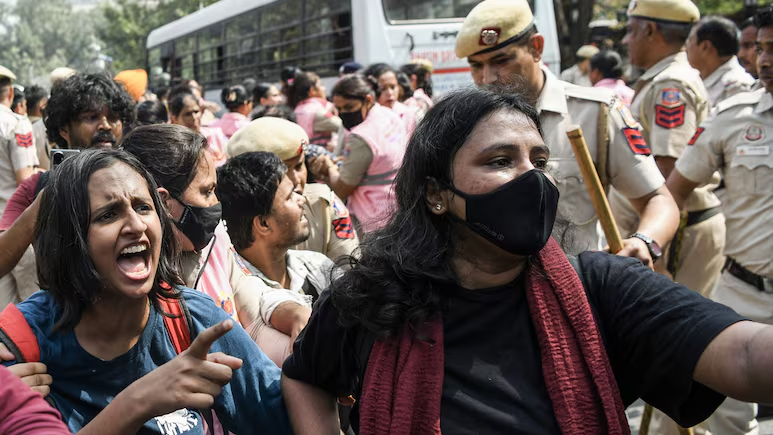
The response has also exposed anger among students living in the area.
Students gathered near the collapsed building to question how an ageing structure could continue operating as a residential hostel if serious safety problems existed.
Their concerns reflect a larger issue facing Delhi and other major Indian cities.
Rapid urbanisation and high demand for affordable accommodation have encouraged the conversion of residential buildings into PGs, hostels and rental properties. When this happens without adequate structural inspections, fire-safety measures or regulatory oversight, the risks can increase significantly.
The Satya Niketan disaster has now pushed student housing safety to the centre of the public debate.
The Delhi government is considering tighter regulation of PGs and private hostels, including licensing, police clearance and structural and fire-safety certification. A proposed framework would also create a public portal listing registered PG establishments and their registration details.
Such measures could make it easier for students and parents to determine whether an accommodation provider has completed the required safety checks.
The bigger challenge, however, will be enforcement.
Regulations are effective only when authorities regularly inspect buildings, act against violations and ensure that unsafe structures cannot continue operating simply because they generate rental income.
The Satya Niketan collapse has demonstrated the potentially devastating consequences when those safeguards fail.
For students looking for accommodation, the incident is also a reminder to ask questions before moving into a PG or hostel. Structural safety, emergency exits, fire-safety equipment, building approvals and the condition of common areas can all be important indicators of whether a property is suitable for residential use.
But ultimately, responsibility cannot be placed entirely on students.
Building owners, operators, engineers, contractors and regulatory authorities all have roles to play in ensuring that accommodation remains safe.
The exact chain of events that caused the Satya Niketan building to collapse will be determined through the ongoing investigation.
For now, the tragedy has left seven families grieving and raised serious questions about the safety of student accommodation in the national capital.
The collapse is a stark reminder that an apparently ordinary residential building can become a deadly hazard when structural problems, ageing infrastructure and unsafe construction practices are allowed to go unchecked.
The most important question now is not only what caused the Satya Niketan building to fall, but whether the authorities can identify other potentially dangerous buildings before another tragedy occurs.