Bengaluru’s much-awaited Pink Line has moved closer to opening for passengers, with the 7.5-kilometre elevated stretch between Kalena Agrahara and Tavarekere now ready for commercial operations. The remaining hurdle is the completion of statutory approvals, including clearance related to the new Metro trains and safety authorisation.
The development is significant for commuters in south Bengaluru, particularly those travelling along the congested Bannerghatta Road corridor. The new Metro section is expected to provide a faster public transport alternative and reduce dependence on one of the city’s heavily trafficked road routes.
Bangalore Metro Rail Corporation Limited has completed the work required on the elevated section, according to officials. The corporation is now awaiting the necessary approvals before passenger services can begin.
The latest update came after Karnataka’s Greater Bengaluru Development Minister Krishna Byre Gowda inspected the corridor and undertook a trial run from Jayadeva to Kalena Agrahara along with Bengaluru South MP Tejasvi Surya, local representatives and senior Metro officials.
Following the inspection, the minister said the 7.5-kilometre stretch was ready to be opened to the public. The state government is hopeful of receiving an inauguration date from the Centre during September.
The section will connect Kalena Agrahara with Tavarekere and include six stations. The stations on the elevated stretch are Kalena Agrahara, Hulimavu, IIM Bangalore, JP Nagar 4th Phase, Jayadeva and Tavarekere.
The corridor runs along the Bannerghatta Road area, which has experienced severe traffic congestion for years. The opening of the Metro section is therefore expected to provide commuters with an alternative to road travel.
However, the line cannot begin passenger operations immediately simply because construction has been completed.
Two important statutory steps remain. Approval for the new rolling stock from the Railway Board is awaited, after which the Commissioner of Metro Railway Safety will complete the required safety inspection and provide the necessary clearance for commercial operations.
Officials have indicated that the rolling-stock approval is expected shortly. BJP MP Tejasvi Surya has said he expects the approval process to progress within the coming weeks, followed by the safety clearance.
The Commissioner of Metro Railway Safety plays a crucial role in ensuring that a new Metro corridor is safe for passenger operations. The inspection covers critical systems and infrastructure before commercial services can begin.
The trains themselves are also undergoing prescribed trials before they can carry passengers.
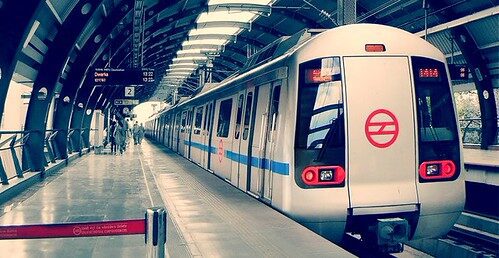
Officials said the trains intended for the six-station elevated section are available, with services planned at a frequency of approximately six minutes once operations begin.
The new trainsets have been manufactured by Bharat Earth Movers Limited and are designed with advanced technology. Around 70 per cent of their components are reported to be locally sourced.
The trains are capable of supporting Automatic Train Operation and advanced Unattended Train Operation technology. This means the rolling stock has been designed to support driverless operation, although the exact operational configuration will depend on the systems and approvals in place when passenger services begin.
The Pink Line will also use Communication-Based Train Control signalling technology.
CBTC allows trains to be monitored and controlled with greater precision and can support higher service frequencies. The technology is particularly useful on busy urban Metro networks where maintaining reliable intervals between trains is important.
The Kalena Agrahara station will also feature modern passenger and operational systems, including an Automatic Fare Collection system compatible with the National Common Mobility Card.
The introduction of these systems is expected to make travel more convenient for passengers and strengthen integration with Bengaluru’s wider public transport network.
One of the most important benefits of the new elevated stretch will be its connection with Jayadeva Interchange.
Jayadeva is an important interchange point between the Pink Line and the existing Yellow Line. Once the Pink Line stretch becomes operational, passengers will have greater flexibility when travelling between different parts of south Bengaluru.
The Yellow Line already connects RV Road with Bommasandra, serving important residential and commercial areas in the southern part of the city.
The Pink Line will add another major north-south connection to the network.
The complete Pink Line is planned as a 21.25-kilometre corridor connecting Kalena Agrahara in south Bengaluru with Nagawara in the north.
The elevated portion accounts for around 7.5 kilometres, while the remaining section is underground.
The underground portion will run from Dairy Circle towards Nagawara and will include several important areas of central and northern Bengaluru.
The underground section is approximately 13.76 kilometres long and includes 12 underground stations.
It is expected to become one of Bengaluru’s most important Metro corridors once fully completed because it will connect major residential, commercial and institutional areas.
The underground section, however, is not yet ready for passenger operations.
Construction, electrification and signalling work are progressing, with the completion target extending into 2027.
BMRCL Managing Director P.C. Jaffer has indicated that the corporation is working toward completing the underground section around the middle of 2027.
The elevated section has already faced several delays in its opening timeline.
Earlier targets had included dates in 2025, March 2026, May 2026 and August 2026. Each deadline passed without the section entering commercial service.
The latest September target has therefore attracted considerable attention from Bengaluru commuters who have been waiting for the project for years.
The repeated delays have also increased scrutiny of the project’s cost and execution.
The Pink Line is part of Bengaluru’s Phase 2 expansion programme, which has involved major construction challenges, including underground tunnelling, station construction, road diversions and complex systems integration.
The elevated section itself was delayed after the original construction contract was terminated and another contractor was brought in to complete the remaining work.
For residents along Bannerghatta Road, the construction period has had a direct impact on daily travel.
Road space has been affected by Metro-related work, while several stretches of Bannerghatta Road and surrounding areas have faced congestion and infrastructure problems.
Commuters are therefore hoping that the opening of the Metro will provide meaningful relief from road traffic.
The new corridor could be particularly useful for students and employees travelling towards IIM Bangalore and other major institutions along the route.
It may also benefit residents of areas such as Hulimavu, JP Nagar and surrounding neighbourhoods.
The extent of traffic relief will depend on passenger adoption, service frequency and the quality of connectivity between Metro stations and residential areas.
Metro expansion alone cannot eliminate Bengaluru’s traffic problems, but it can provide a high-capacity alternative for a significant number of daily commuters.
The six-minute service frequency planned for the elevated Pink Line could make the corridor attractive to passengers who currently depend on buses, private vehicles, taxis and two-wheelers.
The Metro’s ability to carry large numbers of passengers without being affected by road congestion is one of its major advantages.
For commuters travelling on Bannerghatta Road during peak hours, even a partial shift from private vehicles to Metro services could reduce pressure on the road.
The opening is also expected to improve connectivity with existing Namma Metro routes.
Interchange stations allow passengers to travel longer distances without depending on road-based transport for the entire journey.
Jayadeva is particularly important because of its connection with the Yellow Line.
Once the Pink Line is fully operational, the network effect is expected to become even stronger.
Passengers from south Bengaluru will eventually be able to travel through the Pink Line toward central and northern parts of the city, while connections with other Metro corridors will expand their travel options.
The current September opening, however, will cover only the elevated section.
Passengers should not expect the entire Kalena Agrahara-to-Nagawara corridor to become operational at the same time.
The underground section still requires substantial systems work and further testing before it can be opened.
The authorities are therefore adopting a phased approach.
The first phase will bring the elevated six-station section into passenger service once all statutory approvals are secured.
The second major milestone will be the completion and commissioning of the underground section.
For the immediate opening, the focus remains on obtaining Railway Board approval for the rolling stock and completing the CMRS process.
BMRCL officials have stressed that passenger operations can begin only after the mandatory safety procedures are completed.
This means that the inauguration date cannot be treated as final until the required approvals are secured.
The state government has indicated that it is hopeful of receiving a date from the Union government during September.
If the remaining approvals are received as expected, commuters could begin using the new section later this month.
The timing would be significant because Bengaluru continues to face serious traffic congestion across several major corridors.
The city has experienced rapid population growth, expansion of technology and business districts and increasing dependence on private vehicles.
Public transport expansion has consequently become one of the major priorities for improving urban mobility.
The Pink Line is part of a larger programme to expand Bengaluru’s Metro network and create more alternatives to road travel.
The city is also developing the Blue Line, which will connect the Central Silk Board area with Kempegowda International Airport through the Outer Ring Road and other major corridors.
Trial runs on parts of the Blue Line are expected to begin later in 2026.
The expansion of multiple Metro corridors is intended to gradually create a more interconnected public transport system.
The Pink Line is particularly important because it will link south Bengaluru with the central and northern parts of the city.
The corridor will eventually pass through major locations including Dairy Circle, central Bengaluru areas and Nagawara.
Once the complete line is operational, it could significantly change travel patterns for commuters who currently rely on buses or private vehicles.
The immediate priority, however, remains getting the elevated stretch into service safely.
The authorities have emphasised that all construction work required from BMRCL’s side has been completed.
The remaining approvals are outside the corporation’s direct control.
The rolling-stock approval is necessary because the new trains must meet the required technical and safety standards before they can be deployed for passenger service.
Following this, the safety regulator will assess the corridor and associated systems.
The safety inspection is expected to cover areas such as signalling, track systems, train performance, braking, doors, emergency arrangements and other critical components.
The trains have already undergone prescribed testing, including requirements related to their operating performance.
Officials have indicated that train operators have been identified and training is being completed.
This means that the operational preparations are progressing alongside the regulatory process.
The planned six-minute frequency will also require careful coordination between trains, signalling systems and station operations.
CBTC technology is intended to help manage these operations efficiently.
The use of modern signalling and train-control systems is becoming increasingly important as Metro networks become more crowded.
Bengaluru’s existing Metro system has already demonstrated the importance of frequent and reliable services during peak commuting hours.
The Pink Line is expected to add capacity to the network and provide new interchange possibilities.
For businesses and institutions located along Bannerghatta Road, improved Metro connectivity could also make commuting easier for employees and customers.
The opening could influence property and commercial activity around stations over time, although the extent of such an impact will depend on broader economic and urban-development trends.
Metro stations often become important transport hubs, with feeder buses, autos and other services developing around them.
Last-mile connectivity will therefore be crucial to ensuring that the Pink Line delivers its full benefits.
A passenger may be able to travel quickly by Metro but still face difficulties reaching the station or their final destination.
Authorities will need to coordinate feeder transport, pedestrian facilities and road access around the new stations.
This is particularly important along Bannerghatta Road, where pedestrian infrastructure and road congestion have remained concerns for residents.
The new Metro infrastructure can provide an alternative, but station accessibility will influence how many people actually shift from private vehicles.
The September opening would also represent an important milestone after years of construction and repeated deadline changes.
For many commuters, the primary question is no longer when the project was originally supposed to open but whether the latest target can finally be achieved.
Officials are now confident that the physical infrastructure is ready.
The remaining process is largely focused on regulatory approvals and the formal inauguration.
The Union government’s confirmation of an inauguration date is still awaited.
Once that date is communicated and the required safety clearance is obtained, passenger operations can begin.
The government has indicated that it hopes this will happen within September.
For commuters, the upcoming weeks will therefore be closely watched.
The Pink Line elevated section is no longer a distant construction project.
The tracks, stations, trains and operational systems are substantially ready, and trial operations have taken place.
The final step is to complete the statutory process required before passengers can board.
If the approvals arrive on schedule, the six-station corridor could soon become a new part of Bengaluru’s daily commuting network.
The opening is expected to bring relief to commuters travelling through south Bengaluru, particularly those using Bannerghatta Road.
However, the full impact of the Pink Line will become clearer only after passenger services begin and the underground extension is eventually completed.
For now, the key development is that the 7.5-kilometre elevated Kalena Agrahara-Tavarekere section has reached operational readiness.
BMRCL and the state government are targeting a September opening, subject to the remaining statutory approvals.
After years of delays, the long-awaited Pink Line is therefore finally approaching its first major passenger-service milestone, potentially giving thousands of Bengaluru commuters a new way to travel across one of the city’s busiest corridors.