The Smit Machchhar Flydubai Incident has drawn international attention after Flydubai flight FZ1073, travelling from Dubai to Tel Aviv, was diverted to Saudi Arabia following a serious cockpit altercation on September 30, 2026. The Boeing 737-8 MAX aircraft, carrying 174 people, transmitted an emergency code during the flight and eventually landed safely at Tabuk in northwestern Saudi Arabia. Both operating pilots were injured and taken to hospital after the incident.
The Smit Machchhar Flydubai Incident involved Indian Captain Smit Machchhar, who was reportedly attacked by his co-pilot inside the cockpit. According to reporting based on Israeli officials and other accounts, the confrontation resulted in Machchhar suffering serious injuries while the aircraft experienced a rapid loss of altitude. The exact circumstances of the confrontation, including the weapon used, remain under investigation, with reports differing between a knife and the aircraft’s emergency crash axe.
Flight FZ1073 was operating from Dubai International Airport to Ben Gurion Airport near Tel Aviv when the emergency developed. The aircraft reportedly transmitted the international hijack alert code 7500 at around 3:05 UTC, or 8:35 am IST. Flight-tracking data examined by The Indian Express showed the aircraft losing approximately 14,125 feet in about 29 seconds during the crisis. The rapid descent became one of the most significant indicators of the seriousness of the incident.
The Smit Machchhar Flydubai Incident unfolded while the aircraft was at cruising altitude. Reports indicate that the cockpit confrontation escalated rapidly, with Machchhar being injured and the aircraft subsequently going into a sharp descent. Israeli officials have said the co-pilot allegedly attempted to take control of the aircraft, although the precise sequence of events remains part of the ongoing investigation. Flydubai has confirmed that a cockpit altercation took place but has not publicly confirmed every detail reported about the incident.
Despite being seriously injured, Captain Smit Machchhar was able to open the cockpit door, according to accounts cited by The Indian Express and other reports. This allowed passengers and additional crew members to enter the cockpit and assist in restraining the other pilot. The actions of passengers and off-duty pilots travelling on the aircraft also became an important part of the sequence that allowed the flight to be brought under control.
Passenger accounts have provided further details about the moments inside the aircraft. Some passengers described the plane suddenly dropping like a rollercoaster, while others reported seeing people moving towards the cockpit. One passenger told journalists that several people helped restrain the attacker, with some using zip ties and headphones to secure him. These accounts remain passenger recollections and are being considered alongside official investigations and other evidence.
The Smit Machchhar Flydubai Incident also involved other pilots who were travelling on the aircraft. Reports indicate that additional crew members helped secure the plane after the cockpit confrontation. Their presence became significant because the operating crew had been injured during the incident. The aircraft was eventually diverted from its original route and directed toward Tabuk, Saudi Arabia, where it landed safely. All passengers were accounted for after landing.
Captain Machchhar sustained serious injuries during the incident and was admitted to a hospital in Tabuk. Indian officials said he was receiving medical treatment and was safe. India’s embassy and diplomatic representatives have been coordinating with his family and Saudi authorities. Later updates said Machchhar was in stable condition and recovering, with India’s Ambassador to the UAE, Deepak Mittal, also meeting him and his family.
The health update provided some reassurance following the Smit Machchhar Flydubai Incident. Ambassador Mittal said Machchhar was in stable condition and recovering rapidly. The ambassador also described meeting Machchhar and his family, saying they were talking and smiling, which he described as a relief for the family. The pilot’s condition remains an important part of continuing coverage as he recovers from his injuries.
Prime Minister Narendra Modi publicly praised Captain Smit Machchhar following the incident. Modi described the Indian pilot as a hero and said his courage and determination helped protect the lives of people aboard the aircraft. President Droupadi Murmu also praised Machchhar. These are official statements from Indian leaders and represent their characterization of his actions during the emergency.
Israeli Prime Minister Benjamin Netanyahu also praised Machchhar and passenger Yaniv Hayun, who was reported to have helped enter the cockpit during the crisis. Netanyahu said Machchhar’s actions helped prevent what he described as a potentially catastrophic disaster. However, statements describing the incident as an attempted crash or deliberate attack remain subject to investigation, and the precise motive of the co-pilot has not been conclusively established.
The Smit Machchhar Flydubai Incident has also raised questions about the circumstances surrounding the alleged attack inside the cockpit. Reports have differed about the weapon involved. Some accounts referred to a knife, while Netanyahu later suggested that an axe may have been used. Reuters reported that it could not independently establish which weapon was involved. Aviation experts cited in reporting noted that aircraft cockpits contain emergency equipment, including crash axes, while meal-service equipment may also create questions about how a weapon could have been accessed.
Authorities are investigating both the incident itself and the possible motive behind it. The United Arab Emirates has ordered an investigation into the circumstances and motives involved, including whether there was any terrorist connection, prior planning or outside direction. Saudi authorities are also involved because the aircraft landed in Tabuk and the alleged attacker was taken into custody there. The investigations are expected to establish the sequence of events and determine what led to the cockpit confrontation.
Questions about a possible terrorist motive have also emerged, but they should be treated carefully while investigations continue. Netanyahu said it was too early to establish whether Iran had any involvement, while later making claims about alleged radical indoctrination of the co-pilot. Those statements are attributed to the Israeli prime minister and do not by themselves establish the motive or any connection to another state. The UAE investigation is expected to examine these possibilities.
The Smit Machchhar Flydubai Incident has also highlighted the role of passengers during an aviation emergency. Accounts indicate that passengers moved toward the cockpit after the door became accessible and helped restrain the attacker. An Israeli passenger, Yaniv Hayun, was among those reported to have entered the cockpit area, while other passengers and crew assisted in controlling the situation. Their actions occurred during a rapidly developing emergency and were followed by the involvement of additional pilots and crew.
The aircraft’s rapid descent is another important part of the incident. According to flight-tracking analysis cited by The Indian Express, the Boeing 737 lost around 14,125 feet in approximately 29 seconds. Such a rapid altitude change illustrates how quickly the situation developed. The aircraft later stabilized sufficiently for the flight crew and other personnel to divert it toward Tabuk, where it completed the emergency landing without a reported passenger fatality.
The safe landing meant that the immediate aviation emergency ended without the loss of passenger lives, although members of the flight crew sustained injuries. Flydubai confirmed that the aircraft had been diverted following a cockpit altercation and that both operating pilots were injured and taken to hospital. The airline has said additional crew travelling on board assisted in securing the aircraft and completing the diversion.
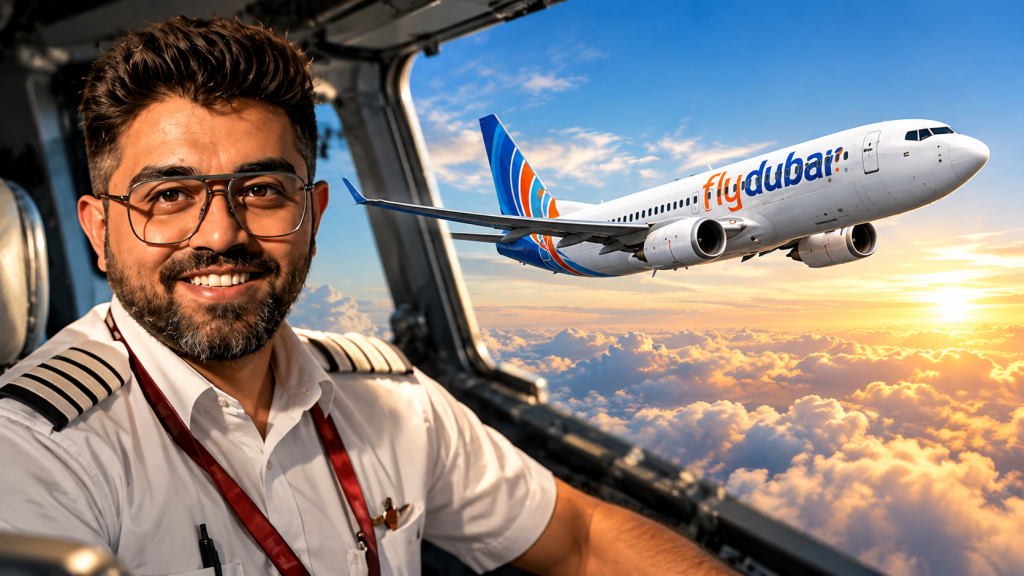
For Indian aviation watchers, the Smit Machchhar Flydubai Incident has placed the Indian pilot at the centre of international attention. Reports describe Machchhar as an experienced Boeing 737 pilot who had previously worked with SpiceJet before joining Flydubai. Other reporting said he had trained in New Zealand and had accumulated more than a decade of aviation experience. His professional background has been highlighted in coverage following the emergency.
The incident also illustrates the importance of multiple layers of aviation safety during an unexpected cockpit emergency. Communication systems, emergency procedures, flight-control capabilities, air traffic control, additional qualified personnel and the ability to divert an aircraft all became relevant during the FZ1073 emergency. However, a detailed assessment of what worked or failed will depend on the findings of the authorities investigating the event.
The Smit Machchhar Flydubai Incident remains an active investigation, and several details should therefore be treated as provisional. While the cockpit altercation, injuries, emergency diversion and safe landing have been confirmed, reports about the precise motive, the weapon used, the intention of the co-pilot and the complete sequence inside the cockpit are still being examined. Authorities will need to reconcile passenger accounts, flight data, cockpit evidence, communications and other investigative material before drawing final conclusions.
For now, Captain Smit Machchhar remains under medical care and has been reported to be recovering. The aircraft and the passengers reached safety after the emergency landing in Tabuk, while investigators in Saudi Arabia and the UAE continue examining the incident. The Smit Machchhar Flydubai Incident is likely to remain under international scrutiny as authorities work to establish exactly what happened aboard Flight FZ1073 and why the cockpit confrontation occurred.