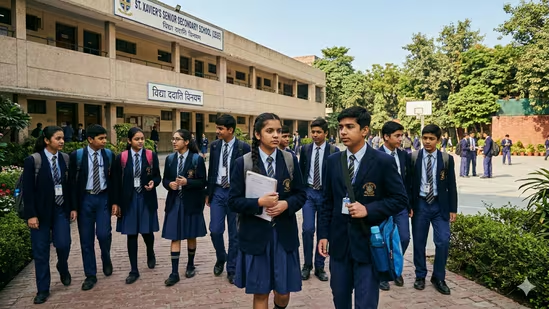
A growing dispute between private schools and the Rajasthan government has raised concerns over the financial condition of private educational institutions and the possible impact on millions of students across the state.
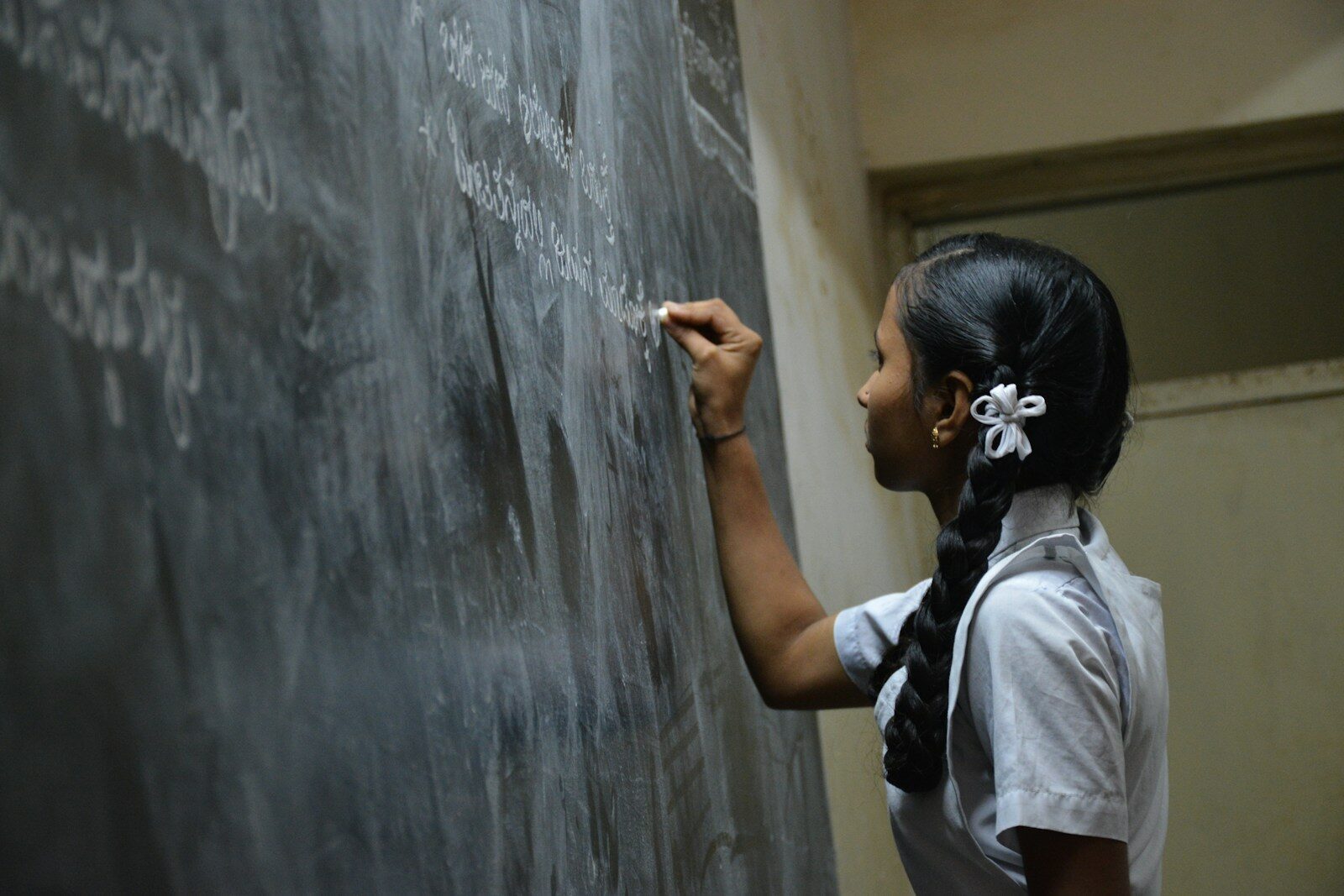
The Rajasthan Private School Sangharsh Samiti has claimed that nearly 90 percent of private schools in the state are facing serious financial pressure and could struggle to continue operations if their concerns are not addressed. The organisation has warned that a large-scale closure of private schools could affect the education of around 85 lakh children and put the employment of nearly 10 lakh workers at risk.
The figures are claims made by the private-school organisation and should not be interpreted as an official government assessment. The association has used the figures to highlight what it describes as a serious financial crisis affecting schools, particularly institutions operating in rural areas and the middle segment of the private-school sector.
One of the central complaints raised by private schools concerns delayed payments under the Right to Education Act. According to the organisation, schools have continued providing education to children admitted under the RTE provision but have faced delays in receiving reimbursement from the government.
The association’s state convenor, Lalsingh Jhala, said the government has paid private schools for the 2024-25 academic session, while other outstanding amounts remain pending. He argued that continued delays have created financial pressure on institutions that still have to meet expenses such as staff salaries, infrastructure costs and daily operating expenses.
The RTE reimbursement issue has become one of the most important points of disagreement between private schools and the state government. Schools admitting eligible children under the RTE framework depend on the prescribed reimbursement mechanism to recover the costs associated with providing education to those students.
Private-school representatives say delayed payments can create cash-flow problems, particularly for smaller schools that have limited financial reserves. They argue that timely reimbursement is necessary if schools are expected to continue participating in the system without compromising their operations.
The association has also raised concerns about the inspection process followed by the education department. According to its representatives, schools have faced repeated inspections since 2018 concerning building standards, staff strength, admissions and other regulatory requirements.
The school operators have not opposed inspections in principle. Instead, they have argued that inspections should focus on improving educational quality and should be conducted through a transparent process in which school representatives are adequately informed and involved.
The association has alleged that repeated inspections have sometimes created what it describes as an “inspector raj”. This is an allegation by the organisation, and the government would need to respond to the specific claims regarding individual inspections and enforcement procedures.
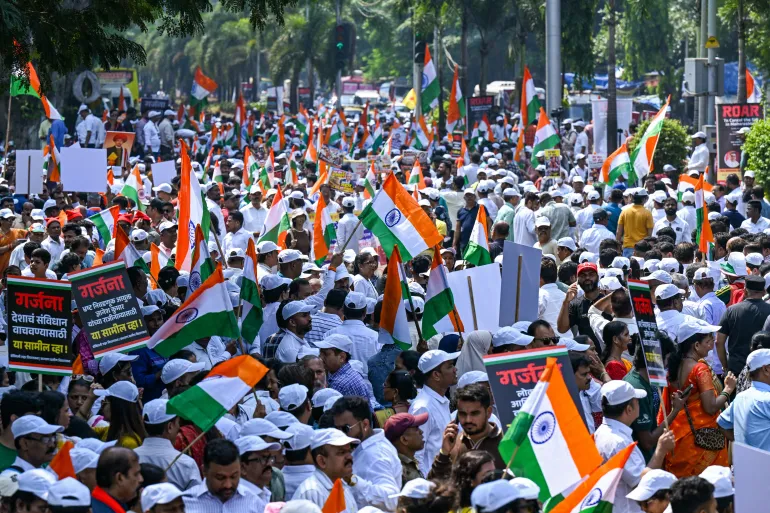
The dispute comes after private-school organisations had already increased pressure on the Rajasthan government earlier in August. Another private-school organisation had warned that its demands relating to RTE payments, inspections and administrative pressure needed to be addressed, with a proposed protest in Jaipur.
The concerns raised by private schools have also brought the broader question of Rajasthan’s education capacity into focus. The association argues that if a large number of private schools were to shut down, government schools would face a major challenge in accommodating additional students.
The organisation has questioned whether government schools currently have enough classrooms, teachers and other infrastructure to immediately absorb the large number of students who could be affected by private-school closures.
This concern is particularly significant because Rajasthan already has a large school-going population spread across urban, semi-urban and rural areas. Any major shift of students from private to government schools would require careful planning and additional resources.
Recent education data also shows that Rajasthan’s overall school enrolment has declined in recent years. According to an analysis of UDISE+ 2025-26 data reported by PTI, total school enrolment in the state fell from about 1.67 crore in 2023-24 to 1.59 crore in 2025-26. Government schools accounted for most of the decline, while private schools largely retained their enrolment.
The decline in overall enrolment adds another dimension to the debate. Education experts have pointed to demographic changes, including falling fertility rates, as one factor behind declining student numbers. At the same time, the sharper decline in government-school enrolment has raised questions about parental preferences, school quality and accountability.
Private schools argue that they have become an important part of Rajasthan’s education system over the years. Their representatives maintain that private institutions did not originally emerge to replace government schools but expanded in response to demand from families seeking educational options outside the government system.
Lalsingh Jhala said that if government schools provide adequate facilities and quality education, parents would naturally consider sending their children there. However, he argued that the government should not treat all private schools in the same way because institutions differ considerably in their size, financial capacity and operating conditions.
The fee issue is another area of continuing discussion. Private schools face scrutiny over the fees they charge, while school operators argue that their expenses vary depending on infrastructure, salaries, facilities and location.
A balanced approach will therefore be important if the government and private schools are to resolve the current dispute. Schools need to comply with safety, staffing and educational standards, while regulatory mechanisms also need to ensure that legitimate institutions can continue operating without unnecessary administrative difficulties.
The dispute is ultimately about more than the financial condition of individual schools. It concerns the stability of an education network that serves a substantial number of Rajasthan’s students.
If the association’s estimate of around 85 lakh students studying in private schools is accurate, even a fraction of those institutions facing closure could create significant disruption. Students could face uncertainty over admissions, transfers, transportation and continuity of education.
Parents could also face additional financial and logistical pressure if they suddenly have to find alternative schools for their children. In rural and smaller towns, where educational options may already be limited, the impact could be more pronounced.
Teachers and other school employees are another group potentially affected by the dispute. The association has estimated that around 10 lakh employees could face employment-related consequences if large numbers of private schools close. Again, this is the organisation’s estimate rather than an independently verified government figure.
The government, meanwhile, has a responsibility to ensure that educational institutions comply with applicable laws and standards. Inspections can play an important role in ensuring that schools have safe buildings, qualified staff and appropriate facilities.
The challenge is to make that regulatory process effective without creating unnecessary uncertainty for students and school operators. A predictable inspection system, clear standards and timely communication could help reduce friction between authorities and schools.
The RTE reimbursement issue may require particular attention because it directly affects the financial relationship between the government and participating private institutions. Clearing legitimate pending payments could provide immediate financial relief while also strengthening confidence in the reimbursement system.
Private schools have been seeking government intervention for months, according to the association. Jhala said the organisation had submitted memorandums to the government since January 30 and had also met the education minister on June 25, but claimed that a permanent solution had not yet been reached.
The dispute therefore appears to have developed over an extended period rather than emerging suddenly. Continued negotiations between government officials and private-school representatives could be important in preventing the disagreement from escalating further.
For students and parents, the most important issue is continuity of education. Whatever decision is eventually taken regarding private schools, children should not be left caught between competing positions.
The government may also need to assess the actual number of schools facing financial difficulty rather than relying solely on broad estimates from either side. A detailed assessment could help identify which problems are related to delayed RTE payments, which are connected to regulatory compliance and which may reflect broader financial or demographic pressures.
Such an assessment could also allow authorities to distinguish between schools that are genuinely at risk of closure and institutions that remain financially stable.
The current controversy comes at a time when education infrastructure and school quality are already receiving increased public attention in Rajasthan. Recent political campaigns and debates have focused on the condition of government schools, while the private-school sector is now highlighting its own operational challenges.
This makes the current situation particularly important for the state’s education policy. Rajasthan has to manage both government and private institutions while ensuring that students receive safe, accessible and quality education.
The private-school association’s warning about the future of 85 lakh students is therefore a serious claim that warrants careful examination rather than immediate acceptance or dismissal. The actual scale of the problem will become clearer through government data, school-level assessments and the outcome of discussions between the authorities and school organisations.
For now, private-school representatives are urging the government to address pending RTE payments, review the inspection system and reduce what they describe as unnecessary administrative pressure.
The government will need to balance those concerns with its responsibility to enforce education standards and protect students. Any solution will need to ensure that financial relief does not come at the cost of educational quality or regulatory compliance.
The immediate priority should be preventing disruption to students while creating a sustainable framework for private schools that participate in Rajasthan’s education system.
The controversy is likely to remain an important education issue in the state as private-school operators seek a response from the government. Whether the current financial concerns develop into widespread closures will depend on the government’s response, the actual financial condition of individual institutions and the ability of both sides to reach a workable agreement.
For Rajasthan’s students and families, the outcome matters most because the stability of schools directly affects their education, routine and future opportunities. The coming weeks could therefore be important in determining whether the current dispute is resolved through policy changes and financial support or develops into a wider crisis for the state’s private education sector.