The INDIA Bloc Protest Against Gyanesh Kumar intensified in New Delhi on Tuesday, October 6, as opposition Members of Parliament marched from the Parliament complex towards the Election Commission of India headquarters, demanding the resignation of Chief Election Commissioner Gyanesh Kumar. The protest was centred on the Opposition’s objections to the ongoing Special Intensive Revision (SIR) of electoral rolls and alleged irregularities in the voter-registration process.
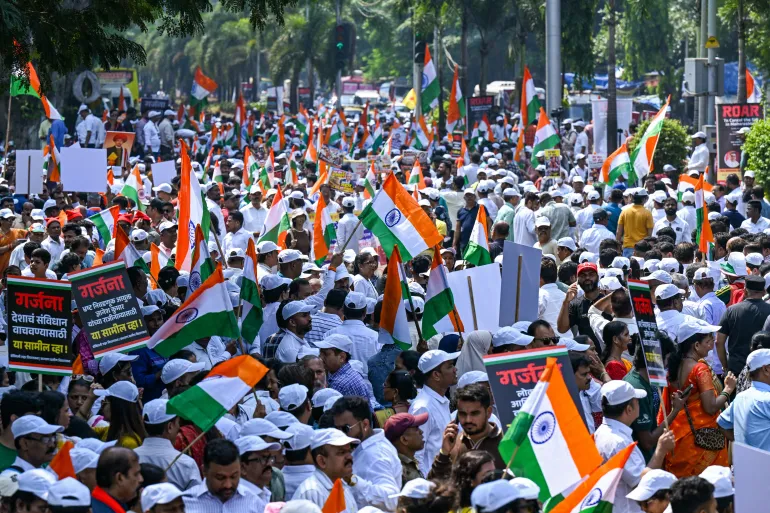
The march was led by prominent Opposition leaders, including Leader of Opposition in the Lok Sabha Rahul Gandhi and Congress president and Leader of Opposition in the Rajya Sabha Mallikarjun Kharge. Several other INDIA bloc leaders and MPs joined the demonstration, carrying placards and raising slogans concerning electoral transparency, voter rights and democracy. The march was stopped by Delhi Police near the NITI Aayog-Akashvani Bhawan stretch before the protesters could reach Nirvachan Sadan, the Election Commission’s headquarters.
The INDIA Bloc Protest Against Gyanesh Kumar comes after several days of demonstrations by opposition parties, youth groups and civil society organisations over the Election Commission’s handling of electoral-roll revisions. The Opposition has alleged that the SIR exercise could result in the exclusion of eligible voters and has questioned changes made to Form 6, which is used for voter registration. The Election Commission and the BJP have rejected the Opposition’s allegations and have maintained that the electoral-roll revision process is intended to improve the accuracy and integrity of voter lists.
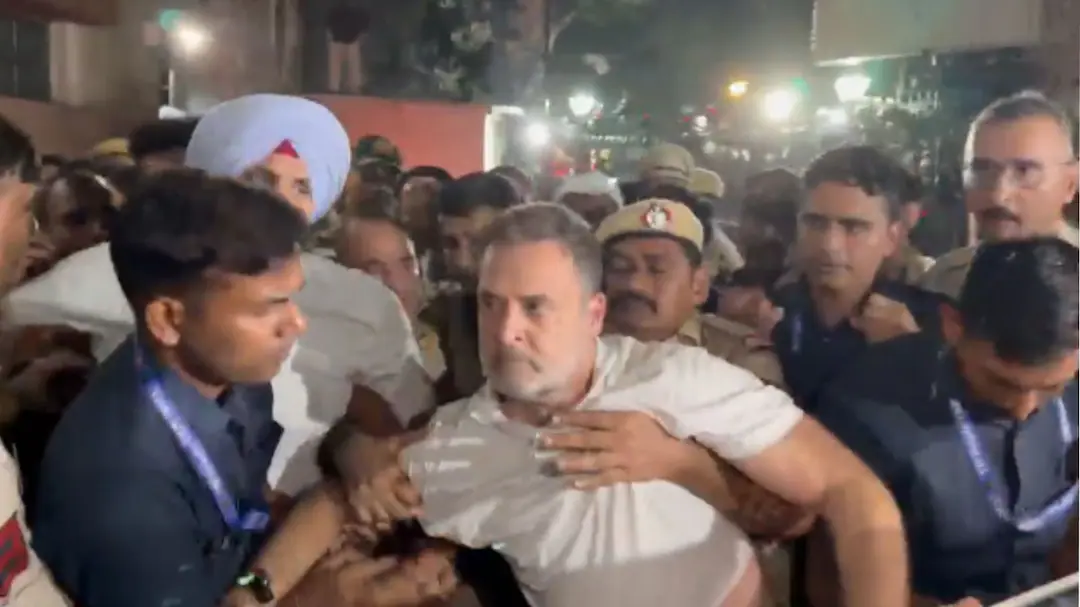
During Tuesday’s march, opposition MPs gathered at Parliament’s Makar Dwar before moving towards the Election Commission office. The demonstration was stopped by security personnel, following which several MPs sat on the road and began a sit-in protest. Rahul Gandhi and other leaders later attempted to move through the barricaded area, with Gandhi and Congress MP Priyanka Gandhi Vadra subsequently being detained and taken towards a police bus. They were later released and were seen at Akashvani Bhawan as opposition leaders continued their protest.
Rahul Gandhi also carried a placard with the message, “Gyanesh, it’s done bro. Time to resign,” while the Opposition continued to demand Kumar’s removal. The protest featured slogans criticising the Election Commission and its handling of the electoral-roll revision. According to reports, several opposition leaders accused the poll body of undermining public confidence, while the Election Commission has continued to reject claims that its decisions were politically motivated.
One of the central issues behind the INDIA Bloc Protest Against Gyanesh Kumar is the Special Intensive Revision, or SIR, of electoral rolls. The exercise has become a major political issue, with Opposition parties arguing that the process needs greater transparency and stronger safeguards to ensure that eligible voters are not excluded. They have demanded access to information about additions, deletions and corrections made to electoral rolls and have called for an effective mechanism through which voters can challenge the deletion of their names.
The Opposition has also objected to changes associated with Form 6, the application used for enrolment of new voters. The issue gained further political significance after proceedings in the Supreme Court on October 5, when Chief Justice of India Surya Kant said that the court had not approved the modified version of Form 6 and indicated that the records would be examined to establish who authorised the changes. The Opposition has cited those remarks while intensifying its criticism of the Election Commission.
The Supreme Court’s observations have become an important part of the political debate, but they do not by themselves establish the Opposition’s broader allegations against the Election Commission. The court’s proceedings relate to the specific question of modifications to Form 6 and the records surrounding those changes. The wider political claims about electoral manipulation remain contested between the Opposition, the Election Commission and the ruling BJP.
Mallikarjun Kharge had earlier outlined several demands on behalf of the Opposition. These include greater transparency in electoral-roll revisions, the availability of relevant electoral data, an opportunity for voters whose names are removed to appeal, and timely access to electoral rolls for political parties. The Opposition has also called for investigations into serious anomalies where they are found.
The INDIA bloc has also demanded that electoral rolls prepared before the SIR exercise be used for future elections and that eligible voters who were excluded because of administrative problems receive protection. Other demands include a simple and accessible voter-registration process for first-time voters and an effective appeal mechanism before a person’s name is removed from the electoral roll.
Another major demand raised during the INDIA Bloc Protest Against Gyanesh Kumar is a return to ballot-paper voting. Opposition leaders have questioned the continued use of electronic voting machines in the context of their wider concerns about the electoral process. Shiv Sena (UBT) MP Arvind Sawant said the Opposition wanted Kumar removed, elections to be held using ballot papers and people whose names were removed during SIR to be reinstated.
The Opposition’s position is that the electoral process must not only be fair but must also be seen to be transparent and trustworthy. Leaders have argued that voters need clear information about why names are removed and should have a meaningful opportunity to challenge such decisions. These demands form part of a wider campaign that the INDIA bloc has described as a fight to protect democratic and voting rights.
The BJP, however, has strongly criticised the protest. Union minister Shivraj Singh Chouhan described the INDIA bloc demonstration as an expression of frustration following electoral defeats and questioned why Opposition parties were challenging the same electoral system under which they had won elections in several states. He also accused the Opposition of making allegations against constitutional institutions.
The Election Commission has also rejected suggestions that the SIR process is designed to benefit any political party. The poll body has maintained that electoral-roll revision is intended to identify and remove duplicate, deceased or otherwise ineligible entries while ensuring that eligible voters remain on the rolls. The Commission has also directed officials to register eligible voters who may have been inadvertently left out.
The INDIA Bloc Protest Against Gyanesh Kumar has therefore become part of a larger political and institutional dispute over how electoral rolls should be revised and how decisions by the Election Commission should be scrutinised. Opposition parties say the current process requires stronger transparency and accountability, while the Election Commission maintains that the exercise is part of its responsibility to maintain accurate voter lists.
Tuesday’s protest also highlighted differences within the broader Opposition camp. The DMK and the Aam Aadmi Party did not participate in the INDIA bloc march, according to NDTV’s live coverage. The Biju Janata Dal, which is not formally part of the INDIA bloc, did participate in the protest through its leaders Manas Mangraj and Sulata Deo. The BJD said it was joining the demonstration as an opposition party while maintaining that it was not part of the INDIA alliance.
The participation of the BJD added another dimension to the demonstration, as the party has previously maintained an independent political position. Its presence showed that concerns about the Election Commission and SIR extend beyond the formal INDIA bloc structure, although different opposition parties may have different positions on the wider political strategy.
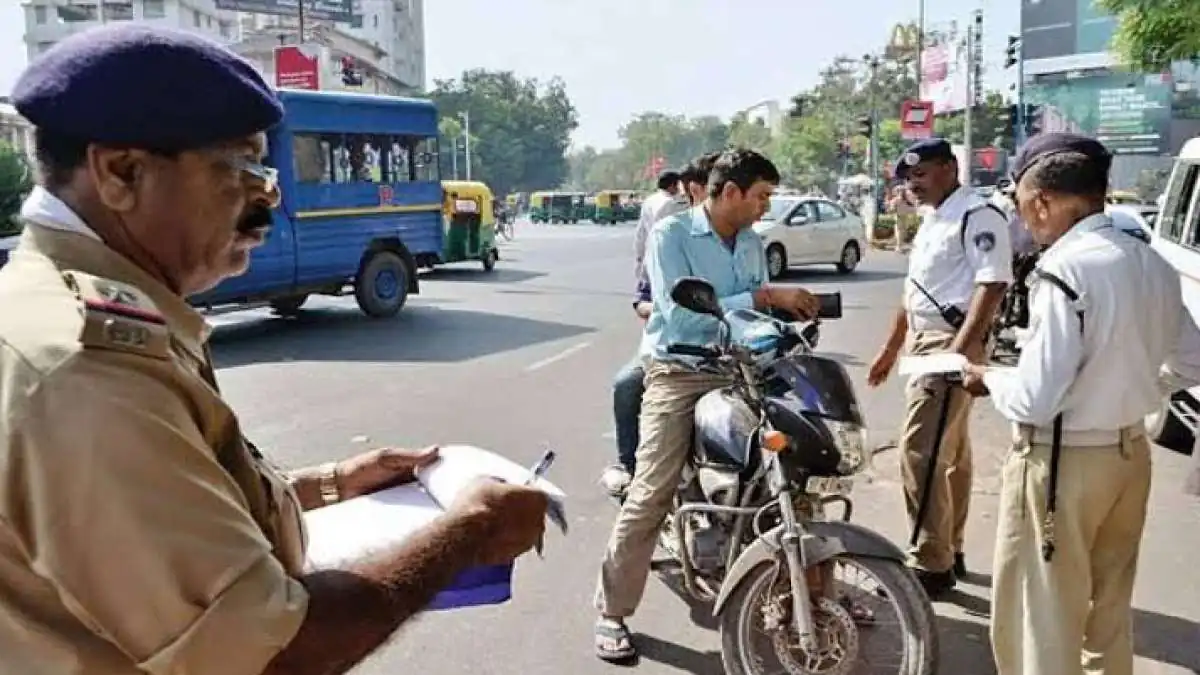
Security arrangements were significantly strengthened in central Delhi ahead of the march. Barricades were placed around Parliament and areas leading towards the Election Commission headquarters. When protesters attempted to move beyond the designated area, police stopped the march. Several Opposition MPs were detained during the confrontation, according to multiple reports. Reuters reported that Rahul Gandhi and Priyanka Gandhi were among the opposition leaders detained during the protest.
The detention of opposition lawmakers has itself become part of the political dispute. Opposition leaders questioned why they were not allowed to proceed to the Election Commission office and sought a meeting with the commissioners. Rahul Gandhi argued that the MPs represented voters and should be allowed to put their concerns directly before the poll panel. The Election Commission, however, said it had not received a formal request from a political party seeking such a meeting, according to reports.
The INDIA Bloc Protest Against Gyanesh Kumar is also connected to a broader series of demonstrations that began earlier in October. Opposition parties and youth groups have held protests in Delhi and Mumbai, with demands including Kumar’s resignation, withdrawal of SIR and greater transparency in electoral processes. Some demonstrations have resulted in police detentions and restrictions on public gatherings.
The protests are expected to continue. The INDIA bloc has announced further programmes as part of its wider “Save Democracy” campaign, including additional demonstrations and rallies. Separate student and civil-society groups have also announced plans for further protests against the Election Commission and the SIR exercise.
The controversy is significant because electoral rolls are a fundamental component of India’s election process. The inclusion or exclusion of a voter can directly affect an individual’s ability to participate in an election. For that reason, both the Opposition’s concerns about safeguards and the Election Commission’s responsibility to maintain accurate voter lists have become central to the ongoing debate.
At present, there is no indication from the Election Commission that Gyanesh Kumar intends to resign. The Opposition has continued to demand his removal, while the BJP and the Election Commission have defended the broader electoral-roll revision process. The dispute is likely to remain politically significant as legal proceedings and political protests continue.
For voters, the central issue emerging from the INDIA Bloc Protest Against Gyanesh Kumar is whether the electoral-roll revision process can provide both accuracy and adequate protection against wrongful exclusion. The Opposition is pressing for stronger disclosure, appeals and restoration mechanisms, while the Election Commission says the revision is necessary to ensure reliable electoral rolls.
The developments surrounding Form 6 and the Supreme Court’s observations have added further scrutiny to the process. However, the legal and administrative questions remain subject to examination, and political allegations about deliberate manipulation should be distinguished from facts established through official investigations or judicial findings.
The October 6 march therefore represents a significant escalation in the Opposition’s campaign against Chief Election Commissioner Gyanesh Kumar. With MPs stopped before reaching the Election Commission headquarters, several leaders detained and the dispute over SIR continuing, the confrontation between the INDIA bloc and the poll panel has moved beyond Parliament and into a broader public and institutional debate over electoral transparency, voter rights and the functioning of India’s election system.