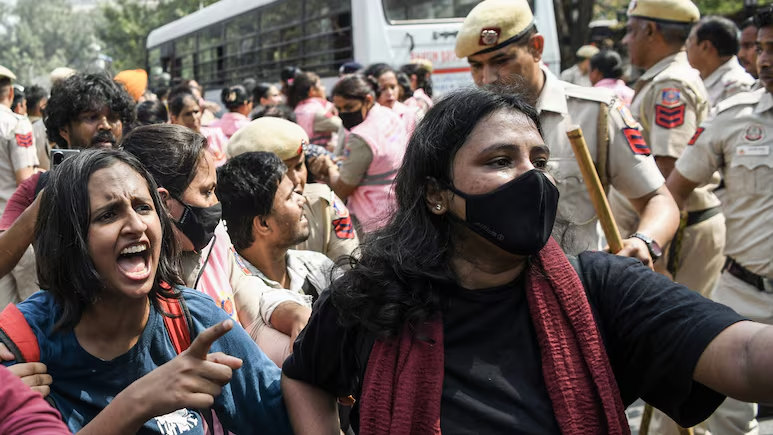
The IIT Bombay student protest following the death of second-year BTech student Sahil Ravindra Wakode has entered a new phase, with student representatives clarifying that their agitation was not intended to defend cheating or academic misconduct. In a statement issued on September 21, the students said their protest was focused on systemic concerns within the institute, institutional accountability and reforms aimed at improving student welfare.
The IIT Bombay student protest began after Sahil Wakode, a second-year student of the Energy Science and Engineering department, died by suicide on September 18. The incident followed an examination-related episode in which he was allegedly found using a mobile phone. IIT Bombay had initially stated that the examination question paper was uploaded to an AI platform to seek answers, although the institute later apologised for its initial communication and said the circumstances surrounding the death were under investigation.
In their statement, representatives involved in the IIT Bombay student protest said students did not support or condone cheating or any form of academic misconduct. They said Sahil’s death had nevertheless prompted students to examine institutional processes and concerns that they believed existed on campus. According to the representatives, the protest was therefore intended to seek meaningful reforms rather than justify the examination incident.
The clarification came amid concerns that the campus agitation was being portrayed as an attempt to defend a student accused of academic misconduct. The students sought to separate those issues, saying that opposing institutional shortcomings and asking for reforms should not be interpreted as support for cheating. Their statement also emphasised that the concerns raised during the IIT Bombay student protest originated from the experiences and concerns of students on campus.
One of the major developments during the IIT Bombay student protest was the submission of an 18-point charter of demands to the institute administration. The demands covered issues including institutional accountability, investigation procedures, disciplinary safeguards, student welfare and mental-health measures. The administration engaged with the students, and representatives said the Director acknowledged the demands and agreed to work towards their implementation within specified timelines.
The student representatives also addressed the position of Professor Suryanarayana Doolla, who was connected to the examination incident. They said they had not presumed his guilt or prejudged the ongoing investigation. Doolla was relieved of his administrative duties as Dean of Administrative Affairs while the investigation continued, but he remained a faculty member at IIT Bombay.
The IIT Bombay student protest has also been accompanied by allegations from Sahil’s parents concerning caste-based harassment and discrimination. His family has alleged that he faced caste-related abuse and harassment on campus for a period before his death. These allegations have been formally raised with the authorities and are now part of the investigation.
IIT Bombay, however, has said that Sahil had not submitted a complaint regarding caste discrimination to its SC/ST Cell or to the administration. The institute’s position is an important part of the ongoing dispute, while the family’s allegations remain subject to investigation. Neither the allegations nor the institute’s response should be treated as a final finding until the investigation establishes the facts.
The police investigation has become another significant part of the IIT Bombay student protest controversy. Following a complaint from Sahil’s father, police registered a case involving allegations of abetment of suicide and provisions of the Scheduled Castes and Scheduled Tribes (Prevention of Atrocities) Act. The investigation has subsequently been taken over by the Mumbai Police Crime Branch, which is examining the circumstances surrounding the student’s death and the allegations made by his family.
The Crime Branch is expected to examine available evidence, including CCTV footage and digital information, while investigating the sequence of events surrounding the examination and Sahil’s death. Reports have also highlighted that no allegation of caste-based harassment has yet been established by the investigation. The final findings will depend on the evidence collected by the authorities.
Meanwhile, the IIT Bombay student protest has highlighted a broader discussion about student welfare, disciplinary procedures and the pressures faced by students at highly competitive institutions. Student representatives have argued that the incident should lead to changes in institutional systems so that students have clearer safeguards and avenues for raising concerns.
Faculty members have presented a different perspective. The IIT Bombay Faculty Forum has supported Professor Doolla and argued that academic rules must be followed when an examination-related violation is detected. Faculty representatives have also called for the investigation to establish what happened before conclusions are drawn.
Professor Rajkumar S. Pant, president of the IIT Bombay Faculty Forum, said the student’s death may have become a catalyst for wider frustrations among students. He also said allegations against Doolla should not be treated as established facts before the investigation is completed. According to Pant, IIT Bombay has an SC/ST Cell and other mechanisms through which students can raise complaints.
The dispute has therefore developed along several separate but connected lines. The first concerns what happened during the examination on September 18. The second involves the circumstances surrounding Sahil’s death. The third concerns the family’s allegations of caste-based harassment. The fourth involves the students’ demands for institutional reforms. The fifth concerns the role and administrative status of Professor Doolla. The ongoing investigations are intended to establish the facts surrounding these issues.
The IIT Bombay student protest has also prompted the institute to engage directly with students through meetings and an open-house interaction. Student representatives said the Director and other administrators responded to questions raised by students. They described the engagement as an important step toward addressing institutional concerns and continuing discussions on reforms.
Students have also said that the concerns emerging from Sahil’s death should remain centred on the IIT Bombay student community rather than being shaped by outside political or organisational interests. In their statement, representatives stressed that the reform process should remain rooted in student experiences and the institute’s own processes.
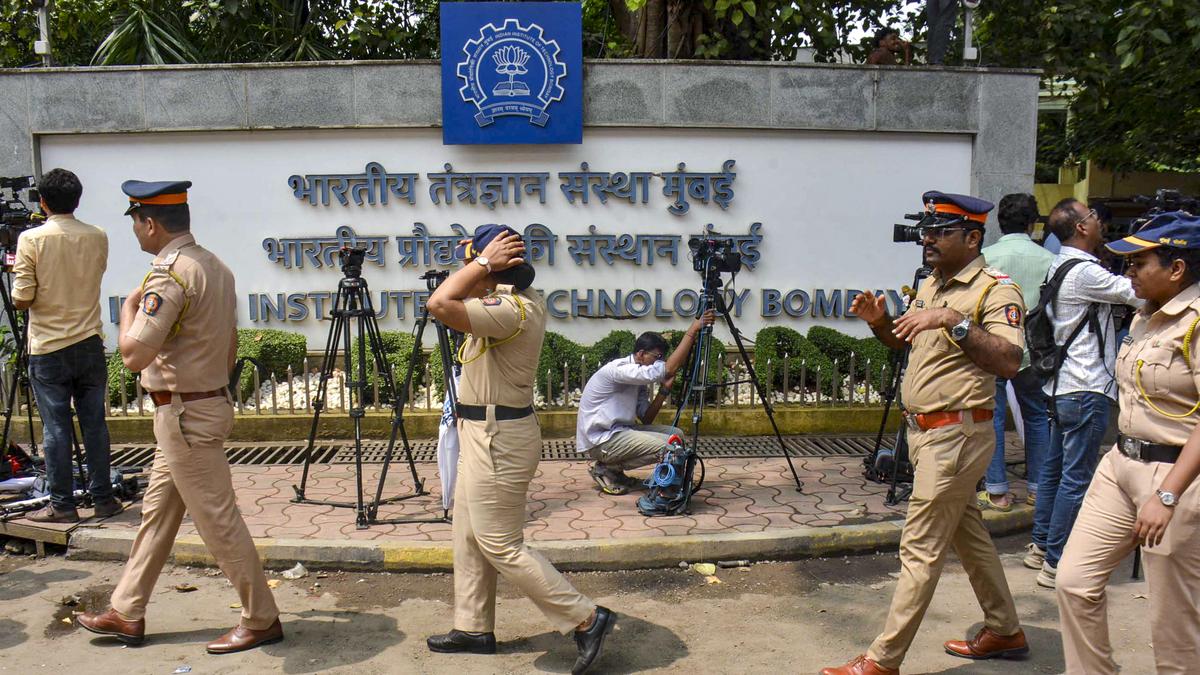
Security on the IIT Bombay campus was also increased as tensions continued. The developments followed both student demonstrations and a faculty march supporting Professor Doolla. The parallel positions have added to the pressure on the institute while the police investigation proceeds.
For IIT Bombay, the immediate challenge is to address the concerns raised by students while allowing the police investigation to proceed independently. The administration has indicated that due process will be followed, while students have called for transparency and accountability. The outcome of the investigation will be significant in determining whether further institutional or legal action is required.
The IIT Bombay student protest has also renewed attention on the need for effective mechanisms through which students can report discrimination, harassment, academic pressure or other concerns. The institute has existing structures, including its SC/ST Cell and student-welfare mechanisms, but the current controversy has brought renewed questions about how accessible and effective such systems are perceived to be by students.
At present, the allegations surrounding Sahil Wakode’s death remain under investigation. The students have made clear that their protest should not be interpreted as support for academic misconduct, while Sahil’s family continues to allege caste-based harassment and has sought a thorough investigation. IIT Bombay has maintained that no caste-related complaint was submitted by Sahil to the institute before his death.
The IIT Bombay student protest is therefore not limited to the examination incident itself. It has become a wider discussion about institutional accountability, student welfare, disciplinary procedures and the handling of allegations within one of India’s leading educational institutions. With the Mumbai Crime Branch investigating the matter, the focus now remains on establishing the sequence of events and determining the facts based on evidence rather than assumptions.
As the investigation continues, IIT Bombay students and administrators are expected to work through the reforms outlined in the 18-point charter. At the same time, the allegations made by Sahil’s family and the institute’s response will remain subjects of scrutiny until the authorities complete their investigation. The coming developments will determine what further action, if any, is taken in connection with the student’s death and the concerns raised on campus.