The latest warning about El Nino Heat India Deaths has raised concerns over the potential health impact of unusually high temperatures in the coming months. A new report from the Climate Impact Lab estimates that India could record around 15,800 additional heat-related deaths between September 2026 and February 2027 compared with a normal year. The projection comes as a powerful El Nino develops and temperatures remain significantly above normal across several parts of the world.
The estimate regarding El Nino Heat India Deaths is part of a broader global assessment by the Climate Impact Lab, a research initiative associated with the University of Chicago’s Energy Policy Institute. Researchers estimate that the current El Nino could contribute to approximately 451,000 additional heat-related deaths globally during the first phase of the event through February 2027. These figures represent estimated excess mortality compared with what would be expected under normal temperature conditions.
The issue of El Nino Heat India Deaths is particularly important because the projected period includes December through February, months that are generally considered cooler across much of India. The report estimates that around 7,400 of India’s projected 15,800 additional heat-related deaths could occur during those three months. Researchers also warn that heat-related mortality could increase again when India enters its hotter summer months after February.
El Nino is a natural climate phenomenon associated with unusually warm sea-surface temperatures in the central and eastern tropical Pacific Ocean. The resulting changes in atmospheric circulation can influence rainfall and temperature patterns across different regions. In India, El Nino has historically been associated with changes in monsoon behaviour, although its impact depends on several interacting climate factors.
The projected El Nino Heat India Deaths come against the backdrop of an already warming global climate. According to the Climate Impact Lab assessment, global land temperatures during the coming period could be around 1.2 degrees Celsius above normal. Researchers estimate that the number of extremely hot days could be about 44% higher than in a typical year, increasing exposure to dangerous temperatures.
The report describes the expected temperatures as resembling conditions that climate models might otherwise associate with a substantially warmer future. This comparison is intended to illustrate how unusual the projected heat could be rather than suggesting that climate change itself has suddenly advanced by two decades. The researchers use the comparison to highlight the challenge of protecting populations from temperatures that infrastructure and public-health systems may not yet be designed to handle.
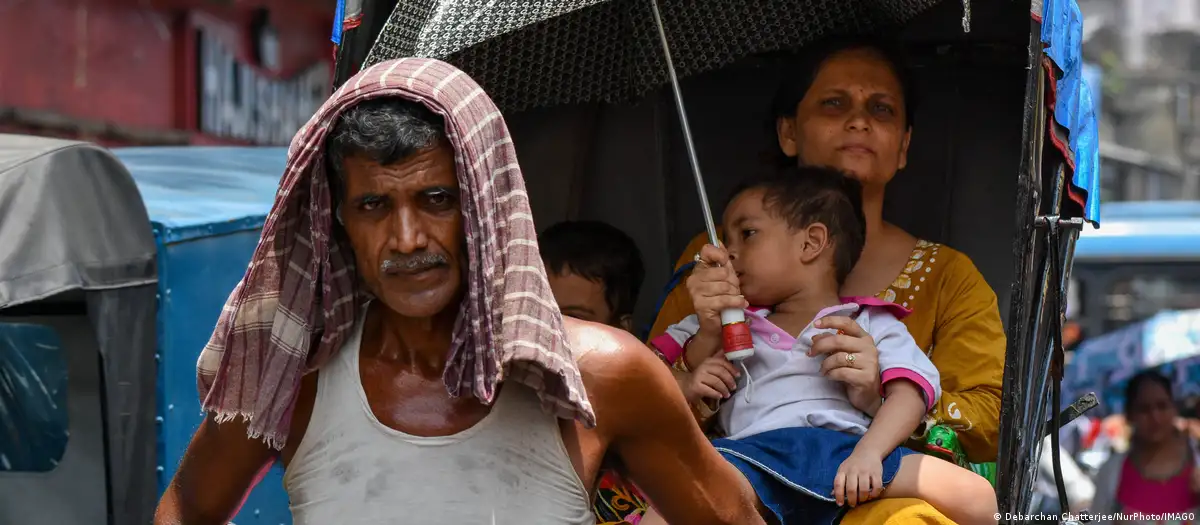
The question of El Nino Heat India Deaths also highlights the relationship between heat exposure and public health. Extreme temperatures can increase the risk of heat exhaustion, heatstroke and other health complications, particularly among older people, people with existing vulnerabilities, outdoor workers and communities with limited access to cooling. The consequences can also place additional pressure on hospitals and emergency services during periods of prolonged heat.
The Climate Impact Lab says the projected mortality burden is likely to be concentrated in countries and regions that are already relatively hot and have fewer resources for adapting to extreme temperatures. India is among the countries expected to experience a substantial number of additional heat-related deaths during the six-month period. Nigeria, Indonesia and Sudan are among the countries with higher projected figures in the report.
The broader global estimate linked to El Nino Heat India Deaths includes substantial projected impacts across Africa, Southeast Asia and South America. The Climate Impact Lab estimates around 66,800 additional heat-related deaths in the Sahel region. Nigeria alone is projected to account for about 31,400 deaths, while Indonesia could see around 19,300 and Brazil around 13,300 during the period covered by the assessment.
For India, the potential increase in El Nino Heat India Deaths comes after a monsoon season that has also raised concerns about rainfall shortages. Recent reports have noted that India’s cumulative monsoon rainfall was around 15% below normal as of September 19. Reduced rainfall can increase concerns about water availability and agricultural conditions, although rainfall patterns vary considerably between regions.
The India Meteorological Department has also been monitoring the developing El Nino. The government has stated that El Nino conditions could strengthen during October to December 2026 and potentially reach the very strong category. At the same time, authorities have stressed that there is no officially defined category called “Super El Nino” under the WMO or IMD classification system. Official classifications generally use categories such as weak, moderate, strong and very strong.
This distinction is important when discussing El Nino Heat India Deaths because the phrase “Super El Nino” has been widely used in recent media reports and research discussions, but it is not an official meteorological classification. The Climate Impact Lab and other researchers may use the term descriptively for an unusually intense event, while agencies such as the IMD use established scientific categories.
The Indian government’s assessment has indicated that El Nino conditions that developed during 2026 could persist through February 2027. The Ministry of Earth Sciences has said that India’s monsoon is influenced by multiple climate factors, including the Indian Ocean Dipole, Madden-Julian Oscillation and regional ocean-atmosphere interactions. Therefore, El Nino alone cannot be used to explain every change in India’s weather conditions.
The projected El Nino Heat India Deaths are also not a certainty that authorities can interpret as a fixed future death toll. Climate mortality studies produce estimates based on historical relationships between temperature and mortality, projected temperature conditions and assumptions about exposure and adaptation. Actual mortality can differ depending on weather patterns, public-health interventions, population behaviour and the effectiveness of heat-prevention measures.
Researchers say that there is still an opportunity to reduce the projected impact. Measures such as early heat warnings, cooling centres, access to drinking water, hydration facilities and protection for workers exposed to high temperatures can help reduce health risks. Strengthening emergency medical capacity can also help communities respond to periods of extreme heat.
Heat action plans are particularly important in the context of El Nino Heat India Deaths because extreme temperatures can affect people differently depending on their location, occupation and access to resources. Outdoor workers, construction workers, agricultural labourers and people working in poorly ventilated environments can face prolonged exposure. Providing shaded areas, rest breaks, drinking water and appropriate work-hour adjustments can reduce exposure during dangerous periods.
Urban areas face another set of challenges. Concrete structures, roads and limited vegetation can contribute to the urban heat-island effect, causing some areas to remain hotter than surrounding regions. Cities can use heat-warning systems, cooling facilities, tree cover and better planning to reduce exposure. These measures become more important when a broader climate pattern such as El Nino adds additional heat pressure.
The discussion around El Nino Heat India Deaths also has implications for agriculture and food security. El Nino can alter rainfall and temperature patterns, potentially affecting crops, water availability and livestock. Recent reporting has highlighted concerns about drought, wildfires and water shortages in several parts of Asia as the current El Nino strengthens.
Agricultural impacts can indirectly affect public health. Reduced crop production can put pressure on food supplies and household incomes, while water shortages can make it more difficult for communities to maintain adequate hydration and sanitation. The effects can therefore extend beyond direct heat exposure, although the Climate Impact Lab’s 15,800 figure specifically refers to projected additional heat-related mortality.
The current situation also demonstrates why early-warning systems are important for limiting El Nino Heat India Deaths. Researchers have argued that governments can use temperature forecasts to identify areas at higher risk and direct resources before extreme conditions arrive. Such preparations can include public-health messaging, emergency funding, cooling infrastructure and additional medical support.
The Climate Impact Lab’s global estimate of around 451,000 additional heat-related deaths is considerably larger than the India projection because it covers populations across multiple regions affected by the current El Nino. The researchers emphasise that the highest risks are expected in places where temperatures are already high and resources for adaptation are more limited.
For India, the expected El Nino Heat India Deaths could also extend beyond the February assessment period. Researchers have warned that the health effects of extreme heat may continue into India’s hotter months in 2027. This does not mean the 15,800 estimate will automatically increase by a specific amount; rather, it indicates that the period covered by the current projection does not necessarily represent the full heat-related risk for the year.
The scientific assessment therefore provides a warning rather than a confirmed future outcome. Weather conditions can change, and the relationship between temperature and mortality can be influenced by preparedness and adaptation. The estimate is best understood as an indication of potential additional risk compared with a normal temperature year.
The El Nino Heat India Deaths projection has nevertheless drawn attention because of its scale and timing. An estimated 15,800 additional heat-related deaths over six months would represent a significant public-health burden if the conditions and mortality relationships assumed by the researchers materialise. The concentration of around 7,400 projected deaths between December and February also challenges the assumption that heat-related risks are limited to India’s traditional summer season.
Authorities and communities therefore face the task of preparing for both immediate and longer-term climate risks. Monitoring temperatures, expanding warning systems, ensuring access to water and cooling and protecting vulnerable populations could help reduce the health impact. The Climate Impact Lab has specifically pointed to targeted emergency responses and resilience measures as potential ways to prevent some of the projected deaths.
The El Nino Heat India Deaths warning comes as scientists and climate agencies continue to monitor the strength and development of the 2026 El Nino. India’s official agencies have stressed that the event’s exact effects will depend on several climate drivers rather than El Nino alone. Continued monitoring will therefore be necessary as conditions evolve through the October-December period and into early 2027.
Ultimately, the projected 15,800 figure should be viewed as a research-based estimate of additional heat-related mortality rather than a prediction that exactly 15,800 people will die. The number compares projected deaths under the current extreme-heat scenario with deaths expected during a normal year. The estimate underscores the potential scale of the health risk while also highlighting the importance of preparedness.
As India prepares for the months ahead, the focus on El Nino Heat India Deaths is likely to remain closely connected to weather monitoring, public-health preparedness and climate resilience. If extreme temperatures develop as projected, early warnings, access to cooling and water, workplace protections and healthcare preparedness could play an important role in reducing the eventual impact.